This is my archive

bar

John McAfee and Tax Evasion

John McAfee died in a Spanish prison today from a suspected suicide (“John McAfee, Software Pioneer Turned Fugitive, Dies in a Spanish Prison,” New York Times, June 23, 2021). He had just lost a legal battle to avoid extradition to the United States after being prosecuted for tax evasion. He was also sued by the Securities and Exchange Commission. I don’t know which, if any, among the offenses he was suspected of over the years, the eccentric entrepreneur was actually guilty of.  It would not be overly surprising to discover that it is getting riskier to be eccentric in our over-regulated societies. McAfee was the Libertarian Party’s presidential candidate in 2016; I suspect it did not help the party. (Not that you should hold that against me, but he was one of my Twitter and Facebook followers!) In On Liberty (1859), John Stuart Mill wrote about eccentricity: Precisely because the tyranny of opinion is such as to make eccentricity a reproach, it is desirable, in order to break through that tyranny, that people should be eccentric. Eccentricity has always abounded when and where strength of character has abounded; and the amount of eccentricity in a society has generally been proportional to the amount of genius, mental vigor, and moral courage which it contained. … I would hypothesize it is also proportional to the level of entrepreneurship. McAfee’s last tweet, dated June 16, said: The US believes I have hidden crypto. I wish I did but it has dissolved through the many hands of Team McAfee (your belief is not required), and my remaining assets are all seized. My friends evaporated through fear of association. I have nothing. Yet, I regret nothing. Regarding the charge of tax evasion, it is interesting to note that in Switzerland, tax evasion—“forgetting” to declare income, for example—is not a crime, but an administrative infraction. Only “tax fraud,” with involves using falsified documents, is criminally prosecutable. One would think that if the income tax is claimed to be voluntary, such a rule would be natural. (0 COMMENTS)

/ Learn More

You’re Not Advocating Anything Different from what you Previously Advocated

Opportunism versus Identifying Opportunities In a recent email, a friend who basically shares my political views wrote: If your solutions to the “problems of capitalism after COVID” are the same as those you were advancing to the “problems of capitalism” before COVID, I suspect COVID has had no bearing on your thinking other than to advance your opportunism. I told him that I thought this was not the slam-dunk argument he thought, and he actually agreed with me and asked me not to quote him by name. But I am quoting the thought because I’ve heard a similar thought expressed over the years by people of various political persuasions. During the financial crisis of 2008-2009, for instance, I advocated getting rid of deposit insurance or at least reducing the amount of a deposit on which people could get insurance, along with getting rid of various other government restrictions (such as the ratings cartel set up by the feds) that had contributed to the financial crisis. The person I was talking to–I forget who–said “I see so many people of your persuasion advocating things they advocated before the crisis and not advocating anything they didn’t already advocate.” He said this as if he thought this was a winning argument against the reforms I advocated. I replied that the reforms I advocated would help make things better and were relevant and that, moreover, if they had been implemented well before the financial crisis, the financial crisis would have been less bad. So, I said, the fact that I advocated them well before the crisis should give me more credibility, not less, because I could connect some of the bad things that happened with the absence of those reforms. I think that the “this crisis hasn’t caused you to change any of your views” argument is a poor one. Maybe it shouldn’t cause you to change any of your views. It’s always better, if your goal is the truth, to analyze the measures being advocated whatever the time line of your advocacy. Go back to the original quote above. Notice the charge of opportunism. It could be opportunistic; I don’t know the people my friend is talking about. But it could also be identifying an opportunity to make a point against capitalism when the person identifying it sincerely believes that capitalism made the particular crisis worse. Again, the best way to handle this, if truth is your goal, is to ask the person to explain how capitalism contributed to the Covid disaster if, indeed, that’s what the person is saying.   (0 COMMENTS)

/ Learn More

Afterimage: An Impressive Movie

I didn’t know the movie “Afterimage” (available, at least in Italy, on Amazon Prime). It is a powerful work by Polish director, Andrzej Wajda. The movie is set in Łódź, Poland, where the painter Władysław Strzemiński lived. You can find his biography here. The movie is about one crucial line in that brief biographical presentation: “in 1950 Strzeminski was stripped of his position at the SHSVA by decision of the Ministry of Culture and Art for failing to respect Socialist Realist doctrine”. Wajda achieved two things, both of paramount importance, with the movie. First, he conveys magnificently the feelings of a formerly celebrated artist, a local glory, whose fortune suddenly collapses and he is left struggling in his new condition of a pariah. The Ministry of Culture was ruthless with Strzemiński: they took his day job (he was a teacher at the State Higher School of the Visual Arts), they destroyed his work, they made him persona non grata throughout the city. Second, Wajda showed how that was possible precisely because of the structure of a command-and-control economy. One telling scene sees Strzeminski trying to use the few bucks he has left to buy a few tubes of paint. He is refused the possibility, “in a shop where I bought my colors for thirty years”, because his artist’s license has been taken away. Without a special license, not only were you forbidden to work; you could not even get hold of the “factors of production” you needed for your creations. I cannot properly review a movie, besides saying I liked it, so here is a more competent and critical review. It could well be that the movie makes of the painter a kind of Ayn Rand-esque hero, though ultimately crushed by the regime. Another element in the movie I have found telling is how it portrays people under socialism. They are as miserable, greedy, and cowardly as they are under other social systems. Perhaps the regime provided some of them an opportunity to punch people they were envious of. Certainly underdevelopment and poverty made them less altruistic, as in a powerful scene when Strzemiński’s maid pours him some soup and then she pours it back in the pot, after the artist tells her he can no longer pay her. Strzemiński then licks the dregs left in his plate. (0 COMMENTS)

/ Learn More

Backlash vs. Resistance: The Case of Wokism

During the last two years, I’ve personally met quite a few people who loathe the woke movement.  They complain about it incessantly and see its wicked influence everywhere.  If the woke are for it, they’re reflexively against it. If the woke movement did not exist, all of these people would obviously be doing something else.  They’d probably still be obsessive and negative, but they wouldn’t be daydreaming about wiping woke ideology off the surface of the Earth.  Should we therefore say that such people constitute a “backlash” to wokism?  Should we conclude that the woke movement is sowing the seeds of its own demise?  Would the woke movement have been more successful if it had pursued the path of moderation? My answer: No on all counts.  Yes, the woke movement has sparked resistance.  Virtually every movement does.  But so what?  The momentous question is rather: Has the woke movement sparked enough resistance to make the entire movement self-defeating?  The answer, of course, is: What used to be called “political correctness” is succeeding by leaps and bounds.  Not just on the news; even the most apolitical people I know have been dragooned into cultish on-the-job struggle sessions (via zoom, of course). Still, there’s a fair follow-up: Has the woke movement sparked enough resistance to even make the movement’s marginal efforts self-defeating?  And the answer to this is at most a definite maybe.  Yes, going after Dr. Seuss might be a bridge too far; the woke movement is indeed stirring up a hornet’s nest.  But even this petty tyranny could well work out for them.  Fear is one of the woke movement’s chief weapons – and successfully toppling a harmless and popular cultural icon is a fine way to spread fear.  How many people witnessed this moral panic and shivered, “If they can cancel Seuss, they can cancel me“? While you could just define even the slightest resistance as “backlash,” that makes the whole concept trivial.  Alternately, you could equivocate between the trivial and momentous definitions to confuse the weak-minded (possibly yourself included).  The wise route, however, is to decide how bad the woke movement really is.  And if you think it’s bad enough, strive to transform mere resistance into full-blown backlash. (0 COMMENTS)

/ Learn More

Temporary insanity (learning from mistakes)

One of the most interesting passages in Edward Nelson’s new book on Milton Friedman concerns wage and price controls as a tool for reducing inflation. Throughout history, economists have generally opposed price controls. Then around 1970, many prominent Keynesian economists suddenly began supporting the policy. Why? Here’s Ed Nelson (Vol. 2, p. 258): Indeed, what is remarkable about events during 1970 is the extent to which mainstream US macroeconomic thinking on inflation moved toward the position on inflation previously associated with Galbraith and with economists in the United Kingdom.  In the course of that year, pure cost-push views became prevalent among major US economists and policy makers.  Increasingly, major Keynesian academic economists, economists in government and business, and policy officials were judging that market power of labor and government had so altered the United States’ wage- and price-setting mechanisms that, instead of merely responding inertially to economic slack, inflation now did not respond to negative output gaps at all. A few pages later he names names: In contrast [to Friedman], the freeze was applauded not only by Burns and Galbraith but also by leading Keynesian economists like James Tobin, Walter Heller, Arthur Okun, and Gardner Ackley . . . One of the most prominent supporters was Paul Samuelson.” Today, a progressive might say, “Good, Keynesians finally shook off neoliberal orthodoxy.”  But there’s a problem with that optimistic view.  The wage/price controls clearly failed.  And after they failed the Keynesian camp went back to their traditional stance of opposing wage-price controls. So what can we learn from this bout of intellectual “temporary insanity”? 1. In 1970, Keynesian economists were still working with the wrong macro model of the economy.  They thought there was a “trade-off” between inflation and unemployment.  So when both inflation and unemployment were high in 1970, they assumed there was some sort of mysterious new phenomenon called “cost-push inflation”, which could only be addressed with wage-price controls.  They had not yet absorbed Milton Friedman’s Natural Rate Hypothesis.  (Although just a few years later Friedman’s theory did become widely accepted by Keynesians. 2.  In addition, Keynesians made a mistake that I see many economists make even today.  They went with their intuition, not with decades of hard economic analysis and solidly established economic theories.  For a brief period, it seemed like price controls were a good idea.  Today, we see many economists rejecting long established theories such as the idea that free trade is good, or that minimum wage laws are bad, or that wealth taxes are bad, or that persistent large budget deficits are bad, or that unemployment compensation reduces the incentive to work, or that fiscal policy is not a good stabilization tool.  They are going with their gut, not with hard economic analysis involving incentives and budget constraints. Does this mean that we cannot trust the experts?  Yes and no.  We cannot have complete trust in experts; but what is the alternative?  I have no doubt that if you polled economists today on the issue of rent controls, you’d find a few individuals in support of the policy.  But if you polled all of the residents of NYC and LA, you find millions in support of rent controls.  So yes, the experts goofed on the Nixon wage/price controls, but the public also supported the policy.  Indeed I’m not sure the public ever learned the lesson that they don’t work.  At least economists learned from their mistake. Here’s Matt Yglesias: Most historians whose work I’m familiar with seem to broadly agree with the thesis of Binyamin Applebaum’s book The Economists’ Hour: False Prophets, Free Markets, and the Fracture of Society. Which is to say they don’t deny that economists have some useful technical knowledge or that some economists are very insightful, but they think that the large and growing role of economists in American public life in the last quarter of the twentieth century was basically bad. They think economics as a discipline entrenches a kind of neoliberal worldview, and the elevation of economics over other social sciences was a bad thing. In fact, the neoliberalism of the final quarter of the 20th century was by far the best thing that ever happened on this planet, producing an astounding decline in global poverty. Yglesias adds a very astute comment: I mention this because I often think that what people mean when they invoke “listen to the experts” is basically that people should agree with the aggregate political opinions of people with advanced degrees. In other words, be very progressive. A particularly comical example of this came recently when Democracy asked a bunch of prestigious law professors to write a new constitution from scratch and they decided there should be a constitutional provision requiring a two percent wealth tax. These law professors are experts, in the sense that they are professors, and professors love Elizabeth Warren and Elizabeth Warren loves the wealth tax. But most tax experts do not like this idea at all. It really depends on whether progressives have a pre-existing opinion that they hold dearly.  They did not have strong views on masks, travel bans, and lockdowns, and hence progressive opinion shifted on a dime in the spring of 2020 in response to sudden shifts in expert opinion on those issues.  But they do have strong opinions on rent controls and wealth taxes, and resent being told by economic experts that rent controls and wealth taxes are a bad idea. PS.  Of course progressives also have dearly held views on gender, sex, and race (some of which I agree with, some I do not), but that’s a topic for another blogger.  Check out Yglesias if you want to see an example involving IQ. PPS.  There are two types of economists.  Those who have read Nelson’s new book and those who have not.  David Henderson linked to an Atlantic article interviewing someone who clearly has not: The new consensus on Friedman’s work among economists has essentially reversed Summers’s verdict from 2006. “Almost nothing remains of his intellectual legacy,” according to Columbia University economist Jeffrey Sachs. “It has proven to be a disastrous misdirection for the world’s economies.” Sigh . . . (2 COMMENTS)

/ Learn More

How to Change: Just Do It?

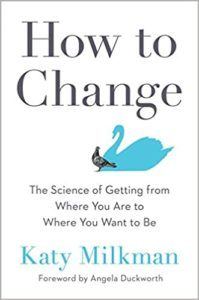
How many times have you abandoned your New Year’s Resolution or given up on a goal that seemed unattainable? Are you looking for sustainable ways to actually achieve your goals? Well, there may be some new tricks to try. In this episode, EconTalk host Russ Roberts speaks with Katy Milkman, a behavioral psychologist at the Wharton School at the University of Pennsylvania, about her book that suggests new ways to increase the probability of making successful, long-term changes in our lives. Milkman’s book, How to Change: The Science of Getting from Where You Are to Where You Want to Be, isn’t your typical self-help book. Instead of the guru style of traditional self-help books, Milkman takes a scientific approach to find strategies that actually help us reach the different types of goals that we have. From issues like going to the gym more, eating healthier, studying more, or saving more money, Milkman gives the audience advice on how to sustainably change certain aspects of our lives. Let’s hear what you think about the process of making change. Answer our questions in the prompts below, or use them to start a conversation with friends offline.     1- Milkman challenges Nike’s notion of “Just Do It.” Do you agree with her? Instead of this “pushing through” strategy, what are the other strategies that Milkman suggests? Have you used either of these strategies yourself? How successful were they?   2- To deal with the “willpower problem,” Milkman suggests that we come up with ways to incentivize ourselves to make certain decisions. What are some of the reasons that Milkman thinks these strategies will work? What do you think about Milkman’s “fresh start effect?” Have you ever used the fresh start effect to try to make changes to your life? Has it been successful? Roberts points out that our ability to achieve a goal is often independent of technique. What do you think he means by this? What does Milkman have to say in response to this?   3-Milkman discusses some of the issues with past psychology studies that are not able to be replicated. What are two of the studies that have been able to be replicated? What example does Roberts use to illustrate the longevity of this tactic being used by humans? Can you think of any other examples of this tactic?   4- Robert’s makes a suggestion on the plausibility of studies in science being incorrect but then being used as placebo effects. What does Milkman have to say about using placebo effects? Do you think her example of housekeeping is accurate?   5- Roberts makes an important point that while it is good to want to make changes to our lives for the better, there also seems to be an urge in our culture to find the life hacks and algorithms that will solve certain problem for us and that this could hinder us from considering the bigger question of how to live. Do you agree with Roberts? Milkman responds that it is important to consider whether our goals will actually benefit us. Do you think there are some goals that aren’t as important as others? Explain. (0 COMMENTS)

/ Learn More

Whalen and Henderson on the Assault on Wealth

These two articles, “The Assault on Wealth” and “Capital Gains Tax Hike: No Gains, No Fairness,” led my Hoover colleague Bill Whalen to interview me last Friday. The result is this 47-minute audio. Normally Bill will ask questions and I’ll answer. He did that, but this was more of a two-way conversation because Bill has his own thoughts on the issue. It was fun. By the way, Hoover has made my Assault on Wealth article into a mini-book. Some highlights follow. (Times are approximate.) 1:50: Bill Whalen quotes F. Scott Fitzgerald on the rich. 4:00: Me on how I think the focus on inequality started. Sylvia Nasar and Bill Clinton were key players. 4:30: Bill quotes Abigail Disney. 6:30: Me on Mr. Miser, Mr. Generosity, and Bob Solow’s growth model. 11:40: Wealth tax. 15:00: Back to F. Scott Fitzgerald. 15:30: Wealth tax. 17:30: My quite good guess about the number of millionaires in Congress. 18:40: How much wealth do you need to be wealthy? 20:00: My daughter’s question to me in 1999 after seeing her fellow students at Robert Louis Stevenson School in Pebble Beach and the cars they owned. (At the time, we had a 1990 Camry wagon and a 1992 Toyota Celica.) “Dad, are we poor?” 20:30: John D. Rockefeller’s life versus ours. 24:30: Biden’s proposal for a retroactive capital gains tax. 26:00: Why California Democrats should oppose Biden’s tax increase on capital gains. 27:15: The SALT limit and Bernie Sanders calling out his fellow Democrats. 29:30: Liz Warren. 30:30: What members of Congress know and don’t know. 31:08: In which I show how hip I am by connecting the conversation with one of my favorite Progressive Insurance ads. 32:20: The role of envy. 35:00: They earned it. William D. Nordhaus. 36:00: Wealth and race. 38:00: How one of my free-market proposals might both make it easier for people to buy houses and reduce the number of millionaires. 39:30: The flat tax and the VAT. 42:30: The effects of the SALT limit and the higher standard deduction. (I got a little muddled here, forgetting to point out that my analysis depended strongly not just on the SALT limit but also on the high standard deduction. Perhaps you can attribute that to the fact that I was up the night before from 11:30 p.m. to 4:00 a.m. with what looked like a medical emergency: everyone’s alright though.) 45:00: Assault vs. siege. (0 COMMENTS)

/ Learn More

Self-Help vs. Power-Hunger

I was recently on an NPR panel on “Capitalism” with a pair of self-identified socialists – Kristen Ghodsee and Vivek Chibber.  The hosts asked us a wide range of questions, including several of the form: “What would you say to a person with problem X?”  For example, they played a statement from someone who really disliked her job as a COVID nurse.  What should she do? Literalist that I am, I tried to offer helpful, relevant advice.  I started with the First Law of Wing-Walking: Keep your current job, but intensively search for a better position.  As I’ve explained before: Happily settle for your first tolerable job offer… but only temporarily.  Once you’re secure in your new position, at least keep your eyes open for a better opportunity.  Something’s bound to come along eventually – and when it does, you can bargain with confidence. Better yet, virtually any job yields valuable experience and career connections.  As a result, you have more than happenstance on your side.  Month after month, year after year, the odds tilt more and more in your favor – especially if you strive to impress your whole social network with your professionalism. Since the unhappy nurse disliked her irregular hours, I pointed out the wide range of nursing positions.  Some nurses have totally regular hours in a doctor’s office or school.  Others pull all-nighters at the ER.  Switching from one track to another takes time, but with determination and flexibility, any qualified nurse can probably pull it off in a matter of months. The socialist panelists, in contrast, bizarrely claimed that such efforts were hopeless, and told the nurse that left-wing political activism and/or unionization were the only viable remedies.  When I pointed out that such methods are notoriously ineffective (when they don’t lead to total disaster), they doubled down.  I pressed them further.  If a young family member asked for career advice, would they seriously tell them that self-help is futile and steer them toward collective action instead?  As far as I recall, my counterparts refused to engage this challenge. Late in the interview, one of the hosts asked something like, “Is belief in the efficacy of self-help the fundamental difference between you?”  The socialists quickly affirmed that it was.  I probably just said, “It is one important difference.”  After the recording session ended, however, this issue stayed in my mind.  Any individual obviously has the power to unilaterally mess up their own lives.  Just become a violent drunk on the job for a day and watch your career die.  How then can you imagine that the opposite path of self-improvement is a waste of time? After a few days, however, the tension between socialism and self-help became clear. Suppose you’re very power-hungry.  Do you want people to think they’re able to fix their own problems?  Of course not.  If individuals can help themselves by doing a good job, learning new skills, making friends, and keeping their eyes peeled, what do they need you for?  In contrast, if people believe that collective action is the path forward, the collectivity will clearly need leaders.  And who will fill these leadership positions?  The socialist activists, naturally. Yes, this is a lurid picture: Power-hungry pundits push the absurd position that collective action is more likely to succeed than self-help – and then get to rule whatever collectivity they manage to inspire.  How many socialists consciously embrace this master plan?  Since I lack telepathy, I honestly don’t know.  Still, the frequency with which bleeding-heart socialists become bloodthirsty tyrants reassures me that I’m not paranoid. (1 COMMENTS)

/ Learn More

Zachary D. Carter’s Hatchet Job on Milton Friedman

The new consensus on Friedman’s work among economists has essentially reversed Summers’s verdict from 2006. “Almost nothing remains of his intellectual legacy,” according to Columbia University economist Jeffrey Sachs. “It has proven to be a disastrous misdirection for the world’s economies.” This is from Zachary D. Carter, “The End of Friedmanomics,” The New Republic, June 17, 2021. The  article makes a case against Friedman’s contributions and his character. This won’t be a comprehensive treatment of Carter’s case, but I do want to point out some major errors and a major misunderstanding of Friedman–who he was and how his mind worked. Carter writes: When he at last won his Ph.D. from Columbia in 1946, Friedman shipped out to Chicago to join a fringe right-wing intellectual movement calling itself “neoliberalism.” Despite their chosen moniker, the neoliberals loathed the politics of the New Deal, seeking instead to revive the most conservative strands of Enlightenment-era economic thought, so-called classical liberalism, for the twenty-first century. Twice in that paragraph Carter claims that the people at Chicago called themselves neoliberals. I’m guessing that I’ve read way more of Frank Knight, way more of Milton Friedman, and more of Henry Simons than Carter has and I don’t recall any of them ever claiming that they were neoliberals. What I do recall is Friedman and others frequently identifying themselves as “classical liberals.” Carter doesn’t do nuance. So, for example, when he wants to point out how Friedman thought a free market would deal with racism and discrimination, he writes: Friedman wrote: “The man who objects to buying from or working alongside a Negro, for example, thereby limits his range of choice. He will generally have to pay a higher price for what he buys or receive a lower return for his work. Or, put the other way, those of us who regard color of skin or religion as irrelevant can buy some things more cheaply as a result.” The relentless logic of the market would drive such inefficiency from public life. Notice that Carter’s summing up Friedman’s thinking in the last sentence of the above gets it wrong. Friedman was not so naive as to believe that the free market would drive out racist discrimination. What he maintained, Gary Becker maintained, and many economists maintain is that the free market would make those who acted on their racist beliefs pay a price and that this price would limit, but not eliminate, racism. I got the sense that Carter is not very familiar with economic thinking, whether of Friedman or of economists in general. This came across in the following passage: But it was a 1946 pamphlet on housing policy co-written with fellow Chicagoan George Stigler that transformed Friedman from an obscure ex-bureaucrat into an academic sensation. Titled “Roofs or Ceilings? The Current Housing Problem,” Friedman and Stigler’s paper argued that California’s rent regulations ultimately ended up raising the price of housing, hurting the very low-income people politicians sought to help. The argument was simple: By artificially depressing the price of housing, regulators deprived potential homebuilders of an incentive—higher profits—to build more homes, which would in time bring down housing costs. The blunt unsophistication of the pamphlet was an intellectual call to arms. Friedman and Stigler weren’t really writing about housing at all—they were writing about economics itself, calling for a return to the simple nineteenth-century analyses that Friedman would later credit for producing the “free market” and “the greatest expansion of human freedom the world had ever seen.” The reaction was furious. Writing in The Washington Post, economist Robert Bangs decried the “drivel” in Friedman’s “insidious little pamphlet,” and denounced him for publishing it through a “propaganda front for reactionary interests” (which was true—“Roofs or Ceilings?” was released by the Foundation for Economic Education, one of a handful of specialty right-wing organizations that sprang up in the postwar world aiming to unwind the New Deal). Ignore his implicit claim that the comment of one economist named Robert Bangs is a sufficient statistic for knowing that “The reaction was furious.” (If he wants “furious,” he should have seen Ayn Rand’s reaction.) The two key things to focus on are his claim that the pamphlet was unsophisticated and that it “wasn’t about housing at all.” His claim about lack of sophistication caused me to reread the article/pamphlet. I recommend that you do too. You can download it here. It turns out to be quite sophisticated. I think Carter conflates clear writing with lack of sophistication. And in rereading it after all these years, I concluded that it really is about housing. If Carter meant to say that once one accepts their reasoning, one can easily conclude that absence of price controls more generally is a good idea, then he would be right. But Carter doesn’t make clear whether he means that or something else. It’s also interesting that Carter would highlight this article. If you ask an economist who doesn’t live in a rent-controlled apartment whether he favors rent controls, the probability that he will say no and that he will make arguments very similar to those of Friedman and Stigler exceeds 0.9. That’s why I say that I’m not sure Carter understands how economists think. He certainly doesn’t understand how Friedman thought. In discussing Friedman’s contributions to macroeconomics and monetary economics, Carter writes: Constructing a 93-year account of fluctuations in the money supply is a curious endeavor to assume for its own sake. But of course Friedman had an intellectual motivation, which he detailed in a famous 1967 speech before the American Economic Association: He hoped to dethrone the ghost of John Maynard Keynes. Maybe, but unlikely. Friedman really did pursue truth and the facts wherever they led. In my review of his and Rose Friedman’s autobiography, Two Lucky People, I wrote: Even more strikingly, Milton doesn’t talk much about how his views evolved during graduate school or after he completed his Ph.D. Yet evolve they did. Most notably, his views on the causes of inflation changed dramatically. The Milton Friedman that most of us know about is the one who said, in a famous 1968 debate with Keynesian economist Walter Heller, “the state of the budget by itself has no significant effect on…inflation” and who wrote in 1963, “Inflation is always and everywhere a monetary phenomenon.” By contrast, here’s what Friedman says about testimony he gave as a Treasury economist in 1942: “The most striking feature of this [testimony] is how thoroughly Keynesian it is. I did not even mention `money’ or `monetary policy’! The only `methods of avoiding inflation’ I mentioned in addition to taxation were `price control and rationing, control of consumers’ credit, reduction in governmental spending, and war bond campaigns.'” What happened between 1942 and the early 1950s that changed Friedman’s mind? Maybe the explanation is simply that he gathered data that persuaded him of the power of monetary policy. But in most intellectual autobiographies I have read, there’s one event, piece of evidence, story, conversation, or argument that starts the process of change. Friedman mentions no such epiphany. A few months after that review appeared in Reason, I ran into Milton at a Hoover dinner. After the quick niceties, he said, “I know that that disappointed you, but my change in views was so gradual that I can’t point to anything like a ‘Saul on the road to Damascus’ epiphany. Sorry.” What can I say? I believe him. Which means I can’t believe Carter. In Carter’s view, Friedman is a schemer who has a political goal and does his intellectual work to achieve that goal. I think the opposite is closer to the truth. Friedman pursued knowledge and that knowledge led him to political goals that differed a lot from those he started with. Elsewhere in his long piece, Carter errs badly in seeing Friedman’s advocacy of school vouchers as a way of responding to the Supreme Court’s finding in Brown v. Board of Education. Historian Phil Magness of the American Institute of Economic Research has unearthed a letter by Friedman that completely undercuts Carter’s claim and has sent a request for a correction to the editor(s) of The New Republic. But I don’t want to steal Phil’s thunder and I don’t have permission to quote it here. Now back to Carter’s quote from economist Jeffrey Sachs, with which I opened in this post. I have no reason to think that Carter misquoted Sachs and so I can’t say that he erred. What I do know is that Sachs erred badly. Co-blogger Scott Sumner has done some very nice blog posts recently (here and here) showing just how intact Friedman’s contributions to macro and monetary theory have been. Note: The picture at the top is of Icelandic economist Hannes Gissurarson, Milton Friedman, and me sometime in the 1990s.     (0 COMMENTS)

/ Learn More

Knowledge, Reality, and Value Book Club, Part 3

The Knowledge, Reality, and Value Book Club continues.  Today, we go over Part 3: Metaphysics.  Huemer’s in blockquotes, I’m not.  Once again, I’m focusing on my disagreements to keep the discussion lively. 1. The Argument from Design. Back in the 19th century, I guess a lot of people had mechanical pocket watches, and if you looked inside, you could see a complicated, very precise mechanism working. Even if you’d never seen a watch before, you would immediately know that this thing had to have been designed by someone. It’s too intricately ordered to have just happened. Unless I missed it, Huemer never clearly articulates the fundamental objection to the Argument from Design.  Namely: The reason why we infer a watch-maker from a watch is not that the watch is “intricately ordered,” but that we have independent reason to believe that watches are not naturally occurring. Consider this rock formation: Now compare it to this rock carving: The former is far more “intricately ordered” than the latter.  But the latter shows design, and the former does not.  Why?  Because we have independent knowledge that only intelligent beings create rocks with little hearts on them.  The upshot is that the Argument from Design literally “begs the question.”  It assumes that the universe couldn’t be naturally occurring, which is precisely the point under dispute. I’m not going to say much about this instance of the Argument from Design, though, because it has not aged well. Paley wrote before the Theory of Evolution was developed (Darwin published On the Origin of Species in 1859), so in Paley’s time, there really was no good explanation for life that anyone had thought of, other than “God did it.” Paley was correct to think it implausible that life just appeared by chance. But would it not be even more implausible to think that God just appeared by chance?  If so, how would the existence of life have been a good argument for the existence of God, even in Paley’s pre-Darwinian time? 2. The “fine tuning” argument for the existence of God: So, given that almost all ways of assigning values to the universe’s parameters would be unfriendly to life, why does the universe in fact have life-friendly parameters? The theist says: Because an intelligent, benevolent, and immensely powerful being set the parameters of the universe that way, in order to make life possible. I say this is an obviously terrible argument, and I don’t say such things lightly.  Why?  Because we have zero evidence that the anyone can “set the parameters of the universe”!  If you went into a music studio, full of knobs and dials, it makes sense to say, “I doubt these knobs and dials just happened to be in the right position to record punk rock.”  The reasonable inference is that someone who wanted to make punk rock set them to do so.  But that’s only because there are a bunch of knobs and dials amenable to adjustment!  If a newly-discovered cave had great acoustics for punk, in contrast, it would be crazy to think anyone “adjusted the cave’s settings” for this purpose. When responding to “Weak Objection #4,” Huemer presents the following hypothetical: Made by God: While exploring the surface of Mars, astronauts discover a new kind of crystal. When they look at it under a microscope, they find that the molecules of this crystal spontaneously arrange themselves into patterns that look exactly like the English words, “Made by God” in Times New Roman font. Everyone who looks in the microscope sees it. Scientists are able to figure out that this is actually a complicated, hitherto-unnoticed consequence of some very specific features of the laws of nature, features that no one has any explanation for. Over the next few decades, many more crystals are discovered, scattered across all the planets of the solar system, which, when looked at under microscopes, look like the phrase “Made by God” spelled out in each of the languages of Earth. Again, the laws of nature just happen to be arranged to ensure that this happens. I’d say this is excellent evidence for intelligent English-speaking life on Mars, but zero evidence for God’s existence.  After all, everything on Earth labelled “made by God” is made by garden-variety intelligent English-speaking life, so why shouldn’t we make a parallel inference on Mars? Am I misreading the point of this hypothetical?  Seemingly not, because shortly thereafter, Huemer writes: “If your opposition to theism is so extreme that your position wouldn’t even admit that there was evidence for theism in the ‘Made by God’ story, then I think you need to step back and take a break.”  I have stepped back, taken a break, and I still think the hypothetical fails. 3. Next, Huemer turns to the Anthropic Principle’s response to the fine tuning argument.  And I have to say, the Anthropic response seems completely satisfactory to me.  So what’s wrong with it, according to Huemer?  He presents this hypothetical: Firing Squad: You’ve been convicted of treason (a result of one too many intemperate tweets about the President) and are scheduled to be executed by firing squad. When the time of your execution arrives, you stand there blindfolded, listening to the fifty sharpshooters lift their rifles, fire, and then . . . Somehow you find yourself unscathed. All fifty shooters have apparently somehow missed. Wondering how this could have happened, you start entertaining hypotheses such as: Maybe someone paid all the soldiers to deliberately miss, maybe someone broke into the armory last night and loaded all the guns with blanks, etc. My reply: Entertaining such hypotheses only makes sense because we have independent reason to believe that people normally don’t survive fifty-man firing squads.  In contrast, it’s not weird for humans to exist on planet hospitable to human life.  And if you ask, “How did this happen?,” saying, “If the universe were very different, we wouldn’t be here too ask such questions” is illuminating. In any case, if you take fine tuning seriously, why can’t you just ask, “How did we happen to be in a universe where a divine being fine-tunes the laws of nature to allow our survival?”  Are you going to say, “A super-divine being flipped the ‘divine fine-turning’ switch to ‘on'”?  In other words, you can think of the presence of a pro-human divine being as another “parameter” of the universe, and say, “This is even more puzzling than I realized.  How did the divine being happen to be so pro-human?”  Yes, you could invoke the Anthropic Principle here too, but then why not cut out the divine being entirely? 4. “The Burden of Proof”: I should note, though, that it’s not always clear exactly what the “burden of proof” people are saying – they’re usually not as explicit as I was above, probably because they themselves are not sure what they believe. (That happens a lot in philosophy.) So people will often make remarks that are ambiguous between (a) and (b) below: (a) In the absence of evidence, you should believe x does not exist. (b) In the absence of evidence, you should refrain from believing that x exists. Notice that (b) is obvious, while (a) is a lot more puzzling and less obvious. I’m going to address (a). I agree that (a) is a little puzzling, but it’s sound under straightforward conditions.  Namely: If X has a low prior probability of existing, and there’s no evidence of X’s existence, we should conclude that X has a very low posterior probability of existing.  What gives X “a low prior probability of existing”?  Many things, including (a) being very specific (e.g. X=”a guy with a feathered hat named Josephus who likes pickle-flavored ice cream and has exactly 19 hairs on his head”), and (b) being fantastical (e.g. X=Superman).  The Christian God is both (a) and (b).  A generic God is (b).  Yes, some things in categories (a) and (b) do exist, but if someone asserts their existence without evidence, we should severely doubt their existence.  (Especially if the asserter has a poor epistemic track record already). 5. Free Will and Predictability Huemer persuasively debunks the “compatibilist” view that free will and determinism can both be true.  But as far as I can tell, he never debunks one of the most popular arguments for determinism.  Namely: Human behavior is often highly predictable.  As a social scientist, I hear such arguments fairly often. My position, which I warrant Huemer would also accept: Libertarian free will and behavioral predictability are totally compatible. Why?  Because libertarian free will is about what you can do, and predictability is about what you do do.  I know via introspection, for example, that I can stop watching television.  But it remains highly predictable that I will keep watching.  Flipping things around, you can often use my genes and environment to make excellent predictions about my behavior.  E.g., Per evolutionary psychology and social norms, I’m going to continue taking care of my kids.  Still, this doesn’t show that I can’t do otherwise, only that I won’t. In Bayesian terms, admittedly, the best way to show that you can do X is to actually do X.  P(I can do X|I do X)=1, whereas P(I can do X|I don’t do X)

/ Learn More