This is my archive

bar

Marginal Costs Should Include All Relevant Margins

Last week, I took my remote key to my 2015 Toyota Camry to the Toyota dealership. I wanted a new battery. I’d done it before. They had installed it for me (I’m not good with such things) and the overall charge with tax was about $11 or $12. The remote with the old battery was hit and miss–not working at the start of the day and then working through most of the day. I wanted it to work all the time. After the Toyota guy installed the battery, I went out to the car and tried it. It didn’t work even though it had been working before we replaced it. So he tried another new battery. Same result. He suggested that I set up an appointment to get the key fixed. I said that probably wasn’t the problem because it had just worked a few minutes earlier. I told him that I wanted him to fish the old battery out of his trash, replace the new with the old, and give me a refund. He did. A friend suggested that I go to a good hardware store. Saturday morning I went to my local Ace Hardware store. (First time I haven’t worn a mask in that building in over a year: it was glorious.) The guy said he had the battery and I asked him if he could install it. He said he could as long as I released him from liability for breaking it. Since I figured he would be less likely to break it than I was, that was an easy choice. I had a further choice: pay about $4.50 for a new battery or about $8 for 2 batteries. It wasn’t a hard choice: I told him that since my experience was that a battery lasted about 3 years, by the time I needed to replace this one, I would have misplaced the second one. So I took one battery. He took apart my key, took out the old battery, and replaced it. I ran out to the parking lot and clicked the key, and voila, it worked. Delighted, I came in to pay for the battery. Although the guy had on his mask, I think he was smiling with delight that it worked. I realized, though, another reason not to have bought the second battery. Let’s say I had and that 3 years later, I needed to replace the current one with the 2nd one. As I said, I’m not good at that, and so what would I have done: gone back to the hardware store, shown them the receipt, and asked them to install the new battery for free? That might work, but it might not. I would be taxing their good will. But if instead I buy a new battery 3 years from now and ask them to install it, the odds are very high that they will. So the marginal cost of the battery being replaced next time will be about $4.50 plus whatever amount the price rises by. By contrast, if I had taken the second battery, the marginal cost looking forward at the time of purchase would be $3.50 plus the cost of finding it 3 years from now plus the cost of taxing the hardware store’s good will. It was this third factor that I didn’t think of and that, when I thought of it, made my decision to buy just 1 battery look even better. (0 COMMENTS)


/ Learn More

Anja Shortland on Lost Art

Economist and author Anja Shortland of King’s College London talks about her new book, Lost Art, with EconTalk host Russ Roberts. When a famous painting disappears into the underworld of stolen art, how does it make its way back into the legitimate world of auction houses and museums? Drawing on the archives of a private database of stolen objects–the Art Loss Register–Shortland discusses the economics of the art world when objects up for sale may be the result of theft. (0 COMMENTS)

/ Learn More

Anja Shortland on Lost Art

Economist and author Anja Shortland of King’s College London talks about her new book, Lost Art, with EconTalk host Russ Roberts. When a famous painting disappears into the underworld of stolen art, how does it make its way back into the legitimate world of auction houses and museums? Drawing on the archives of a private […] The post Anja Shortland on Lost Art appeared first on Econlib.

/ Learn More

Political Harassment From Your Suppliers

One reason why nominally private corporations become politicized must be to please the most insistent mobs as well as “the regulator”—that is, the feared governments that follow or inflame the same mobs. Otherwise, nearly every supplier’s incentive would be to serve all its customers equally and independently of their politics (except perhaps for small businesses serving very limited market segments). The happy situation is when your oil delivery man and your software manufacturer are blind to your physical and political colors and only want your money. In an article on “The Problems with Politicizing Corporations”  in the just-published summer issue of Regulation, I mention some consequences of the current politicization of businesses. I quote a Wall Street Journal opinion piece by Dave Seminara, a former ambassador (“What I Wouldn’t Give for a Shave That Isn’t Woke,” April 4, 2021): When I look around my house, I see many products from woke companies that want me to know how strongly they disagree with me on pretty much every issue of the day. … It doesn’t seem like too much to ask that the businesses I patronize refrain from actively and loudly despising me. Another example: By refusing to accept gunshops as customers, PayPal prevents all its individual customers from using its system to pay for guns or ammunition. I note: PayPal certainly has—and should have—the right to prevent its customers from using their accounts to purchase guns or ammunition, a right protected (against government) by the Second Amendment of the Constitution. I would also defend the company’s right to discriminate against its customers who exercise their First Amendment rights. But I would recommend that PayPal’s executives read [Samuel] Brittan’s book as well as Milton Friedman’s 1962 Capitalism and Freedom to appreciate the importance of separating politics from the market. It’s urgent. I further observe: This politicization of business contributes to alienating a sizeable part of the American public from “the community.” This discrimination is not a recipe for social peace nor, of course, for liberty.   Microsoft’s Propaganda: A Windows-10 Locked Screen picture As I was reflecting on the present post and unlocking my computer, the Windows-10  Lock Screen Background that appeared (and is reproduced as the featured image of the post) showed luxuriant vegetation with the words: Once known for its heavy industry, this place is now an example of how a city can… I clicked the message and the rest appeared: Get clean and green Most Microsoft customers may like anything that is “clean and green.” If Microsoft had operated in the environment of my Catholic childhood, most of its customers would have preferred something “clean and pure.” In the former South, its customers would have preferred it “clean and white.” But whatever is Microsoft’s opinion (the opinion of its executives or even some of its shareholders), why does it feel allowed to propagandize it on its customers’ computer screens? What if I preferred that city when, instead of being “clean and green,” it welcomed the paper mill that manufactured inexpensive paper for poor school children? Cleanness and greenness are not the only things in life. In this case, of course, despite my annoyance, the solution was simple: go to Settings – Lock Screen. I simply canceled (à la woke) this Windows feature and replaced it with an image of my own; for now, it is the Chisholm trail in Kansas with the ruts of the great cattle drives (for a detour by the Chisholm trail, see my “Cowboys and Entrepreneurs in the Cattle Kingdom,” Regulation 38:4 [Winter 2015-2016] pp. 67-71). But the constant political propaganda our suppliers is often worse than that, generally naïve, and always inappropriate. And yes, my piece also talks (rapidly) about Facebook’s “community standards” and Twitter’s equivalent. Ruts of the Chisholm Trail. Personal photograph. (0 COMMENTS)

/ Learn More

Two Hopeful Signs

There are currently more than 1,400 direct primary care practices operating in 49 states. Among them are doctors Lee Gross and William Crouch at Epiphany Health Direct Primary Care in North Port, Florida. They charge just $75 a month for an adult, $30 per month for one child, and $15 a month for each additional child. After that, nothing more is owed for services provided in the office—no health insurance necessary. In January, Reason‘s John Osterhoudt visited Epiphany and spoke with Gross about what free market health care should, and can, look like. This is from John Osterhoudt, “What Free Market Health Care Would Actually Look Like,” Reason, July 2021. This particularly interests me because my primary care doctor announced last month that he’s retiring in September. When I started with him 6 years ago, I asked him if he would guarantee to stay in business for at least 5 years. He kept his word. I didn’t realize it until he became my doctor, but he’s the first really good primary care doctor I’ve ever had. His practice has 3 people: him, his nurse (who’s also his wife), and his office assistant. It’s fee for service and he’s not in my health insurer’s network, but the extra charge for me is only about $30 per visit. And he listens and takes time. So I’m looking around for another doctor and this article in Reason caught me eye. Another excerpt that answers something I was wondering about: What can you do in the office? Can you give me a range of what is included in that $75-a-month fee? Once a patient is a member of our practice, anything that we can do within the four walls of our office is included at no additional charge. That would include things like electrocardiograms (EKGs); 24-hour heart monitors or Holter monitors; minor procedures like taking off a small skin cancer. I can do biopsies and joint injections, we can remove moles and sew up lacerations. I can splint uncomplicated fractures. Most tests that we do within our office, like a strep test, urine test, or pregnancy test, those are all things that we do at no additional charge. And something else I was wondering about when I see the charges for blood work before the insurer knocks them down: For example, the very first patient that I enrolled in our direct primary care practice, they went to see their rheumatologist, and the rheumatologist gave them a lab order. The lab quoted them $1,800 for the blood work. The patient got on the phone and said, “Wait a second, I can’t afford this. I thought I was supposed to get some sort of discount by being a member of your direct primary care practice?” We said, “Well that order has to come through us, and you have to pay us for it, because we buy labs wholesale.” That patient was able to get the same exact labs at the same exact facility for $85. So with the savings on a single lab test, that patient paid for [months and months] of membership in our program. And, completely unrelated, another hopeful sign: 35 years ago, it was illegal in 16 states (including Texas) for a civilian to carry a concealed weapon. Only Vermont did not require a pistol permit. Working through the slow process of going state to state to change the law, the revolution happened. First came the switch from no permit to may permit. That placed the decision on issuing permits in the hands of elected sheriffs, which explains why California and New York have not budged. Democrat sheriffs pocket a lot of money from patrons who want to carry. Then came shall permit. This put the onus on law enforcement to show why a person should not carry a concealed weapon. Finally, came freedom. 19 states no longer require the state’s permission to carry a concealed weapon. Texas and many other states went from red (a ban on concealed carry) to yellow (may issue) to blue (shall issue) to green (no permission necessary). It is the Vermontization of America. The Green Mountain Boys always put the right to firearms off limits to regulation. Interesting state. For 14 years, it was a republic — longer than Texas and other states that were republics for a time. This is from Don Surber, “The gun revolution,” June 18, 2021. About 15 years ago, some students at Hillsdale College invited me to give a talk there. I did. I think my talk had more than a touch of “ain’t it awful?” as I listed the various relatively new restrictions on freedom in America: the USA Patriot Act, the requirement of government permission before you get on a commercial aircraft, and a few other things. In Q&A, a student asked me if I could think of any area in which freedom had increased in the last decade or so. Always wanting to be the glass half-full person, I thought hard and told him that I couldn’t. But my friend Harry Watson was in the audience and he piped up with a major one: the increasing freedom in many states to carry a gun. (0 COMMENTS)

/ Learn More

Inflation is a nominal phenomenon

In my previous post, I discussed how Milton Friedman was right about 4 key issues during the 1960s and 1970s. He argued that interest rates are not a good indicator of the stance of monetary policy. He argued that the long run Phillips Curve was vertical, which means no long run tradeoff between inflation and unemployment. He argued that fiscal policy was not an effective way to control inflation. And he suggested that wage/price controls would not work. But why was he able to see what other top economists failed to see? What do these four cases have in common? Perhaps conventional economists were putting too little emphasis on the distinction between real and nominal variables. Friedman saw that persistent inflation is a nominal problem, and it has nominal causes. Edward Nelson (vol. 2, pp. 155-56) quotes Friedman in 1977, looking back on his 1967 Presidential address: The essence of my argument in that paper was that the monetary authorities had a monetary instrument with which they could ultimately control only monetary variables, such as the price level and nominal income; that it is not possible to use monetary instruments to achieve a real target, whether that real target be the real interest rate or real output or unemployment rate. When analyzing inflation, Keynesians were explicitly or implicitly focused on 4 real variables: 1. real interest rates 2. unemployment 3. the velocity of money 4. price mark-ups (in percentage terms) 1. In the 1960s, Keynesian wrongly assumed that rising nominal interest rates represented rising real interest rates, and hence “tight money”. There are actually two problems here. The obvious problem is that nominal interest rates might be rising due to inflation (the Fisher effect.) The less obvious problem is that although tight money often does temporarily increase real interest rates, it is not true that rising real interest rates imply tight money. Real interest rates move around for many different reasons. And finally, for any given money supply, higher nominal interest rates are actually inflationary, as they boost velocity. 2. Keynesian wrongly assumed a long run tradeoff between inflation and unemployment. While it is true that a tight monetary policy raises unemployment in the short run, it is not true that rising unemployment implies tight money, or lower inflation (as we saw in the 1970s.) For any given level of nominal GDP (M*V), a booming economy is actually deflationary. Low unemployment can co-exist with low inflation, as we saw in 2019. High unemployment can co-exist with high inflation, as we saw in 1981. 3. Keynesians typically don’t talk about velocity. But the claim that fiscal policy can control inflation is implicitly a claim that fiscal austerity reduces velocity. Nominal spending is M*V, so if you don’t plan to control the money supply, the only (demand-side) way to reduce inflation is by reducing velocity. Friedman didn’t think fiscal policy had much effect on velocity, and even if it did, it would at most be a modest one-time effect. If the Fed boosts the growth rate of the money supply from 5%/year to 10%/year (at a time of positive interest rates), you are almost certainly going to eventually end up with higher inflation. Even if a tax increase reduces the velocity of circulation by 2% in a single year, it will have almost no impact on longer run inflation, which is driven by rapid money growth. Here’s very important distinction. If you boost money growth from 5% to 10%/year, if will cause inflation to be roughly 5% higher as long as the rapid money growth continues. Fiscal policy is not like that. Even if you permanently switch to a more expansionary fiscal policy, it will only cause a one-time increase in velocity. Monetary policy works by influencing a nominal variable (M), while fiscal policy works by influencing a real variable (V). It’s really hard to cause persistent inflation by influencing real variables like velocity.  In contrast, it’s easy to increase the money supply growth rate as much as you like. 4. The same argument applies to price controls. Let’s say that firms have some monopoly power and that price controls are able to reduce price mark-ups by 2%. That merely produces a one-time 2% fall in the price level, relative to where it would otherwise have been. Go much further with price controls and you end up with severe shortages. But if the Fed is simultaneously boosting money growth from 5%/year to 10%/year, the disinflation effects of the price controls will be overwhelmed by the effects of faster money growth.  That’s the story of the 1970s. To summarize, Keynesians were treating inflation like it was a microeconomic problem, which could be addressed by influencing real variables. It’s true that if you want to lower the relative price of a single good in the economy, you need policies that impact real variables. But inflation is a nominal phenomenon, and it requires nominal solutions. You need to reduce the growth rate of the nominal money supply. In some respects the Keynesian mistake was understandable. Between 1879 and 1968, the price of gold was fixed, except during 1933-34 when it rose from $20.67/oz. to $35/oz. During much of that long period, people tended to think in terms of high and low price levels, not high or low rates of persistent inflation. In a world where price levels bounce up and down and inflation is not persistent, the four Keynesian fallacies discussed above are much less of a problem. Real and nominal interest rates are similar, the Phillips Curve is more stable, tax increases can slightly reduce the price level during a period of high prices, and price controls can have a modest effect during a temporary price level surge. But if the inflation rate rises from 2% to 8%/year, and the high inflation persists for a long period, then real theories of inflation become almost worthless. It’s a monetarist world, and Milton Friedman was the master of that world. PS.  Some of these arguments are less applicable to a world of zero interest rates.  But Friedman was winning his arguments with the Keynesians at a time when nominal interest rates were far above zero. (0 COMMENTS)

/ Learn More

The Origin of SARS-Cov-2

SARS-CoV-2 has a very unusual feature: it is surprisingly good at infecting a particular type of cell that has what is known as an angiotensin-converting enzyme 2 receptor. Some other animals have ACE2 receptors, but SARS-CoV-2 works much better in human or human-like ACE2 receptors. The significance of this cannot be overemphasized. SARS-CoV-2 needs four things to happen to infect a human. It must enter the body and it must attach to certain cells. It must be cleaved at precisely the correct spot by the victim’s cells. The remaining genetic piece must then enter and infect the cell. Every one of these four steps has a low probability of occurring by chance. The probability of all four of these unlikely events developing randomly through mutations is, therefore, very low. Could SARS-CoV-2 have acquired its clever attributes from another coronavirus of the same family? Are there coronaviruses that exploit human-like ACE2 receptors? For this, we need to discuss the furin cleavage site, which is where the ACE2 receptor precisely cuts SARS-CoV-2, as described in step 3 above. This is from Charles L. Hooper and David R. Henderson, “The Origin of SARS-CoV-2,” AIER, June 18, 2021. Another excerpt: Location, Location, Location If camels infected humans in the Middle East, we wouldn’t expect to see the first cluster of cases in, say, Honolulu. Early cases typically happen where the virus first became contagious. And even if people travel, they are likely to become sick or infect others en route, leaving a trail of evidence. There are nine Metro lines and 40 hospitals in Wuhan and yet all the patients treated for Covid-19 between 1 December 2019 and early January 2020 were cared for in hospitals close to the Metro Line 2 commuter line, connecting Wuhan and WIV. That’s highly unlikely by random chance alone. Charley did all the research for this and almost all the writing. I edited it but he very generously gave me co-authorship. Read the whole thing. (0 COMMENTS)

/ Learn More

Defending Populism?

The Spring issue of Regulation contains my review of an interesting book by historian Donald Critchlow, In Defense of Populism. In his view, the different waves of left-wing and right-wing populism in America were useful social movements. A few short excerpts from my review: [Critchlow] argues that these “social movements” are necessary for “democratic renewal” by translating popular discontent into government actions. Populism is necessary for democracy but, he notes, democratic change has paradoxically generated “an enlarged bureaucratic government that is further removed from the people.” … Critchlow’s story starts with the populism of the last two decades of the 19th century, culminating in the founding of the People’s Party (also called the Populist Party). At the federal level, populist ideas included an income tax, antitrust legislation, more regulation of banks, expansion of the money supply, protection of workers and consumers, and federal aid to farmers. State-level populism often called for even more government intervention. … Dominated by religion and anticommunism, the first phase [of the conservative populist reaction after World War II] was often proto-Trumpian in its simplistic understanding of the world. Critchlow gives many examples. Carl McIntire, a Presbyterian minister and popular religious radio broadcaster, believed that Catholicism was more dangerous than communism. Originally a supporter of Barry Goldwater, who was more a libertarian than a conservative, McIntire later became, more logically, a follower of segregationist George Wallace. Billy Hargis, another radio preacher, thought that “it is ignorant people who are going to save this country.” His associate, David Noebel, believed that the Beatles were part of a Soviet conspiracy to brainwash American youth with hypnotic techniques. Robert Welsh, founder of the John Birch Society, thought that Eisenhower was a Soviet agent and Sputnik was a hoax. Later, the Birchers shifted to attacking the New World Order as a Masonic conspiracy. All that without the help of today’s social networks—not a mean feat! Critchlow includes Ronald Reagan in this [post-war, religious and anti-communist] phase of the right-wing populist movement, which is debatable, as is his claim that Trump amplified Reagan’s message. Although Reagan turned out to be more conservative than libertarian, he was not (let the truth be told) an ignorant buffoon. I comment: Each succeeding populism thus adds its own bricks to the construction of the totalitarian state. But there is more in Critchlow’s book. Part of my conclusion: These failings should not distract us from In Defense of Populism as a good book of American history. It is scholarly and as objective as such books can be. (1 COMMENTS)

/ Learn More

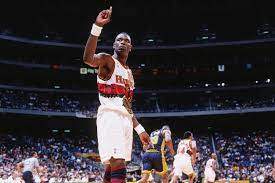
How Dikembe Mutombo’s Career Illustrates the Case for Free Trade

Finally, when Dikembe Mutombo came to Georgetown University in 1987, what was his career plan? Answer: to become a doctor and return to the Congo and help his people, who badly needed doctors. But then Georgetown Hoyas basketball coach John Thompson recruited Mutombo to play basketball. He excelled at the game and had a lucrative eighteen-year career in the NBA, playing for the Denver Nuggets, the Atlanta Hawks, and the Houston Rockets for fifteen of those years. But Mutombo didn’t forget his original goal. He donated $3.5 million of his earnings toward building a hospital in the Congolese capital of Kinshasa. If he had stuck with his plan to become a doctor, he would have been only one doctor in the Congo. Instead, by specializing in basketball, he earned enough to pay multiple doctors in the Congo. This is from David R. Henderson, “A Refresher Course on Free Trade,” Defining Ideas, June 17, 2021. Another excerpt: If free trade is such a good policy, why do so many non-economists think it’s controversial? Part of the answer lies in the asymmetry between producers and consumers. Consider the case of sugar. We in America pay approximately double the world price of sugar because the US government sets tight quotas on sugar imports. That, incidentally, is why Coca-Cola is produced with corn syrup in the United States but with sucrose (sugar) in Canada and Mexico. Over 300 million of us pay a little more annually for higher-price sugar but the few major sugar producers in the United States make tens of millions to hundreds of millions more in revenue, and their employees make a few thousand dollars more in annual income than they would make in their next best use. The overall loss to consumers calculated by Washington State University economics professor William S. Hallagan a few years ago was $2.25 billion annually. The offsetting gain to domestic sugar producers was $0.85 billion and the gain to the lucky importers who got to buy the sugar at the world price and then sell it at the higher US price was $0.30 billion. The loss to consumers outweighs the gain to producers and importers but the average consumer’s loss is only about $10 per year, while the average producer’s gain is large. This gives producers a large incentive to be involved in the setting of sugar quotas, while the average consumer pays virtually zero attention. That’s why it’s true that even though the intellectual case for free trade is largely settled, those interest groups that want to limit trade are creating most of the buzz. That buzz occasionally misleads even some scholars who study trade and generally understand it. Zack Beauchamp of Vox recently quoted the following comment on Biden’s trade policy by Tufts University scholar Dan Drezner: “It’s totally America First.” No, it’s not. It’s American producers first; consumers don’t seem to count. Are US consumers not Americans? To ask the question is to answer it. Of course they are. If Trump truly favored or Biden favors an “America first” policy on trade, both would be strong advocates of free trade because with rare exceptions, the consumer losses from restrictions on trade exceed the gains to producers. By the way, even my point above about the Biden/Trump trade policy being “producer first” is overstated. Trump imposed, and Biden has kept, some protectionist measures on items that are inputs into production. Those measures hurt some U.S. producers. Read the whole thing. (0 COMMENTS)

/ Learn More

Free Parking

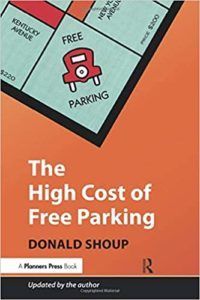
What if where you park, and how much you do or don’t pay for it, could benefit your community it multiple ways? How can cities and communities create a sustainable way of dealing with the supply and demand of free parking or metered parking? In this episode, EconTalk host Russ Roberts sits down with Donald Shoup, Distinguished Research Professor in the Department Urban Planning at UCLA, to discuss the unintended consequences of free curb parking and parking requirements. In his book, The High Cost of Free Parking, Shoup  urges cities to charge for curbside parking and use the proceeds to improve the neighborhood beyond the curb. Stroup also explains the surprising harm done by requiring new buildings to provide a minimum level of off-street parking. Let’s hear what you think about the relationship between parking and urban life. Answer our questions in the prompts below, or use them to start a conversation with friends offline. We’re here for the conversation.   1- Shoup sums up his book in three points. What are those three main points? What are some of the effects of requiring off-street parking everywhere? Does Shoup suggest that developers shouldn’t provide parking for future residents of the apartments? What is the role of the planner in the scenario? Can you predict anymore unseen consequences for free curb-side parking or requiring off-street parking for new buildings? What about the consequences for charging curb-side parking?   2- What city does Shoup first use as an example to illustrate the effects of charging for curb-side parking? Explain what happened when the money earned from curb-side parking was used to restore and clean sidewalls in that community. Would you be more inclined to visit a city which charged for parking but had clean community spaces? Is that something you would even consider before going? Does this reflect the results of Shoup’s example? Why do you (or why don’t you) think this is the case?   3- What aspect of Shoup’s research does Roberts praise as being “a fantastic application of economics?” How does this point reflect the positive effects that not requiring off-street parking for new buildings will have on poor people in the area?   4- Has Shoup convinced you that charging for curb-side parking could be a plus in your own community? Are you more willing to pay for curb-side parking if the money goes back to maintaining that community? Do you have any other reflections or related experiences to Shoup’s points?     (0 COMMENTS)

/ Learn More