This is my archive

bar

The Marxist Owner of the American Store?

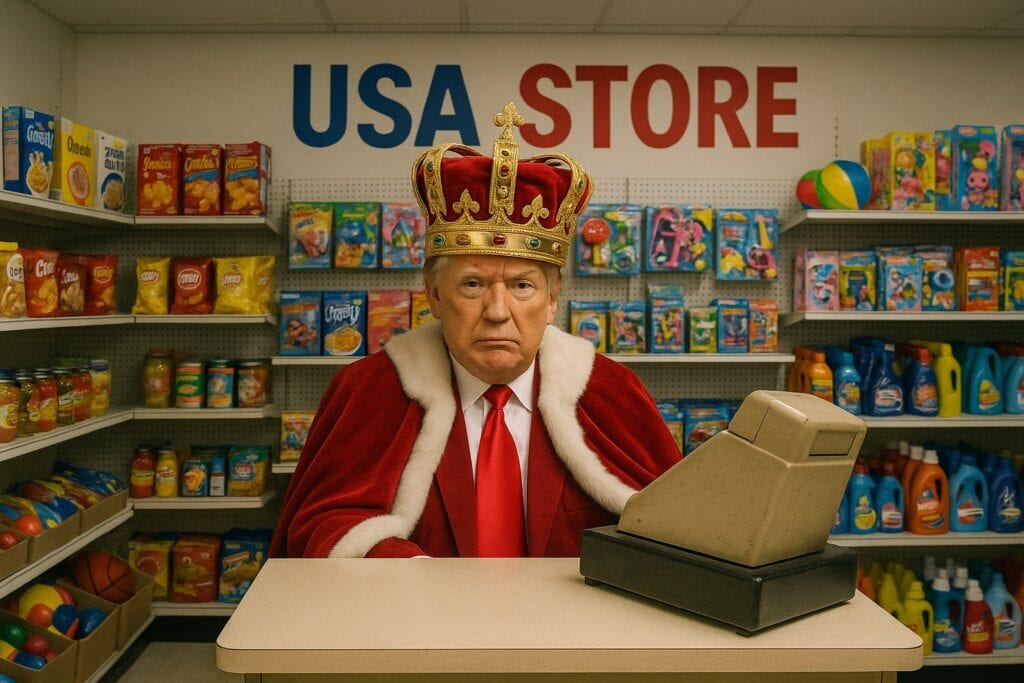
Barack Obama’s notorious admonishment to business owners that “you didn’t build that” was bad enough, but a recent statement by Donald Trump is even more collectivist: he claims he owns the store. The Financial Times reports on a Time Magazine interview of President Trump (“Donald Trump Claims to Have Received Call from Xi Jinping and to Have Cut ‘200 Deals’ on Trade,” Financial Times, April 25, 2025): When asked what Xi had told him in the conversation that Trump claims happened, the US president referred to the power he had as gatekeeper for the US consumer market. “It’s a giant, beautiful store, and everybody wants to go shopping there. And on behalf of the American people, I own the store, and I set prices, and I’ll say, if you want to shop here, this is what you have to pay,” Trump told Time. It seems that Mr. Trump was confusing imports and exports, for what his trade policy is focused on is deciding which suppliers his store will buy from. But let’s ignore this small detail. If the chief ruler of a country says he owns the store, he is expressing something quite close to Marxist theory, of which a major pillar is the collective (“social”) ownership of the means of production, which include retail outlets. The country is a collective, and the store is collective property. The apparent owners of private stores, if there are any, benefit from a special privilege from the collective or are simply state agents. Nobody can buy from, or sell to, the collective store without the permission—and tax gouging—of the gatekeeper. Invoking “the people” is a mere excuse to justify the state’s ownership of the means of production. Nothing can be owned by everybody, for ownership means control. Collective ownership implies that no individual “owner” may sell his share; quite the contrary, he is stuck with it and must make sacrifices for it. In Chapter 13 of Justice and Its Surroundings, Anthony de Jasay discusses the “social ownership” pretense of Marxist collectivism. Owning and controlling the means of production “on behalf of the people” or the working class is only a propaganda trick. In both collectivism of the left (Marxism and socialism) and collectivism of the right (populism and fascism), the store belongs to those who control the state or act as its agents. (Note the big principal-agent problem there.) A populist leader gives a different flavor to the myth of collective ownership by pretending that he embodies the people. Needless to add, no classical liberal theorist ever argued that the chief official of the government of a free country would “own the store.” Who would have thought that the populist ruler of America was more Marxist than today’s run-of-the-mill social democrats or socialists? In truth, it is not surprising because the left and the right both hold collective and political choices as superior to individual and private choices. Mr. Trump is not a Marxist, he is just another sort of collectivist. An alternative hypothesis is that, with his store ownership claim, Mr. Trump was just making noises with his vocal chords, without grasping the meaning of the sounds. An economist is methodologically reluctant to make this diagnosis but, in a recent Reason column, Jacob Sullum suggests something along these lines. ****************************** The owner of the USA Store sitting behind his checkout counter (0 COMMENTS)

/ Learn More

Inflation and the Demand for Money: The Confederacy in the Civil War

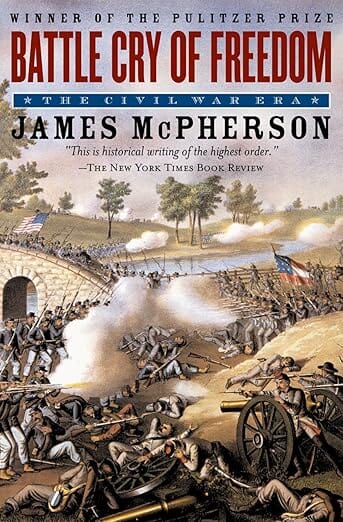
When the Civil War broke out in 1861, the Confederacy, like any government in any situation, had three sources of money: taxing, borrowing, or printing. Taxing The Confederacy struggled throughout to extract taxes from its citizens. “Congress enacted a tiny tariff in 1861,” historian James M. McPherson writes, “but it brought in only $3.5 million during the entire war,” partly a result of the federal blockade. “In August 1861,” he continues: …a direct tax of one-half of one percent on real and personal property became law. The Richmond government relied on states to collect this levy. Only South Carolina actually did so; Texas confiscated northern-owned property to pay its assessment; all the other states paid their quotas not by collecting the tax, but by borrowing the money or printing it in the form of state notes! In April 1863, more comprehensive fiscal measures were enacted, including a progressive income tax, an 8% levy on certain goods held for sale, excise, and license duties, and a 10% profits tax on wholesalers intended to punish “speculators.” But the Confederacy needed real resources, not depreciating paper, so a 10% “tax in kind” was imposed on agricultural produce, alienating large swathes of the population. Many willing to die for the Confederacy, few were willing to pay for it.  Borrowing The Confederacy’s ability to borrow tracked its prospects of victory. “The first bond issue of $15 million was quickly subscribed,” McPherson writes: Subsequent action by Congress in May and August of 1861 authorized the issuance of $100 million in bonds at 8 percent interest. But these sold slowly. Even those southerners with spare cash to invest had to dip deeply into their reserves of patriotism to buy bonds at 8 percent when the rate of inflation had already reached 12 percent a month by the end of 1861.  Besides, both taxation and borrowing sought to extract cash from a relatively cash poor society. Most of the Confederacy’s capital was tied up in the non-liquid form of land and slaves. “While the Confederate states possessed 30 percent of the national wealth (in the form of real and personal property),” McPherson writes, “they had only 12 percent of the circulating currency and 21 percent of the banking assets.”  Printing Thus, despite Treasury Secretary Christopher Memminger warning that printing it was “the most dangerous of all methods of raising money,” the Confederacy had little choice. Congress authorized the issuance of $20 million in treasury notes in May 1861, $100 million in August, $50 million in December, and a further $50 million in April 1862. “During the first year if its existence,” McPherson writes: …the Confederate government obtained three-quarters of its revenues from the printing press, nearly a quarter from bonds (purchased in part with these same treasury notes), and less than 2 percent from taxes. Although the proportion of loans and taxes increased slightly in later years, the Confederacy financed itself primarily with a billion and half paper dollars…    Memminger warned that “The large quantity of money in circulation today must produce depreciation and financial disaster” and it did. “At first the currency depreciated slowly, because Confederate victories in the summer of 1861 bolstered confidence,” McPherson writes. Economist Eugene M. Lerner noted that, in June 1862, the real value of the money stock was 2% higher than in January 1861 as the money stock had increased faster than commodity prices. After that, prices rose more rapidly than the money stock and its real value fell: by January 1864, it was 58% lower than in January 1861 and was around 80% below it at the start of 1865.  As military setbacks dimmed Confederate fortunes, holders of Confederate notes began to doubt the promise to redeem them in specie at face value within two years of the war’s end and started offloading them as quickly as possible. “She asked me 20 dollars for five dozen eggs and then said she would take it in ‘Confederate,’” the diarist Mary Chestnut wrote in 1864: “When they ask for Confederate money, I never stop to chafer. I give them 20 or 50 dollar cheerfully for anything.”  In terms of the equation of exchange, the demand to hold Confederate money balances collapsed and velocity (V) surged, augmenting the inflationary pressures of the increases in the money supply (M) and fall in production (y) as war ravaged the Confederacy. Milton Friedman famously argued that: Inflation is always and everywhere a monetary phenomenon in the sense that it is and can be produced only by a more rapid increase in the quantity of money than in output. This leaves out the role of the demand for money. Elsewhere, Friedman summarized inflation (P) as too much money (M) chasing (V) too few goods (y). This better fits the story of the Confederate hyperinflation.   (0 COMMENTS)

/ Learn More

Doug Irwin on Trade Deficits and the Wealth of Nations

  In the latest EconTalk, “The Economics of Tariffs and Trade (with Doug Irwin)“, May 5, 2025, Russ Roberts interviews one of the top trade economists in the world, Doug Irwin. Doug recently completed an entry titled “Tariffs” for my Concise Encyclopedia of Economics. Early in the interview, he and Russ talk about trade deficits. Like almost all economists, Russ and Doug don’t see those as a problem. But Doug had a refreshing way of putting it. He stated: And so, the way I put it is–sometimes when I’m telling my students–you know, let’s say the government didn’t produce statistics, economic statistics. If we had inflation, would you know it? Absolutely you’d know it. Every time you go to the grocery store or someplace, you’d see it. If we’re in a recession, would you know it? Absolutely. You’d see people around you losing their jobs, maybe you yourself. If we’re running a trade surplus or a deficit, would you know it? No, it is to an abstraction. It’s not something that personally affects you directly. Nicely done. Also, Doug pointed out how Adam Smith nailed the issue almost 250 years ago. Doug said: Every time I pull the book down from my shelf, The Wealth of Nations, I learn something again. I’ve read it, but I find there’s some sentence I missed or insight. And, it’s just a true book of wisdom. Here’s a guy–he didn’t have the Internet; limited to Britain and a little bit of time in France, but he knew so much and he interpreted things so well. And, it’s so relevant for today in so many dimensions. I have the same experience. I confess, though, that I haven’t read the whole thing cover to cover. I’ve especially jumped over Smith’s discussion of taxes.   (0 COMMENTS)

/ Learn More

Popular Economics Books to Read or to Avoid

This article has two lists: a list of popular economics books that I recommend reading; and a list of popular economics books that I recommend avoiding.1 What is a popular economics book? My first thought is that it is written without the mathematics and diagrams that economists use when teaching courses. My second thought is that the book has to have received some notice in the press. As this might be too heavily biased against books by conservative authors, I have relaxed this criterion. My third thought is that there are a ton of popular books on business and the stock market that might belong on the “Avoid” list, but I do not want to chronicle those. Books to Read “Everyone should understand how markets work and why they are important.” Everyone should understand how markets work and why they are important. This is called microeconomics or price theory. An enjoyable way to approach this subject is to read The Price of Everything, a didactic novel by Russ Roberts.2 For an overview, I recommend Hidden Order: The Economics of Everyday Life, by David Friedman.3 He shows how to think like an economist. His description of growing automobiles by growing wheat, putting it on ships to Japan, and having the ships return with automobiles, is clever and powerful. As a runner-up, consider Basic Economics, by Thomas Sowell. Another topic is macroeconomic performance. This covers economic expansions, recessions, unemployment, and inflation. This is a controversial topic, concerning which there are many conflicting theories. Pretty much every book, including mainstream textbooks, is biased one way or another, pushing a particular theory. The book I recommend is Macroeconomic Patterns and Stories, by Edward Leamer.4 In 2020, I wrote, This provides an excellent introduction to the data that are central to macroeconomics—how they are collected and what they mean. Although it is framed as an introductory textbook for business school students, it is valuable for economists at all levels. Leamer wisely steers the reader away from thinking in terms of systems of equations and instead looks for patterns in the data and stories that could explain those patterns. I was saddened to read of Leamer’s death in February of 2025. His macroeconomics book, by sticking close to the data, is very practical and free of bias. Standard economics tends to overlook the role of overhead costs and economies of scale. These are especially important in the contemporary world of global software giants like Microsoft, Alphabet (formerly Google), and Meta (formerly Facebook). A classic book I recommend on this topic is Information Rules, by Hal R. Varian and Carl Shapiro.5 A more recent treatment is Capitalism Without Capital, by Jonathan Haskel and Stian Westlake.6 Economic history is an important source of perspective that is too often neglected in both academic and popular economics. I recommend Manias, Panics, and Crashes, by Charles P. Kindleberger and Robert Z. Aliber.7 The book covers episodes of financial excess. It is also important to understand the dramatic escape from poverty that resulted from the Industrial Revolution. A classic book is How the West Grew Rich, by Nathan Rosenberg and L.E. Birdzell, Jr.8 A more recent treatment is A Culture of Growth, by Joel Mokyr.9 Much gets written about economic inequality. On that topic, a modern classic I would recommend is Myths of Rich and Poor, by W. Michael Cox and Richard Alm.10 They take the contrarian view that the poor are not getting poorer. One of their most persuasive tables shows that people who were in the bottom percentiles decades earlier had risen in the income distribution by the time that the book was written. This process has continued. Books to Avoid On the topic of income distribution, Thomas Piketty’s Capital in the 21st Century tops the list of books to avoid.11 It has been subject to some devastating criticism, both in theory and in data. For example, much of the decrease in the share of income going to labor that Piketty ascribes to an increase in capital income was shown to be due to an increase in rental income from real estate. Piketty has been praised as a prose stylist, and yet the book sits unread on many a bookshelf. On macroeconomics, Stephanie Kelton’s The Deficit Myth12, propounds what is known as Modern Monetary Theory. MMT appears to justify almost unlimited government deficits, and its influence may have contributed to the extravagant government spending and resulting inflation that wounded the Biden Presidency. For more on these topics, see “Modern Monetary Theory: Nothing New Under the Sun,” by Nicolas Cachanosky. Econlib, March 1, 2021. “Piketty Fever,” by Pedro Schwartz. Econlib, June 5, 2014. Hal Varian on Technology. EconTalk. Steven Levitt and Stephen J. Dubner published Freakonomics in 2005.13 This surprise best-seller probably found more readers than all of the rest of the books mentioned in this article put together. Many economists were happy to see a popular treatment that demonstrated the methodology of natural experiments and the use of clever analysis to challenge conventional wisdom on topics. But other economists saw it as a collection of small studies, lacking any overall lesson. Critics saw many of the studies as addressing topics in sociology rather than economics. Finally, some of the results of the studies did not stand up under further investigation. Overall, the reasons for praising the book largely still hold true, but so do the criticisms. Footnotes [1] Note: This format is inspired by Noah Smith, who posted his own list on Noah Smith’s Substack, Noahpinion, “Popular econ books: What to read, what not to read” [2] Russell Roberts, The Price of Everything: A Parable of Possibility and Prosperity. Princeton University Press, 2009. [3] David Friedman, Hidden Order: The Economics of Everyday Life. Independently published, 2019. [4] Edward Leamer, Macroeconomic Patterns and Stories. [5] Carl Shapiro and Hal Varian, Information Rules. Harvard Business Review Press, 1998. [6] I reviewed this book at “Economics when Value Is Intangible,” by Arnold Kling. Library of Economics and Liberty, Jan. 1, 2018. [7] Charles Kindleberger, Manias, Panics, and Crashes: A History of Financial Crises. Wiley, 2000. [8] Nathan Rosenberg and L.E. Birdzell, Jr. How the West Grew Rich: The Economic Transformation of the Industrial World. Basic Books, 1987. [9] I reviewed this book at “Ideas and Economic Growth,” by Arnold Kling. Library of Economics and Liberty, Jan. 2, 2017. [10] Michael Cox and Richard Alm, Myths of Rich and Poor. Basic Books, 2000. [11] Thomas Piketty, Capital in the Twenty-First Century. Belknap Press, 2017. [12] I reviewed this book at “Deficits—Budgetary and Conceptual,” by Arnold Kling. Law and Liberty, July 17, 2020 [13] Steven D. Levitt and Steven J. Dubner, Freakonomics: A Rogue Economist Explores the Hidden Side of Everything. William Morrow, 2005. *Arnold Kling has a Ph.D. in economics from the Massachusetts Institute of Technology. He is the author of several books, including Crisis of Abundance: Rethinking How We Pay for Health Care; Invisible Wealth: The Hidden Story of How Markets Work; Unchecked and Unbalanced: How the Discrepancy Between Knowledge and Power Caused the Financial Crisis and Threatens Democracy; and Specialization and Trade: A Re-introduction to Economics. He contributed to EconLog from January 2003 through August 2012. Read more of what Arnold Kling’s been reading. For more book reviews and articles by Arnold Kling, see the Archive. As an Amazon Associate, Econlib earns from qualifying purchases. (0 COMMENTS)

/ Learn More

Why Nogales Fails

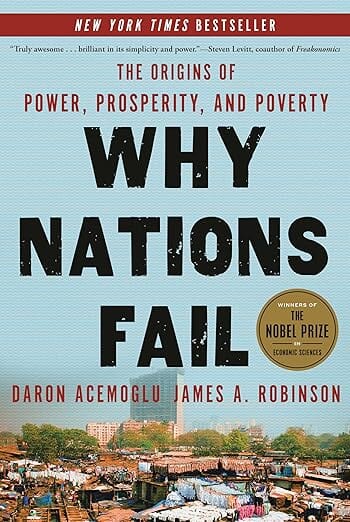
In their influential magnum opus, Why Nations Fail, Daron Acemoglu and James A. Robinson develop the proposition that the wealth of nations is ultimately the outcome of political and economic institutions able to generate prosperity, progress and the distribution of opportunities for growth. The authors characterize this set of arrangements as “inclusive institutions,” namely, access to free exchange of goods and services, open competition, liberal democracy, a stable currency, and a reliable legal framework that guarantees contract enforcement and protects well-defined property rights.1 Thus, income disparities across homogenous regions and throughout the world can be attributed to differences in the quality of institutional frameworks. The very first example that the authors use to highlight the thesis about the determinants of wealth gaps is the case of Nogales, along the Mexico-U.S. border—specifically, the contrast between the city of Nogales, Arizona and Nogales, Sonora (Mexico). The former thrives and enjoys higher per capita income because its institutions are “inclusive”; whereas the latter, south of a mere fence that divides both sites, suffers from crime, corruption and backwardness due to an “extractive” institutional arrangement. Consequently, the level of prosperity on the Mexican half is lower than the level of its northern neighbor, due to the lack of high-quality institutions capable of attracting productive investment and developing the incentive structure for innovation and establishment of businesses south of the border. The 2024 Nobel Laureates in economics bemoan two cities “so close, and yet so different.” The reason for such large wealth disparities, they say, “is very simple”: They live in a different world shaped by different institutions. These different institutions create very disparate incentives for the inhabitants of the two Nogaleses and the entrepreneurs and businesses willing to invest there. [This] is the main reason for the differences in economic prosperity on the two sides of the border.2 Alas, yes but no. Many observers of Mexico’s modern economic performance, including a handful of native classical liberals,3 cite this now famous example as (almost) conclusive proof of the institutionalist aims and claims of Why Nations Fail. The commentary is well-taken, and particularly understandable in Mexico’s current context, in light of the widespread institutional deconstruction of checks and balances that began with the AMLO (Andrés Manuel López Obrador) regime in 2018, and is continuing, at warp speed, under the administration of Claudia Sheinbaum. This includes a disastrous proposal for judicial reform, which calls for the election of all judges at all levels of government, by popular vote; the elimination of a variety of autonomous agencies responsible for financial and regulatory oversight in key sectors of the economy; and a blatant lack of transparency in the (ab)use of federal funds for public infrastructure projects; among other highly “extractive” setbacks in the country’s institutional state of affairs.4 The story of Nogales, however, is more complex than what Acemoglu and Robinson suggest, and conventional wisdom supposes. It is also a fascinating phenomenon. Nogales vs. Nogales does actually confirm the authors’ institutional thesis, but in a fashion that is the exact opposite of what they articulate. Nogales, Sonora, boasts a population of 264,000, more than ten times the population of Nogales, Arizona, which has only 19,000 inhabitants. Since the North American Free Trade Agreement (NAFTA) came into effect in 1994, there has been a paradigm shift in the productive dynamic of both border cities, with a noticeable expansion in the manufacturing industry. This has led to significant job creation on both sides, and a corresponding flow of new human capital into the Sonoran counterpart. Today, the manufacturing structure represents 35% of employment for Sonora’s maquiladora workforce. The remarkable increase in exports has become the driving force behind Sonora’s economic growth, which has averaged Asia-style growth rates, significantly higher than the national average, during the NAFTA-period and has transformed Nogales into one of the most important points of entry across the entire Río Grande border. The framework established under NAFTA (now USMCA) established the institutional foundation for a much more reliable investment climate able to attract historically unprecedented flows of new capital investment into the city and the surrounding zones of the northern Sonora region. The expansion of economic freedoms for international trade (combined with the advent of monetary stability) has triggered significant growth in Nogales, Sonora, and across the state of Sonora. In Nogales alone, total two-way trade is equivalent to more than $26 billion USD per annum—a datum that clearly seems to belie the claim that Nogales vs Nogales are “so close, and yet so different.” Rather, the proper conclusion is that the city has become a strategic gateway between Mexico, the U.S., and even Canada. Every day, a vast array commodities crosses the border, in all geoeconomic directions across the North American region. This includes auto parts, computers, televisions, mangoes, beer, chips, tomatoes, electronics, apparel, grapes and much more. Indeed, Nogales has become the most important site throughout the border for imports of fresh produce, handling almost 40% of all Mexican imports into the United States, which increases to 60% in winter months. Stories are now commonplace on the huge lines of trucks transporting Corona and Pacifico beer, among many other brands, as well as tons of avocadoes, on the eve of Super Bowl weekend. This means that, despite Mexico’s struggles with internal rule of law, crime and poor infrastructure, both sides of the border have managed to meet the challenges of open markets—maintaining competitive positions, adapting to new productive structures (mainly export-oriented manufacturing centers), and developing a wide-ranging variety of services related to international trade. Not surprisingly, Nogales, Arizona, has likewise experienced an important economic transformation, different in kind from its southern counterpart but equally visible: it has become a pivotal hub for large wholesale markets, where various agents receive multiple goods crossing the border, to thereafter distribute them to a wide variety of final destinations. Naturally, it also facilitates the entry of U.S. exports (especially agricultural goods) into Mexico, which has become the top customer of U.S. sales abroad, surpassing China and Canada. This robust trade relationship is supported by a significant bi-national workforce, with many individuals crossing the border on a daily basis to engage in various employment opportunities on both sides of a highly intertwined city. There is no doubt that significant income and rule of law disparities persist between the two cities. However, the case of Nogales vs Nogales represents a powerful example of the enormous economic benefits of North American integration—contra what Acemoglu and Robinson advance. In particular, it shows how the North American treaty made it possible to import those inclusive institutions south of the border, enabling places like Nogales, Sonora (along with many others) to improve incentives to attract productive investment flows and boost productivity. In the words of Luis Rubio: “What is crucial about NAFTA is the recognition of the incapacity of existing institutions to give investors the long-term certainty they require… for long-term growth.”5 Indeed, NAFTA became a vehicle to “borrow US institutions for the benefit of Mexico.” This analysis yields two conclusions. On the one hand, Acemoglu and Robinson’s thesis about the role of institutions as the differentiating factor in prosperity levels may be correct. However, the transformation of Nogales into a strategic logistics and growth hub would confirm the institutionalist thesis in reverse: by borrowing those very inclusive institutions north of the border, both Nogales and Sonora have been able to benefit from the massive expansion in trade and supply chains that the entire mega-region has experienced. If anything, the greatest institutional deficiencies in both cities lie in cumbersome customs procedures, with endless lines of trucks and cars waiting long hours to cross from one side to the other. Streamlining these processes would provide fundamental benefits and opportunity cost gains to both sides of what has, in effect, become a single highly interconnected city.6 North American citizens trade more than $3 billion per day, 90% of which is transported by land. The congestion at the border represents a loss of foregone output of approximately $8 billion per annum. “… the story of Nogales vs. Nogales is a dramatic example of the long-run benefits of open trade, notwithstanding the asymmetries in income per capita, and access to basic human needs such as security, education and health services.” So construed, the story of Nogales vs. Nogales is a dramatic example of the long-run benefits of open trade, notwithstanding the asymmetries in income per capita, and access to basic human needs such as security, education and health services. As a border city, divided by a simple fence and regulations (transaction costs), Nogales is a miniature version of a common market with (relatively) free flow of all factors of production, including human capital. In fact, more than half of Nogales’s residents on the U.S. side are Sonoran-born citizens, crossing the border up to three times per day. The industrial platform of Nogales, Sonora, has developed at a rapid pace since the institutional framework governing North American trade integration came into effect, fostering the emergence of new businesses, sophisticated investment projects, labor productivity above the national medium, real wage appreciation, and higher living standards. The very same phenomenon can be observed at other border points that are highly intertwined, especially Laredo and Nuevo Laredo.7 Our contention is that as an empirical case study, the case of Nogales is much more powerful as a representation about the evolving benefits of open trade integration, than as a contrast between inclusive vs. extractive institutions. Why Nations Fail has been criticized on many fronts. Some argue that it is unduly reductionist, collapsing into a nonfalsifibale form of institutional determinism. Others suggest that is embodies an implausible dirigisme.8 Others yet, especially Deirdre McCloskey, have also inveighed that the authors have it backwards: it is ideas, not institutions, that are the key factor that decides the fate of nations between poverty and prosperity.9 We believe there is an important kernel of truth in Acemoglu and Robinson’s remarkable account. Our claim is different, however. For the sake of argument, we assume that the authors are right in their thesis that the lack of credible institutions constitutes the main reason for differences in prosperity. Our claim is that, under this assumption, the Nobel Prize winners do have it backwards: they are right, but for the wrong reasons. The Nogales case is clearly not an example comparable to, for instance, South Korea vs. North Korea. We suggest it would be advisable to substantially revise their assessment of Nogales vs Nogales in future editions of Why Nations Fail.10 For more on these topics, see Daron Acemoglu on Why Nations Fail. EconTalk. International Trade Agreements, by Douglas A. Irwin. Concise Encyclopedia of Economics. “The Institutions-Intensive Economy,” by Arnold Kling. Econlib, February 25, 2013. Sadly, this reflection may already be purely scholastic, if not immaterial. Today, north of the border, weaponizing tariff threats as a geopolitical bargaining tool has dealt a severe blow to the long-term institutional certainty that exemplifies the key value of the North American trade agreement. And, south of the border, a wave of illiberal populism that began with AMLO and is now continuing during the new presidency of Sheinbaum seems to be committed to fulfill, at all costs, the call to arms that AMLO popularized with his infamous cry after he lost the presidential elections in 2006: “to hell with institutions.”11 This, unfortunately, entails very challenging times for the institutions that underpin an open society in North America. Indeed, they may ultimately fail. Footnotes [1] Acemoglu, D. and Robinson J.A. (2012) Why Nations Fail: The Origins of Power, Prosperity, and Poverty. Crown Publishers. In truth, there is nothing particularly new in the Acemoglu-Robinson approach, as it is an extension of the larger institutionalist approach elaborated by the late Douglass North. In our article “Nogales, Instituciones, y la Empresa Familiar en México,” La Internacionalización de la Empresa Familiar: Teoría y Práctica (Escuela Austriaca de Economía), ed. Fernando Lozano, Unión Editorial Colombia, 2018, José Torra and I develop the argument that the five main categories used in the Economic Freedom of the World index can be used to explain the “inclusive” institutions described by Acemoglu and Robinson. In other words, to advocates of economic freedom, their approach is nothing new—income per capita and levels of wealth across nations are adequately explained by differences in economic freedom. [2] Why Nations Fail, p. 9. [3] A good example is Sergio Sarmiento, “Los Dos Nogales”. Reforma, October 15, 2024. [4] For a detailed exposé of the institutional devastation orchestrated during the AMLO administration, see the report edited by Enrique Cárdenas, Signos Vitales, “El (funesto) legado de López Obrador,” November 2024. [5] Rubio, L. (2015), A Mexican Utopia: The Rule of Law Is Possible, monograph published by the Woodrow Wilson International Center for Scholars, Washington, D.C., p. 59. [6] Bob Pastor, in Pastor, R. A. The North American Inda: a Vision for a Continental Future (2015), Oxford University Press, has argued convincingly on the dire need to reforms customs procedures along the U.S.-Mexico border, and for the adoption of smart technologies to facilitate greater cross-border trade. [7] On this point, Robert H. Topel commented to me that the point Acemoglu and Robinson are making is not so much about contrasting the two Nogales cities, but rather presenting it as an example of the larger economic differences in wealth between Mexico and the United States. This is a good observation, but it is also open to the same criticism. The NAFTA-linked states have grown at a much faster pace, and accumulated much greater productive investment, with the consequent results in per capita income, than the non-NAFTA states. It is the phenomenon known as the “Two Mexicos.” On this point, see Rubio, L., and Remes, J. (2014,). “The Two Mexicos.” McKinsey. August 2023. [8] This is especially clear in the stronger statist emphasis of the authors’ The Narrow Corridor: States, Societies and the Fate of Liberty, Penguin Books, 2020. [9] For instance, see Deirdre McCloskey, “The statist neo-institutionalism of Acemoglu and Robinson,” Journal of Public Finance and Public Choice, Vol. 38, Issue 2, April 2023, pp. 175-204. [10] Incredibly, ABC news would be a good reference to undertake this revision! See the report on the trade dynamics of the border cities in this YouTube video: Multi-billion-dollar trade industry relies on bi-national workforce in Nogales [11] For a detailed description and criticism of the onslaught against checks and balances during the AMLO administration and especially related to the fragility of the country’s property rights framework, see my case study “Property Rights, Open Trade and Prosperity: The Case of Mexico,” in The 2023 International Property Rights Index, Property Rights Alliance, August 2023. * Roberto Salinas León is President of the Mexico Business Forum, where he works on assorted projects of policy analysis, media, investment advisory, and economic consultancy. He is currently the Director of the Center for Latin America of Atlas Network and is President of Alamos Alliance, which organizes an annual symposium in the town of Álamos, Sonora. Earlier versions of this article were published in (together with José Torra) “Nogales, Instituciones y la Empresa Familiar en México,” La Internacionalización de la Empresa Familiar: Teoría y Práctica (Escuela Austriaca de Economía), ed. Fernando Lozano, Unión Editorial Colombia, 2018; and in “Nogales versus Nogales,” Literal Magazine, March 2, 2025. As an Amazon Associate, Econlib earns from qualifying purchases. (0 COMMENTS)

/ Learn More

Law, Legislation, and Libertarianism

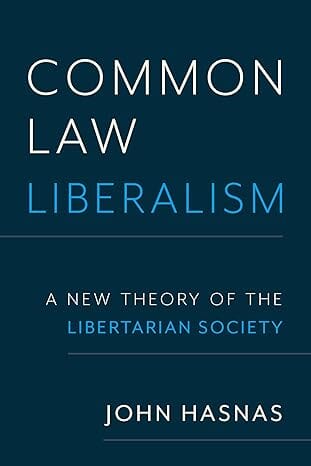
A Book Review of Common Law Liberalism: A New Theory of the Libertarian Society, by John Hasnas.1 “Look around.” John Hasnas’s main political advice may sound extravagant. But his remarkable book, Common Law Liberalism,1 is a caveat against “inattentional blindness” of the sort social scientists often fall victim to—and those who like flirting with theory more than the others. Inattentional blindness consists in the “failure to notice a fully visible, but unexpected object because attention was engaged on another task, event, or object.” That fully visible object, the gorilla that nobody notices, is the law. Hasnas refers to inattentional blindness first to explain the success of the market failure argument. The concept is not controversial among economists, who would overwhelmingly agree that government intervention is necessary to correct the market’s failure to consider the social costs of private transactions. Economists, however, may simply be flirting with an idealistic model of what a market is, considering it as “the realm of unregulated voluntary contractions—the realm in which human beings interact free from any restraint other than self-interest.” Law, on the contrary, is assumed to be a set of norms conceived by the government to fix the problems arising from such interactions. Both definitions are wrong. For one thing, the law is not exclusively legislation: that is, norms purposefully produced by lawmakers. Nor are those norms the ones that actually make for peaceful coexistence for most of our life. Some of the most important norms regulating our activities are still the outcome of the “old” common law—”rules that were abstracted from series of cases thought to represent just resolutions of past disputes.” Some are still based on custom and habit. For another, the silhouette of a “realm of unregulated voluntary transactions is a theoretical construct with no referent in reality,” because human action is always regulated—by, Hasnas maintains, “ethics, custom, and the common law,” all of them being “emergent orders in which rules evolve as a result of human interaction but are not the output of any identifiable human will.” What economists simplify in the model of the free market is not a space free of regulations but only one in which the government has not stepped in yet. Beliefs and customary practices, Hasnas argues, are themselves the outcome of trial-and-error attempts to reduce the degree to which individuals’ actions can cause harm to others. “Common law civil liability evolved to address the harmful actions that are not suppressed.” Economists seem to think civil liability is either absent or irrelevant. Most people may believe that legislation is necessary because civil liability would not disincentivize harmful action strongly enough. Yet, “the evidence suggests not that civil liability is a regulatory force but that it is too strong.” Hasnas’s case in point is a product liability suit, the infamous 1994 McDonald’s coffee cup case. So goes the story: a 79 year-old woman who was a passenger in her grandson’s car goes through a McDonald’s drive-through. She orders a cup of coffee; her grandson stops the car so that she can add cream and sugar; in attempting to remove the lid of the cup, she accidentally spills the coffee on her lap. “This caused third-degree burns on her thighs, buttocks, and groin”. McDonald’s corporate policy was then to hold coffee at between 180 and 190 degrees Fahrenheit. After the old lady was compensated with a total of $640,000 ($ 160,000 in compensatory damages and $ 2.7 million, reduced to $ 480,000, in punitive damages), “the McDonald’s she patronized began serving coffee at 158 degrees Fahrenheit” whereas “the McDonald’s handbook for franchisees ow calls for holding coffee between 170 and 180 degrees,” and, “Starbucks serves its coffee at between 150 and 170 degrees by corporate specification.” The case, Hasnas explains, “became famous because it was thought to illustrate that the civil liability system provides too much safety regulation.” He does not mean to claim that the compensation was fair, or wasn’t—but to point out that civil liability offers an alternative to regulation. In writing on a more worrisome event, the BP 2010 oil spill in the Gulf of Mexico (of America?), Hasnas reminds us that regulation stepped in not to curb profit-seeking enterprises but rather because “common law civil liability discouraged drilling for oil at great depths,” making it necessary for the government to step in limiting oil companies’ liability. “A free market economy had indeed been rejected by the 20th century. Yet wasn’t it at least centered on some rules, which by definition limited the discretion of rulers?” After classical liberalism had been in retreat, both politically and intellectually, for the first half of the 20th century, we experienced a comeback of classical liberal ideas after World War II. For some, the rebirth of classical liberalism is best dated to 1947, when the Mont Pelerin Society was founded. Others would date it to the early 1960s, when works such as F.A. Hayek’s The Constitution of Liberty, Milton Friedman’s Capitalism and Freedom, and James Buchanan and Gordon Tullock‘s The Calculus of Consent were published. One thing is, however, clear. In those years, several theorists thought that the best way out of the authoritarian conundrum was to emphasize the rule of law as the essence of classical liberalism. This was also key to redeeming some respectability for the market economy. A free market economy had indeed been rejected by the 20th century. Yet wasn’t it at least centered on some rules, which by definition limited the discretion of rulers? Weren’t such rules better than the unchecked propensity to distribute privileges by an all-powerful bureaucracy? Hasnas would caution us not to use “rules” indiscriminately. His book is reminiscent of Freedom and the Law published by Bruno Leoni in 1961. Leoni’s work developed out of his criticism of Hayek’s Cairo lectures, which later became part of The Constitution of Liberty. Leoni presented, among many, two key arguments for his friend. The first was not to confuse the British common law and the European Rechtsstaat, which were conducive to two very different forms of rule of law. The second one was not to mistake legal certainty for the mere fact laws were written. Written laws evoke certainty because written statutes can be read and hence known by all who are subject to them. But written laws, if they are the outcome of a legislative process, can be changed at will, and often are when a parliamentary majority changes. Plus, Hasnas’s only apparently extravagant political advice comes in handy: look around. How many people who actually read laws do you know? And if some wanted to, could they, as legislation multiplies week by week? Hasnas distinguishes between “political” and “nonpolitical” law. Nonpolitical law is that in which rules “evolve without a guiding human intelligence.” That is, customary law and common law. Political law, on the other hand, is one in which a conscious human effort steers the norms in a particular direction. Hasnas acknowledges that the dominant political culture, among social scientists as well as among ordinary people, is overwhelmingly in favor of political law. Should not law be purposeful; for example, shouldn’t it pursue the common good? And, perhaps more important, should not the law be grounded in some level of consent? Norms springing out of a political assembly reflect the consent that emerged in such an assembly, which, in turn, emerged out of some elections before. But, again, look around. What are norms for? The theoreticians’ fascination for building a just society are at odds with political law as we know it in practice, as a system in which law-making is opportunistically used to the benefit of specific groups in society, no matter how grandiose the words which are used to justify it. Norms may, more modestly, be devices to resolve conflicts in a smoother and less violent way. Going back to England after the collapse of the Roman Empire, where the conditions were such that they may be considered to resemble a state of nature, Hasnas points out how rules evolve to make peaceful coexistence possible. From the blood feud (“when someone was assaulted, killed, or otherwise wronged, the expected, socially accepted response was for the members of the aggrieved party’s household or clan to wage private war against the wrongdoer”), then we moved to a system of negotiations: “when both parties agreed, they could lay their dispute before the moot [a public assembly which served as the chief instrument of social administration], whose members, much like present-day mediators, attempted to facilitate an accommodation that both parties found acceptable.” As “such negotiated settlements avoided the strife and physical risk of the blood feud, community pressure gradually transformed the effort to reach them from an optional alternative to the feud to a necessary prerequisite for receiving the help of one’s grouped in protecting it.” Successful negotiations typically involved some form of compensatory payment and from that evolved a fixed schedule of penalties for various types of injuries. Thus, “by establishing a schedule of payments associated with various types of actions that damaged the interests of others, customary law established the obligations members of the community owed to their fellows.” In this perspective, rights (the counterparts for obligations) are “problems solved”: they embody a story of attempts to fine tune proper compensation for certain wrongdoings or stopovers. F.A. Hayek, writes Hasnas, “famously compared the price mechanism to a system of telecommunications that enables human beings to coordinate their economic activities. Customary law is similarly a system of telecommunications that enables humans to coordinate their social interaction as to avoid violence and facilitate joint pursuits”. But isn’t that law, regardless of how it was produced? Hasnas’s sober prose does not aim to convince the reader that customary law, or common law, would always perform better. There can be “legal failure”, in the sense that an acephalous legal system, with no planner nor direction, can indeed lack in producing certain norms the public, at some point, may think it needs. Yet what political legal systems do not produce are “what Hayek referred to as rules of just conduct—general rules of universal application that do not favor the interests of any particular group.” The mere fact of entrusting somebody with the task of writing (and abolishing and rewriting) norms makes for them being at the service of some groups in society instead of others. For more on these topics, see “The Power and Pervasiveness of Spontaneous Order,” by Elaine Sternberg. Econlib, July 5, 2021. “Legal Safeguards Against Omnipotent Lawmakers,” by Pierre Lemieux. Econlib, May 1, 2023. The Underrated Bruno Leoni (with Michael Munger). EconTalk. To many, that may be a necessary evil. There is no law without a legislator, at least no law that allows for peaceful coexistence in a complex society. But is that true? Answering in the negative, Hasnas calls our attention to early Medieval England, but also to Law Merchant and how international arbitration systems work today, and to the whole sets of actions and interactions that in our daily lives are regulated by norms that were not “legislated.” Indeed: look around. Footnotes [1] John Hasnas, Common Law Liberalism: A New Theory of the Libertarian Society. Oxford University Press, 2024 *Alberto Mingardi is Director General of the Italian free-market think tank, Istituto Bruno Leoni. He is also assistant professor of the history of political thought at IULM University in Milan and a Presidential Scholar in Political Theory at Chapman University. He is also an adjunct fellow at the Cato Institute. For more articles by Alberto Mingardi, see the Archive. As an Amazon Associate, Econlib earns from qualifying purchases. (0 COMMENTS)
/ Learn More

The Inescapable Principle of Comparative Advantage

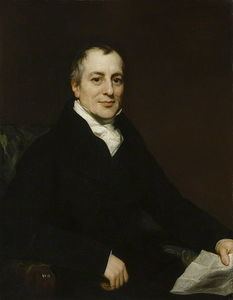
David Ricardo. In a recent article in The Financial Times Nat Dyer argues that economists misunderstand tariffs.1 He points out that tariffs have political and moral dimensions not captured by standard economic reasoning. We therefore take economists’ widespread advocacy of free trade at our peril: “too few economic theorists have interrogated the actual, messy history of trade.” He concludes that we need “a new, genuinely progressive economics with its eyes focused on the real world and its history, rather than abstract models built on unreality.” Economists have long been accused of paying too little attention to reality and too much to models. The accusation is sometimes just. But critics are often guilty of an equally harmful sin: neglecting the truths of economic thought. The centerpiece of Dyer’s discussion is David Ricardo. In Chapter 7 of his Principles of Political Economy and Taxation,2 Ricardo exposited the principle of comparative advantage with a discussion of England and Portugal. If England trades cloth with Portugal for wine instead of producing wine itself, it receives wine at a lower cost than if it produced it domestically. If Portugal trades wine with England for cloth, it receives cloth at a lower cost than if it produced it domestically. With exchange and specialization, the amounts of wine and cloth available in both countries will increase. Ricardo’s analysis, according to Dyer, is fundamentally flawed because it neglects the historical complexities of English-Portuguese trade relations and the political economy of imperialism more broadly. He quotes Matthew Watson of Warwick University to make the point: Ricardo’s theory is “a mathematical façade behind which the actual historical relations of production of the real England and Portugal are deliberately taken out of the equation.”3 The relations are “explicitly oppressive social relations of production based on slave labor and the imperial policing of national hierarchies.” For Dyer and Watson, Ricardo’s ignorance—or neglect—of political complexities and moral atrocities discredits not only his analysis but that of the many economists, from Paul Samuelson to Gregory Mankiw, who have followed him down his misguided, historically-illiterate path. I know little about English-Portuguese trade relations in the eighteenth and nineteenth centuries. The complexities of those relations may have been overlooked by Ricardo in his political commentary. I don’t know. But I do know that the complexities have no impact on the analytical content of the principle of comparative advantage. And this principle needs to be reckoned with, irrespective of one’s political persuasions. “The principle of comparative advantage as it has come to be taught in standard economics courses is less grandiose than its critics think.” The principle of comparative advantage as it has come to be taught in standard economics courses is less grandiose than its critics think. It is not a full-fledged description of how international trade works in practice. It is not a theory of international relations. It is not a comprehensive political program. It is not even a policy position. It is, in fact, an explanation of why two people–or two countries–might choose to trade, even though it looks like they have no reason to do so. And it uses only simple arithmetic! Suppose David needs to fix his car. He could do the job himself in three hours. He earns $50 per hour at his accounting job, so fixing the car will cost him $150 in forgone income. Suppose his neighbor’s college-aged son, Adam, offers to fix the car for David. Adam says it will take him five hours. Adam earns $20 per hour working at a local coffeeshop, so David would have to pay him at least $100 for the job. Adam has a comparative advantage in fixing David’s car, even though he is a slower mechanic, because he gives up less in dollar terms ($100) than David ($150) to complete the same job. If David chooses to hire Adam, he can fix his car at a lower cost than if he did the job himself. If Adam chooses to take the job, he can earn more than he would working at the coffeeshop. If David devotes his time to his accounting job and hires Adam to fix his car, both enjoy higher incomes. The principle of comparative advantage doesn’t tell us everything we might like to know about David and Adam’s situation. It doesn’t tell us how David acquired his car. It doesn’t tell us whether David likes fixing his car himself, just the fun of it. It doesn’t tell us if Adam’s father mistreats him, or what the working conditions are like in the garage—or the coffeeshop. It doesn’t tell us anything about David’s son, who might like to learn to work on cars but doesn’t seem to have the knack for it. It doesn’t tell us about the personal dynamics and history between David’s family and Adam’s family. Some of these details would obviously be relevant for the ethics of it all. But the details are simply not relevant for the principle of comparative advantage. That principle informs us, as a matter of arithmetic, that David can increase his income if he hires Adam to fix his car instead of fixing it himself, even though Adam is a less skilled mechanic, and that Adam also gains from the situation. What Dyer is really rejecting when he claims to be rejecting the principle of comparative advantage is the inference from the principle to the conclusion that free trade serves the common social good. Ricardo expressed that inference this way: Under a system of perfectly free commerce, each country naturally devotes its capital and labour to such employments as are most beneficial to each. This pursuit of individual advantage is admirably connected with the universal good of the whole. The rejection of Ricardo’s logic in the statement flows from moral convictions about historical injustices, perceptions of continuing power imbalances, and more. Dyer writes: “All major economic powers—Britain, Germany, and yes the USA, and China-rose to their position while protecting their industries with high tariffs.” Moral convictions, power dynamics, and so on should impact how we think about trade policy in practice. Certain convictions and claims might incline us towards or against trade liberalization and the historical Ricardian policy position. But they in fact take nothing away from the analytical principle of comparative advantage. Jubilantly declaring the second death of Ricardo, as Peter Navarro did in 2019,4 has no bearing on the enduring truths Ricardo uncovered in parts of his analysis. Claiming that trade is complex in practice cannot change the fact that every choice has a cost; the cost is always an opportunity forgone; we each increase our productive output and the output of others by specializing in the activities that cost us the least and exchanging. This is logic and arithmetic. For more on these topics, see Comparative Advantage, by Lauren Landsburg. Library of Economics and Liberty. Comparative Advantage, by Donald J. Boudreaux. Concise Encyclopedia of Economics. “I’ll Stick with These: Some Sharp Observations on the Division of Labor,” by Michael Munger. Econlib, April 2, 2007. Kimberly Clausing on Open and the Progressive Case for Free Trade. EconTalk. One might conclude that there are good reasons for protectionism (I don’t). But arguments for protectionism or a “genuinely progressive economics,” to be serious, have to take the principle of comparative advantage seriously, just as they have to take arithmetic seriously. That means admitting that there will absolutely be clear costs—material benefits forgone—by restricting trade. Historical and political complexities change that fact no more than they change the fact that water runs downhill. Footnotes [1] Nat Dyer, “What economists get wrong about tariff wars.” Financial Times. March 5, 2025. [2] David Ricardo, On the Principles of Political Economy and Taxation. In particular, see Chapter 7. [3] Matthew Watson, “Following in John Methuen’s Early Eighteenth-Century Footsteps: Ricardo’s Comparative Advantage Theory and the False Foundations of the Competitiveness of Nations.” PDF file. [4] Peter Navarro, David Ricardo is Dead. Long Live Fair, Balanced, and Reciprocal Trade. Video. Institute of Politics. April 25, 2019. * Erik W. Matson is a Senior Research Fellow, Mercatus Center at George Mason University and Deputy Director of Adam Smith Program at GMU Department of Economics. For more articles by Erik W. Matson, see the Archive. (0 COMMENTS)

/ Learn More

The Economics of Tariffs and Trade (with Doug Irwin)

Is the United States victimized by trade? What causes trade deficits? Are higher tariffs a good idea? Can manufacturing jobs return to the United States? Economist Doug Irwin of Dartmouth College answers these questions and more in this wide-ranging conversation with EconTalk’s Russ Roberts. The post The Economics of Tariffs and Trade (with Doug Irwin) appeared first on Econlib.

/ Learn More

My Weekly Reading for May 4, 2025

  May the fourth be with you. Understanding the Effects of Tariffs by Kyle Pomerleau and Erica York, AEI Economic Perspectives, April 23, 2025. Excerpt: In 2023, the US applied a simple average tariff of 3.4 percent on imports; that’s the result of 734 distinct tariff rates, the highest of which is 350 percent on some beverage and tobacco imports. While 46.5 percent of US imports were duty-free, certain categories of imports faced high average rates. For example, average rates were 16.1 percent for dairy, 11.6 percent for clothing, 15.0 percent for sugars and confectioneries, and 6.5 percent for petroleum. However, only 2.7 percent of imports (measured by share of import value) faced duties greater than 15 percent (WTO et al. 2024). And: A tariff would make untaxed, domestically produced goods more attractive to consumers than foreign-produced goods. As discussed above, this would shift labor and capital out of the export sector and into the import-competing sector of the economy. Although shifting means goods would not face direct taxation, it would produce inefficiencies. Labor and capital would move to less productive uses, leading to lower output and incomes than in the absence of tariffs.   You Autor Know by Scott Winship, First World Problems, April 28, 2025. Excerpt: ADH [Autor, Dorn, and Hanson]  first assessed what they called the “China Syndrome” in a paper published in 2013.[ii] They leveraged the fact that different geographic areas (“commuting zones,” or CZs) had more or less susceptibility to import competition from China depending on their pre-Shock mix of industries. ADH assigned Chinese import growth in different industries to CZs based on the areas’ initial share of national employment in each industry. In other words, they assumed a CZ that initially had 4 percent of US employment in some manufacturing industry was hit twice as hard by increased Chinese imports within that industry as a CZ that initially had 2 percent of employment in the industry. ADH summed these amounts across all manufacturing industries to get a measure of each CZ’s overall exposure to Chinese import growth. Finally, they scaled the growth in imports for each CZ by the area’s initial employment level. (Absorbing $1 million in imports is a bigger deal in a CZ with 50,000 workers than in one with 500,000 workers.) They found that stronger growth in Chinese imports in some CZs than in others caused those CZs to have worse manufacturing employment trajectories relative to the others than would have been the case absent the China Shock. If this seems like a very particular way to word the conclusion, the reason will become clearer below. Assume for now that ADH’s estimates are unassailable. Do they suggest effects large enough to cause the economic, social, and political outcomes that are often blamed on the China Shock? To put them into context, imagine two large commuting zones each with 200,000 working-age people and 20,000 manufacturing workers in 2000.[iii]Imagine one of them was at the 10th percentile of exposure to the China Shock—meaning that it was relatively unexposed to rising Chinese imports—and the other was on the other end, at the 90th percentile. For simplicity, imagine further that they experience no population growth, and that in the absence of the China Shock, they would both have continued to have 20,000 manufacturing workers. The 2013 paper implies that the CZ with the greater import exposure would have had about 2,700 fewer manufacturing workers than the other in 2007. [iv] On the one hand, that means that one out of every seven manufacturing workers would have lost their job in the one place but wouldn’t have in the other. On the other hand, it would mean a relative decline in the manufacturing employment rate of 1.4 percentage points—14 would-have-been manufacturing workers for every 1,000 working-age people.   DDF vs BHL by David Friedman, David Friedman’s Substack, March 20, 2023. Excerpts: While I agreed with many of his points, that was not one of them. If “social justice” has a definite meaning in philosophy, philosophers should be able to offer clear definitions and the definitions offered by different philosophers should be consistent with each other. As the quotes above from two philosophers from the same faction of the same political movement demonstrate, they are not. The first specifies that it is about coercive institutions, the second about institutions in general. The second makes the evaluation of a society depend on how well it serves the interests of the poor and least advantaged, the first makes it depend on maintaining a minimal standard for “conscientious people.” The poor and disadvantaged are not all conscientious, conscientious people are not all poor and disadvantaged. Both definitions look more like political rhetoric than political philosophy. Not only are the definitions not consistent with each other, neither has a clear meaning. Consider, for instance, “minimally decent lives.” A modern making a list of the requirements would almost certainly include access to decent medical care. By that definition no human being prior to 1900 lived a minimally decent life, since what we consider reasonable medical care did not then exist. And: To continue …  . “Advocates of social justice believe the moral justification of our institutions depends on how well these institutions serve the interests of the poor and least advantaged.” Depends entirely? Two societies are equally justified if they equally serve the interests of (say) the bottom 10% of the income distribution even if in one of them the rulers live a life of luxury supported by the taxes of everyone else above the bottom or if, in one, almost everyone above the bottom 10% is a (well taken care of) slave? Does Brennan think there is any human being who thinks none of that matters, that the moral justification of the institutions depends only on how well they serve the bottom of the distribution? The obvious response is that advocates of social justice believe that the justification of the society depends in part on the implications for poor people. But so does very nearly everyone else. Utilitarians believe that the justification of the society depends on how well it serves everyone’s interests, the poor and disadvantaged included. Similarly for most alternative candidates. The concept that, according to Brennan, has a definite meaning in philosophy either has a meaning that nobody could take seriously or a meaning that distinguishes it from practically none of the alternative concepts. I agree with Jason that consequences matter, but that agreement does not define social justice.   California’s Environmental Regulations Are a Mess. Why Won’t Lawmakers Fix Them? by Steven Greenhut, Reason, May2, 2025, Excerpt: And if you think these cynical efforts to gum up the construction process help the environment, then consider this alarming point from that analysis: “Projects designed to advance California’s environmental policy objectives are the most frequent targets of CEQA lawsuits.” These include transit projects, multi-family housing, parks, schools and libraries. It notes that 80 percent of the CEQA lawsuits are in infill locations, which is where environmentalists want us to build. CEQA criticism has grown even on the political Left thanks largely to the law’s stifling effect on new housing construction. As everyone here knows, California faces a severe housing crisis as the median home price statewide has soared above $800,000 and well over $1 million in many coastal metros. That has led to massive rent spikes and has exacerbated our homelessness situation. Lawmakers have—to their credit—passed targeted exemptions and streamlining provisions for particular types of housing projects (infill, multi-family, duplexes), but it’s not enough. A 2022 report for the Center for Jobs and the Economy by Holland & Knight attorney Jennifer Hernandez notes that despite those new laws, “CEQA lawsuits targeting new housing production, in contrast, continue to expand—with 47,999 housing units targeted in the CEQA lawsuits filed just in 2020.” The California Air Resources Board (CARB) “acknowledges that two-thirds of CEQA lawsuits allege violations of climate impacts.”   Free Markets Did Not Fail the Middle Class by Norbert Michel and Jerome Famularo, Cato at Liberty, May 2, 2025. Excerpt: Here’s just one more example of how wrong the populists’ income stagnation story is. Real median household income, for all American households, increased 73 percent from 1968 to 2024. That’s not stagnation. Interestingly, that figure is biased downward because of changing household characteristics, such as smaller families, an aging population, and more single folks. As Figure 1 shows, real median income for married couples with children increased by 132 percent from 1968 to 2024. That’s pretty much the polar opposite of stagnation.     (0 COMMENTS)

/ Learn More

Party Time: Lessons from the aviation investigative process on “fact checking”

In the wake of the airline accidents in Washington DC, Pennsylvania, and Toronto, social and traditional media has been flooded with pictures, (questionable) expert commentary, and theories as to the causes.  Before any investigation has even begun, before any evidence has been gathered, before the witnesses can be interviewed or black boxes recovered, an army of “aviation correspondents” eager for their 15 minutes of fame flock to network news and podcasts to deliver their two-cent opinions to anyone who will click on the link.  And frankly, with inflation these days, their opinion is still only worth two cents. Our job as safety professionals is to determine the cause of the accident, deliver that information to the public, and provide recommendations to prevent tragedy in the future.  As professionals, we owe it to the victims to get it right. In aviation, the body responsible for accident and incident investigation is the National Transportation Safety Board (NTSB).  An independent agency, the NTSB has no prosecutorial or law enforcement teeth to mete out punishment; their sole mission is to determine the cause of transportation accidents and formulate recommendations for safety.  But to do so, they must have access to accurate information and have the ability to assess the information they do have, even if it is outside their technical expertise.   A parallel can be drawn with the general public.  Since the age of social media there is the ability for the public to access information at a nearly unprecedented scale.  But the quality of that information varies widely, from the accurate and truthful, to the absolutely goofy (and before anyone asks, yes, the Earth is round.  We figured it out like 3000 years ago with a couple of sticks in the desert.  Please stop coming to the flight deck to ask.  I don’t care what you saw on the tickety-toks).  I’m familiar with Amy Willis’s “Searching for Truth in a Social Media World” discussing a conversation between Russ Roberts and Arnold Kling on feedback loops with regard for information Econtalk, and while I haven’t formulated a good answer to her question of why bad information simply doesn’t go out of business, I would like to share my perspective on information gathering.   How do safety professionals vet their information to make sure it is accurate and unbiased?  The answer is simple, if a bit counter-intuitive: by inviting everyone vested interest to the table.  The investigative process of the NTSB relies on what they call the Party System.  In a high-stakes investigation such an accident with fatalities, there are plenty of interested parties with an interest in the outcome: the aircraft manufacturer would be eager to show their systems were safe and reliable, the airline would want to demonstrate their business practices were not at fault, etc.  The NTSB determines what parties are interested and have expertise they require (within limits: those with legal or litigative positions are not allowed to be assigned to the investigative process, but for the sake of this metaphor, we’ll pretend they don’t exist).  Those who have the technical expertise or insight are invited to actively participate in the investigation.  Eventually, each party is asked to prepare a factual report and they are all asked to verify the accuracy of the others.  The parties do not participate in the actual analysis and report writing writing phase, but their own reports and findings are included in the public docket.  The NTSB then deliberates over the final result and reports their findings.  At its very core, this Party system uses each organization’s self-interest as a check on the others’ self-interest.     Let’s expand this metaphor to something we’re all more familiar with: ourselves.  Constantly, we are assaulted by a deluge of information.  Most of it is about as useful as glow-in-the-dark sunglasses.  But just because information is bad, inaccurate, or biased, does that mean it should be excluded from the public?  That decision should come down to the individual.  Like the NTSB, we have a moral responsibility to ourselves and our community to seek out the best possible information.  We should hear as many different (relevant) perspectives as possible, rattle them around in our head for a bit, then determine a course of action.  We have the capacity to do so.  It’s a disservice to public discourse if we start excluding ideas because they don’t pass a fact check or they’re too “woke”. Invite everyone to lay their cards on the table, and use self interest as a motivator rather than an axe.      (0 COMMENTS)

/ Learn More