
For Students
-
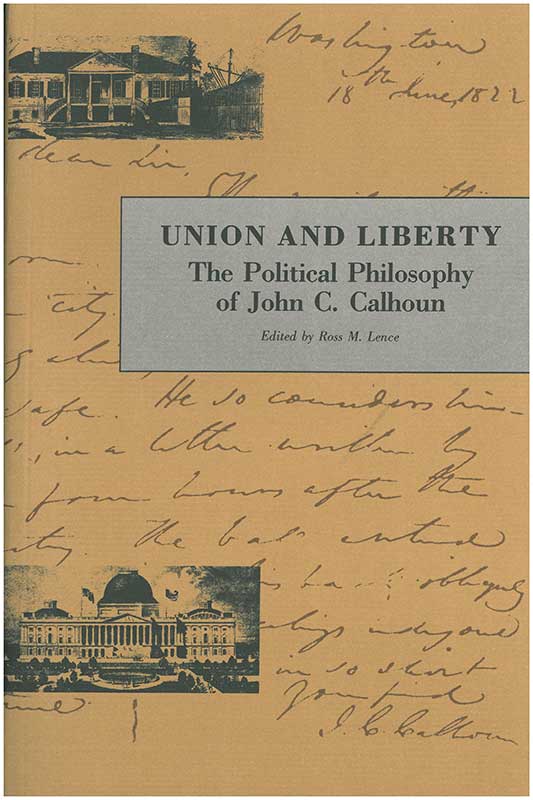
![CalhounUnion 9780865971035 800h 72]()
Union and Liberty
by John C. Calhoun
/ Learn MoreCalhoun’s most important constitutional and political writings are now available as complete, unabridged texts and in a single volume, many for the first time since the 1850s. These writings address such issues as states’ rights and nullification, slavery, the growth of the Federal judicial power, and Calhoun’s doctrine of the “concurrent majority.” Ross M. Lence was Professor of Political Science…
-
![AlchianandAllen 9780865979055 800h]()
Universal Economics
by Armen A. Alchian and William R. Allen
/ Learn More“No one has ever done price theory better than Alchian—that is, no one has ever excelled Alchian’s ability to explain the reason, role, and nuances of prices, of competition, and of property rights. And only a precious few—I can count them on my fingers—have a claim for being considered to have done price theory as well as he did it.”…
-
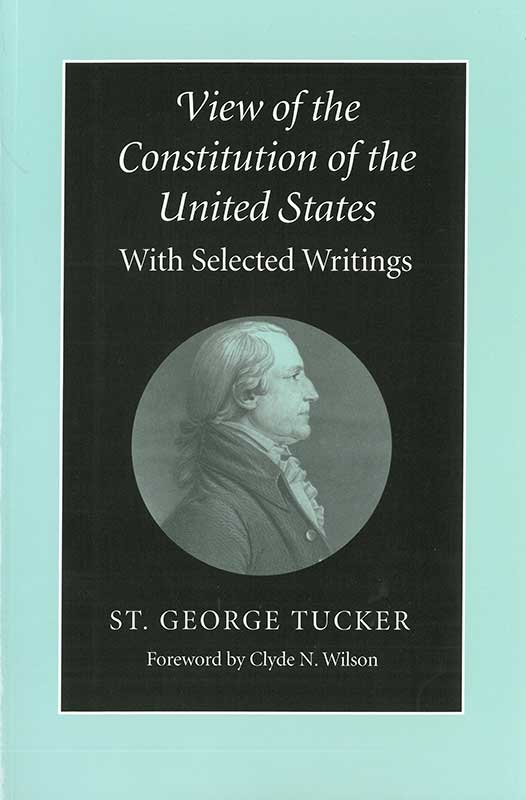
![TuckerView 9780865972018 800h 72 2]()
View of the Constitution of the United States
by St. George Tucker
/ Learn MoreSt. George Tucker’s View of the Constitution, published in 1803, was the first extended, systematic commentary on the United States Constitution after its ratification. Generations learned their Blackstone and their understanding of the Constitution through Tucker. Clyde N. Wilson is Professor of History and editor of The Papers of John C. Calhoun at the University of South Carolina.
-
![BurkeVindication 9780865970106 800h 72]()
A Vindication of Natural Society
by Edmund Burke
/ Learn MoreThis is a new edition of Edmund Burke’s first work, originally issued anonymously in 1756 as a letter attributed to “a late noble writer.” In 1757 Burke produced a revised version with a new preface but still did not attach his name to the work. This Liberty Fund edition is based on the 1757 revision. The Vindication is a political…
-
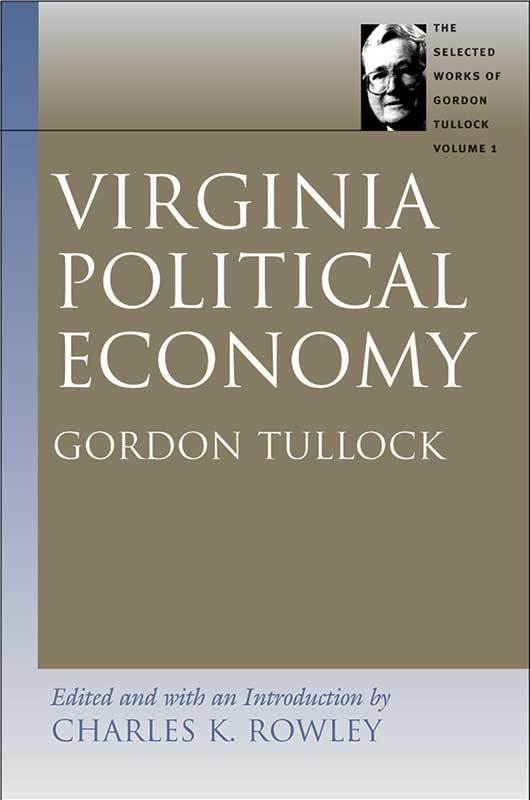
![TullockV1Virginia 9780865975316 800h 72]()
Virginia Political Economy
by Gordon Tullock
/ Learn MoreEditor Charles Rowley calls Gordon Tullock “an economist by nature rather than by training.” Tullock attended a one-semester course in economics for law students at the University of Chicago but is otherwise self-taught. Tullock’s background has enabled him to analyze economic problems with an open mind and to deploy his formidable intellect in a truly entrepreneurial manner. Virginia Political Economy…
-
![ShilsVirtue 9780865971486 800h 72 2]()
The Virtue of Civility
by Edward Shils
/ Learn MoreEdward Shils was one of the leading intellectual defenders of freedom in the twentieth century. In these nine essays, he explores the importance of civility and tradition to a free society. The essays’ significance is enormous, for Shils was one of the first and assuredly one of the most courageous writers to examine the nature of civility and civil society…
-
![OakeshottVoice 9780865973244 800h 72 2]()
The Voice of Liberal Learning
by Michael Oakeshott
/ Learn MoreBy 1989, when Michael Oakeshott’s Voice of Liberal Learning was first published by Yale University Press, books that held a negative view of education in the United States had garnered a remarkable amount of attention. Oakeshott’s approach to the subject is subtle, comprehensive, and radical—in the sense of summoning readers to the root of the matter. That root, Oakeshott believed,…
-
![Belz 9780865972735 800h 72]()
The Webster-Hayne Debate on the Nature of the Union
by Herman Belz
/ Learn MoreThe debates between Daniel Webster of Massachusetts and Robert Hayne of South Carolina gave fateful utterance to the differing understandings of the nature of the American Union that had come to predominate in the North and the South by 1830. To Webster, the Union was the indivisible expression of one nation of people. To Hayne, the Union was the voluntary…
-
![BuchananEconomistsDo 9780913966655 800h 72 2]()
What Should Economists Do?
by James M. Buchanan
/ Learn MoreThis volume is a collection of sixteen essays on three general topics: the methodology of economics, the applicability of economic reasoning to political science and other social sciences, and the relevance of economics as moral philosophy. Several essays are published here for the first time, including “Professor Alchian on Economic Method,” “Natural and Artifactual Man,” and “Public Choice and Ideology.”…
-
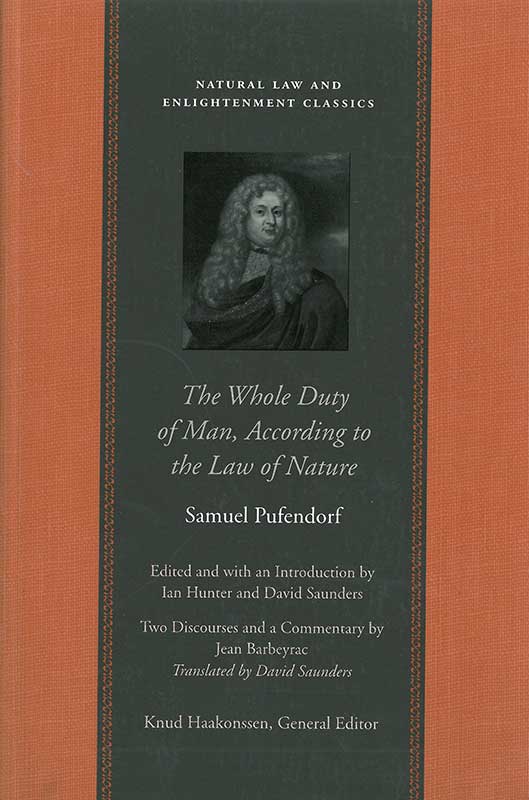
![PufendorfWholeDuty 9780865973756 800h 72]()
The Whole Duty of Man, According to the Law of Nature
by Samuel Pufendorf
/ Learn MoreSamuel Pufendorf’s The Whole Duty of Man, According to the Law of Nature suggested a purely conventional basis for natural law. Rejecting scholasticism’s metaphysical theories, Pufendorf found the source of natural law in humanity’s need to cultivate sociability. Samuel Pufendorf (1632–1694) taught natural law and was court historian in both Germany and Sweden. Ian Hunter is Australian Professorial Fellow in…
-
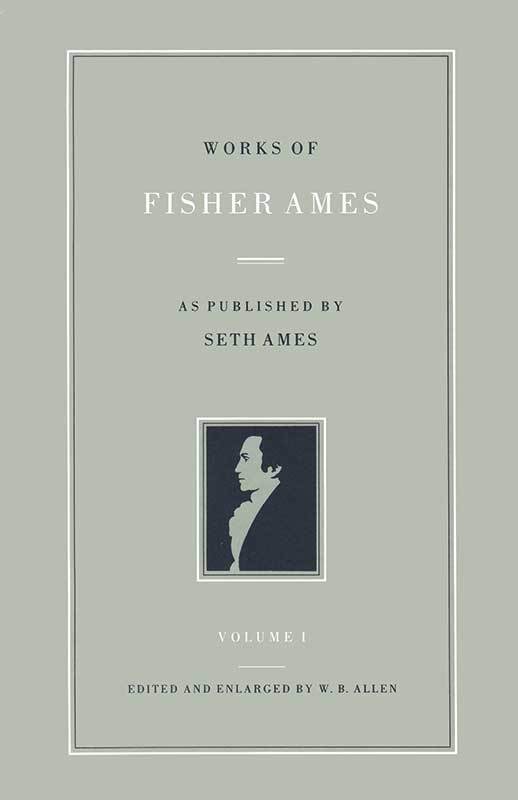
![Ames 9780865970168 800h 72 2]()
Works of Fisher Ames
by Fisher Ames
/ Learn MoreFisher Ames was a leading New England Federalist and sublime critic of Jacobin Democracy and the French Revolution. During the presidency of George Washington, he was the leader of his party in the House of Representatives. Ames was active in public life from 1787 through 1807 and was instrumental in one drafting of the First Amendment to the Constitution. His…
-
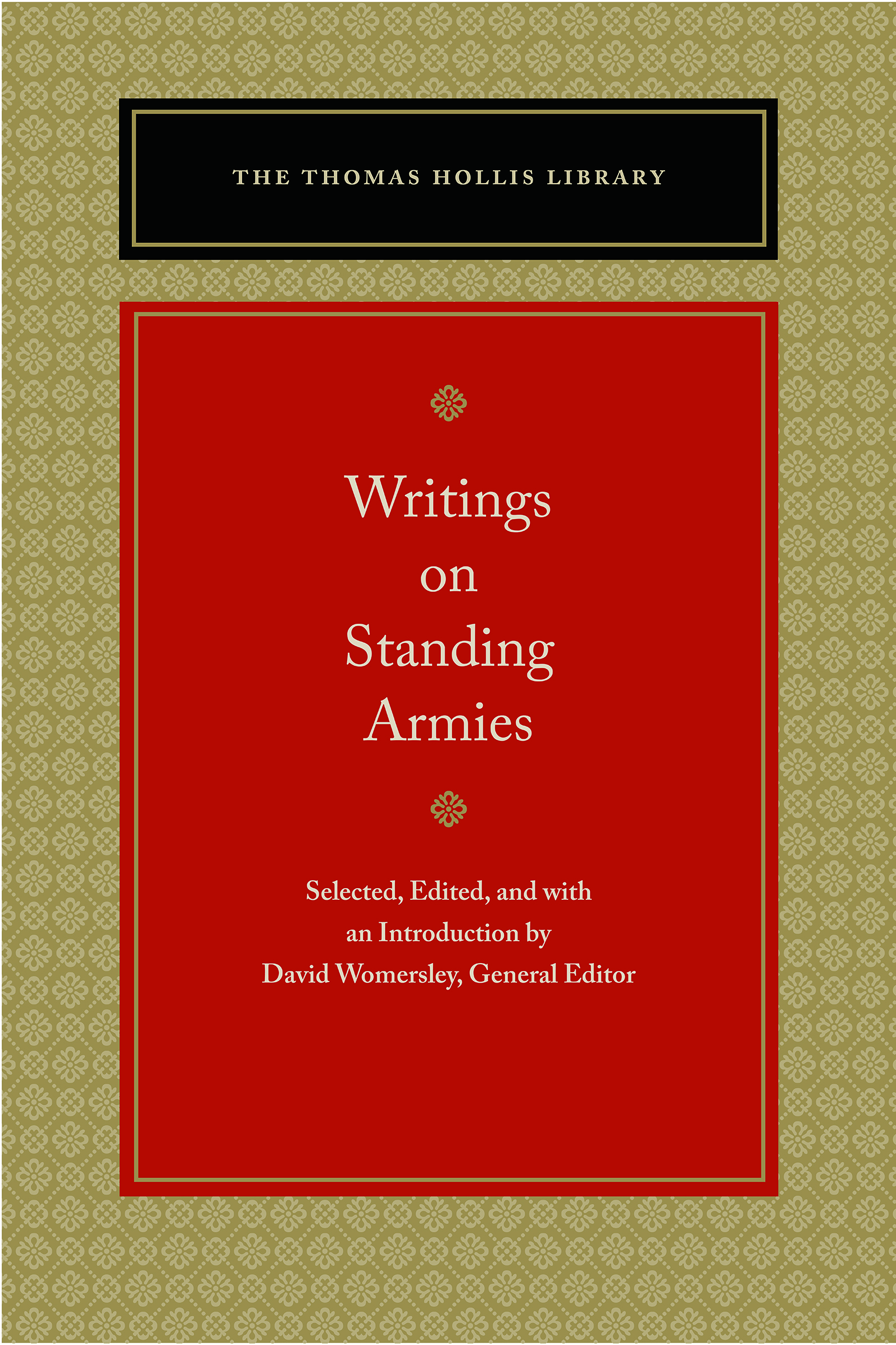
![Womersley StandingArmies 9780865979123]()
Writings on Standing Armies
by David Womersley
/ Learn MoreThe questions of where to locate, in whose hands to place, and how to exercise the state’s powers of deadly military force inform a perennial topic in political theory and coalesce into a recurrent problem in political practice. Liberty Fund presents Writings on Standing Armies, a newly collected, authoritative edition of the most important pamphlets on the “standing armies” controversy…

Promotions
Stayed tuned for future promotions!