This is my archive

bar

Punishment, Poetry, and Percy Jackson

In this inspiring episode, author, poet, and lawyer Dwayne Betts describes the terrible choice he made at age 16 that left him in prison for almost a decade. Despite his tragic situation, the young Betts was determined to see his sentence more as an opportunity than a punishment. EconTalk host Russ Roberts explores this experience with Betts, as well as the project born from his time in prison, the Million Books Project. The role of books in Betts’s life- it’s a line item in his personal budget!- is empowering and encouraging. If Betts can’t make you want to read great books, I’m not sure who can. We hope you’ll join us in continuing to reflect on this powerful episode. Use the prompts below and journal your thoughts. Or perhaps start a conversation at the dinner table. And by all means, grab some books. The shadow lineages are long… If we’re to get from Homer to Percy Jackson, it’s going to be a long night.       1- What does the process of reading look like for Betts, and how has his process changed over time? What does your process look like? Do you take notes, journal, dog-ear pages, or write in your books? How does Betts’s approach compare to Ryan Holiday’s? To what extent can Betts’s approach be seen as an “effort that goes into producing greatness? (This episode with David Epstein might also be helpful here.)   2- Why does Betts believe that reading is probably the most democratic thing we can do? How can we use reading to talk to people different from ourselves? (You might want to revisit this Extra, based on the recent episode with Zena Hitz.)   3- Pierre Goodrich, the founder of Liberty Fund, was purported to suggest never reading an introduction to a book. Why do you think that might be, and how does Betts’s plan for “new” introductions to the MBP books speak to Goodrich’s admonition?   4- What is the purpose of the Million Book Project, as Betts describes it? Why does he not want the books housed in a prison library, and why does he think about it more like a museum experience than a library experience? Which part of the program sounds most promising to you, and why?   5- How/when did you “find” your capacity to read multiple books deeply- college? Elsewhere? Consider Bette’s approach to his MBP “syllabi”- a selection each of fiction, non-fiction, poetry, and a writing prompt. How well do you think this will work with prison populations? What other populations might benefit from such an approach?   6- The conversation concludes with Roberts asking Betts for his thoughts on the current environment with regard to race in America today. What most surprised you about Betts’s response?   (0 COMMENTS)

/ Learn More

Tyler Cowen Doubles Down

  I criticized (here and here) a recent article that Tyler Cowen wrote in Bloomberg about COVID-19 and lockdowns. Last week he doubled down by raising the issue of the elderly. The title fits his theme, is “Yes, Covid-19 Is More Serious for the Elderly. So What?” Cowen starts with an analogy to 9/11. (Everything in the shaded areas is a quote from his article.) Consider 9/11, when some 3,000 Americans died. The U.S. mounted a very activist response that included new security procedures at airports, crackdowns on money laundering, increased surveillance and two wars. Not all of those choices were prudent, but nonetheless they qualify as a very vigorous response. All true, but I wonder what point he is making. Then he gets to it. The point is this: Had 3 Americans been killed rather than 3,000 — if, say, 9/11 was a U.S. holiday the hijackers didn’t know about, so fewer people were working — the optimal response would not have been all that different. There were a lot of casualties, but it is also significant that several airplanes were brazenly hijacked and flown into major iconic buildings, the Pentagon was hit, and Congress itself came under threat. He says that “the optimal response” with 3 deaths plus the iconic destruction would not have been “all that different.” I gather he means that it would not be all that different from what would have been the optimal response with the actual 3,000 deaths. But he does not tell us what the optimal response to that was. Isn’t that the nub of the debate over lockdowns—what is the proper response? I count Bush’s war on Iraq as one of the most evil government policies of this century. Even if you don’t agree, it was big. So if we got close to the optimal response, then Cowen is saying that the Iraq war was close to optimal. And, by the way, in case he or you need reminding, that war caused many thousands of deaths of young, old, and in-between. Almost all were relatively innocent. Polities that do not respond to such attacks [as 9/11] soon find themselves out of business. Not only do they invite further intimidations, but their citizens lose faith in the government’s ability to maintain public order or shape the future of the nation. The entire U.S. system of government may well have been at stake in the decision to respond to 9/11 in a significant way. Even for things like 9/11, we should reject Cowen’s argument. It would have to apply to every government whose country is attacked. Ethical principles generalize, or they are not principles. There’s nothing special about the United States is that respect. So, for instance, when the U.S. government attacked Iraq, Cowen’s recommendation would have had to be for the Iraqi government to attack the United States. That would likely have cost thousands of lives if they could have pulled it off. They probably couldn’t have, but then we’re stuck with the non-principle that might makes right. But Covid is not like 9/11—unless Cowen wishes to suggest that the virus was biological warfare perpetrated by a foreign power. I don’t think that’s what he’s saying. To be sure, the number of U.S. victims is high — 220,000 and counting, plus some number of excess deaths from broader causes. But the event itself is so cataclysmic that “downgrading” those deaths by saying many of the victims were elderly doesn’t make a big difference in terms of formulating an optimal response. Cowen errs again in likening Covid to a military or terrorist attack. Yes, the murder of an ailing 80 year old is basically like the murder of a 20 year old. But succumbing to an illness does not involve the malicious conduct of a malefactors. That takes the moral and legal question of wrongdoing out of the matter. Now we are left with plain hardship: Succumbing to an illness is much more tragic in the case of an otherwise healthy 20 year old than an ailing 80 year old. Any reasonable ethical reckoning would agree. The focus on protecting the elderly flows simply from two facts: (1) they’re (we’re–I turn 70 next month and my wife is 71) most at risk and (2) they’re often retired and, therefore, are better able to isolate. So I think it makes a huge difference in an optimal response. Let the people who are lower risk be out in the world. As they spread the virus, we augment immunity. That doesn’t hurt the elderly. It helps us. Furthermore, it is likely that coronaviruses will return, which is all the more reason to excel in response now. To consider another example, during the 2002-2003 outbreak of SARS-1, 774 people died worldwide, none of them in America. The countries that took that virus seriously — Korea, Taiwan and Canada, to name a few — have performed much better during the current crisis. And many of the best biomedical responses, including vaccines and monoclonal antibodies, have evolved from very serious responses to previous pandemics. I agree that we should excel. But how? Do you do it with lockdowns, or do you do it with deregulation, including allowing people to try various vaccines whatever stage they’re at, and allowing self-test kits for the virus to be sold, kits that could be available now for less than $10 a pop, but which the Food and Drug Administration won’t let us have? And now Cowen’s pièce de résistance. One final (rather outlandish) thought experiment: Imagine that an enemy of the U.S. demanded that 100 90-year-old Americans be handed over each year for execution. Of course America would refuse. The age of the victims would not be a factor in that decision. Cowen persists in his false analogy of a terrorist or military attack. As Ryan Sullivan, my co-author on my recent Wall Street Journal op/ed advocating that schools be opened, put it, millions of years of children’s lives are being robbed. Ryan has an autistic son in kindergarten and a daughter in first grade. Both, but especially the son, are losing a lot. Cowen’s policy is more analogous to the terrorist attack on 9/11 than the virus is. Notice also, what’s missing in Cowen’s paragraph above: the idea of tradeoffs. Of course, we wouldn’t give over 90 to 100 year olds. But he’s willing to sacrifice the well-being of 50 million school-age children. Remember his  casual “It just doesn’t seem worth it” remark about allowing kids to go back to school. He handles the tradeoff by not mentioning it. Both of Cowen’s pieces resemble the work of a mainstream journalist ignorant of market economics. The essence of economics is tradeoffs. Precious little in his two pieces talks seriously about tradeoffs.   (0 COMMENTS)

/ Learn More

Viral Silence

This semester I volunteered to teach both of my classes in-person.  I’ve also given four public talks in Texas, and one at GMU.  All of these venues had mask mandates.  And in each case, I noticed an eerie pattern: Almost no one talks to each other anymore!  In the past, I had to ask classes to quiet down so I could start class.  Now I usually face dead silence.  Public lecture halls used to overflow with the chatter of the crowd.  Now you can practically hear a pin drop. From what I’m told, I’m not alone.  When I talk to other faculty who teach in-person (rare, I admit), they too remark upon this viral silence. What’s the explanation?  Here are my leading candidates. 1. Health fear. People avoid talking to others because they think it increases their odds of getting sick.  If you initiate a conversation, the other person might move closer to hear you better, or even remove his mask to speak more clearly. 2. Social anxiety. People avoid talking to others because they’re worried about upsetting others.  Maybe the other person will feel that you’re standing too close or wearing your mask improperly.  Maybe they’ll even bite your head off for your offense. 3. Poor audibility. Conversation is always a gamble.  If masks make it hard to hear and be heard, the gamble looks worse.  So fewer people place bets by opening their mouths. 4. Lack of normal social cues.  Human beings rely heavily on facial expressions to guide conversation.  So if you can’t see other people’s faces, you don’t know how to talk to each other.  This in turn usually leads to no talking at all. 5. General depression. People are so sad they don’t feel like talking. 6. The social multiplier. An extra factor to consider: Perhaps the preceding factors are all small, but when everyone has the same problem, the total effect remains enormous because humans feed off each other.  My social anxiety amplifies your social anxiety which in then further amplifies my social anxiety. Other stories?  What’s the truth of the matter? (0 COMMENTS)

/ Learn More

Krastev on Pandemic and Politics

On “Persuasion” (the newsletter-think tank launched by Yascha Mounk after the Harper Letter) there is an excerpt of Ivan Krastev’s forthcoming book, Is it Tomorrow Yet? Paradoxes of the Pandemic. Krastev struggles with the impact of the pandemic of different political regimes. His starting point is that “more than any other crisis, a public-health emergency can induce people voluntarily to accept restrictions on their liberties in the hope of improving their personal security. Invasive surveillance systems and bans on freedom of assembly have been introduced and accepted around the world with little public pushback.” It seems we should think that these kinds of crises are healthy for authoritarian leaders, who thrive on fear. Yet Krastev points out that such authoritarian leaders typically are “problem solvers”, but of problems of their making (up). As a seemingly unstoppable crisis that has riveted the attention of the global public, Covid-19 deprives authoritarian and authoritarian-minded leaders of the chance to manufacture a “better crisis.” Far from citing the coronavirus crisis to justify an increase in power, a high-profile slew of populists and autocrats have strenuously and ridiculously denied the very existence of the pandemic. … Political leaders in general prefer “enemies” who can unconditionally surrender to anonymous “threats” that need to be managed over time. Would-be dictators, in particular, find it more rewarding to pose as “deciders” than to do the hard work required of “problem-solvers.” The former allows them to vaunt their I-alone-can-solve-it unilateralism, while the latter requires them to cooperate with others, to freely admit their own mistakes, and to spend the time needed to master complex and evolving situations. Flashy stunts by men-of-action must give way to slow and laborious efforts by anonymous professionals. It is not only that authoritarian leaders despise crises that they do not freely choose and which require them to stake their prestige on cooperatively resolving problems that, at the outset, are difficult to understand. They also spurn “exceptional situations” that compel them to respond with standardized rules and protocols rather than with ad hoc, discretionary moves. Mundane behaviors such as social distancing, self-isolation and washing hands are the best way to stop the spread of the disease. The leader’s strokes of genius, inviting thunderous applause, are perfectly irrelevant. Worse still, the palpable courage of ICU doctors and nurses makes phony heroics in presidential palaces appear even more pathologically narcissistic than before. Another point Krastev makes is that the global nature of the crisis, “the ubiquity of the disease”, “makes it possible for people to compare the actions of their own governments with the actions of other governments around the world. Success or failure at flattening the curve provides a common metric, making cross-national comparisons possible and putting strong pressure on governments that had previously succeeded in insulating themselves from public criticism. The opening provided by easy government-to-government comparisons gives citizens the capacity to grade their government’s performance. This is a problem for authoritarian regimes and authoritarian-minded leaders, who previously got away with staged “performances” supplemented by the silencing of whistle-blowers and critics.   The whole thing is well worth reading, and I look forward to the book. What Krastev writes about authoritarian regimes is, in fact, a problem for political leaders in democracies, too: perhaps spectacular decisions in tackling the epidemic (the kind that politicians tend to favor) are not as effective and important as leaders believe. Perhaps containing the virus is an exercise in self-governance that some people are more adept at conducting than others, because of their history and their institutions. Krastev rightly points out that it is too early to say: success and failure in dealing with Covid-19 will be properly assessed years from now. I look forward to his books to see how he develops these views presented in the “Persuasion” excerpt. (0 COMMENTS)

/ Learn More

Fredrik deBoer on the Cult of Smart

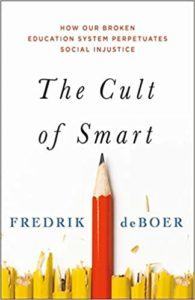
Author and journalist Fredrik deBoer discusses his book The Cult of Smart with EconTalk host Russ Roberts. DeBoer argues that there is little that can be done to change the distribution of success in K-12 education. He argues that educational reforms like charter schools and No Child Left Behind are doomed to failure. At the […] The post Fredrik deBoer on the Cult of Smart appeared first on Econlib.

/ Learn More

Illinois Restaurants Collude to Expand Output

  Seventy local businesses met Thursday night, agreeing to keep serving customers indoors despite a new state order, a Bradley restaurant owner said. Thomas Spellman, owner of Hoppy Pig, said his restaurant will continue serving patrons inside, defying Gov. J.B. Pritzker’s new order on some regions to cease indoor dining to lessen the spread of the coronavirus. “We have families. I have forty employees, you know, they have families, they have houses and they have kids and they have to pay for school,” Spellman said. “The government’s not paying for them. We don’t want the government to pay for us. We just want to do business the way we do business.” This is from Chris Coffey, “70 Suburban Businesses Meet, Agree to Continue Serving Customers Indoors Despite State Order,” nbc chicago, October 23, 2020. (0 COMMENTS)

/ Learn More

Look at money!

I ended a recent MoneyIllusion post with this amusing equation, as a sort of throwaway: M*V = C + I + G + (X-M) The comment section convinced me to say a bit more about the equation. How should we think about it? Start with a barter economy and look at the exchange of apples and oranges. If the price of apples in terms of oranges moves over time, how should we think of that change? Obviously it might reflect a shock in the apple industry, the orange industry, or both. Therefore it might be useful to compare each good against many other goods, to see if one of the two goods was clearly moving in price against almost all other goods. A more familiar example is exchange rates. If the yen price of euros goes up, that might mean a stronger euro, a weaker yen, or both. Here again you might look at each currency in terms of all other currencies, to get a better read as to where the “shock” was concentrated.  If the euro appreciated against all other currencies, then that would be suggestive that the move didn’t just reflect events in Japan. Of course most transactions involve money for goods.  My general view is that in a microeconomic context it makes more sense to focus on the good in question, whereas in macro I focus on the money side of the transaction. Consider a case where global oil output suddenly falls by 2%, and oil prices shoot up by 20% in the short run.  (Oil demand is highly inelastic in the short run.)  In that case, money expenditures on oil rise by about 18%.  And yes, that expenditure is a part of NGDP.  So why do I focus on the OPEC output shock and not the money side when explaining why 18% more is spent on oil?  Because the oil market is just one of many uses of money.  If people spend more on oil, it’s pretty easy to move money over from other sectors, or from savings. In macro it’s almost exactly the opposite.  When we spend more at a macro level, we have more money being exchanged for thousands of different types of goods, services, and assets, in a wide variety of markets.  Now it’s simpler to focus on the money side of the transaction.  It’s easier to figure out why M times V goes up, rather than explain spending on many different types of goods. In my book on the gold standard I looked at changes in the price level, although I would have used NGDP if better high frequency data were available.  I found that the easiest way to explain the big fall in global prices (and NGDP) during the early 1930s was to look at changes in the supply and demand for gold, rather than C + I + G in dozens of countries. That’s not to say it’s impossible to tell a “Keynesian” story.  You could claim that reduced animal spirits led to less investment demand and a lower equilibrium global interest rate.  A lower interest rate boosted gold demand (or reduced gold velocity.)  But in practice, animal spirits don’t typically change that dramatically for no reason, especially in the aggregate.  In the early 1930s, it was increased demand for gold by central banks that first triggered the Great Depression, and this is what later reduced “animal spirits”, leading to additional feedback effects that further boosted gold demand and further reduced NGDP and prices. Overall, I believe that NGDP during the gold standard can be best explained by focusing on the global gold market, but it’s not the only option.  It’s when we turn to fiat money regimes that the argument for a monetary explanation for NGDP becomes completely overwhelming, for two reasons: 1. Central banks have almost infinite ability to impact M (and great ability to impact V as well—via IOER) 2. Central banks often have mandates to target things that are closely related to NGDP, like prices and employment. Perhaps the following analogy would help explain why the money focus is even more desirable with fiat money than with gold. With old-fashioned sailing ships, you might want to focus on the captain’s decisions when explaining the path of the ship, but wind and waves would also play a non-trivial role. With modern oil tankers, you’d be crazy to not focus on the captain’s decisions when explaining the path of the ship; the role of wind and waves would be trivial. Now let’s return to M*V = C + I + G + (X-M) It’s an identity, so it tells us nothing about causation.  One can think of this equation as a sort of argument, a debate.  It reflects two ways of describing NGDP, and it can be viewed as a dispute as to which approach is more useful in explaining what causes changes in NGDP.  Should we focus on the goods sold, or the money spent on those goods? When inflation is extremely high, it’s pretty obvious that the monetary approach is the most useful.  You can’t explain hyperinflation by looking at what causes prices rises in 13,000 individual markets, and then adding them up.  There’s obviously a common factor. In most cases, close to 99% of hyperinflation is due to money growth, and the rest is higher velocity.  When inflation is very low, it’s more debatable as to which approach is the most useful for explaining changes in P and NGDP. I happen to believe the monetary approach continues to be the most useful framework at lower rates of NGDP growth and inflation, because even though M and P (or M and NGDP) are no longer closely correlated, the central bank can and should move M to offset changes in V.  When if fails to do so, we can think about monetary reform proposals to make that failure less likely in the future.  Such reforms were enacted after both the Great Depression and the Great Inflation, which is why we now freak out about 1.5% inflation when there’s a 2% target, instead of minus 12% inflation or plus 13% inflation, which used to happen before we fixed the Fed. If the monetary approach were not the most useful, then it’s unlikely that Fed reforms would have eliminated the wild price level swings we used to see, from double digit inflation to double-digit deflation.  Perhaps fiscal reforms could be said to have fixed the deflation problem (I doubt it), but obviously fiscal didn’t fix the high inflation episodes. So what does M*V = NGDP actually mean?  One definition is, “The person who wrote down this equation believes that one should explain movements in NGDP by looking at the market for money.”  It’s a sort of exhortation:  Look at money! And what does C + I + G + (X-M) = NGDP actually mean?  One definition is, “The person who wrote down this equation believes that one should explain movements in NGDP by looking at the factors that determine each type of spending.”  It’s a sort of exhortation:  Look at the major expenditure categories! Me:  Look at money!   (0 COMMENTS)

/ Learn More

Costco Joins the COVID Fight

There has been a lot of debate during this pandemic about the effectiveness of mask wearing, the risks involved with social contact and school reopenings, whether or not Vitamin D helps with COVID, and how much of this is all President Trump’s fault.  However, everyone seems to agree that more testing, particularly more available at-home testing, would be a huge step forward.  The problem, of course, is that the government hasn’t been able to provide the necessary testing capacity on a nationwide basis.   What the government is unable or unwilling to do, Costco will happily do.  You might remember early on during the pandemic that Costco was one of the first businesses to require indoor mask wearing at its stores.  Now they are taking another bold step – Costco is now offering at home COVID tests on their webpage.  They aren’t cheap – 129.99 – but neither were the first flat screen televisions 20 years ago.  Costco sells more wine than anyone in America, and I wouldn’t be stunned if they became our biggest seller of COVID tests pretty soon. (0 COMMENTS)

/ Learn More

Rejoinder to Appelbaum on Friedman

By John P. Mackey and Walter E. Block   In his September 18, 2020 New York Times column, Binyamin Appelbaum appeared to be highly critical of Milton Friedman. The former started out by calling the latter “a free-market ideologue,” and he did not mean this as a compliment. He ended on this note: “After 50 years of listening to Friedman, it’s time to do something about the flaws (in the views of this Nobel Prize winning economist).” In between, he maintained we should no longer wait for, or rely on, businessmen to renounce “selfishness portrayed as a principled stand,” as he purported Friedman would have it. It is now time- it is past time, in his view, to get the government involved in compelling the wealthy in effect to support social justice. It would appear at the outset to be a 180 degree difference between these two writers. Not so, not so, at least not when it comes to goals. Both seek an end to poverty, favor prosperity, freedom and economic development. Appelbaum supports egalitarianism, Friedman did not, but even here it is possible to at least partially reconcile their differences. The journalist favors heavy taxation of the rich and financial support for the poor; the economist would go part way in that direction with his negative income tax (those at the bottom end of the income distribution pay a negative tax; e.g., receive a subsidy). Moreover, Friedman would attest that economic growth disproportionately helps the impoverished. 200 years ago, 94% of everyone alive on Planet Earth lived on less than $2.00 per day. Today it is only 10%.  The average lifespan in 1820 was 30, today it is 72.6 (which is higher than in any country in 1950).  In 1820, illiteracy rates were 88%, while today they have shrunk to only 14%. No, the gigantic, stupendous, difference between the two scholars concerns means, not ends. And here we side completely with the University of Chicago professor who was the most prominent dismal scientist of the 20th century (many scholars would argue that Keynes was), and should continue that position in the present one. What are the specifics? Appelbaum wants to leave off “the public shaming of restaurants that refuse to give paid leave to sick employees” and have a law enacted compelling them to do just that. But what determines employee well-being is total wages, the monetary plus the non-monetary (health care, safety on the job, and other fringe benefits). The firm cares not one whit about the proportions; its eye is only on the cost of the total compensation package. It has every incentive to allocate remuneration in accord with worker preferences. Mr. Appelbaum does not realize that if paid family leave is given, and total compensation (based on productivity) does not change, then something else will be reduced, presumably take home pay. Most workers would rather have higher take home pay than paid family leave if this means to an agreed-upon end is implemented. This is basic economics 101, and there are few people who have contributed more to it than Milton Friedman. Similarly, the New York Times editorialist avers: “Instead of pleading with McDonald’s to raise wages, raise the federal minimum wage.” But as Professor Friedman would explain, this legislative enactment does not raise compensation, certainly not in the long run; rather, it serves as a barrier over which an employee’s productivity must rise, if he is to obtain and keep a job. When compensation is legislatively raised above what the labor productivity of the low-skilled worker is contributing, the firm will either be forced to make an investment in new technology and/or take on more highly skilled employees, so as to substitute for the displaced workers.  Keep raising it, and more and more less-skilled workers will be legislatively consigned to permanent unemployment. Again, neither man wants that. They disagree on means, not ends. Also on Applebaum’s wish list is that our society “combat discrimination … reduce pollution (and) maintain community institutions.” Friedman was certainly a world class economist, and his legacy also includes many of his students. Gary Becker, Thomas Sowell and Walter Williams would be the first to reply to Appelbaum that different wage levels, whether between whites and blacks or men and women, do not necessarily indicate discrimination. Friedman would have no problem with a law reducing pollution (he supported his colleague Ronald Coase’s solution in this regard), but he would insist that if any one firm carried out this policy, it would court bankruptcy. He also had no problem with supporting charitable organizations; he only insisted that people do this with their own money, not that of others (such as CEOs on behalf of stockholders). States Mr. Appelbaum: “Friedman’s negative vision of government has helped to obscure the ways the public sector can help the private sector, for example by investing in education, infrastructure and research.” But a careful perusal of his famous book, Capitalism and Freedom will demonstrate that Friedman’s concept of “neighborhood effects” supported precisely these three policies. He saw a market failure in what most economists would call positive externalities: we all benefit from the education of others, infrastructure that we need not use directly and general research. Therefore, the government should subsidize these efforts, lest resources be misallocated. One last example. The editorialist wants “to convince banks to steal less money from customers.” This is presumably a misprint. Obviously, he wants savings institutions to engage in no robbery at all. Does anyone doubt that the economist would enthusiastically support this? There are deep dark chasms between Freidman and Appelbaum concerning means to an end, but less so, far less so, regarding goals they both share. John P. Mackey is Co-Founder and CEO of Whole Foods Market Walter E. Block is Harold E. Wirth Eminent Scholar Endowed Chair and Professor of Economics at Loyola University New Orleans (3 COMMENTS)

/ Learn More

How Much Should Young People Be Punished?

Great debate on lockdowns. I like what retired Professor John A. Lee has to say. Economist Dan O’Brien is also very succinct: How much punishment are we willing to inflict on young people? The guy who put this together clearly doesn’t like the message of Professor Tomas Ryan, the advocate of lockdowns, as evidenced by the crawls he types on the screen as Ryan talks. I found this alternately amusing and annoying. Trivia question: What is the number of people under age 25 who have died of COVID-19 in Ireland? The answer is in the 16-minute video. HT2 Don Boudreaux. (0 COMMENTS)

/ Learn More