
This is my archive

bar

The Economics of the Hispanic Scholastics

Economics, as a branch of knowledge concerned with human wellbeing, is somewhat like Jenga. The structure cannot hold if certain pieces, such as Adam Smith’s classical school, are removed.  In Economics: An Introductory Analysis, Paul Samuelson presents a “family tree of economics” noting the contribution of Aristotle, Aquinas, and medieval Schoolmen to the history of economic thought. This may have been a nod to his dissertation advisor, Joseph Schumpeter, who believed that the 16th century development of natural law theory created a framework for economics as an independent discipline. This natural law tradition was subsequently passed on to Adam Smith at the University of Glasgow.  An intense modern-day look at the economic contributions of late Hispanic Scholastic thought began with Marjorie Grice-Hutchinson (The School of Salamanca, 1952). It continued with Alejandro Chafuen (Faith and Liberty, 2003 and Raices de la Economia de Mercado en la Escolastica Catolica, 2nd Ed., 2017).  The Hispanic Scholastics were the first to formulate a quantity theory of money and purchasing power parity, foundational in the canon of economics. However, it is worthwhile to consider how their methodology employed natural law, civil law, and revelation to explore a subjective theory of value, the moral neutrality of market transactions, and personal consent.  The Hispanic Scholastics’ subjective (not to be confused with relativistic) theory of value applies to all goods, including money. Viewing consumption as the end of all economic activity implies that value is subjective, based on people’s needs and wants, even when those needs and wants are foolish. These ideas persisted on the European Continent with the ordinary person seen as a consumer rather than a producer. In the 18th century, classical economists stressed production, inputs, and cost, even to the extent of holding to a labor theory of value. Measuring hours of labor and other inputs is relatively straightforward; whereas subjective satisfaction or utility is incapable of measurement. A theory of behavior describing how consumers reveal preferences was needed. The time had not yet come to advance theories of value into a coherent synthesis, combining subjective and objective elements.  In the 1870s, Carl Menger in Austria defined the value of an economic good in essentially Hispanic Scholastic terms, i.e. its ability to satisfy a human need. Leon Walras, a French land reformer, modeled money into ratios of exchange between goods. William Stanley Jevons, a British economist departing somewhat from Smith, derived the value of goods from revealed intensities of satisfaction. Within four years of each other Menger, Walras, and Jevons independently set the precedent for marginal supply and demand analysis for understanding market prices. Economics, within the tradition of classical liberalism, is perceived by some to be excessively individualistic and dismissive of national sovereignty. Multigenerational poverty and the hollowing out of employment in certain sectors are serious economic issues. However, sound economic principles formulated over time by those seeking truths about the human condition and the wealth of nations are essential building blocks. There is no need for future generations to bear the economic consequences of ignoring these relatively absolute absolutes.  My recent essay at AdamSmithWorks provides a fuller summary of some of the most important ideas of the Hispanic Scholastics.   Maryann Keating O. is a research fellow at the Indiana Policy Review Foundation. She edited Paul Samuelson’s essays on Economics from the Heart (Thomas Horton and Daughters) and had co-authored several articles and books, including Microeconomics for Public Managers (Wiley-Blackwell). (0 COMMENTS)
/ Learn More

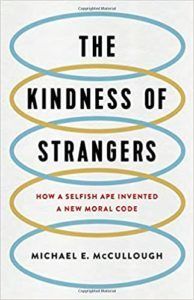
Michael McCullough on the Kindness of Strangers

***** TAKE THE 2020 ECONTALK SURVEY: https://tinyurl.com/y6tzqvg6. VOTE FOR YOUR FAVORITE EPISODES OF THE YEAR! ***** Author and psychologist Michael McCullough of the University of California, San Diego talks about his book The Kindness of Strangers with EconTalk host Russ Roberts. McCullough traces the history of human empathy and tries to explain why we care […] The post Michael McCullough on the Kindness of Strangers appeared first on Econlib.

/ Learn More

Pandering to the public’s ignorance

Andrew Gelman has a post discussing a website called “Panda”, which provides a wealth of misinformation about Covid-19. What makes the site of interest is that its board contains some pretty big names, including former Trump advisor Scott Altas, as well as some Stanford University professors: The board also includes, among others, Stanford medical school professor Jay Bhattacharya, Stanford biology professor Michael Levitt, and Michael Yeadon, a retired pharmacologist and drug company executive who, according to the website, “believes the pandemic was over in the summer”? Gelman points out that until a few days ago the site was discouraging people from using Covid vaccines: There was also this, from the organization’s webpage entitled, “You asked, we answered,” under the heading, “Would you have the vaccine yourself?”: As for any other medication, a vaccine must be shown to be safe and effective before it is introduced to the general public. Vaccines take 10 to 15 years on average to be developed. . . . Currently, there is no one for whom the benefit would outweigh the risk of these vaccines—even the most vulnerable, elderly nursing home patients. . . .  I guess this statement was a bit of an embarrassment after one of the members of the Panda scientific advisory board publicly stated that he and his mother had received the vaccine. The above link is from 22 Jan 2021, courtesy of the Internet Archive. Go to that page now and that whole section has been removed. OK, fine. But . . . also no acknowledgment of their earlier ridiculous statement. And this is just the tip of the iceberg.  Even the revised statement is loaded with mistakes: the mortality overall is relatively mild compared to past severe pandemics such as the 1918-19 Spanish flu and several more recent influenza pandemics such as the Hong Kong flu of 1968 and the Beijing Flu of 1993. The UK government even declared that “[a]s of 19 March 2020, COVID-19 is no longer considered to be a high consequence infectious disease (HCID) in the UK”. Given that the overall statement was revised within the past week, I’m not sure why they still rely on estimates from March 2020.  In any case, Covid-19 is an order of magnitude worse than the Hong Kong Flu of 1968.  There was very little social distancing in 1968, and without social distancing the death toll from Covid in the US would already exceed a million.  (About 34,000 Americans died of the Hong Kong flu, although the number would be several times larger today, as there are now far more older Americans.) The low mortality across the South East Asia and Oceania super region is likely driven by other factors, possibly prior immunity. I don’t think there’s any evidence that prior immunity explains the success of Australia or New Zealand.  A recent outbreak in Melbourne spread rapidly before being brought under control, and of course Wuhan was devastated back in January.  Does anyone seriously believe that all of China except Wuhan had natural immunity?  (Almost all Chinese Covid deaths were in the Wuhan area.)  Yes, some countries may have some natural immunity, but it’s disingenuous to minimize the role of behavioral changes, which obviously played a huge role in China, Australia, and elsewhere. We are unaware of any studies using sound methodology that show a benefit for masks in the general population. The only COVID-19-specific mask study using sound methodology found no significant impact of mask wearing on the spread of the disease. If you follow the link you find a Danish study that did not even test whether masks help to slow the spread of the disease.  To do so, you’d have to test whether mask wearers are less likely to spread the disease.  Did they even read the abstract? The fatality rate in most people infected with SARS-CoV-2 is very similar to that of the flu. COVID-19 is less severe than the flu for children and young people and more severe than the flu for the elderly with severe underlying illness. I’d call this misleading, albeit not false.  It’s true if by “elderly” you mean a 55-year old man.  However for older middle-aged people, especially men, Covid is far more dangerous than the flu.  Indeed it’s not even close. And this is just ridiculous: On the other hand, it has been observed that winter respiratory mortality patterns are usually associated with a single dominant pathogen at any time, so it could be that (this year at least) COVID-19 has simply supplanted influenza and is, in the main, taking the lives that would have previously been lost to influenza. New York and New Jersey already have more than 65,000 Covid deaths, despite widespread social distancing, and yet they contain less than 10% of the US population.  The entire US usually has far less than 65,000 flu deaths each year. This is also extremely misleading, if not outright false: There is no clear evidence in the literature showing that asymptomatic transmission is a major driver of the pandemic. The poorly supported theory that suggested this, was the main logic behind lockdown policies, which in any event have been shown to have no beneficial effect on death curves. The primary worry was that presymptomatic people would spread the disease, but according the Panda those people are not “asymptomatic”: An asymptomatic person is one who never develops clinical symptoms at all (no sneezing, coughing, fever, loss of taste or smell). This is distinct from a presymptomatic person, who begins to show symptoms after the incubation period of a few days. A meaningless distinction.  Almost every average person would assume the term ‘asymptomatic’ applies to the presymptomatic.  People without symptoms often spread Covid. However, many countries are recording COVID-19 official deaths if there is past evidence of a positive PCR test, or the patient is considered “probable” or “presumed’ to have COVID-19, even where the cause of death is clearly unrelated and symptoms are not present. This generous diagnosing can inflate the number of deaths in the data. Countries categorize deaths as “COVID deaths” using different criteria, so comparisons of such statistics are of questionable validity. In fact, excess death data suggests that most countries have severely undercounted Covid deaths, and also that the excess deaths cannot be explained by other factors like suicide or people not getting cancer screenings. Gelman suggests that this website has links to the conservative movement.  One thing I’ve noticed over the past year is that conservatives seem obsessed with minimizing the severity of Covid-19, and also seem interested in showing that measures to prevent Covid-19 (such as masks) are not likely to be effective.  This “head in the sand” approach has done a great deal to discredit the entire conservative movement with the well-informed part of the population.  That’s a shame, as there are areas (such as economic policy) where conservatives have lots of good ideas.  But they are rapidly losing votes among the college educated part of the population, and this sort of misinformation doesn’t help. (0 COMMENTS)

/ Learn More

To Learn to Desire to Learn: On Shakespeare and Education

How deep has your experience with reading William Shakespeare been? Is that experience tied to your formal education, the theater or movies, or your own personal reading? Do you prefer the comedies to the tragedies, or vice versa? Perhaps you love his sonnets best? In this episode, EconTalk host Russ Roberts welcomes Scott Newstok of Rhodes College to discuss his teaching experience and his new book, How to Think Like Shakespeare: Lessons on a Renaissance Education.   1- Why is Newstok such a strong advocate of teaching Shakespeare today? What is singular about the work of Shakespeare, according to Newstok, and what are we to take from it? To what extent does this align with your own experience of Shakespeare?   2- What does Newstok mean when he talks about the ongoing community of responses to Shakespeare? Why is this so important to him in the study of Shakespeare? (It may help to c0nsider the quote from Kenneth Burke near the 25 minute mark.)   3- What does Roberts find most appealing about Shakespeare? What sentiments or experiences do you share with him? Which Shakespeare plays have you read and/or see performed? How did they affect you? What did you learn from them?   4- What constitutes good teaching for Newstok? What role does drafting play in his teaching? (Think about how art, math, writing, etc. emerge.) How might this practice be put to good effect in your life?   5- What makes a conversation ideal? What does Roberts mean when he suggests that parents and teachers instruct young people on manners, but not conversation? To what extent is it possible to teach the art of good conversation, and how? (0 COMMENTS)

/ Learn More

Is there politics after polarization?

A few days ago, Politico published a dense piece featuring a number of intellectuals and academics, left and right, suggesting ideas to “unite” the country, as President Biden proposed to do. As a non-US citizen, I am interested more in the method than in the substance of the different ideas proposed in the article. What is it that does this “unifying”? I30 suppose we are dealing, by necessity, with highly symbolic moves, which won’t necessarily make everybody happy. (This is always difficult in politics, even when we are not directly dealing with taking money out of somebody’s pocket to give it to somebody else.) Such moves should, broadly speaking, restore the conditions for a more tranquil partisanship. The problem with “political polarization”, in the US as much as in Europe, it is a matter of tone as well as of political posture. How can we restore public debate in which people stop at shouting at each other? Nick Eberstadt has a point that sounds reasonable to me: America will not be able to do much healing in the next four years if the 47 percent of America who voted against the president-elect are treated as a subjugated population. Yet knowingly or not, this is how the election’s victors are behaving. A large minority of our nation can scarcely air its opinions in the academy or, increasingly, in the establishment media. Their speech is ever more policed in the workplace and online by rules tantamount to “victor’s justice. Of course that’s more easily said than done. And some other of the proposals Politico has assembled seem to be pointing in quite the opposite direction. Some of them are down to heart: Abraar Karan proposes a push for better face masks as a way to convince more Americans to use face masks, Caitlin Rivers some sort of national mourning for COVID19 victims. A fair number of Poltico’s proposals are, however, concerned with history, and they stress the need for a shared narrative which resembles the various streams of “revisionist” history dominating in the last few years. There is certainly a lot to learn in these accounts of history – but is this something that would actually unite Americans as describe above? It seems to me that it would actually go the opposite way, strengthening the tendency toward the sense of “victor’s justice” Eberstadt cautions against. Hence my question: is “uniting” Americans after a much heated electoral campaign something that people really care about? Is it simply a posture for reassuring the losers? Is it something only those who lost care about? In a battle so symbolically intense, is there any genuine intention to meet halfway, on either side? It seems to me that one component of political polarization is the belief in a basic difference in the moral fiber of one’s opponent. The more intense the fight, the greater the impression that something essential is at stake: and in these later years, it is seldom policy-related, it is far more personality-related, particularly after Donald Trump. Self-righteousness becomes ubiquitous in a polarized political spectrum. How do you back down? And is there anybody who really wants to do so? (0 COMMENTS)

/ Learn More

People Have Purposes; Markets Don’t

In a comment on my blog post on the GameStop controversy yesterday, Jonathan Seder wrote: Remember – the purpose of the capital markets is to facilitate price discovery for equities, and to direct capital to the most productive uses. Passive investors are outsourcing that job to traders – individuals and pros – who gather information and try to identify pricing errors. (I think there’s an argument to be made that people with business expertise have some moral obligation [on top of the financial incentives] to play The Game rather than being passive investors.) Jonathan’s first sentence is incorrect. He has confused, as many people do, one beneficial result of markets with their purpose. Markets don’t have purposes; people do. Markets come about as a result of people pursuing their purposes. When I buy shares or sell shares, my purpose is not to facilitate price discovery. My purpose is to buy shares or sell shares and, hopefully, make myself better off. Ditto the person or institution on the other side of the buy/sell order. The distinction between purpose and results is not specific to capital markets. It applies to all markets. In pursuing our own self-interest in any market, we, buyers and sellers, drive the price to some level that informs other people. Let’s say, for example, that the demand for and supply of computer programmers leads to entry-level programmers making $80K a year, and that the demand for and supply of social workers leads to entry-level social workers making $45K a year. Those price signals are valuable information that can help guide decisions of undergrads who are willing to pay attention to them. But the purpose of those price signals is not to tell people what jobs they should train for. Those price signals don’t have a purpose. People have purposes. Price signals are inanimate. Notice that throughout the paragraph I quote from Jonathan, he makes the same mistake of attributing purposes. He writes: Passive investors are outsourcing that job to traders – individuals and pros – who gather information and try to identify pricing errors. I’m a passive investor, but I’m not outsourcing that job to anyone. Those traders are taking on the job themselves and they are trying to identify pricing errors for the same reason I’m investing: to make money. I’m glad they’re doing it. But I’m not asking them to do it. Jonathan goes even further, writing: I think there’s an argument to be made that people with business expertise have some moral obligation [on top of the financial incentives] to play The Game rather than being passive investors. Whence that comes that moral obligation? Simply because they have information and expertise, they should, for reasons not connected to financial incentives, play “The Game?” I don’t agree. (0 COMMENTS)

/ Learn More

The equity and efficiency of SALT cap repeal

There’s currently some discussion in Washington DC about repealing the limitation on the deductibility of state and local taxes (from one’s federal taxes.) Back in 2018, the US government began limiting SALT deductions on federal income taxes to no more than $10,000/taxpayer. Repeal of this provision would have effects on both economic efficiency and economic equity: Efficiency: Repeal would cause many more people to itemize their taxes, which would increase the time and money costs of preparing taxes. It would also drive a wedge between the local cost of state and local spending and the total cost. Thus 70% of the cost of a $1 billion government project in New York or California might be paid for by local taxpayers, while the other 30% would be paid for by taxpayers in all 50 states. This would push states toward projects that don’t pass cost/benefit analysis, but that might seem desirable if one ignores the external costs imposed on out-of-state residents.  An example might be high-speed rail in California. Equity: Repeal of the SALT limitation would reduce taxes on upper income taxpayers. Because there is no free lunch, other taxpayers would have to pick up the slack.  If we run large budget deficits, then future taxpayers would absorb the bill. PS.  Because I live in California, I would pay less in taxes if SALT limits were repealed.  However, my taxes would become much more complicated in terms of required record keeping, so I doubt I’d be any happier.  Don’t just think in terms of “who pays”; a successful country is one that avoids lots of needless deadweight losses. (0 COMMENTS)

/ Learn More

Nationalism, prejudice, and FDA regulation

President Trump was a forceful advocate of nationalism. Many intellectuals (myself included) are strong opponents of nationalism. Indeed I view nationalism and communism as the two great evils of the 20th century. Thus it’s ironic to find many proponents of government regulation making essentially nationalistic arguments. Alex Tabarrok recently pointed to the FDA’s scandalous refusal to allow the manufacture and sale of AstraZenaca vaccine in America: By the way, the US failure to authorize the AstraZeneca vaccine in the midst of a pandemic when thousands are dying daily and a factory in Baltimore is warmed up and ready to run is a tragedy and dereliction of duty of epic proportions. The AZ vaccine should be given an EUA immediately and made available in pharmacies for anyone who wants it while continuing to prioritize Moderna and Pfizer for the elderly and essential workers. When I advocate allowing people to be free to take a non-FDA approved drug or vaccine, the response is generally an argument relying on some form of paternalism. People are too poorly informed to be allowed to make these choices. They should not be allowed to take the drugs unless experts have verified that the drugs are safe and effective. But that’s obviously not their actual motive. Experts in the UK have looked at the AstraZenaca vaccine and found it to be safe and effective. And yet Americans are still not allowed to use the product. So if paternalism is not the actual motive, why do progressives insist that Americans must not be allowed to buy products not approved by the FDA?  What is the actual motive? The answer is nationalism. The experts who studied the AstraZenaca vaccine were not American experts, they were British experts. Can this form of prejudice be justified on scientific grounds? Obviously not. There has been no double blind, controlled study of comparative expert skill at evaluating vaccines. We have no way of knowing whether the UK decision is wiser than the FDA decision. Instead, the legal prohibition is being done on nationalistic grounds. We are told to blindly accept the incompetence of British experts, without any proof.  (And even if you believed there was solid evidence that one country’s experts were better than another, it would not explain why each developed countries relies on their own experts.  They can’t all be best!) These debates always end up being like a game of whack-a-mole. Shoot down one argument and regulation proponents will simply put forth another. Their minds are made up.  You say people shouldn’t be allowed to take a vaccine unless experts find it to be safe and effective? OK, the UK experts did just that. You say that only the opinion of US experts counts because our experts are clearly the best? Really, where is the scientific study that shows that our experts are the best? I thought you said we needed to “trust the scientists”?  Now you are saying we must trust the nationalists?  Was Trump right about nationalism? My dream of a completely free market in drugs will likely never happen. But what’s wrong with the following three-part system of regulation as a compromise solution: 1. FDA approved drugs can be consumed by anyone in America. 2. Drugs approved by any of the top 20 advanced countries (but not the FDA) can be consumed by anyone willing to sign a consent form indicating that they understand the FDA has not approved this product. I’ll sign for AstraZeneca.  (The US government puts together a list of 20 reputable countries.) 3. Drugs approved by none of the top 20 developed economies will still be banned. This is what regulation would look like if paternalism actually were the motivating factor. But it’s not.  It’s Trump-style nationalism that motivates progressives to insist that only FDA approved drugs can be sold in America. They may look down their noses at Trump, but they implicitly share his nationalism. (0 COMMENTS)

/ Learn More

The Big Long

Anywho, if you’re quick on the draw you’ll understand the implications. Shorting is for when you believe* a stock is going down. If you borrow a share from a broker that’s trading for… 10 bucks and short sell it, you pocket 10 bucks then and there. You then stand to gain as much as you buy it back for after the price goes down. If, for example, you buy the share back when the price has dropped to 5, you turn in that share back to your lender and now have netted 5 bucks. The maximum gain for this example is 10 bucks, i.e. the company bankrupts and their shares are worthless. I say “believe” with an asterisk, because there’s a caveat. We’ll come back to that. This is from an irreverent and expletive-filled post last night by someone named Trashaccount121. It’s all about the Gamestop (GME) controversy. There’s a lot of good information in the post, although I think some of it is wrong. One important example of an incorrect statement: Only big money hedge funds and financial institutions are allowed to short, I’m pretty sure that’s false. A  non-economist friend who’s a daily news junkie called me yesterday afternoon to see if I was following this. I wasn’t. But I got up at about 3:45 a.m. PST and watched CNBC’s Squawk Box to see what they were saying. The GME short was the main news item they discussed. Just as the irreverent blogger above said in his post, two of the three hosts, Joe Kernan and Andrew Ross Sorkin, were talking about how bad this event was, how terrible it was that people buying stocks in units of 100s rather than 1,000s were making life difficult for hedge fund traders. From what I saw, the third, Becky Quick, was more the real reporter, showing some curiosity and some humility. The three of them interviewed Mark Cuban on the phone. Cuban seemed to delight in what was happening and he pointed out that you shouldn’t get too upset at people for taking advantage of the rules in the marketplace. If you don’t like the behavior, change the rules. (That last statement is his thought, not mine.) Cuban made an analogy with football. Change the NFL rules and you can expect people to game (no pun intended) the system. Becky Quick asked if the SEC should introduce some regulation and her tone, disappointingly, suggested that she favored new regulation, although it wasn’t clear what that would be. Cuban answered that we no longer see investors in the stock market, people who buy and hold long-term. We don’t? That’s all most of my friends and I do with our Vanguard Total Market Index or the equivalent and some holdings of individual stocks. One fact that came out that surprised me is that the average amount of time a stock is held now is, wait for it, 40 seconds. I’m a little skeptical. Cuban said that you could require people to hold a stock for at least a day. He admitted that that would reduce liquidity but argued that liquidity is the not the be all and end all. (Those are my words for his thought.) I doubt that requiring stocks to be held for a day would reduce liquidity much, but I still don’t see the point. No one prevents me from holding a stock for 10 years if I want to. Read the whole post that I mentioned above to see how the shorts got hurt by various players coming in and actually trying to make Gamestop into a successful company. It reminds me of that great movie The Producers. (That’s the picture above.) The shorts actually shorted more than 100 percent of the stock, just as the producers of a Broadway play planned for it to fail so that they could oversubscribe and sell more than 100 percent of the production.   (0 COMMENTS)

/ Learn More

Persecution Bet

I’ve already seen George Mason University badly mistreat non-conformist professors.  Should I expect the same to happen to me?  I wouldn’t be surprised, but I’m not greatly worried either.  I’m definitely not going to self-censor to protect myself.  Yet quite a few people tell me that I’m in grave danger.  One of them, Todd Proebsting, a C.S. professor at the University of Arizona, has offered to bet me. To be clear, Todd wishes me well.  He does not want me to suffer mistreatment; he merely predicts it.  Here are the terms on which we have agreed. I bet Todd Proebsting $50 at even odds that I will NOT be “clearly mistreated” by George Mason University before January 1, 2031. If there is a dispute, Phil Magness will have final authority to determine the winner of the bet. Examples of “clear mistreatment” include but are not limited to: 1. Any public announcement by an agent of my university’s administration that my speech or writings are under investigation, or a subject of further inquiry. 2. Any GMU investigation or inquiry into my speech or writing. This could be done by administrators or an ad hoc committee or HR or whatever. 3. Any official disciplinary action due to my speech or writing, even if limited to a mere “warning”. 4. Cancellation of a public talk by me at GMU. 5. Any negative financial consequences explicitly justified by my speech or writings. 6. “Clear mistreatment” does NOT include any employee of GMU expressing disapproval of the content of my speech or writings, but DOES include any official personal or professional condemnation.  So: Todd doesn’t win for “GMU strongly disagrees with what Prof. Caplan said about pickpockets,” but Todd does win for “GMU strongly condemns Prof. Caplan for saying that about pickpockets.” (3 COMMENTS)

/ Learn More