This is my archive

bar

Correlation and causation

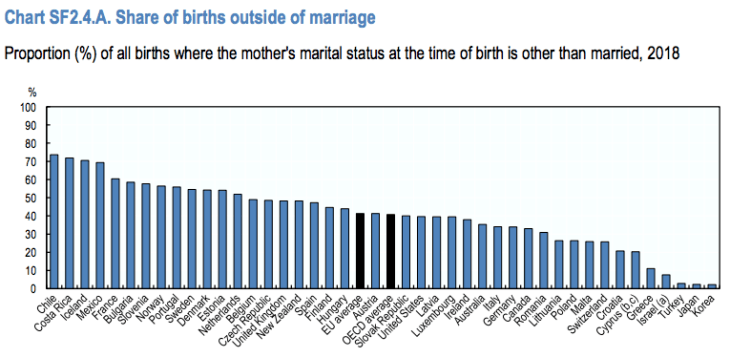
Bryan Caplan has a new post where he claims that people can avoid poverty with three simple steps: If you live in the First World, there is a simple and highly effective formula for avoiding poverty: 1. Finish high school. 2. Get a full-time job once you finish school. 3. Get married before you have children. This made me wonder if Bryan was confusing correlation with causation.  He denies this: A more agnostic criticism doubts causation.  Sure, poverty correlates with failure to follow the success sequence.  How, though, do we know that the so-called success sequence actually causes success?  It’s not like we run experiments where we randomly assign lifestyles to people.  The best answer to this challenge, frankly, is that causation is obvious.  “Dropping out of school, idleness, and single parenthood make you poor” is on par with “burning money makes you poor.”  The demand for further proof of the obvious is a thinly-veiled veto of unpalatable truths. I am not at all convinced by this argument.  Indeed I don’t see any real argument being made here.  It seems equally plausible to me that the sort of person who doesn’t finish high school is different, on average, from those who do.  The dropout may (on average) be less smart, less interested in classes, less motivated, and/or perhaps a bit anti-social.  None of those traits are normally associated with financial success.  If you put a gun to their heads and forced this cohort to finish high school, would that by itself change those personal characteristics?  Maybe slightly, but how much?  Would this group then become identical to other high school grads?  I doubt it. As for marriage, the Nordic countries tend to have a much higher share of births out of wedlock, and yet typically have relatively low rates of poverty: You might argue that their culture is different, and that in Scandinavia even unmarried men often take an interest in raising their children.  I accept that, but again it just makes me wonder if it’s marriage that is the key, or if the deciding factor is the personal characteristics of those who fall into poverty. I certainly agree that working hard and being responsible are useful traits, and that some people are poor due to unfortunate life choices.  I would push back, however, against any suggestion that there are simple public policy fixes, such as policies that discourage people from dropping out of high school or encouraging marriage.  Those policies might work, but simple correlations don’t prove that.  (BTW, I lean toward policies that make work more attractive, such as low wage subsidies and housing deregulation, as opposed to basic income programs that might discourage work.) Also keep in mind that definitions of poverty are based on “households”, where the poverty line increases only modestly each time a person is added to a household.  Thus if two single people making $10,000 each decide to double up and live in the same apartment, that pushes them above the poverty line.  It’s not obvious their situation improved (otherwise no one would ever chose to live alone), but the US government treats the decision to share an apartment as an improvement of living standards.  This biases the statistics toward the conclusion that marriage improves one’s economic well being. Thus you might just as well argue that poverty could be almost eliminated if everyone lived like Chinese college students in the 1980s, with eight people per apartment. Even with minimum wage jobs, a household of eight will earn far more than $47,650.  But would those “households” be better off, or would people get on each other’s nerves?  (My wife shared a room with 7 other college students in the 1980s, in Beijing.) Finally, most women have a strong preference to have children.  Finding a suitable husband is not always a “simple” process. (0 COMMENTS)

/ Learn More

What Does the Success Sequence Mean?

If you live in the First World, there is a simple and highly effective formula for avoiding poverty: 1. Finish high school. 2. Get a full-time job once you finish school. 3. Get married before you have children. Researchers call this formula the “success sequence.”  Ron Haskins and Isabel Sawhill got the ball rolling with their book Creating an  Opportunity Society, calling for a change in social norms to “bring back the success sequence as the expected path for young Americans.”  The highest-quality research on this success sequence probably comes from Wendy Wang and Brad Wilcox.  In their Millennial Success Sequence, they observe: 97% of Millennials who follow what has been called the “success sequence”—that is, who get at least a high school degree, work, and then marry before having any children, in that order—are not poor by the time they reach their prime young adult years (ages 28-34). One common criticism is that full-time work does almost all the work of the success sequence.  Even if you drop out of high school and have five kids with five different partners, you’ll probably avoid poverty as long as you work full-time.  Wilcox and Wang disagree: …This analysis is especially relevant since some critics of the success sequence have argued that marriage does not matter once education and work status are controlled. The regression results indicate that after controlling for a range of background factors, the order of marriage and parenthood in Millennials’ lives is significantly associated with their financial well-being in the prime of young adulthood. Simply put, compared with the path of having a baby first, marrying before children more than doubles young adults’ odds of being in the middle or top income. Meanwhile, putting marriage first reduces the odds of young adults being in poverty by 60% (vs. having a baby first). But even if the “work does all the work” criticism were statistically true, it is misses the point: Single parenthood makes it very hard to work full-time. A more agnostic criticism doubts causation.  Sure, poverty correlates with failure to follow the success sequence.  How, though, do we know that the so-called success sequence actually causes success?  It’s not like we run experiments where we randomly assign lifestyles to people.  The best answer to this challenge, frankly, is that causation is obvious.  “Dropping out of school, idleness, and single parenthood make you poor” is on par with “burning money makes you poor.”  The demand for further proof of the obvious is a thinly-veiled veto of unpalatable truths. A very different criticism, however, challenges the perceived moral premise behind the success sequence.  What is this alleged moral premise?  Something along the lines of: “Since people can reliably escape poverty with moderately responsible behavior, the poor are largely to blame for their own poverty, and society is not obliged to help them.”  Or perhaps simply, “The success sequence shifts much of the moral blame for poverty from broad social forces to individual behavior.”  While hardly anyone explicitly uses the success sequence to argue that we underrate the blameworthiness of the poor for their own troubles, critics still hear this argument loud and clear – and vociferously object. Thus, Eve Tushnet writes: To me, the success sequence is an example of what Helen Andrews dubbed “bloodless moralism”… All bloodless moralisms conflate material success and virtue, presenting present successful people as moral exemplars. And this, like “it’s better to have a diploma than a GED,” is something virtually every poor American already believes: that escaping poverty proves your virtue and remaining poor is shameful. Brian Alexander similarly remarks: The appeal of the success sequence, then, appears to be about more than whether it’s a good idea. In a society where so much of one’s prospects are determined by birth, it makes sense that narratives pushing individual responsibility—narratives that convince the well-off that they deserve what they have—take hold. Cato’s Michael Tanner says much the same: The success sequence also ignores the circumstances in which the poor make choices. Our choices result from a complex process that is influenced at each step by a variety of outside factors. We are not perfectly rational actors, carefully weighing the likely outcomes for each choice. In particular, progressives are correct to point to the impact of racism, gender-based discrimination, and economic dislocation on the decisions that the poor make in their lives. Focusing on the choices and not the underlying conditions is akin to a doctor treating only the visible symptoms without dealing with the underlying disease. Strikingly,  the leading researchers of the success sequence seem to agree with the critics!  Wang and Wilcox: We do not take the view that the success sequence is simply a “pull yourselves up by your own bootstraps” strategy that individuals adopt on their own. Rather, for many, the “success sequence” does not exist in a cultural vacuum; it’s inculcated by an interlocking cultural array of ideals, norms, expectations, and knowledge.* This is a strange state of affairs.  Everyone – even the original researchers – insists that the success sequence sheds little or no light on who to blame for poverty.  And since I’m writing a book called Poverty: Who To Blame, I beg to differ… * To be fair, Wang and Wilcox also tell us: “But it’s not just about natural endowments, social structure, and culture; agency also matters. Most men and women have the  capacity to make choices, to embrace virtues or avoid vices, and to otherwise take steps that increase or decrease their odds of doing well in school, finding and keeping a job, or deciding when to marry and have children.” [to be continued] (0 COMMENTS)

/ Learn More

The Theory and Practice of Oligarchical Collectivism Book Club, Part 6

And now it’s time to finish our critical read of TPOC.  Please leave your thoughts and questions in the comments and I’ll do an omnibus reply later this week. In Oceania at the present day, Science, in the old sense, has almost ceased to exist… In all the useful arts the world is either standing still or going backwards. The fields are cultivated with horse-ploughs while books are written by machinery. But in matters of vital importance — meaning, in effect, war and police espionage — the empirical approach is still encouraged, or at least tolerated. This “compartmentalization” is readily visible in today’s world as well.  Think about all of the brilliant scientists who just repeat popular platitudes when they talk about public policy.  Or the major political parties’ eager use of statistics to plan their electoral strategies, but not to guide their policy platforms. The two aims of the Party are to conquer the whole surface of the earth and to extinguish once and for all the possibility of independent thought. There are therefore two great problems which the Party is concerned to solve. One is how to discover, against his will, what another human being is thinking, and the other is how to kill several hundred million people in a few seconds without giving warning beforehand… Why would these be the Party’s two aims?  Power-hunger, of course.  If this is such a relatable motive, how come almost no one talks about it?  Social Desirability Bias, of course. What is more remarkable is that all three powers already possess, in the atomic bomb, a weapon far more powerful than any that their present researches are likely to discover. Although the Party, according to its habit, claims the invention for itself, atomic bombs first appeared as early as the nineteen-forties, and were first used on a large scale about ten years later… The effect was to convince the ruling groups of all countries that a few more atomic bombs would mean the end of organized society, and hence of their own power. Thereafter, although no formal agreement was ever made or hinted at, no more bombs were dropped. This is probably the least plausible feature of Orwell’s scenario.  The leaders of the totalitarian superpowers were fanatical and reckless enough to engage in nuclear war, but pragmatic and calculating enough to simultaneously realize that they’re a “few bombs” away from destruction?  During wartime, the first high-ranking leader to suggest de-escalation would probably be denounced as a traitor.  And even if his peers listened patiently, the obvious objection is: “If we sue for a cease-fire now, the other side will think we’re weak and impose highly unfavorable terms.  And even if they agree, they’ll probably double-cross us very soon.”  Yes, you can appeal to doublethink.  But the bottom line is that “Back down once you’re a few bombs away from the end of organized society” simply isn’t a focal point. Moreover, no fighting ever occurs except in the disputed areas round the Equator and the Pole: no invasion of enemy territory is ever undertaken. This explains the fact that in some places the frontiers between the superstates are arbitrary. Eurasia, for example, could easily conquer the British Isles, which are geographically part of Europe, or on the other hand it would be possible for Oceania to push its frontiers to the Rhine or even to the Vistula. But this would violate the principle, followed on all sides though never formulated, of cultural integrity.  If Oceania were to conquer the areas that used once to be known as France and Germany, it would be necessary either to exterminate the inhabitants, a task of great physical difficulty, or to assimilate a population of about a hundred million people… In Orwell’s scenario, all of the super-states are extremely multicultural already.  Oceania includes all of the Americas; Eurasia stretches from Portugal to Siberia.  Since none of them are supposed to have notable ethnic or regional tensions, these countries are supernaturally great at culturally assimilating disparate populations. War prisoners apart, the average citizen of Oceania never sets eyes on a citizen of either Eurasia or Eastasia, and he is forbidden the knowledge of foreign languages. If he were allowed contact with foreigners he would discover that they are creatures similar to himself and that most of what he has been told about them is lies. The sealed world in which he lives would be broken, and the fear, hatred, and self-righteousness on which his morale depends might evaporate. These echoes Stalin’s policy of arresting anyone with foreign contacts.  But the better story is not that contact with foreigners would seriously endanger the totalitarian system, but that the leadership is paranoid. Under this lies a fact never mentioned aloud, but tacitly understood and acted upon: namely, that the conditions of life in all three super-states are very much the same. In Oceania the prevailing philosophy is called Ingsoc, in Eurasia it is called Neo-Bolshevism, and in Eastasia it is called by a Chinese name usually translated as Death-Worship, but perhaps better rendered as Obliteration of the Self. The citizen of Oceania is not allowed to know anything of the tenets of the other two philosophies, but he is taught to execrate them as barbarous outrages upon morality and common sense. Actually the three philosophies are barely distinguishable, and the social systems which they support are not distinguishable at all. This is clearly inspired by the strong family resemblance between Nazism and Stalinism.  To insiders – the Nazis and Stalinists themselves – the minor details are obviously a matter of life and deaths.  But they’re deluded.  It takes an outsider to see the ideological landscape as it really is.  Atheists know (I repeat, know) that Catholics and Protestants fighting during the Wars of Religion were ideological siblings.  And confirmed enemies of totalitarianism know (I repeat, know) that the Nazis and Stalinists were ideological siblings.  Or dare I say, moral approximates. Everywhere there is the same pyramidal structure, the same worship of semi-divine leader, the same economy existing by and for continuous warfare. It follows that the three super-states not only cannot conquer one another, but would gain no advantage by doing so. On the contrary, so long as they remain in conflict they prop one another up, like three sheaves of corn… Here it is necessary to repeat what has been said earlier, that by becoming continuous war has fundamentally changed its character. Again, we need not and should not accept the silly story that totalitarian regimes preserve their power by keeping their subjects “stupefied by poverty.”  Instead, we should accept the sensible and parsimonious story that totalitarian regimes preserve their power by filling their subjects heads full of fear of vicious external enemies. In past ages, a war, almost by definition, was something that sooner or later came to an end, usually in unmistakable victory or defeat… War was a sure safeguard of sanity, and so far as the ruling classes were concerned it was probably the most important of all safeguards. While wars could be won or lost, no ruling class could be completely irresponsible. But when war becomes literally continuous, it also ceases to be dangerous. When war is continuous there is no such thing as military necessity. Technical progress can cease and the most palpable facts can be denied or disregarded… The rulers of such a state are absolute, as the Pharaohs or the Caesars could not be. They are obliged to prevent their followers from starving to death in numbers large enough to be inconvenient, and they are obliged to remain at the same low level of military technique as their rivals; but once that minimum is achieved, they can twist reality into whatever shape they choose. Overstated, but still insightful.  In particular, one of the top laws of modern geopolitics is that no one invades a nuclear power.  No matter how backward North Korea becomes relative to the rest of the world, their nukes allow the Kims to stonewall world opinion about their domestic policies.  Given these incentives, we should be amazed that nuclear proliferation hasn’t gone much further already. The war, therefore, if we judge it by the standards of previous wars, is merely an imposture. It is like the battles between certain ruminant animals whose horns are set at such an angle that they are incapable of hurting one another. But though it is unreal it is not meaningless. It eats up the surplus of consumable goods, and it helps to preserve the special mental atmosphere that a hierarchical society needs. Yes, but to repeat, the essence of the “special mental atmosphere” is fanatical group cohesion, not “stupefication via poverty.” (0 COMMENTS)

/ Learn More

The Mysterious Microchip Shortage

When the press reports on a microchip shortage, as it has done regularly since the beginning of the year, the economist does not believe it on faith. How can there be a shortage if market prices can freely adjust? A shortage is not simply a high price, for how useful would be a special word meaning exactly the same as “high price”? For the economist, a shortage is a situation where it is impossible to get something at any price, that is, by bidding up the current price. To cite just one textbook, see Arman A. Alchian and William R. Allen, Universal Economics, edited by Jerry L. Jordan (Liberty Fund, 2018), chapter 10. Since microchip prices are not, for all we know, capped by some domestic government under penalty of fine or jail, we need to find out what is happening. At least, we need to ask the right questions. Let me suggest a few and propose some answers. Of course, a temporary shortage in a segment of the market is not impossible, although it stretches and fuddles the meaning of “shortage” a bit. Perhaps I can say that there is a shortage of croissants at my preferred bakery every day at a certain time. But if I offered one million dollars (with a $100,000 deposit) for a croissant, the bakery would rapidly turn around or, if necessary, somebody would jump in a plane and bring me a croissant within at most 12 hours. Similarly, if your local grocery store is out of baguettes, you are facing a localized and temporary shortage of sorts—but only until the grocery supply truck returns. In the same way, the so-called chip shortage is not across the whole market. Computer manufacturers, smartphone makers, and others apparently have no problem getting them, although they may have to pay more as they renew their supply contracts. And, of course, it takes more time to manufacture a microchip (typically a few weeks or months after an order) than to cook a croissant or deliver a baguette—the time dimension of shortages. Another factor to factor in is that up to 50% of the chips car manufacturers need are non-generic, that is, they are not standardized commodities. The spot market for chips is limited but that does not prevent prices from rationing demand, if only in indirect ways through special fees for quicker delivery, for example. What happened recently in the chip market appears to be that the car manufacturers’ demand suddenly increased last Fall as the economy recovered. This pushed up the price of chips and their components, including the ubiquitous wafers. Just over the past three months, chip prices have increased by an estimated 20%. For one million dollars per chip instead of a few cents or a few dollars, a car manufacturer or a car part supplier could certainly find a chip maker who would be willing to pause its new contracts (usually signed months before delivery) and start producing for the new buyer as soon as they could. At such a high price some car companies would presumably be willing to sell part of whatever stock they have or to sell their own chip supply contracts with close delivery dates. Of course, car manufacturers aren’t willing to bid up chip prices to $1 million. They obviously calculate that, at current prices, another batch of chips would increase their marginal cost of car production by more than their marginal revenues from car sales. This is why many car manufacturers in the world have announced production cuts and are waiting for lower prices or later deliveries. Some car manufacturers reallocate chips from their less profitable cars to their more profitable ones. For a student of economics, this is a reminder that possibilities of substitution in production exist—in this case, of an input between two products. Why didn’t car manufacturers order their chips or chip-containing parts several months before the recovery and stock them? Because they did not need them during the slump in car demand caused by the pandemic. Stocks are expensive—they use space, cost interest, and require management—especially in uncertain conditions when they might not be needed. When the demand for cars picked up last Fall, manufacturers all started placing new orders. In the meantime, manufacturers of computers and other consumer electronics had increased their own demand for chips as consumer demand for their products had grown due to lockdowns and remote work and education. The variety of the chip supply had changed (with some retooling) to meet the changed demand. (Car manufacturing typically uses about 10% of chip production.) Car manufacturers probably realize now that it was an error not to stock chips or chip-containing parts while waiting for the recovery of car demand. Risto Puhakka, president of VLSIresearch, an industry analysis firm in Silicon Valley, says that it was a big “car industry failure.” On a free market, of course, localized errors happen—all the time. But profit-seeking firms have an incentive to correct them for the future. Automobile manufacturers will no doubt become more attentive to their chip procurement. To summarize how this reported shortage looks from an economic perspective: If we say that there is a current shortage in the microchip market, we must immediately add that it is a localized and temporary “shortage.” It is localized in that it is limited to certain products—for which users typically do not want to pay higher prices, which does not make it a shortage at all. It is temporary because the production cycle does some time during which supply is fixed. (0 COMMENTS)

/ Learn More

John Cochrane on the Pandemic

Would the impact of the pandemic have been different if government and policymakers had been more open to more market-based responses and less committed to a top-down approach? Economist John Cochrane of Stanford University’s Hoover Institution talks with EconTalk host Russ Roberts about the pandemic and the policy response. Cochrane believes outcomes would have been […] The post John Cochrane on the Pandemic appeared first on Econlib.

/ Learn More

Jeff Hummel on Classical Liberals and Libertarians

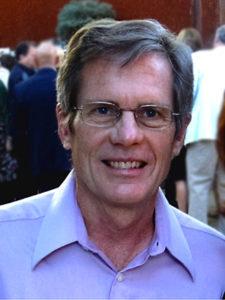
Economist and libertarian Jeff Hummel, pictured above, sent me the following and I think it’s worth sharing: In a Zoom session some libertarian friends and colleagues had a lively discussion of the correct usage of the term “libertarian.” Afterwards I had some additional thoughts. So I wrote this message to lay out my argument in more detail. In the late 60s and early 70s, as the libertarian movement was just distinguishing and disentangling itself from conservatism, the terms “libertarian” and “classical liberal” had clear and relatively precise meanings, at least among the U.S. libertarians with whom I associated. These meanings were once very clearly articulated by libertarian philosopher Eric Mack at one of the IHS (or Cato?) summer seminars I attended. He defined a classical liberal as someone who believes that maximizing individual liberty should be the highest (if not sole) goal of government (or the State). A libertarian is a classical liberal who further believes that government should have no morally privileged status with regards its powers. In other words, government and its agents could justly engage only in actions that were legitimate for individuals or groups of individuals. Thus, governments should be confined to using force (coercion) to the extent that individuals can rightfully do so for defense or restitution. Stating the libertarian constraint on government in this way gets around (or evades, if you prefer) some of the difficult problems defining the moral limits of legitimate defense and restitution, about which libertarians sometimes disagree, especially in the realm of so-called national defense. Yet nearly all moral philosophies, religious and non-religious, share certain broad outlines, disapproving of murder and theft, as much as they may differ on the borderline details of justifiable defense or restitution. This way of putting the constraint also leaves open some room for the libertarian archipelagos of Chandran Kukathas, or for the proprietary communities that other libertarians favor. But in order to qualify as genuine libertarian social orders, such communities must be voluntary associations. The opposition to government taxation is also what distinguished libertarians from non-libertarian classical liberals, who in contrast believe that there is a difficult trade-off between liberty and coercion. In their view, government must impose taxes and perhaps exercise other coercive powers not derived from individual rights in order to effectively maximize total liberty. Libertarians, in contrast, held that government should be entirely voluntarily funded, a position that even Ayn Rand embraced at one point. Libertarians then divided into limited-government libertarians (or to use Sam Konkin’s term, minarchists) and anarchist libertarians (or anarcho-capitalists, a term I never liked). Rand, among others, was a limited-government libertarian. Anarchist libertarians, such as myself and the younger Roy Childs, did argue that the limited-government libertarian position was inconsistent, pointing out that there is no sure way that a government (even if it eschews taxation) can maintain its monopoly without using some coercive powers that are illegitimate for individuals. But we never therefore denied that limited-government libertarians failed to qualify as libertarians, as long as they continued to believe that a voluntarily funded government was desirable and possible, no matter how mistaken we found that belief. Moreover, these distinctions were fairly widely recognized and accepted by libertarians of all varieties, whether primarily influenced by Rand or Rothbard. I admittedly recognize two problems with maintaining these clear distinctions today. There is often a tension between prescriptive and descriptive definitions for words. I accept that the meanings of words spontaneously evolve over time. The word “libertarian” was used with a less precise meaning before the modern movement, even being embraced by some socialist libertarians. And in common usage today, the terms libertarian and classical liberal have become virtually synonymous. I attribute that evolution to two developments. (1) As some (many?) of the young libertarians of the 60s and 70s matured and aged, having to deal with real-world problems and issues, their views became less consistent or more nuanced and subtle, depending on your point of view. For particularly extreme cases of this intellectual evolution, I like Jeffrey Friedman’s term of “post-libertarian.” (2) The newer generation of libertarians is much more focused on current government policies, and has little interest in the fundamental but thorny philosophical and ideological foundations of their views. Even some of us in the older generation have gotten tired of those endless debates. So in casual conversation, I have to go along with current usage. Yet I still think the greater clarity of the original meanings should sometimes be maintained and specified for more serious discussions. A second problem with a strict definition for the term “libertarian” is that in the past it led to endless internecine squabbles about who was a “genuine” libertarian, almost like the hair-splitting divisions and deviations that arose among early Marxists. I certainly have no interest in bringing back these counter-productive excommunications and denunciations. If someone wants to claim the label “libertarian,” there is not much to be gained from arguing about that, unless the self-identification is particularly outlandish. I’d rather focus on specific and concrete differences of opinion. Some contend that one consideration should be whether people self-identify as libertarians, as Rand did not. For labels that describe people’s ideas there is a smidgen of validity to his claim. With respect to religion, we usually accept as definitive people’s self-identification as Christian, Muslim, atheist, etc. But that is simply a courteous and usually reliable rule of thumb. Lurking behind it is still some objective notion of what, for instance, a Christian believes. If, on questioning someone who claims to be a Christian, you discover that he or she does not believe in the historical existence of Jesus or in the existence of God, and also thinks the New Testament has less religious relevance than the Koran, you would be justified in doubting his or her self-identification. By the way, by the strict standard that Jeff lays out for libertarians, I am not quite a libertarian.     (0 COMMENTS)

/ Learn More

The Sunk Cost Lesson Stuck

On Friday, the president of the Naval Postgraduate School, Dr. Ann E. Rondeau, announced that Captain Raymond (“Pancho”) Barnes, Military Associate Dean of the Graduate School of Defense Management (the new name for the school I taught at before retiring in 2017) is leaving his position for a new Navy posting. I haven’t met him during his tour because the in-person part of the School is pretty skimpy and so my biweekly visits to my former colleagues haven’t happened for about a year. But I’ve often enjoyed his emails to the faculty, which include the emeritus faculty. So I emailed him Friday to wish him well, even though, I said, I hadn’t met him. Well, it turns out that I had. I received this email back. Prof. Henderson, Oddly enough, if we go back to Winter Quarter 2005, you were my GE3070 instructor during quarter two of my EMBA [Executive MBA.] I thoroughly enjoyed that course (and your instructional methods), so much so that it is honestly but one of the few courses I actually remember. Economics has always been an interest of mine (if my wife hears me talk about sunk costs one more time during a movie, I think she will divorce me), especially as it relates to everyday life. I particularly enjoy Stephen Dubner’s “Freakonomics” podcast; very interesting and entertaining content. Thanks for the note; it has been a great tour at NPS. All the best to you as well. V/R, Ray   I love it when students remember, and apply, important things I taught them over a decade ago.   (0 COMMENTS)

/ Learn More

Dean Baker on wealth

In the past, I’ve poked fun at progressives who don’t seem to know what they want. The wealth tax on luxury yachts was repealed partly at the behest of progressive politicians that worried it might cost jobs in the yacht building industry. But unless you destroy jobs producing consumption goods for the rich, it is literally impossible to use their resources to help the poor. Dean Baker is one progressive who does understand this point: If we think of the prospects of reducing consumption with a wealth tax, they don’t look very promising. Consider our latest round of incredibly rich people, like Elon Musk, Jeff Bezos, and Mark Zuckerberg, all of whom have over $100 billion in wealth. While I am sure these people all live very well, I doubt they spend substantially more on their own consumption in a year than your typical single-digit billionaire. There are only so many homes you can live in, cars you can drive, trips you take, etc. This means that if we taxed away 10 percent, 20 percent, or even 50 percent of their wealth, it will have very little impact on their consumption. This means that it will not get us very far in freeing up resources for an expanded social welfare state. We will not be able to pay for Medicare for All or free college by taxing away these people’s wealth, we will have to focus on policies that reduce the consumption of a far larger group of people. Of course just because a wealth tax is bad doesn’t mean that taxing the consumption of the rich is necessarily any better.  I favor a progressive consumption tax, but there are also reasonable arguments against the idea.  My point is that the rich basically can do three things with their wealth: consumption, investment and charity.  Progressives tend to deny that government spending crowds out investment, and they presumably don’t want the funds to come out of charity.  So that leaves consumption.  Either accept that you are trying to destroy jobs in the production of luxury goods, or else give up all hope for economic redistribution. The essay is full of lots of other great observations: If we stacked everyone in the world by wealth, going from richest to poorest, those at the very bottom would be recent graduates of Harvard business and medical school. I’m not kidding. Many of these people have borrowed hundreds of thousands of dollars to pay for their education. Most of them have few if any assets. This means that on net, they are hundreds of thousands of dollars in the hole. Do we really want a definition of economic wellbeing that says a recent HBS grad is much poorer than homeless person in Calcutta? And this: The money in a retirement account is included in standard calculations of wealth. Traditional pensions generally are not. (We can impute values for these pensions, but this is generally not done in most wealth calculations.) This leads to a story where we would say that a person with a 401(k) is much wealthier than a person with a traditional pension, even if they have no better prospects for retirement income. PS.  I have a new piece in The Hill on asset price bubbles. (1 COMMENTS)

/ Learn More

Adam Smith in the Workplace

Jonas Grafström and I chat about Adam Smith in the workplace. The chat is based on a paper “Adam Smith and Human Resources” by me, published by the American Enterprise Institute (and in Swedish in Ekonomisk Debatt).   How can the thinking of Adam Smith help with challenges in work and employment? What skills should employers look for? Smith discussed what we may call sympathetic deftness, akin to social intelligence or soft skills. There are two sides to sympathetic deftness: The amiable side is deftness in entering into the situation of another. The respectable side is deftness in enabling others to enter into your situation. But continuing upward in virtue calls for deftness in both the amiable and the respectable. Work, business, and trade are schools of virtue. Smith is therapy, self-help. He affords a rich understanding of sentiments, sympathy, and virtues. Here the focus is on the workplace. The video gives some introduction, but the paper says more about using Adam Smith to improve your career, productivity, and sense of meaning –and your love of life, which David Hume mentioned as one of the calm passions. (0 COMMENTS)

/ Learn More

How the Feds Gave a Competitive Advantage to Conservative Radio

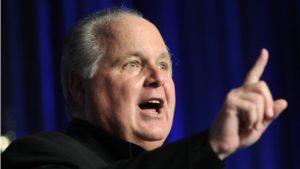
This point is obvious once you think about it. It’s basic economics. It’s just that I had never thought about it. It is also worth noting that talk radio in the 1980s was a much more ideologically diverse industry than it is today, with many hosts from both the political left and right. Contrary to conservative talk radio hosts who explain their dominance by the existence of a silent majority of average Joe listeners, ironically it was the federal government that boosted right-wing dominance of talk radio. As historian Brian Rosenwald argues, left-wing talk radio hosts had to compete for listeners with government-subsidized, center-left NPR affiliates, while right-wing hosts had a clearer competitive field. Station owners could guarantee a larger audience to advertisers simply by picking right-wing instead of left-wing talk radio programs. Talk radio’s conservative bent is the unintended product of the government’s halfhearted attempt to create a nationalized broadcasting system in the 1970s. (Though I wouldn’t expect a “Rush was Made Possible By Listeners like You” slogan to appear on a complimentary NPR tote bag any time soon.) From Paul Matzko, “The Fairness Doctrine Was the Most Deserving Target of Rush Limbaugh’s Rage,” Reason.com, February 19, 2021.   (0 COMMENTS)

/ Learn More