This is my archive

bar

Ancient Wisdom on Climate Change and Society, Part 1

Another UN Conference of the Parties (COP) held to “unite the world to tackle climate change” recently came to a close. While critical discussions of the scientific and policy rationales promoted at these meetings typically address the validity of climate models, the costs and benefits of various proposals and the pitfalls of the precautionary principle, some historical perspective can shed additional light on current climate anxiety. Because of natural factors such as changes in the axial tilt of the Earth’s orbit around the sun, the amount of incoming solar radiation, geological activity (e.g., large-scale volcanic eruptions, plate tectonics), changes in oceanic circulation and atmospheric chemistry, and numerous feedback effects (e.g., physical, chemical, and thermal), the Earth’s climate and seasonal weather have always been and will remain in a state of flux, with or without human activities. As Aristotle observed over two millennia ago: “Sometimes there is much drought or rain, and it prevails over a great and continuous stretch of country. At other times it is local; the surrounding country often getting seasonable or even excessive rains while there is drought in a certain part; or, contrariwise, all the surrounding country gets little or even no rain while a certain part gets rain in abundance.” In his Notes on Virginia, Thomas Jefferson later assessed that a “change in our climate”  was “taking place very sensibly” as both “heats and colds are become much more moderate within the memory of the middle-aged” and that “[s]nows are less frequent and less deep.” One problem with a warming trend in the Spring was that it often resulted in late frost episodes that proved “very fatal to fruits.” In an age without the means to access the agricultural surplus of regions that had benefitted from good growing conditions, bad weather resulted not only in much higher local food prices, but also often in more lethal consequences. Writing at a time when the railroad and the steamship had largely taken care of this problem, British historian George Dodd observed in 1856 that in the “days of limited intercourse, scarcity of crops was terrible in its results; the people had nothing to fall back upon; they were dependent upon growers living within a short distance; and if those growers had little to sell, the alternative of starvation became painfully vivid.” Not surprisingly in this context, the biogeographer Philip Stott observed that from the “Babylon of Gilgamesh to the post-Eden of Noah, every age has viewed climate change cataclysmically, as retribution for human greed and sinfulness.” Torrential rains and their resulting floods, droughts, hurricanes, tornadoes, unseasonable warmth and cold, along with noticeable climate trends such as the Little Ice Age (circa 14th-19th C), were thus attributed to a wide range of anthropogenic causes. For instance, Theophrastus, the Greek “father of botany,” wrote over two millennia ago that swamp drainage and agriculture had changed local climates. In the Middle Ages, both prolonged wet periods and droughts, along with more frequent and longer freezing of rivers, were often interpreted as a heavenly riposte to tolerance of witchcraft. In the wake of the Great Storm of 1703 – to this date the most severe natural disaster ever recorded in southern England -, a national fast was observed in January 1704 to ask for God’s forgiveness and blessing on the nation. Even Daniel Defoe in his account The Storm felt compelled to write that we never enquire after God in those Works of Nature which depending on the Course of Things are plain and demonstrative; but where we find Nature defective in her Discovery, where we see Effects but cannot read their causes; there ’tis most just, . . . to end the rational Enquiry, and resolve it into Speculation: Nature plainly refers us beyond her Self, to the Mighty Hand of Infinite Power, the Author of Nature, and the Original of all Causes . . . When the sins of a Nation are very great and prevailing, it is God’s unusual Method to pronounce destruction on the Nation. In his massive synthesis on the history of deforestation, the late historical geographer Michael Williams documents how numerous writers thought deforestation was a major cause of desiccation (or reduced precipitations) and of global warming. One of them was the Scottish philosopher David Hume who speculated that recent warming could be traced back to human deforestation which allowed the rays of the sun to reach the surface of the Earth. Acting on a belief that planting trees would increase rainfall, the Timber Culture Act of 1873 granted settlers on the American plains 160 acres free of charge on the provision that they plant trees. Prolonged droughts in the following decades, however, eventually disproved this belief. Writing in 1890, the Austrian physical geographer Eduard Brückner observed that many European officials blamed deforestation for lesser rainfall, more frequent droughts and lower water levels. At about the same time, some French colonial botanists accused careless African peasants of having accelerated local climatic deterioration by overgrazing forests. In recent decades, tropical deforestation, especially in the Amazon, has often been viewed as a threat to the stability of the world’s climate. Recent technological advances were also often blamed for climate change. The exceptionally wet European summer of 1816 was traced back by many at the time on lightning conductors even though these devices had previously been accused of causing droughts. In 1881 American experts warned that telegraph lines might knock the Earth off its axis, cause earthquakes, melt the poles and cause a “glacial flood” that would wipe out the human race. A contemporary news report on this hypothesis ended by suggesting that “Whether this theory prove [sic] correct or not, there cannot be a doubt that something has of late gone wrong with atmospherical arrangements, and perhaps the telegraph wires are not wholly blameless in the matter.” Extensive gun-fire during the First World War and the development of short-wave radio communication over the Atlantic were deemed the cause of unusually wet summers in the 1910s and 1920s. Other technologies later accused of causing climatic disruptions include nuclear explosions (1950s) and supersonic transport and space traffic (1960s and 1970s). Nowadays, climate change is blamed on ever greater emissions of anthropogenic greenhouse gases whose ultimate cause is an increasingly numerous “global middle class” with a fondness for meat, automobiles and higher standards of living. In their zeal to “build back better,” however, activists are often blind to the significant economic and environmental costs of their hatred of carbon fuels. Yet, the historical record shows rather convincingly that greater wealth and abundant, reliable and affordable energy made it possible for people to live better in locations with climate as diverse as those of Montreal, Glasgow, Katowice, Bali, New Delhi and Cancun where UN delegates have previously congregated in luxury. Pierre Desrochers, is Associate Professor of Geography, University of Toronto Mississauga. (0 COMMENTS)


/ Learn More

Public Choice: Improperly Applying Economics to Politics?

Adherents of the Public Choice school of economic thought accept the neoclassical economist’s erroneous views on monopoly and antitrust laws hook, line, and sinker. They take seriously the perfectly competitive model as a criterion against which to measure the operation of the real-world economy. For them, the desiderata is the number of competitors. But this is highly problematic: how do you determine the contours of an industry? If it only includes car manufacturers, there are but a few of them in any given country, so it is easy to launch the criticism of oligopoly. But why not include trucks? And, maybe, motorcycles. The more expansive is our definition, the less concentration there is. No, motor vehicles do not much compete against modes of transportation such as bicycles or skates, but they most certainly do vis a vis other big-ticket items such as pianos, pricey violins, trips around the world, yachts, etc. If we include them in the automobile “industry” concentration ratios sink like a stone, and with it the plaintiffs’ anti-trust case. Similarly, is the proper “industry” dry breakfast cereal, all breakfast cereal, all breakfast food, all food in groceries, restaurant meals? The more widely we define this “industry” the lower the concentration ratio, and the more like the model of perfect competition we can see emerging. But, the point is, there is no proper, unambiguous, undebatable definition of “industry.” It is very subjective. Plaintiffs want to define it narrowly, defendants, broadly. Then, too, that monopoly diagram which undergirds the mainstream economists’ justification for antitrust law is nothing but an exercise in interpersonal comparisons of utility. The dead weight loss is the be all and end all of this model’s claim of market failure. It is used to assert that the consumers more greatly value the amount of product “withheld” from the market, compared to how much would have been produced under perfect competition. If that does not constitute the unwarranted interpersonal comparison of utility, then nothing does. The public choice position on this matter is indistinguishable from that of neoclassical economics. The point is, if the Public Choicers apply invalid economic theory to politics, this undermines their effort. For example, extrapolating from this invalid tool, they claim that the “more the merrier”: the more political jurisdictions there are in a given geographical or population area, the better. This constitutes a wholesale importation of erroneous economics into politics. If they were to import Austrian economics into their analysis, they would have averred that the greater the free entry into politics the more effective and efficient it would be. This may not be true due to a false analogy between economics and politics, but at least it would not constitute applying mistaken economic theory to the latter discipline. There is one minor point in this arena that perhaps Public Choice advocates can be congratulated upon: unlike many mainstream economists, they take note of the fact that anti-trust lawsuits are not a free good. Only if the dead weight losses to be banished are greater than these costs, should the plaintiff, private or public, be allowed to go ahead. But this is scarce comfort to economics, since the dead weight loss triangle which underlies the entire initiative is invalid from the outset. The PCers favor income and wealth redistribution. This, at least, applied to James Buchanan, one of the two founders of this school of thought (the other was Gordon Tullock). Buchanan went so far as to support a 100% tax on inheritance, although most supporters of this school of thought would reject such a radical invasion of private property rights. This not only fails to apply economics to politics, it has the very opposite effect. From the dismal science we learn that if the government takes money from the rich and transfers it to the poor, it reduces the incentives of both to earn income and be productive. The wealthy hire tax accountants to explore “loopholes,” spend time thinking not about how they can innovate and offer a better product at a lower price but how they can avoid taxes. Never far from their thoughts are the grasses that may be greener in other locales. A 100% inheritance tax would lead parents, as if by an “invisible hand,” to make larger gifts to their children, timed before their demise. The ultimate act in this regard would be to time matters so that death barely preceded pennilessness. It is difficult to see how this type of economic imperialism can be an improvement over what the political scientists were all about before this incursion. Walter E. Block is Harold E. Wirth Eminent Scholar Endowed Chair and Professor of Economics at Loyola University New Orleans and is co-author of An Austro-Libertarian Critique of Public Choice (with Thomas DiLorenzo). (0 COMMENTS)

/ Learn More

The FTC on a Supply-Chain Witch-Hunt

The Federal Trade Commission is in the news these days. Its glorified bureaucrats issued “orders” (not loving appeals for cooperation!) regarding an instance of their “wide-ranging studies that do not have a specific law enforcement purpose,” what the FTC chairman also calls “market studies.” It is a “market study” in which the “consumers” are forced to participate. This looks like more a supply-chain witch-hunt. At the very least, scapegoats are needed. A November 29 press release of the bureaucratic agency states that it is ordering nine large retailers, wholesalers, and consumer good suppliers to provide detailed information that will help the FTC shed light on the causes behind ongoing supply chain disruptions and how these disruptions are causing serious and ongoing hardships for consumers and harming competition in the U.S. economy. The general causes of the current economic problems that are referred to as “supply chain disruptions” or “shortages” should be quite obvious to anybody who once read a textbook of microeconomics. In short: The pandemic brought a general drop in production, caused partly by government lockdowns and partly (if not mostly: see Goolsbee and Syverson, and Chakraborti and Roberts) by people deciding to stay at home. In a large number of industries, supply (the supply curve) decreased (shifted up)—whether demand (the demand curve) decreased (shifted down) or, like in emergency supplies, increased (shifted up). Price controls against “price gougers” triggered by the federal and state declarations of emergency prevented the price increases necessary to reestablish the supply-demand equilibrium and thus generated real shortages. Some sellers who violated the price caps (and thus had something to sell) were prosecuted; many others were scared to move supplies where most needed as indicated by price signals. These shortages in the proper sense of the word started the supply-chain incantations—from people who did not know microeconomic theory and economic history or who had a political or ideological interest in attacking economic freedom. The reason why the pandemic contributed to inflation, defined as a not-one-shot rise in the general level of prices, is that central banks have been creating money to finance a jump in government expenditures. Between the third quarter of 2019 and that of 2021, the U.S. expenditures of the U.S. federal government increased by 40%, with a growth rate peak of 144% as of the first quarter of 2020 (compared again to 2019-3). Part of these new expenditures have been financed by the Fed, that is, by money creation. An indication is that since February 2020, the money stock (M2) in America has increased by 37%, which corresponds to an annual rate of growth of 21%. Without money creation, that is, without central banks “accommodating” a temporary decrease in global output and continuing to pump money in the economy, there would be no inflation as it seems to be developing. The federal and state emergencies came to an end in the Fall, but part of the California state of emergency has been reconducted until March 2022 and a new one decreed in New York State. Even with these Damocles swords, it is not clear why some shortages persist. Recall that a shortage is not simply that something is expensive like, say, Ferraris or Bourgogne wine, but that something in demand is not available at the going legal market price or has a long waiting list. Gasoline is an example of a good where, at least in America, there is no shortage and waiting lines precisely because, as demand jumped after the pandemic, prices have adjusted upward to the relatively scarce supplies, thus preventing a shortage. Something different happened in the UK for a few weeks last autumn when the fear of a shortage generated panic buying and waiting lines at service stations. A sufficient price increase would have rapidly cut quantity demanded, brought in supplies from elsewhere, and eliminated the queues. But the Petrol Retailers Association warned its members against “profiteering,” arguing that their customers would not forgive them, as if everybody preferred to queue for gasoline or go without it. Is this old premodern or socialist ethics sufficient to create a shortage? This is a real question, but there may be something else than pure mobbish opinion: entrepreneurial merchants and shopkeepers may be scared of violating one or the other of the numerous and obscure laws and regulations that might be invoked against “profiteering.” It is unlikely that the FTC will analyze any of these causes. Some good economists must be working there, but it is neither in their interest to remember what they learned in elementary textbooks, nor in the interest of their bureaucratic-political bosses for whom witch-hunting is easier. The four commissioners of the FTC unanimously voted in favor of “issuing the Special Orders.” Three out of the four were nominated by President Donald Trump and one, the chairwoman, by President Joe Biden. It would have made no difference if they had all been nominated by Trump or all by Biden. The same convergence between the two brands of authoritarianism was illustrated just yesterday when the FTC announced a lawsuit “in its own administrative court” against microprocessor maker Nvidia. The latter has been trying for more than one year to obtain, from many “regulators” in the world, permission to purchase a Japanese-owned British company. The Wall Street Journal notes: The commission, currently composed of two Democrats and two Republicans, voted 4-0 to file the lawsuit. (0 COMMENTS)

/ Learn More

What Are You Afraid Of?

For most of my teaching career, I was an economics professor at the Naval Postgraduate School. My students were generally motivated, reasonably hard-working military officers from the Navy, other US services, and other countries. I loved teaching them. But one day in the mid-1990s I told them a true anecdote whose shock value required them to know, for comparison, the population of the United States. I usually read students’ faces well and I saw little shock. I immediately wondered if they knew the US population. So I told them to write their estimate of the US population on a piece of paper and hand it in. At the time the US population was about 270 million. Finally there was a shocked face: mine. Although the median answer was within 10 percent of the right answer, only about 40 percent of the students gave a number close to the median. The estimates ranged from—are you ready?—1.5 million on the low end to 2 billion at the high end. I pointed out that 1.5 million was close to the number of Americans in the armed services. So that would mean that almost everyone in the United States, including little babies and eighty-year-olds, was in the military. At the other end, I noted, 2 billion was about one-third of the world’s population. This is the opening paragraph of my latest article for Hoover’s Defining Ideas, “What Are You Afraid Of?” Defining Ideas, December 2, 2021. And on to Covid: And now we come to the issue that has dominated American society since March 2020: COVID-19. From almost the start, the United Nations, echoed by various media outlets, told us that “we are all in this together.” That’s one of those rare statements that are literally true but figuratively false. Yes, we’re all in this together, but the probability of death from COVID-19 varies dramatically by age. The younger you are, the less at risk you are, and if you’re really old, your risk is three orders of magnitude greater than the risk for the very young. This matters because the very young are bearing substantial costs of government measures on COVID-19 in return for tiny benefits to themselves. COVID-19 lockdowns, shutdowns of schools, and masking requirements not only indoors but also, sometimes, outdoors, are taking a huge toll on the very young that could well scar them for the rest of their lives. Consider the latest risk data reported by the Centers for Disease Control and Prevention (CDC). As of November 24, 621 people in America age seventeen or younger had been killed by COVID-19. That’s only about 1 percent of all deaths (62,999) of people in that age bracket. People sixty-five years old and older, by contrast, suffered 580,605 deaths. That was a substantial 12.6 percent of all deaths (4,609,094) of the elderly. In 2019 there were approximately 54.1 million American residents age sixty-five and up. For people sixty-five or older, therefore, the risk of dying from COVID, over the almost two years we have dealt with it, was 1.1 percent. In 2019, there were 73 million American residents age seventeen or younger. So their risk of dying from COVID over the same almost two years was only 0.00085 percent. The elderly people’s risk of dying from COVID, therefore, is 1,294 times the risk of that of children. Read the whole thing. (0 COMMENTS)

/ Learn More

U-Shaped Deterrence

“The death penalty deters murder.”  A classic right-wing idea.  So classic, in fact, that it’s tempting to think that the idea of deterrence itself is right-wing. Yet on reflection, that’s absurd.  The left strongly believes in deterrence for discrimination.  If you said, “Let’s cap discrimination damages at $1000,” they would predict a massive increase in discrimination.   The left strongly believes in deterrence for pollution.  If you said, “We should let first-time pollution lawbreakers off with a warning,” they would predict a large increase in pollution. The left strongly believes in deterrence for tax evasion.  If you said, “Let’s end jail time for tax offenses,” they would predict a large reduction in tax collection. What’s the common thread?  The straightforward answer is: “Everyone strongly believes in deterrence for behavior they abhor.”  The right abhors violent crime, so they think that “lock-’em-up-and-throw-away-the-key” will sharply reduce violent crime.  The left abhors discrimination, pollution, and tax evasion, so they think that harsh penalties – including jailtime – will sharply reduce discrimination, pollution, and tax evasion.  The left will almost surely never embrace rehabilitation for billionaire tax cheats. On further thought, however, this straightforward answer is incomplete.  How so?  Because people are also quick to assume that behavior that they support is highly responsive to deterrence!  Consider: The right strongly believes that high taxes deter work. The left strongly believes that anti-abortion lawsuits deter abortion providers. The right strongly believes that twitter mobs deter right-wing speech. The left strongly believes that holding unions liable for strike-related property damage will discourage unionization.   Once again, the motivated reasoning is palpable.  Previously, though, the motivated reasoning said, “Deterrence will sharply reduce whatever I abhor.”  Now. in contrast, the motivated reasoning says, “Deterrence will sharply reduce whatever I adore.”  Apparently the only thing that doesn’t respond to deterrence is whatever leaves you unmoved.  If you put “How you feel about X” on the x-axis, and “How much do you think X responds to deterrence” on the y-axis, you get a U-shaped curve that reaches its minimum around X=0. Lunacy?  Definitely.  But there is a method to this madness: People seek to minimize the punishment of what they like, and maximize the punishment of what they dislike.  If they like it, they fret, “Even the slightest punishment puts it in mortal danger.”  If they dislike it, they gloat, “With vigorous punishment, we can wipe this off the face of the Earth.”  A strange implication: The big ideological disagreements about the efficacy of deterrence rarely arise when both left and right strongly care about X.  Both sides agree that laws against abortion will sharply reduce abortion; they just disagree about whether sharply reducing abortions is really good or really bad.  Instead, the big ideological disagreements about the efficacy of deterrence arise primarily when one side cares about the problem and the other is apathetic.  Take violent crime.  The right cares about it a lot; the left doesn’t.  Hence, the right claims that deterrence sharply reduces violent crime, while the left is skeptical.  Or take discrimination.  The left cares a lot; the right doesn’t.  Hence, the left claims that deterrence sharply reduces discrimination, while the right is skeptical. If ideology is objectively useless for estimating the efficacy of deterrence, what’s the alternative?  Ideally, of course, we would defer to high-quality social science.  Yet for most deterrence-related issues, alas, high-quality social science barely exists.  If we almost never use Voluntary Human Experimentation to measure the efficacy of masks, we’re probably not going to use Voluntary Human Experimentation to measure the efficacy of $1000 fines for failure to wear masks.  So what’s left?  Almost all of what we really know about deterrence simply comes from introspection – and listening to the introspection of others.  Not on the politically-charged question of, “How much deterrence change society,” but on the common-sense question of, “How much deterrence change you?”  Introspection is far from perfect, but compared to motivated ideological reasoning, it’s rocket science. (3 COMMENTS)

/ Learn More

Sokal III: Another Hit at Woke Nonsense?

To paraphrase the incipit of the Manifesto of the Communist Party (my apologies to Marx), a specter is haunting America—the specter of wokeness. But wokeness has intellectual feet of clay. By the time you read this post, the news of the fake article published by Wiley’s academic journal Quarterly Education Quarterly will probably start hitting mainstream media and we should know more. I heard about this story on Tuesday night through a post by Dan Klein on Yahoo’s BastiatList, a private group. The suspected hoax seems to have been first revealed the day before by the website Powerline. Yesterday, Wednesday, the National Review reported that the article appears to be a fake. To understand the interest of this story, recall that, in 1996, Alan Sokal, a physicist at the University of New York, had an article published in the postmodern journal Social Text. (As I understand it, wokism is a mix of postmodernism, gender fixation, and racial obsession.) As Sokal later said about his hoax, nowhere in [his article] is there anything resembling a logical sequence of thought; one finds only citations of authority, plays on words, strained analogies, and bald assertions… I go on to suggest (once again without argument) that science … in order to be ‘liberatory,’ must be subordinated to political strategies. Two decades later, Peter Boghossian, a philosophy professor at Portland State University, and co-authors James Lindsay and Helen Pluckrose, pulled a series of similar hoaxes (Sokal II, as it were) by publishing postmodern and woke nonsense in small academic journals. Again, only the correct words, the emotional orthodoxy, and the right conclusions seemed to matter. Now, this past October, an article bearing the names of Sage Owens and Kal Avers-Lynde III, “Donor Money and the Academy: Perceptions of Undue Donor Pressure in Political Science, Economics, and Philosophy,” appeared on the website of the Higher Education Quarterly, a journal in the portfolio of well-known publisher Wiley, as an online pre-publication, that is, before appearing in a forthcoming printed issue of the journal. (The link above is still live as I write this post on Wednesday night.) The authors argue, in an academic tone slightly colored by an anti-classical-liberal bias, that their survey provides strong statistical evidence that faculty and administrations of American colleges and universities feel constrained by their “right-wing” donors: Right-wing money has a strong overall effect on perceptions. Faculty and staff generally feel pressure to hire and promote white candidates, to avoiding hiring and promoting non-white candidates, to hire and promote right-wing and moderate candidates, and to teach and promote right-wing ideas. … Our study demonstrates that right-wing donations are strongly associated with feelings of undue influence and a lack of safety, even among right-wing respondents. The abstract includes: Right-wing money strongly appears to induce faculty and administrators—including those who self-identify as members of the right—to believe that they are pressured to hire and promote people they regard as inferior candidates, to promote ideas they regard as poor, and to suppress people and ideas they regard as superior. The specter of Koch money appears often in the article along with code words such as “neoliberalization of higher education” or “market fundamentalism.” That might have been sufficient to have the article accepted, despite fabricated data and obvious errors. The identity of the two listed authors is still a mystery. Somebody clever noted that the initials of their names, Sage Owens and Kal Avers-Lynde III read “SOKAL III”! Yesterday afternoon, I emailed the Wiley Newsroom about this article. An anonymous person responded that the journal has issued the following statement—which, strangely, at the time of writing, I am unable to find online: Higher Education Quarterly takes research integrity incredibly seriously and is moving swiftly to retract the article given that the data has been identified as fabricated and the authors have not disclosed their true identities. (0 COMMENTS)

/ Learn More

A boringly conventional contrarian

In my new book entitled “The Money Illusion”, I argue that a tight money policy by the Fed in 2008-09 largely caused the Great Recession.  I’d guess that 99% of economists don’t agree with me on that point.  That makes me a contrarian. But if I am a contrarian, it’s of a type that is quite common throughout history.  Consider: 1. In the 1930s and 1940s, almost all economists believed that the Great Depression was not caused by a tight money policy at the Fed.  In the 1960s, Milton Friedman and Anna Schwartz convinced many economists that an excessively tight money policy was largely to blame for the Depression. By 2002, even Fed officials like Ben Bernanke acknowledged the Fed’s guilt: Let me end my talk by abusing slightly my status as an official representative of the Federal Reserve. I would like to say to Milton and Anna: Regarding the Great Depression. You’re right, we did it. We’re very sorry. But thanks to you, we won’t do it again. 2.  In the 1960s and 1970s, most economists did not blame the Fed for the Great Inflation.  A few decades later, most economists thought the Fed was to blame.  (Ben Bernanke among them.) 3.  In the 2010s, most economists did not blame the Fed for the Great Recession.  Market monetarists did. What do the first two cases have in common?  In both cases, an economist focusing on interest rates would be unlikely to blame the Fed.  Rates were very low in the 1930s, and hence money did not look tight.  Rates rose sharply in the 1970s, and hence monetary policy did not look expansionary. So why did economists change their mind?  In both cases, NGDP signaled a problem.  NGDP fell roughly in half during the early 1930s, which sure looks like tight money.  NGDP growth averaged 11% during 1971-81, which sure looks like easy money. This is why my contrarianism is so boringly conventional.  I’m merely trying to do for the Great Recession what other economists have already done for the Great Depression and the Great Inflation.  I’m attempting to get people to see that a “Great” economic problem, which didn’t look monetary in real time, actually was monetary.  I am trying to get people to believe that money was tight in 2008, even though it didn’t look tight.  I hope to convince people that the huge drop in NGDP growth during 2008-09 is prima facia evidence of an excessively tight monetary policy.  I am trying to get people to see the post-Lehman banking crisis as being caused by falling NGDP, just as the 1930s banking crises were caused by falling NGDP. In fact, my contrarian take on the Great Recession is so similar to previous reappraisals of the Great Depression and the Great Inflation that I’m tempted to say that it is I that is actually the conventional economist and all those who have not come around to my view are the true contrarians. It’s a longstanding tradition for economists to initially blame “Great” problems on non-monetary factors, and then later see them as monetary policy failures.  Why stop now? Keep the tradition alive! (0 COMMENTS)

/ Learn More

A Package of Populist Deregulation

The best deregulation lacks popular appeal.  Deregulation of immigration is unpopular.  Deregulation of housing is unpopular.  Deregulation of labor markets is unpopular. But when the stars align, specific forms of deregulation become potentially popular.  All you need is close the deal is some brash populists to enthusiastically tell the masses what they’re ready to enthusiastically hear. Despite the rising fashion of “national conservatism” among the right, I suspect that the stars for American deregulation are indeed aligning as we speak.  A politician today could loudly promise lots of deregulation – and win.  Furthermore, he could fulfill his promises – and win again.  Topping the list of potentially popular deregulation: 1. An immediate end to all Covid rules.  No more mask mandates – not in schools, not in airports, not on planes.  No more distancing.  No more Covid tests.  No more travel restrictions on anyone.  (The “anyone” phrasing is how you free foreigners, as well as natives, without calling attention to the fact). 2. An immediate end to all government Covid propaganda.  No more looping audio warnings at airports.   No more signs or stickers.  Indeed, a national campaign to tear down all the propaganda that’s been uglifying the country for almost two years. 3. A radical and immediate reduction in airport security theater.   End the rules that require the removal of shoes, jackets, and belts.  End the rules that require you to remove electronic devices from your bags for extra screening.  End the rules against travelling with liquids.  Switch back to old-fashioned metal detectors instead of body scanners. 4. An immediate end to all airline security theater.  End federal rules for use of “large electronics” during takeoff and landing.  End federal rules for tray tables and seat inclines.  Stop turning flight attendants into sky deputies.  Just say, “Let the airlines decide.  Competition works.” 5. End all traffic cameras.  All of them. 6. End all remaining laws against marijuana and psychedelic mushrooms. 7. End FDA regulation of smoking and vaping for legal adults – and pass new laws banning such power grabs in the future. 8. Full school choice, nation-wide: “Fund students, not systems.” 9. Kill REAL ID.  Forever. 10. End mandatory vehicle safety and emissions inspections: “An annual pain in the neck and a complete waste of time.” 11. Create an ironclad free speech limitation on discrimination law, which explicitly includes both (a) political speech, and (b) jokes.  Along the lines of, “Expression of political opinions or jokes by co-workers, managers, or owners are Constitutionally protected free speech and can never be treated as evidence of discrimination or a hostile workplace environment.” 12. Undermine Human Resource Departments by amending existing employment law to read, “Human Resource employee training or lack thereof can never be treated as evidence in employment lawsuits.”  This removes the incentive to constantly ratchet up employee brainwashing to show that your firm takes the law seriously. Note: I’m not saying that the public is currently clamoring for any of these forms of deregulation.  My claim, rather, is that the public is now predisposed to listen favorably.  If you describe existing laws as a mix of “full-blown tyranny” and “petty tyranny,” the masses won’t think you’re crazy.  And if you combine great political poetry with great rhetorical delivery, they might even hand you the power to set them free. Why, you may ask, does my list have so many superlatives, so many simplistic slogans?  Because the heart of populism is sacrificing nuance to gain devotion.  Ending all Covid rules is much more inspiring than ending most Covid rules.  The superlatives also provide atypical transparency.  If you promise to kill REAL ID forever, the veracity of your promise is easy to verify. In the past, claims about “libertarian moments” have always struck me as naive.  And the best description of American policy today is that we’re having a long anti-libertarian moment.  At the same time, however, popular resentment of these oppressive policies is unusually high.  As a result, the American right has a rare opportunity to gain power by feeding that resentment.  It would be ironic indeed if it ran away from deregulation as the very time the public happens to be atypically receptive to it. Ironic, but hardly surprising. (0 COMMENTS)

/ Learn More

Bad and Good Olympic Boycotts

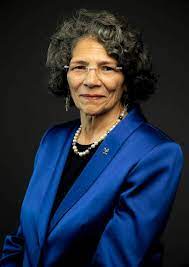
Let people choose for themselves. No one knows how hard it is. No one knows what we’re doing every day and what the challenges are. We were invisible basically, except portrayed as children who wouldn’t do what the president wanted to have done. But it was our lives, not his. The above quote is from Anita DeFrantz, who was on the U.S. Olympic rowing team for the 1980 Olympics, which were held in Moscow. She didn’t get to go, nor did the other athletes, because of President Jimmy Carter’s boycott of the Olympics. The quote is on an eleven minute video put out by the Washington Post on July 16, 2020. You can tell from the quote above, and from DeFrantz’s tone, that she is still bitter about Carter having made her decision for her. In the narrative that accompanies the video is this segment from DeFrantz: I finally asked the chairman of the Joint Chiefs of Staff, David Jones … “Can you tell me that one human life will be saved if we don’t go to Moscow?” He thought about it and said, “No.” That was the bottom line for me: If we can’t save one person, why are we doing this? As fate would have it, Cutler, who was then attorney for the president, invited me to come back with him to the White House to have another discussion. … We sat and we talked back and forth. He finally said, “Anita, isn’t there something you can feel in your gut when something is wrong?” I said: “Absolutely. I most certainly have that feeling right now.” Good for her. One of the easiest things for politicians to do is make decisions that dash people’s dreams but have very little effect on the politicians’ lives. Carter’s decision was one such. I followed the issue in 1980 and at the time I thought that Carter had literally prevented the athletes from going to Moscow. But his chief domestic policy advisor, Stuart Eizenstat, says that’s not true. In the narrative, Eizenstat says: And third, he realized that the U.S. government didn’t have full control over whether we participated as a U.S. team in the Olympics. That was ultimately up to the U.S. Olympic Committee, which is a totally separate independent body from the U.S. government. So Vice-President Walter Mondale went to a USOC meeting in Colorado Springs to make Carter’s case. The vote, by secret ballot, was 1,604 to 798 for the boycott. Did Mondale or Carter make threats? I don’t know and we may never know. (DeFrantz, by the way, says that what cinched it for Carter was former Ford administration Treasury Secretary Bill Simon’s speech in which he said that the USOC should do what the president wanted.) All of that makes refreshing, to me at least, what President Biden is considering regarding a boycott of the 2022 Winter Olympics in Beijing. This is from Associated Press, “President Joe Biden says U.S. ‘considering’ diplomatic boycott of 2022 Beijing Olympics,” November 18, 2021. President Joe Biden said Thursday that the United States was considering a diplomatic boycott of next year’s Winter Olympics in Beijing over China’s human rights abuses, a move that would keep American dignitaries, but not athletes, from the Games. If Biden doesn’t want to send government officials, at our expense, to the games, that’s great. But let the athletes make their own decisions. And it looks as if he plans to do just that. Score one for Biden. Actually, in her 66-page oral history, DeFrantz made the point more eloquently back in 1980: I think the real turning point was when someone from a magazine called and stated, “President Carter said, ‘We won’t be going to Moscow’.” I shot back, “We? What do you mean ‘we?’ Where was ‘we’ when I was training all year in the cold and freezing my butt off?” I went on to say, “There’s not one penny of federal money that goes into training. It is a private enterprise and I, as a private citizen, have the right to decide.” The pic at the top is of Anita DeFrantz.     (1 COMMENTS)

/ Learn More

Walt Disney and the Chinese State

According to the Wall Street Journal, the Chinese government has censored one episode of “The Simpsons” from Walt Disney’s streaming service in Hong Kong or, we don’t know, it may be the company itself that self-censored (Dan Strumpf, “Disney’s Missing ‘Simpsons’ Episode in Hong Kong Raises Censorship Fears,” November 29, 2021): Yet one episode is missing from “The Simpsons” lineup: Titled “Goo Goo Gai Pan,” the episode from season 16 centers on a trip to China by the show’s namesake family. Along the way they encounter a plaque at Tiananmen Square in Beijing that reads: “On this site, in 1989, nothing happened.” … It isn’t known if Disney removed the episode under pressure, or whether it decided itself to leave the episode out of its lineup when it launched the Disney+ service in Hong Kong earlier in November. Representatives for Disney didn’t respond to requests for comment. A spokeswoman for the Hong Kong Office of the Communications Authority, which oversees broadcasters in the city, declined to comment. The whole thing is rather funny, but of course not for the poor Chinese submitted to government censorship. That businesses have incentives to pander to the state or even to sensitive groups of private customers is a real problem for (other) consumers and, in this case, for freedom of speech. The problem, however, is much mitigated if not eliminated by the fact that other businesses have an incentive to compete and cater to neglected consumers. Competition if not repressed solves the problem. Whether Disney self-censors or accepts to be censored by staying in China, we should not refrain from calling the company’s behavior shameful. Similarly for private companies that cooperated with the Nazi government or for American companies that now crawls before the woke mob. Ethically, it seems that one should not do just anything to keep one’s access to a market; the end does not justify the means. There is a crucial difference, though, between the consequences of shameful behavior by private companies, which are attenuated by competition; and the consequences of shameful behavior by governments, which face little competition because they restrict or ban it. The problem is not self-interest, but bans on competition. (0 COMMENTS)

/ Learn More