This is my archive

bar

Let’s “curb” our enthusiasm for urban planning.

It has become fashionable to view the wealthy with suspicion. A pervasive theme among politicians is that the elite and wealthy are opposed to their constituency. To beat the system, one needs to beat back the elites. Yet for all the rhetoric centered around conflict, putting aside class differences can be helpful to achieving widely desirable goals. Jimmy McMillan, satirical candidate for the ‘Rent Is Too Damn High’ party received more than 40,000 votes over frustration that the costs of renting in New York City is too expensive. He was onto something. A Brookings Institution study analyzed that by the middle of the 90s, low-wage workers were no longer moving to high-wage cities because of rent costs. Rent and mortgage costs seem intractable when analyzing life as a competition between the rich and the poor. Yet, cooperation and pruning zoning regulations is something billionaires and low-income workers could unify on during the time of the Coronavirus. Cooperating on an issue can unify the wealthy and the poor and cut through class division. The landscape for corporate real estate is changing quickly during the pandemic. As money is tight, and businesses are unable to utilize their offices, businesses have warmed to working from home as a permanent model for some industries. Being given access to the benefits of saving up to $11,000 dollars a year for each worker working remotely, cutting commuting costs, having access to a broader range of employees, while having most managers being satisfied with work quality proves to be a tempting offer. As leases expire, many corporations will not renew with as much space. As corporations no longer want, or need as many offices, much space is going to be left unused. It may remain unusable if inflexible zoning laws prevent landowners from using their buildings for noncommercial uses. Currently, urban planners zone so that residential property isn’t near commercial property, but as commercial property becomes vacated, outdated regulations on how land is to be used will disadvantage the urban poor and the landowners. Give landowners and developers the flexibility to make housing in commercial zones by easing regulations will benefit all. As corporations vacate the real estate market, landowners will need to find other sources of revenue. Letting buildings rot as people remain homeless does not make moral or financial sense. Financially, refusing to accept payment for housing is risky, especially as city governments are grasping for money. As a result, landowners will be incentivized to create housing that people will hope to move into. To entice renters, the housing created must be competitive in cost of living, and safety. As many lose or leave their jobs and look for less expensive living, landowners must provide inexpensive units to meet demand in order to make a profit. While unconcerned with lining landowner’s pockets, affordable housing advocates have strong reasons to support the downsizing of urban planning. Affordable housing advocates are frustrated that the indigent and unfortunate do not have an inexpensive place to live. They’re right. The average family can’t afford to buy a home in 71 percent of the country. While in the past, they’ve argued for counterproductive measures like rent control and government run development, they can refocus on  reducing regulation to better achieve their goals. Here’s why: the total housing supply is the primary determinant for the price of rent. Increasing the total amount of housing- even if it’s not going to the poor- will increase competition for the buyer, driving down prices. Regardless of whether housing is “luxury” or “affordable,” housing costs go down overall. Economist Evan Mast examined the effect of new apartment buildings in low-income areas, and found that the inclusion of new market-rate buildings lower nearby rents  to 7 percent. Affordable housing advocates should want more housing to be built, regardless of whether its low income, or “luxury.” America does not have the ‘luxury’ of waiting for governments to produce a housing revolution. Instead, by freeing real estate from the boot of urban planners, let’s create the conditions that allow people to thrive!   Isadore Johnson is a campus free speech advocate, an economics and philosophy student, and regional coordinator for Students for Liberty. (0 COMMENTS)

/ Learn More

What makes an issue political?

Here’s Reason magazine: It was a little more than a year ago—right before Thanksgiving, as COVID-19 raged—that Jessica committed her crime: She let her 7-year-old son and his friend, age 5, play at the park while she went to buy a turkey.For this, she faced criminal charges, as well as being listed for 25 years on Arizona’s Central Registry, a secret blacklist that functions similarly to the sex offender registry but is less publicly accessible. I never knew that my parents were child abusers!I’ve had many discussions with people about this issue, and heard numerous horror stories such as the one mentioned here. Parents who grew up in foreign countries (where kids are often still allowed our alone) are especially perturbed by our safety-obsessed culture. But even non-immigrant Americans seem to miss the old days when kids could roam free. Almost everyone I speak with believes we’ve become way too overprotective.But that’s not what I wish to discuss today. Rather, I’m interested in another question. Why isn’t this a political issue? Lots of people have their lives damaged by this sort of overreaction. Yet I never see candidates in either party take sides on this issue, either pro or con.   Other restrictions on freedom quickly become political. When parks were closed due to Covid, lots of people (rightly) complained. Why isn’t there a big debate over whether parks should be closed to children playing alone?One answer might be that the public is pretty content with the status quo. Based on numerous conversions I’ve had, however, just the opposite seems to be true. But people seem fatalistic, as if a cloud from outer space descended on our culture and changed our attitudes toward childhood. As if nothing can be done about it.So what determines why some issues become political while others do not? Have you ever seen two candidates debate whether kidney donors should received monetary compensation? That regulation kills as many as 40,000 people a year.  Maybe that’s because everyone is on one side. But not everyone is on the same side regarding pot legalization, and yet I almost never see two candidates argue over the issue in a political debate. Ditto for physician-assisted suicide.  Other social issues pop up and quickly become political flash points, such as trans rights. But pot legalization remains mostly ignored by politicians on both sides. Gay rights were not an issue when gay sex was illegal (and why not?)  Rather it become an issue when specific questions such as gays in the military and gay marriage became contentious.I’m sure there’s a rational explanation for all of this. Presumably candidates do a cost/benefit calculation when considering which issues to discuss and which to ignore. I’m just not sure what that calculation involves. PS.  Note to commenters.  This post is not about the best way to raise one’s children; it’s about what determines when an issue becomes political. PPS.  Photo from epSos.de (1 COMMENTS)

/ Learn More

An Insurance Story

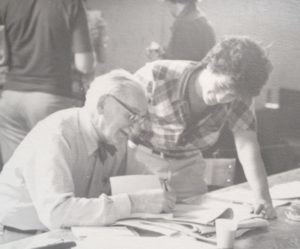
I thought I had told this story on EconLog before but a thorough search convinces me that I haven’t. It’s a story about how an insurance company treated 3 of my lost books from a devastating fire. In February 2007, a fire destroyed the 19th-century wooden building in which I had my office in Monterey. I don’t know if I would have lost everything if I had got in soon enough, but days and weeks later, with the rain coming down (my office was on the top floor) pretty much everything was destroyed. Early on, the Monterey city manager, Fred Meurer, refused to let me go into the building. When I pointed out that someone had offered free use of his cherry picker so that I wouldn’t have to touch the floor (which easily could have fallen through), Meurer came up with another objection: asbestos. I pointed out that one couldn’t get badly sick from asbestos with the little exposure I would have. Meurer didn’t budge. That’s the bad news. In what also looked like bad news, I was underinsured. I had a computer, printer, 6 file cabinets full of files, a nice couch, 4 nice wooden book shelves, and about 1,500 books. The representative from Safeco, my insurer, agreed with me that I would easily hit the $14,000 limit on my policy and so he sent a check right away for $8,000 so I could quickly set up everything I needed in a new office. I told him that I had 3 autographed books from Friedrich Hayek and a few from Milton Friedman, who had died 3 months earlier. He told me that since I was already at the $14,000 loss point, I wouldn’t get any extra for those books. Then, about a week later, he called and told me that he had found a provision in my insurance policy that he and I had both missed: I was allowed up to $10,000 for “fine art.” “And let me read you the definition of fine art,” he said. It included books autographed by famous authors. He then told me that this wasn’t his specialty but Safeco dealt with a company that specialized in valuing autographed books. He suggested that I send him my estimate of value. I came up with a number of $200 per book, figuring that no one could say that was too high. I also told him that meanwhile I had discovered that my autographed books from Milton Friedman were at home and at my campus office. About a week later I was flying to Baltimore Washington International Airport (BWI) from Monterey on Delta. I was on sabbatical and I was about to spend about 10 weeks of the sabbatical with the economists at George Mason University. (Thanks to Don Boudreaux, then chairman of the economics department, for letting me have an office.) The flight was from Monterey to Salt Lake City and then from SLC to BWI. As soon as I got off the flight in SLC, I turned on my flip phone and the phone rang. The woman on the other end told me that she was from the company hired by Safeco and she was calling to discuss the value of the Hayek books. “I notice that you said you thought they were worth $200 each,” she said, “how did you come up with that?” Oh, here we go, I said to myself. They’re going to dispute even that. “I figured no one could argue that they weren’t worth at least $200,” I replied. “I know something about the value of books autographed by Hayek,” she responded. “You don’t get it,” I replied, “these weren’t just books autographed by Hayek; these were books autographed by Hayek to me.” “Mr. Henderson, you don’t get it,” she replied, “these books aren’t worth $200 each; they’re worth $2,400 each.” I was dumbfounded. This conversation occurred as I was walking to the gate for BWI. I thanked her and hung up. “How much would I have to pay to upgrade to first class?” I asked the Delta employee. “$300,” he answered. So I did. Spending 4% of my $7,200 windfall seemed about right. Note: The picture above is of Hayek autographing my copy of his Studies in Philosophy, Politics, and Economics at the second Austrian economics conference at the University of Hartford in Hartford, Connecticut in June 1975. This was 6 months after Hayek had been presented with the Nobel Prize. Studies was one of my favorite of Hayek’s books. The photographer was Richard Ebeling. I had the picture as a book mark in my copy of another of my favorite of his books, Individualism and Economic Order. So of course it burned in the fire. I regretted that mainly because when I taught “The Use of Knowledge in Society,” I had showed the students the pic of Hayek and me. A few years later, Richard Ebeling emailed me and attached the above picture, asking if it was I. I  replied that yes it was, and I love him. (0 COMMENTS)

/ Learn More

The Collapse of the Soviet Union and the Continued Relevance of Ludwig von Mises

December 25th is certainly a time for celebration among those of us observing Christmas, but today also marks a day for all of humanity to rejoice and celebrate, regardless of creed, for today marks the 30th anniversary of when the Soviet sickle and hammer last flew over the Kremlin, marking the dissolution of the Soviet Union. The inhumanity and deprivation of that tyrannical regime remains terrible to contemplate. According to political scientist R.J. Rummel (1994), conservative estimates of the deaths deliberately caused by Soviet government policy, or “democide” as he refers to it, between the years 1917 and 1987 amount to almost 62 million people. Let that figure sink in, particularly because these figures do not include combat deaths on the Eastern Front during World War II (which would further increase the figure by millions), but deaths caused by state-sanctioned famine, imprisonment, and outright murder. What’s tragic about such figures is that the objectives of socialism were diametrically the opposite- namely, to bring forth a more economically prosperous world without class struggle. As Karl Marx and Friedrich Engels state in The Communist Manifesto (1848 [1998], p. 75), the “proletariat will use its political supremacy to wrest, by degrees, all capital from the bourgeoisie, to centralise all instruments of production in the hands of the state, i.e., of the proletariat organised as the ruling class; and to increase the total of productive forces as rapidly as possible.” Despite the abject failure of socialism to achieve its stated and well-intended ends, and the appalling figures outlined above, renewed sympathies for central planning are not absent. For example, according to a poll conducted by the Levada Center (2021), a Russian non-governmental research organization, as much as 60 percent of Russians are supportive of central planning as an appropriate means for allocating resources, with a corresponding decline in acceptance of a market economy[3]. Perhaps this figure speaks more to the way in which “privatization” at the hand of Russian “oligarchs” was implemented during the post-Soviet transition period, and that Russians have come to associate a market economy with cronyism. Written in the memory of my late father-in-law, Spiridon Albu, who persevered the tyranny and deprivation of socialism in Romania and was a never-ending support of my pursuit to articulate the case for a free society. My point here is not to use this poll to infer such a conclusion, but to appeal to a whole generation of individuals who are alive today, and who might still appeal to socialism as the means for organizing an economic system, but have no living memory of life in the Soviet Union, nor of the tyranny and deprivation it imposed behind the Iron Curtain (as has been recounted to me by my loved ones who, fortunately, survived that tyranny to celebrate Christmas with me). Did socialism fail in the Soviet Union because the “wrong people” were in charge, or did socialism fail because it generated the very conditions for the wrong people to become in charge? The answer to this question, I argue, turns on the continued relevance and understanding of an argument first put forth by the great Austrian economist, Ludwig von Mises. In the context of Soviet experiment with socialism, Mises wrote his classic article “Economic Calculation in the Socialist Commonwealth” ([1920] 1975), in which he argued that abolishing private property in the means of production would eliminate the possibility of central planners to allocate scarce resources according to their competing consumer uses, resulting in economic waste. This is because only within a context of private property are individuals able to exchange resources, the act of which generates exchange ratios denominated in money, also known as market prices, which are necessary to calculate the opportunity costs of using resources in the production of one consumer good, as opposed to another. Therefore, the impossibility of economic calculation under socialism is based not on any lack of motivation among central planners to allocate resources according to its most valued consumer uses, but because, without private ownership of those resources, the context-specific knowledge that is necessary – communicated through market prices in the form of profit and loss signals – simply does not exist for the central planner (see Boettke 1998, p. 149). The failure to understand the logic of Mises’s argument by economists outside the Soviet Union only reinforced the myth, through Soviet propaganda and fictitious statistics, that the Soviet GDP would eventually surpass that of the United States (Levy and Peart 2011; see also Ebeling 2020). Mises’s critique was the first salvo in what became known as the Socialist Calculation Debate, in which proponents and opponents of Mises attempted to defend or counter his claim, respectively. For my purposes here, I will not directly address the arguments made during that debate, the definitive account of which was written by Don Lavoie (1985a).[4] Rather, the main point I wish to argue here is that the “knowledge problem” (Hayek 1945) that is inherent to the problem of economic calculation extends not only to the comprehensive planning of an entire economy, but also applies to any form of non-comprehensive planning in which an individual is not assigned residual claimancy for their decision-making. To illustrate this point, let’s take a very simple and mundane example of economic calculation that I’ve used elsewhere (both here at EconLog and in a working paper co-authored with Peter Boettke and Peter Jacobsen), one in which scarce resources must be sorted to consumers according to their willingness to pay: the allocation of overbooked passenger seats on an airline. When passenger seats are overbooked, from an economic perspective, there is a conflict between consumers because of an imperfect assignment of property rights by the airline. This raises a question: what method of (re)allocation can be utilized to resolve such a conflict? An involuntary method of reallocating seats can be used, known as “bumping,” the consequence of which could be the violent removal of an individual from their seat, as exemplified by the United Airlines 3411 incident in 2017. Otherwise, a voluntary method can be used, utilizing market pricing to calculate the scarcity of airline seats, as was first devised by Julian Simon (1968) in the form of a reverse auction. According to this latter method, passengers are assigned the ability to exchange claim to their seats, in effect creating the conditions for economic calculation. This exchange process generates knowledge that is discovered only through the reverse auction, namely the discovery of who is the person with the lowest reservation price. Given that airlines in this case are private, for-profit firms, one could not claim that its owners are neither more nor less motivated before or after the implementation of the airline overbooking auction system. Therefore, a lack of motivation cannot explain why an airline had been unable to allocate airline seats to consumers who value them the most. Rather, without the knowledge generated through the reverse auction, it would be simply impossible for the airline to discover which individual would have the lowest reservation price. To be fair, one could object and argue that Mises’s critique (and my example above) are not applicable here. Given that Mises raised his critique in the context applied of economy-wide central planning, it may be the case that I am attacking a strawman, which is not applicable to today’s context, especially if the word “socialism” is being conflated today with “a larger welfare state,” “income redistribution,” or some other loose terminology that does not fit the classic definition of socialism (i.e. abolition of private property in the means of production). Moreover, one might also object that socialism as practiced in the Soviet Union, as well as Eastern and Central Europe in the past, or Cuba, North Korea, and Venezuela in the present, are not exemplary of “real-world socialism,” because their failures were caused by the “wrong” person being in charge, someone who was not well-motivated to allocate scarce resources in a peaceful, productive and responsible way. However, “[w]hether applied to comprehensive or noncomprehensive planning,” Lavoie (1985b, p. 57) argues, “the knowledge problem argument crucially depends on the view that knowledge is not the same as data, that is, given pieces of explicit information” that be gathered through search. Rather, “economic rivalry among competitors in the market,” as in the case of an auction, “generates knowledge that no rival on his own could have possessed in the absence of that rivalry” (1985, p. 26), particularly the price that an airline must pay to the individual giving up his or her seat as compensation for the error of overbooking. The point here is that even if we assigned Mother Teresa as a central planner, however well-intended or well-motivated she may be, she would still be precluded from the knowledge necessary for economic calculation, because such knowledge, embodied in market pricing, does not exist outside the context of exchangeable private property. How is all of this relevant to the example of the auction solution to airline overbooking? Nothing about the failure of an airline to assign airline seats according to consumer valuations can be attributed to the lack of motivation on the part of the airline, since it is a private firm striving to earn the highest profits possible. Such airlines were just as motivated to maximize profit before the existence of the overbooking auction as they were after its implementation. And yet, without economic calculation established through a reverse action, airlines are unable to address the misallocation of overbooked airline seats, despite being well motivated to do so. Again, my example may seem, at best, irrelevant, or at worst, just the silly cleverness of an economist with an ideological ax to grind. My point, however, is not a trivial one, but one with deadly serious implications. That is, if there are renewed calls for socialism, then how can we even begin to even reconsider its implementation on a grand scale if it is impossible to rationally calculate the price of overbooked airline seats outside the context of an auction, even under the best-case scenario of a well-motivated, profit-maximizing firm? The point of my illustration has not been meant to be an exercise of cleverness, but an exercise of warning. When so many innocent individuals have paid for the ideal of socialism with their own blood, as illustrated by the figures above, it is high time to remember that the nature of this problem, even under conditions as small-scale as an airplane, is not one of a lack of motivation, but of a lack of contextual knowledge that only emerges in the context of exchangeable private property rights. Moreover, if voluntary exchange and market pricing is not utilized as a means of competition for scarce resources, then individuals will learn involuntary methods of resource allocation, which is “why the worst get on top” under socialism, as F.A. Hayek (1944) argued. Overbooking on an airline without auction pricing as a solution can get an individual “bumped” from an airline against their will, but failure to comply with the central plan of socialist regime can get millions of individuals executed. Thus, socialism failed in the Soviet Union, not because the wrong people were in charge, but because the socialist economic system generated the very conditions for the wrong people to rise to the top and become in charge (see Boettke 1995). This continued relevance of Mises’s original contribution to the socialist calculation debate must be constantly reiterated, one that applies to planning and coordination not only across markets, but within any economic organization, both profit and non-profit. Without it, civilization and continued human progress hangs in the balance. Rosolino Candela is a Senior Fellow in the F.A. Hayek Program for Advanced Study in Philosophy, Politics, and Economics, and a Program Director of Academic and Student Programs at the Mercatus Center at George Mason University. References Boettke, Peter J. (1995). “Hayek’s The Road to Serfdom Revisited: Government Failure in the Argument Against Socialism.” Eastern Economic Journal 21(1): 7–26. Boettke, Peter J. (1998). “Economic Calculation: The Austrian Contribution to Political Economy.” Advances in Austrian Economics 5: 131–158. Boettke, Peter J., (Ed.). (2000). Socialism and the Market: The Socialist Calculation Debate Revisited (9 Volumes). New York: Routledge. Ebeling, Richard M. (2021). “Socialism-in-practice was a Nightmare, not Utopia: Ludwig von Mises’s Critique of Central Planning and the Fall of the Soviet Union.” The Review of Austrian Economics 34(4): 431–448. Hayek, F. A. (1944). The Road to Serfdom. Chicago: University of Chicago Press. Hayek, F.A. (1945). “The Use of Knowledge in Society.” The American Economic Review 35(4): 519–530. Lavoie, Don. (1985a). Rivalry and Central planning: The Socialist Calculation Debate Reconsidered. New York: Cambridge University Press. Lavoie, Don. (1985b). National Economic Planning: What is Left? Cambridge: Ballinger Publishing. Levy, David M., and Sandra J. Peart. (2011). “Soviet Growth and American Textbooks: An Endogenous Past.” Journal of Economic Behavior and Organization 78(1-2): 110–125. Mises, Ludwig von. ([1920] 1975). “Economic Calculation in the Socialist Commonwealth.” In F.A. Hayek (Ed.), Collectivist Economic Planning (pp. 87–130). Clifton: August M. Kelley. Rummel, R. J. (1994). Death by Government. New Brunswick: Transaction Publishers. Simon, Julian L. (1968). “An Almost Practical Solution to Airline Overbooking.” Journal of Transport Economics and Policy 2(2): 201–202.     [1] Written in the memory of my late father-in-law, Spiridon Albu, who persevered the tyranny and deprivation of socialism in Romania and was a never-ending support of my pursuit to articulate the case for a free society. [2] I thank Peter Boettke, Christopher Coyne, and Andreea Candela for their very helpful comments and suggestions. [3] I am very grateful to Konstantin Zhukov for his research assistance in pointing me to this reference. [4] For a selected collection of literature revisiting the socialist calculation debate, see also Boettke (2000). (0 COMMENTS)

/ Learn More

ADA Hurt Disabled Workers

In my recent post about Walter Block, I wrote: I notice that Provost Singh thinks that a statement that the Disability Act shouldn’t exist is racist and/or sexist. Seriously? Is she aware that one of the groups that has been most hurt by that law is people who are disabled? The reason is that the requirement for accommodating those with disabilities makes employers hesitant to hire disabled people. A commenter on my post, Daniel B, in what he called a rant but I thought to be a good comment, stated: Now that my rant is over, I must ask David to please post some ADA readings for us in the comments section 😀 I want to learn more! I replied that I was pretty sure I had read an NBER working paper on it some years ago. It turns out that I did, but I had forgotten who the authors were. The paper is Daron Acemoglu and Joshua Angrist, “Consequences of Employment Protection? The Case of the American with Disabilities Act,” NBER Working Paper #6670, July 1998. Here’s their abstract: The Americans With Disabilities Act (ADA) requires employers to accommodate disabled workers and outlaws discrimination against the disabled in hiring, firing, and pay. Although the ADA was meant to increase employment of the disabled, it also increases costs for employers. The net theoretical impact turns on which provisions of the ADA are most important and how responsive firm entry and exit is to profits. Empirical results using the CPS suggest that the ADA had a negative effect on the employment of disabled men of all working ages and disabled women under age 40. The effects appear to be larger in medium size firms, possibly because small firms were exempt from the ADA. The effects are also larger in states where there have been more ADA-related discrimination charges. Estimates of effects on hiring and firing suggest the ADA reduced hiring of the disabled but did not affect separations. This weighs against a pure firing-costs interpretation of the ADA. Finally, there is little evidence of an impact on the nondisabled, suggesting that the adverse employment consequences of the ADA have been limited to the protected group. Angrist, by the way, is one of the three co-winners of the 2021 Nobel Prize in economics. The paper was ultimately published in the Journal of Political Economy, 2001, Vol. 109, No. 5 (0 COMMENTS)

/ Learn More

Regenerative Agriculture and the Denial of Comparative Advantage. Recreating Old Problems?  

Part 1: Food Security Supporters of alternative agricultural systems often argue that present-day monocultures are primarily the result of climate change-inducing cheap petroleum and subsidy programs that benefit large-scale producers. They would rather leave fossil fuels in the ground, redirect government support towards “regenerative” approaches in which smaller and more diverse operations grow a variety of crops and keep diverse animals that complement each other, and have these operations serve primarily a localized “foodshed.” As stated by alternative food system guru Michael Pollan, the vast US federal agricultural policy apparatus should support “a transition to a new solar-food economy” by, for instance, adjusting payment levels to “reflect the number of different crops farmers grow or the number of days of the year their fields are green,” subsidizing four-season farmers markets, and rebuilding local distribution networks. This narrative is both incorrect and puzzling. For instance, the regional specialization of agricultural productions in the United States and elsewhere long predates the development of transportation fuels out of petroleum. Even more puzzling is that present-day alternatives look very similar to the way our ancestors once produced food, albeit supplemented with technologies whose development required an ever more globalized market. To critics of agri-business, however, modern practices were shoved down the throats of reluctant consumers. Unbeknown to them though, food security was a key consideration as will now be discussed. Farming activities are categorized as being either of a subsistence or commercial nature. Subsistence farming typically takes one of three forms. One is shifting agriculture where a patch of often newly deforested land is cultivated for a few seasons before being abandoned after its fertility has run out or weeds and other pests have taken over. Pastoral nomadism revolves around the movement of livestock from one grazing area to another depending on the local landscape and season. In some of the best locations though, individuals often practiced rudimentary sedentary tillage in which they continually exploited the same plot of land and, by necessity, produced a mixture of crops and animals raised for family consumption or trade with more or less distant neighbors. (For instance, the typical thirteenth century western European peasant strived “not exactly [for] self-sufficiency, but self-supply of the main necessities of life” such as bread, pottage or porridge, and ale.) In the context of shifting agriculture and sedentary subsistence farming, individuals preserve and store crop products at the end of the growing season and draw upon them until the next harvest. Farm animals are fed organic waste (including crop residues), low-grade forage (such as the low quality weeds that would typically appear on fallow land) and are left to scrounge for insects, greens, acorns, wild fishes and whatever other nutrition they can find. Some animals are used for power and transport (e.g., plowing, pulling a cart) while others provide intermittent variety in the diet (e.g., meat, milk, eggs and blood) along with valuable by-products (e.g., hides, leather, fibers and feathers). All of these also provide manure and can serve as a form of insurance against crop failures. In the words of agricultural economists George Norton, Jeffrey Alwang and William Masters, in subsistence agriculture livestock acts as “a savings bank and an insurance plan.” Like all agricultural producers, however, subsistence farmers could never avoid insect pests, diseases and bad weather during the growing and storage periods. The Roman poet Virgil alluded to some recurring problems and calamities in his Georgics. Weeds invaded the land. Voles and mice spoiled the threshing floor. Cranes and geese attacked the crops. Goats ate the young vines. Moles, toads and ants feasted on or undermined the farmer’s work. Virgil added that whatever production survived this onslaught could then be damaged or wiped out by summer droughts and winter windstorms, snow, hail or heavy rain. Even in good years, he added, a field might be accidentally set on fire. (Some of the calamities Virgil left out include frost, fungus and animal diseases, including diseases of work animals that severely reduced agricultural productivity.) These risks were traditionally minimized by growing different kinds of crops simultaneously, by producing as much as possible beyond the immediate year’s requirements, and by having one household work different parts of the local landscape (e.g., one family could simultaneously work a plot in a river plain and another on a hillside). “Catch crops” that could be grown quickly after the early failure of a more desirable one were often crucial. For instance, in the Mediterranean context, a failed winter wheat crop could be partly compensated by the planting of short cycle crops such as millet or dry legumes. In England, lesser spring-grown grains such as oats and barley played the same role for rye and wheat, while in central Pennsylvania fast growing buckwheat was another option. Unfortunately, no matter how diversified their operations were, subsistence farmers had no choice but to put all their food security eggs in one regional basket. This was always and everywhere a recipe for disaster. As Gregory of Nazianzus observed in the fourth century AD about the inland city of Edessa: There was a famine, the most severe within the memory of man. The city was in distress, but there was no help forthcoming from any quarter, nor any remedy for the calamity. The maritime cities support without difficulty occasions of want like these, since they can dispose of their own product and receive in exchange those which come to them by the sea. But we in the inland can make no profit on our superfluous products, nor procure what we need, having no means of disposing of what we have and importing what we lack. Fortunately, the 19th century saw the development of coal-powered steamships and railroads which made it possible for the first time in human history to move large quantities of food at a low price, not only on water but also on land. This transportation revolution not only paved the way to an ever more abundant, affordable and diverse food supply, but it also put an end to widespread hunger and misery in more advanced economies. Most people at the time were extremely grateful for these developments. Writing in 1856, British historian George Dodd observed that in the “days of limited intercourse, scarcity of crops was terrible in its results; the people had nothing to fall back upon; they were dependent upon growers living within a short distance; and if those growers had little to sell, the alternative of starvation became painfully vivid.” In 1862, economist and agricultural writer T. E. Cliffe Leslie reminded his readers about the “unmistakable warnings … in the last few years,” such as the potato disease, that “we cannot afford to be dependent for the staples of our food and industry on any single place or production.” In his 1871 Annals of Rural Bengal, William Wilson Hunter noted that an important set of preventive steps against famines included “[e]very measure that helps towards the extension of commerce and the growth of capital, every measure that increases the facilities of transport and distribution… [and whatever tends] to render each part [of a country] less dependent on itself.” In a speech delivered in 1875, the Australian entrepreneur Thomas Sutcliffe Mort observed that the advent of the railroad, the steamship, and artificial refrigeration had paved the way to a new age where the “various portions of the earth will each give forth their products for the use of each and of all,” the “over-abundance of one country will make up for the deficiency of another,” and so would the “superabundance of the year of plenty… for the scant harvest of its successor.” Humanity’s long history of famine and chronic malnutrition, he pondered, had not so much been the result of God’s not having provided enough to spare, but rather the unavoidable consequence of the fact that “where the food is, the people are not; and where the people are, the food is not.” It was now, he observed, “within the power of man to adjust these things.” This power is still very much with us and it would be nothing short of suicidal to turn our backs on it.   Pierre Desrochers, is Associate Professor of Geography, University of Toronto Mississauga. (0 COMMENTS)

/ Learn More

A Christmas Tale: Santa in the New World

As his flying truck was clearing the half-frozen runway, Santa reflected on how the world had changed. His co-pilot was his Chief Diversity Officer, a blue hermaphrodite. (Ze was also his Chief Scientific Officer.) Her presence was not formally required by law but Santa knew he would otherwise get in trouble with “the authorities” and their armies of bien pensant minions. Not that Santa held any partisan political opinion: for decades, he had delivered the gifts requested by children, with due consideration to their parents’ wishes, and just wanted his customers to be happy. He had been a smiling merchant. “Merchant” is not the correct term because, as is well known, Santa did not charge anything for his services. But that was not an excuse for ignoring officially-defined fairness, as Google, Facebook, and Twitter had learned in times past. It must however be admitted that Santa partly financed his activities with ads from Amazon, the logo of which figured on all his gift bags. There is no such thing as a free lunch. Also, his flying truck was loaned by Space X and bore the company’s logo: there is no such thing as a free launch either. At that time, historians will recall, Amazon was still trying to survive a long decline while fighting new legal challenges from antitrust authorities, who had been lobbied by some new competitors. Poor economics, of course. Heavily subsidized universities had stopped teaching standard economics which, it was complained, transmitted “an oversized and anti-social view of the individual.” The State of California had forced Santa to fill 10% of his cargo space with non-gendered gifts. Although the required proportion did not correspond to straight demographics, it made sense given that non-gendered people were more privileged and much wealthier than average and typically spent much more on their children’s gifts. In a rare fit of dark humor, the old Santa had filled the mandated space with cowyouth revolver toys. The packaging of the gun toys also warned: “For Social Justice Enforcement Only.” Long guns bore the inscription “The Long Arm of the Law.” It would be incorrect to believe that Santa had become a moral nihilist. On the contrary, he had simple moral beliefs, perhaps reminiscent of what Honoré de Balzac said of a character (Borgeat) in one of his novels: “This man’s faith was perfect; he loved the Virgin Mary as he might have loved his wife.” (In the French original: « Cet homme avait la foi du charbonnier. Il aimait la sainte Vierge comme il eût aimé sa femme. ») This did not fit well with the Brave New World, where the simple person’s morality now consisted in worshipping Gaia, claiming for sacrifices to social justice, and obeying the authorities. Entering America’s airspace was not easy but it was just business as usual. A Great Invisible Wall had been created that blocked any foreigner until he could be vetted. As an exclusive service to good American citizens, the federal government was offering the completely free insertion under the skin of a complimentary microchip that automatically opened The Wall, except of course if an order from a secret court dictated otherwise. (These national security measures had been reconducted under the latest Matriot Act, renamed to position it squarely against patriarchy.) Santa had to produce personal and customs e-documents, show the QR of his special cabotage permit (the Jones Act had been recently modernized), provide a link to his DNA profile and complete medical file, answer questions, and swear not to make any trouble. He was not comfortable with that promise but he was not a pure Kantian and thought that lying, although generally wrong, could be justified under special circumstances such as coercion. As Friedrich Hayek wrote in a 1973 book, “The first attempt to secure individual liberty by constitutions has evidently failed.” Santa had not read Hayek, who was by then totally forgotten after being openly censored as an old white man. Crossing The Wall was only the beginning of Santa’s problems. Once he started landing on roofs, he saw that the vast majority of chimneys had warnings such as “Only Local Toys Accepted,” “Union-Made Toys Only,” “No Sexist Toys,” “No Gun Toys,” “Blue-Made Toys Only,”  “Nothing But Educative Toys,” “No Foraign [sic] Stuff,” “Warning: Inclusive House.” When in the weeks preceding Christmas, Santa had met little boys and girls in stores and shopping malls, he whispered in their ears: “If your gifts are not by the chimney, go and see outside the backdoor of your house or outside your school.” (An increasing number of families lived in public or subsidized apartment blocks as opposed to single-family houses, which were said to “waste our national resources.”) By Christmas morning, all children had received the gifts they had asked for—except for a few inappropriate requests from naughty kids and, of course, from children in jail, where deliveries were forbidden. An electronic Christmas card accompanied each gift, paraphrasing a reflection by (now officially canceled) economist James Buchanan: “You will need liberty to become the individual you want to become.” Interestingly, Santa had heard about Buchanan, perhaps in Econlib or Regulation articles that circulated on the dark web. After Santa had delivered his last gift, any passerby would have heard a short burst (ho-ho-ho) of his famous laugh. He then hurried back to the North Pole, his truck in hypersonic mode, to escape being canceled by the mob or arrested by its very representative government. (0 COMMENTS)

/ Learn More

Decentralized Tokyo

The Economist has an interesting article on the world’s largest city: Tokyo is now the world’s largest city, with 37m residents in the metropolitan area and 14m in the city proper. It is also one of the world’s most liveable, with punctual public transport, safe neighbourhoods, clean streets and more restaurants and Michelin stars than any other. In the liveability index of the Economist Intelligence Unit, our sister group, Tokyo comes joint fourth, but its population is larger than the combined populations of the others (Adelaide, Auckland, Osaka and Wellington). “It’s possible to have a liveable city at any scale—Tokyo proves that,” says Gabriel Metcalf, at Committee for Sydney, an Australian think-tank. The article discusses the role of planning: Tokyo’s liveability is a product of planning’s successes but also its failures, argues Jordan Sand of Georgetown University. One success was public transport. After the Meiji restoration, the government put rail ahead of roads, expanding networks through the city and then underground. Even as large firms in America built headquarters in suburbs, in Japan they clustered around transport hubs, incentivising the use of trains and subways, says Okata Junichiro of the University of Tokyo. That helped make Tokyo polycentric, with many hubs, not one. What the article doesn’t say is that the transit system is surprisingly decentralized.  While Tokyo’s largest operator (JR East) is government owned, the metro area is served by 48 different commuter rail operators.  Of the 158 rail lines in the Tokyo area, no fewer than 55 are run by private operators.   You may recall that Japan’s postwar boom occurred partly because firms like Honda ignored the diktats of government planners (who wanted them to stick to motorcycles.)  Something similar happened with urban planning: Around those hubs grew dense, mixed-use neighbourhoods. That was the planning “failure”. After the war, city planners sought to impose zoning as in the West, as they had after the Great Kanto Earthquake of 1923. But the government’s resources were too limited and Tokyo’s growth too rapid to control the process. Japan instead developed lax zoning codes, which allow pretty much anything to be built, rather than prescribing what is permitted. Historically, this model “was part of a modernist ethos to separate functions, to say work happens here, living happens here”, explains Mohsen Mostafavi of Harvard’s Graduate School of Design. For those interested in urban planning, I found this video on Tokyo’s lax zoning rules to be quite interesting: (0 COMMENTS)

/ Learn More

John Tamny’s Quizzical Statement

In one of the lead letters in the Wall Street Journal on 12/20/21 (print edition on 12/21/21), John Tamny closes with the following statement: The state of the consumer-price index is a political phenomenon born of panic, not an inflationary story of dollar-price decline. I assume that by “dollar-price decline,” Tamny means a decline in the value of the dollar; otherwise it wouldn’t be an “inflationary story.” But Tamny doesn’t deny that consumer prices have risen a lot. Another way of saying that consumer prices have risen a lot is that the value of the dollar has fallen. So the CPI increase is a story of dollar-price decline. Does anyone know any interpretation of Tamny’s sentence that both fits the recent data and is not contradictory? Note: Lawrence H. White, “Inflation,” in David R. Henderson, ed., The Concise Encyclopedia of Economics, is still one of the best overall concise treatments of inflation. (0 COMMENTS)

/ Learn More

Better Late than Never for Eric Topol

Cardiologist Eric Topol writes: Rapidly scale the production of the anti-Covid pill Paxlovid, which is about to get FDA emergency authorization and the topic of my last post here. There will be a large number of non-mild infections going forward and we now have a treatment that is expected to work extremely well against Omicron, but the supply is dreadfully short. I wrote more about this today Enacting the Defense Production Act, as the President has done for rapid test production, is one way to solve this shortage problem. Our healthcare workforce, already compromised in numbers and morale, will likely be hit hard by Omicron infections. Having a pill treatment that knocks viral load down by 10-fold quickly, to potentially get them back in action in a short time lag (e.g. 2 days instead of 10) may prove vital. We need to get studies on transmission of Omicron done ASAP, and particularly with Paxlovid treatment to nail this time interval down, as discussed in my recent Q&A with New York magazine. Good for him. He wants the FDA to approve Paxlovid rapidly. This is better late never. Contrast his view here with his view that he hoped the FDA would slow down the Covid vaccine and make sure it didn’t get approved until after the November presidential election: If Trump badgered the US Food and Drug Administration into prematurely releasing a vaccine that wasn’t effective, or even caused harm, it could shake the public’s trust in any covid-19 vaccine. And if we are to achieve wide immunity against SARS-CoV-2, we’ll need to vaccinate more people than the number that get flu shots each year. Releasing a vaccine that people are afraid of could do more harm than good. To prevent such a scenario, Topol led online calls for FDA commissioner Steve Hahn to resign after his agency was criticized for cowing to political pressure—and then phoned Hahn a number of times to urge him to resist Trump’s influence. Topol also targeted Pfizer, the only pharmaceutical company likely to seek approval of its vaccine before Election Day, which eventually set up a meeting for him with its vaccine team. On October 16, Topol and his allies were able to claim success: Pfizer CEO Albert Bourla said the company would not be able to seek emergency approval for its vaccine before the third week in November, owing to safety standards that had been put in place by the FDA. Those standards had been issued against Trump’s wishes, but at the urging of Topol and other advocates. The above is from Antonio Regalado, “One doctor’s campaign to stop a covid-19 vaccine being rushed through before Election Day,” MIT Technology Review, October 19, 2020. Call me cynical about cardiologist Eric Topol’s motives, if you will, but in this case I spell cynical r-e-a-l-i-s-t-i-c. HT2 chrisare, a commenter on this post. Question: With the benefit of hindsight, and assuming, as seems plausible from the MIT Technology Review article referenced above, that Topol helped slow the vaccine approval by a few weeks, how many extra deaths did Dr. Topol contribute to?   (0 COMMENTS)

/ Learn More