This is my archive

bar

Conservatism and Historical Empiricism

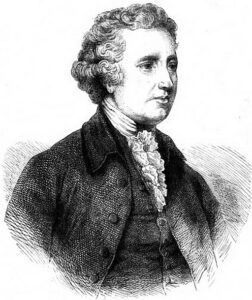
In my previous post, I introduced Yoram Hazony’s project in his new book, Conservatism: A Rediscovery. What, to Hazony, separates true conservatism from Enlightenment liberalism, and why is the former superior to the latter? To answer this, Hazony looks to the writings of major conservative thinkers in centuries past, such as John Fortescue, Richard Hooker, John Seldon, and Edmund Burke. What unites these thinkers is their support for what Hazony dubs historical empiricism, and their distrust of universalist, rationalist theories founded on abstract reason. Quoting John Seldon, Hazony says of historical empiricism that by “this view, our reasoning in political and legal matters should be based upon inherited national tradition. This permits the statesman or jurist to overcome the small stock of observation and experience that individuals are able to accumulate during their own lifetimes (‘that kind of ignorant infancy, which our short lives alone allow us’) and to take advantage of ‘the many ages of former experience and observation’ which permit us to ‘accumulate years to us, as if we had lived even from the beginning of time.’ In other words, by consulting the accumulated experience of the past, we overcome the inherent weakness of individual judgment, bringing to bear the many lifetimes of observation by our forebears, who wrestled with similar questions under diverse circumstances.”  This is distinguished from the thought of the political philosopher John Locke, a key figure in the Enlightenment liberal tradition. Hazony identifies Locke as a rationalist and a universalist, whose approach to political philosophy stands in stark contrast to the historically grounded and experience-based vison of conservatism. Hazony explains: “Rationalists have a different view of the role of reason in political thought, and in fact a different understanding of what reason itself is. Rather than arguing from the historical experience of nations, rationalists set out by asserting general axioms that they believe to be true of all human beings and that they suppose will be accepted by all human beings examining them with their native rational abilities. From these, they deduce the appropriate constitution or laws for all men.” Perhaps Locke’s most famous work, his Second Treatise on Government, demonstrates this process in action. Locke’s approach is not an “effort to formulate a theory of the state from an empirical standpoint. Instead, it begins with a series of axioms that are without any evident connection to what can be known from the historical and empirical study of the state…From these axioms, Locke then proceeds to deduce the proper character of the political order for all nations on earth.”  As with all deductive reasoning, Locke’s axiomatic-deductive approach is only as strong as the assumptions on which it rests. But, Hazony says, “there is no reason to think any of Locke’s axioms are, in fact, true.” And in claiming the universal validity of these axioms and the systems deduced from them, rationalists recklessly seek to overthrow generations of accumulated experience in favor of something grounded in little more than their own armchair thought experiments. For if this axiomatic-deductive reasoning, untethered from experience, successfully “reveals to all the universal laws of nature governing the political realm, then there will be little need for the historically and empirically grounded reasoning of men such as Fortescue, Hooker, Coke, Selden, and Hale. All men, if they will just gather together and consult with their own reason, can design a government that will be better than anything that ‘the many ages of experience and observation’ produced in England. On this view, the Anglo-American conservative tradition—far from having brought into being the freest and best constitution ever known to mankind—is in fact shot through with unwarranted prejudice, and an obstacle to a better life for all.” Conservatives reject the universal claims of rationalist liberals. It is simply beyond the powers of the human mind to create, from whole cloth, a universally valid system of rights, or a universally valid political order, equally applicable in all times to all peoples. However, one must be careful not to overstate this point. The conservative thinkers Hazony cites, along with Hazony himself, do admit that universally correct answers exist. For example, Hazony says while “there are certainly principles of human nature that are true of all men, and therefore natural laws that prescribe what is good for every human society,” the true nature of “these principles and laws are the subject of unending controversy.” Elsewhere Hazony reiterates the point: “Conservatives do believe there are truths that hold good in all times and places, but given the extraordinary variety of human opinions on any given subject, they are skeptical about the capacity of the individual to attain universal political or moral truths simply by reasoning about them.”  What separates empiricist conservatives from rationalist liberals is how to go about discovering what these universal laws are. Rationalist liberals believe they can be derived through human reason, and once known these universal laws can be applied to consciously construct a universally valid political order. Empiricist conservatives believe human reason can only provide an understanding that is very limited and partial, and it’s only through long periods of experience and trial-and-error, built up across generations, that we can attempt to more closely approximate these ideals in practice.  Further, the discoveries made through this evolved and experienced-based process will not be universally applicable. They will be shaped into different forms by the differing characters, experiences, constraints, and histories of each nation, and may manifest in different, often incompatible, but equally useful ways. Again quoting Seldon (whom Hazony ranks as the greatest of conservative thinkers), Hazony writes “no nation can govern itself by directly appealing to such fundamental laws, because ‘diverse nations, as diverse men, have their diverse collections and inferences, and so make their diverse laws to grow to what they are, out of one and the same root.’” But these laws and traditions of different nations, despite growing from “out of one and the same root” may be incompatible with each other, says Seldon, who writes that what “may be most convenient or just in one state may be as unjust and inconvenient in another, and yet both excellently well framed as governed.”  An analogy might be drawn by referencing an archery target. Suppose the middle of the target, a perfect bullseye, represents the “principles of human nature that are true of all men” and the “natural laws that prescribe what is good for every human society.” Rationalist liberals believe one can create a social order through human reason that operates squarely on the bullseye. But empiricist conservatives see it differently. Human reason is far too feeble a guide to accomplish this. Different peoples and different nations, through trial and error and hard-earned experience, can try, over time and bit by bit, to move closer and closer to the bullseye. One nation may end up in a spot six inches above the center, while another ends up six inches below, with a third six inches to the left and a fourth six inches to the right. Each of these nations have developed systems and institutions that are equally close to correct, yet the institutions and traditions of each will be in many ways different from or incompatible with each other. Additionally, they didn’t end up where they were through sheer chance. Where each nation ended up had its own path-dependent logic based on its own unique history and circumstances. So even though the customs and institutions for each may be equally valid in a sense, they won’t be universal or interchangeable. What works at the northern-most point won’t work as well in the western-most point, and so on.  Because of this, Hazony writes, conservatism does not attempt to reach beyond its borders, or attempt to influence or interfere with other nations. “Each nation’s effort to implement the natural law is in accordance with its own unique experience and conditions. It is therefore wise to respect the different laws found among nations, both those that appear right to us and those that appear mistaken, for different perspectives may each have something to contribute to our pursuit of the truth.” There is no similar basis for such tolerance or respect in Enlightenment liberalism. For if the correct laws can be known through simply consulting universal human reason, and the validity of these reason-derived laws are always and everywhere valid, we have no more reason to respect the experience and character of other nations than we do to respect the accumulated experience of the past within our own society. If they seem contrary to what you can determine through reason, we can freely dispense with them. In the next post, I will review Hazony’s views on conservatism and nationalism, and why he sees these ideas as necessarily connected.  (0 COMMENTS)

/ Learn More

Ask and You May Receive

On Friday, October 27, just before I was to head east for the Mont Pelerin Society meetings in Bretton Woods, I woke with the toothache from hell. I arranged an emergency appointment with my dentist. She prescribed an antibiotic, recommended an OTC pain pill, and had her assistant line up an appointment with her favored endodontist. It all worked. I had a successful trip with minimal pain and got back last Thursday. On Friday, the endodontist’s assistant called to find out what kind of dental insurance I had. The bottom line: none. So when I showed up for my appointment on Monday of this week, I told the assistant that in light of the fact that I didn’t have insurance, I wondered if the doctor would give me a senior discount. She said she would ask. When I left my consultation appointment, she told me that I would get a 10% discount off the $242 that I had been quoted and a 10% discount off the much larger $1725 for the root canal. I once negotiated a discount with a doctor who had already done my daughter’s tonsillectomy. You don’t always get discounts but it usually pays to ask. (0 COMMENTS)

/ Learn More

The grasshoppers are coming for your savings

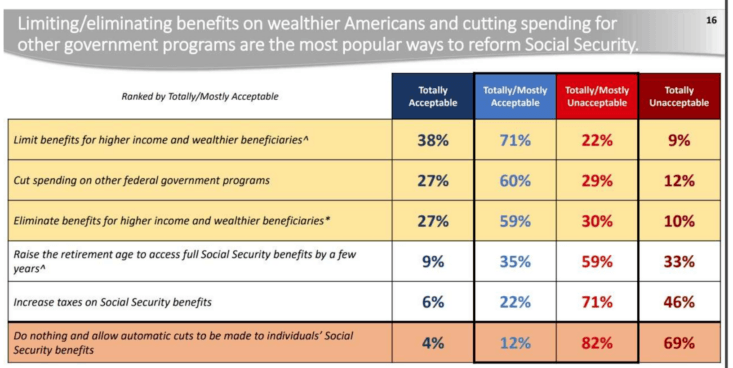
A recent Reason magazine article included a poll on how the public would like to address the Social Security crisis: In other words, most people don’t want to sacrifice anything; they want someone else to bail out the troubled program.  What a surprise! This reminded me of a famous parable: In Aesop’s original fable the grasshopper spends the entire summer chilling out, while the ant works to store up food for the winter.  Long story short, winter comes, the starving grasshopper begs the ant for food, the ant refuses because the grasshopper was lazy, the grasshopper dies, and we all learn about the value of hard work and long-term planning. When I see this sort of poll my initial (visceral) reaction is that those spendthrift grasshoppers that didn’t save very much wish to take away the social security benefits of thriftier people (like me.)   But I doubt whether these answers can be trusted.  I doubt whether people understand that limiting the benefits of wealthy people would only make a dent in the problem if “wealthy” were defined to include “middle class people who were thrifty”.  There aren’t many truly wealthy American retirees, but there are a whole lot of middle class retirees with substantial 401k plans (like me.)  That’s an influential political bloc, and won’t take kindly to major cuts in their social security.  It’s not politically feasible to take away the social security benefits of the top 20% of retirees—they are too powerful.  Perhaps you could give then a 10% haircut, but that wouldn’t be enough to solve the problem.  We need some combination of more immigration, higher tax rates and/or cuts in other federal programs. In practice, I suspect that the actual reforms will include a mix of current tax increases and benefits cuts that are pushed well into the future.  Young people will pay the price, but as we saw with the 1983 reforms, young people don’t care very much about benefit cuts that won’t take effect for 30 years. Also keep in mind that many benefit cuts are disguised tax increases.  Restricting benefit cuts only to wealthy people is equivalent to a tax on wealth creation.  It would represent a rise in the implicit marginal tax rate on income and saving. (0 COMMENTS)

/ Learn More

Introducing Conservatism: A Rediscovery

It would be difficult for the typical observer of American politics to doubt that conservatism is in crisis. At present, Joe Biden’s approval ratings are quite low, despite generally favorable economic conditions. Majorities of the American public disagree with the Democratic party on important issues related to race and gender ideology. In normal circumstances, one would expect this to be a time when the Republican party to be ascendant in a major way. Instead, what we see is a Republican party that seems determined to self-immolate and snatch a devastating defeat from the jaws of what should be an easy victory.  What explains this disfunction among American conservatives? Perhaps conservatism, as an idea, is doomed to end in failure. Or, perhaps, true conservatism has been lost, and needs to be recovered. It is this idea that animates Yoram Hazony in his book Conservatism: A Rediscovery. Hazony believes that a “remarkable fact about contemporary conservatism” can be found in “the extraordinary confusion over what distinguishes Anglo-American conservatism from Enlightenment liberalism (or ‘classical liberalism’ or ‘libertarianism’ or, for that matter, from the philosophy of Ayn Rand).” George Will, in his book The Conservative Sensibility, considers American conservatism based on the idea of conserving the values of the Founders, which were in turn derived from the classical liberal values of the Enlightenment. So, to George Will, American conservatism is about conserving the classical liberal tradition. Not so for Hazony. He believes the broader tradition of Anglo-American conservatism stands in distinction from, and is in many ways opposed to, classical liberalism and Enlightenment values. Hazony believes that true conservatism needs to be rediscovered, and its recovery is necessary to improve the state of the nation. This is made all the more necessary because Enlightenment liberalism has failed: “The hegemony of liberal ideas, which was supposed to last forever and to be embraced by all nations, has come to an end after only sixty years.” Liberalism has been unable to withstand the challenges of radical Progressivism or Marxism. Because liberalism is fundamentally different from conservatism, liberalism lacks the tools necessary to conserve itself: “For the truth—which at this point cannot be repeated frequently enough—is that Enlightenment liberalism, as a political ideology, is bereft of any interest in conserving anything. It is devoted entirely to freedom, and in particular to freedom from the past. In other words, liberalism is an ideology that promises to liberate us from precisely one thing, and that thing is conservatism. That is, it seeks to liberate us from the kind of public and private life in which men and women know what must be done to propagate beneficial ideas, behaviors, and institutions across generations and see to it that these things really are done.” Despite this grim assessment, Hazony is hopeful that true conservatism can be rediscovered: “Is it possible for a society whose traditions have grown so faint to revive them? Is it possible for individuals who have grown up in a liberal society obsessed with personal freedoms to become strong conservative men and women and to do what a conservative calling demands of them? I believe it is possible because I have seen it happen many times over the course of my life. It is possible for individuals to discover that they have been on the wrong course, repent, and set out on a new and better course. And this is possible, too, for families and congregations, tribes and nations.”  This is ambitious, to be sure. And due to this ambition, Hazony’s vision of conservatism deserves careful consideration and scrutiny. Over the next several posts, I’ll go over the major ideas in Hazony’s book. As always when I do these book reviews, I’ll be presenting, rather than evaluating, Hazony’s argument, and if anyone has questions in the comments, my responses will be tailored to represent Hazony’s view as I understand it, rather than presenting my own views. My evaluation and critique of the book will be saved for the final posts. (0 COMMENTS)

/ Learn More

What In Heaven’s Name is the Public Interest?

Special interests must yield to the public interest. Individual interests are special interests. Thus, individual interests must yield to the public interest. This means, in practice, that individuals must be prevented by force from acting against the public interest. This widely shared conclusion is invalid. Used this way, the “public interest” is an undefined and undefinable expression. It’s an incantation. If, as we are expected to believe, the “public interest” is the interest of the public, it does not exist, because “the public” is made of different individuals who each have his (or her, of course) own interest and tries to maximize his own utility (as he sees it). The public interest would literally only exist if all individuals were identical, that is, had the exact same preferences and values, and found themselves in the same particular circumstances. Those who invoke the “public interest” are obliged to retreat in defining it as what a democratic political system decides. That does not make it the interest of the public but the interest of the numerical majority who consciously and knowingly vote for it. Aggregating the opinions of all voters in such a way that each one has an equal say and the result is coherent is a well-known mathematical impossibility, under certain reasonable conditions. The “public interest” typically turns out to be the outcome of political horse-trading and what politicians or bureaucrats put on the political agenda in the first place. In other words, the “public interest” is what is decided by those who have the power to impose their decisions on others. (See my “The Impossibility of Populism,” The Independent Review, Vol. 26, No. 1 [2021], pp. 15-25.) Another way to rescue the “public interest” is to view it as the churning of private interests in the state’s cauldron. The state will give privileges to A at the expense of B, and then to B at the expense of A or C. Often, the state will simultaneously give to A and take from A, and the same for B and C. This churning will, on net, decrease the utility of everybody. For a recent example (they are not difficult to find), see a piece of Financial Times columnist Rana Foroohar, who generally falls in love with any proposed government intervention that, she assumes, will not harm her: “How to make free trade fairer,” October 30, 2023. Her column, about what she calls “fair” trade, is best summarized by its subtitle: It’s time to change settlement dispute systems that favour multinationals over countries — and their public interest. So “countries” have “their” public interest? All the same public interest or a different one for each country? Isn’t any corporation and even multinational corporation a legal resident of one country? Aren’t the interests of its owners part of that country’s public interest? Or are they part of the world’s public interest? And how does Foroohar weigh the interests of the corporation’s owners (or its workers or customers) against the interests of some others in the country or in the world? She can only answer such questions in an arbitrary and authoritarian fashion. For another recent example, consider Vice-President Kamala Harris speaking in London in front of a large slogan: “Artificial Intelligence: In Service of the Public Interest” (see “US Upstages Rishi Sunak with AI Regulation Plan,” Financial Times, November 1, 2023). Since the public interest does not exist, Ms. Harris in fact wants to impose by force her conception, or her tribe’s conception, or the current US government conception’s, of that dangerous unicorn. I recently gave another example in my EconLog post “The Arbitrariness of the ‘Public Interest’.” The only conceivable public interest resides in the common interest of all individuals to be equally free to each pursue his own interests within broad rules—which usually take a negative form, such as “Thou shall not kill.” This is the classical liberal ideal that James Buchanan and Friedrich Hayek* have explored. On this essential distinction between the common interest and the confused “public interest,” the last chapter of Geoffrey Buchanan and James Buchanan’s The Reason of Rules is enlightening, if sometimes disquieting. They argue that we can only speak of the public interest if and when some individuals voluntarily accept to support the costs of the collective action necessary to reform a state that does not correspond to the requirements of a unanimous social contract or the common interest of all individuals (see notably p. 163). —————————————————- * I provide an introduction to Friedrich Hayek’s social and legal thought in my separate reviews of the three volumes of his trilogy Law, Legislation, and Liberty: Volume 1, Rules and Order; Volume 2, The Mirage of Social Justice; and Volume 3, The Political Order of a Free People. (0 COMMENTS)

/ Learn More

Hazony 2

What, to Hazony, separates true conservatism from Enlightenment liberalism, and why is the former superior to the latter? To answer this, Hazony looks to the writings of major conservative thinkers in centuries past, such as John Fortescue, Richard Hooker, John Seldon, and Edmund Burke.  What unites these thinkers is their support for what Hazony dubs historical empiricism, and their distrust of universalist, rationalist theories founded on abstract reason. Quoting John Seldon, Hazony says of historical empiricism that by “this view, our reasoning in political and legal matters should be based upon inherited national tradition. This permits the statesman or jurist to overcome the small stock of observation and experience that individuals are able to accumulate during their own lifetimes (‘that kind of ignorant infancy, which our short lives alone allow us’) and to take advantage of ‘the many ages of former experience and observation’ which permit us to ‘accumulate years to us, as if we had lived even from the beginning of time.’ In other words, by consulting the accumulated experience of the past, we overcome the inherent weakness of individual judgment, bringing to bear the many lifetimes of observation by our forebears, who wrestled with similar questions under diverse circumstances.”  This is distinguished from the thought of the political philosopher John Locke, a key figure in the Enlightenment liberal tradition. Hazony identifies Locke as a rationalist and a universalist, whose approach to political philosophy stands in stark contrast to the historically grounded and experience-based vison of conservatism. Hazony explains: “Rationalists have a different view of the role of reason in political thought, and in fact a different understanding of what reason itself is. Rather than arguing from the historical experience of nations, rationalists set out by asserting general axioms that they believe to be true of all human beings and that they suppose will be accepted by all human beings examining them with their native rational abilities. From these, they deduce the appropriate constitution or laws for all men.” Perhaps Locke’s most famous work, his Second Treatise on Government, demonstrates this process in action. Locke’s approach is not an “effort to formulate a theory of the state from an empirical standpoint. Instead, it begins with a series of axioms that are without any evident connection to what can be known from the historical and empirical study of the state…From these axioms, Locke then proceeds to deduce the proper character of the political order for all nations on earth.”  As with all deductive reasoning, Locke’s axiomatic-deductive approach is only as strong as the assumptions on which it rests. But, Hazony says, “there is no reason to think any of Locke’s axioms are, in fact, true.” And in claiming the universal validity of these axioms and the systems deduced from them, rationalists recklessly seek to overthrow generations of accumulated experience in favor of something grounded in little more than their own armchair thought experiments. For if this axiomatic-deductive reasoning, untethered from experience, successfully “reveals to all the universal laws of nature governing the political realm, then there will be little need for the historically and empirically grounded reasoning of men such as Fortescue, Hooker, Coke, Selden, and Hale. All men, if they will just gather together and consult with their own reason, can design a government that will be better than anything that ‘the many ages of experience and observation’ produced in England. On this view, the Anglo-American conservative tradition—far from having brought into being the freest and best constitution ever known to mankind—is in fact shot through with unwarranted prejudice, and an obstacle to a better life for all.” Conservatives reject the universal claims of rationalist liberals. It is simply beyond the powers of the human mind to create, from whole cloth, a universally valid system of rights, or a universally valid political order, equally applicable in all times to all peoples. However, one must be careful not to overstate this point. The conservative thinkers Hazony cites, along with Hazony himself, do admit that universally correct answers exist. For example, Hazony says while “there are certainly principles of human nature that are true of all men, and therefore natural laws that prescribe what is good for every human society,” the true nature of “these principles and laws are the subject of unending controversy.” Elsewhere Hazony reiterates the point: “Conservatives do believe there are truths that hold good in all times and places, but given the extraordinary variety of human opinions on any given subject, they are skeptical about the capacity of the individual to attain universal political or moral truths simply by reasoning about them.”  What separates empiricist conservatives from rationalist liberals is how to go about discovering what these universal laws are. Rationalist liberals believe they can be derived through human reason, and once known these universal laws can be applied to consciously construct a universally valid political order. Empiricist conservatives believe human reason can only provide an understanding that is very limited and partial, and it’s only through long periods of experience and trial-and-error, built up across generations, that we can attempt to more closely approximate these ideals in practice.  Further, the discoveries made through this evolved and experienced-based process will not be universally applicable. They will be shaped into different forms by the differing characters, experiences, constraints, and histories of each nation, and may manifest in different, often incompatible, but equally useful ways. Again quoting Seldon (whom Hazony ranks as the greatest of conservative thinkers), Hazony writes “no nation can govern itself by directly appealing to such fundamental laws, because ‘diverse nations, as diverse men, have their diverse collections and inferences, and so make their diverse laws to grow to what they are, out of one and the same root.’” But these laws and traditions of different nations, despite growing from “out of one and the same root” may be incompatible with each other, says Seldon, who writes that what “may be most convenient or just in one state may be as unjust and inconvenient in another, and yet both excellently well framed as governed.”  An analogy might be drawn by referencing an archery target. Suppose the middle of the target, a perfect bullseye, represents the “principles of human nature that are true of all men” and the “natural laws that prescribe what is good for every human society.” Rationalist liberals believe one can create a social order through human reason that operates squarely on the bullseye. But empiricist conservatives see it differently. Human reason is far too feeble a guide to accomplish this. Different peoples and different nations, through trial and error and hard-earned experience, can try, over time and bit by bit, to move closer and closer to the bullseye. One nation may end up in a spot six inches above the center, while another ends up six inches below, with a third six inches to the left and a fourth six inches to the right. Each of these nations have developed systems and institutions that are equally close to correct, yet the institutions and traditions of each will be in many ways different from or incompatible with each other. Additionally, they didn’t end up where they were through sheer chance. Where each nation ended up had its own path-dependent logic based on its own unique history and circumstances. So even though the customs and institutions for each may be equally valid in a sense, they won’t be universal or interchangeable. What works at the northern-most point won’t work as well in the western-most point, and so on.  Because of this, Hazony writes, conservatism does not attempt to reach beyond its borders, or attempt to influence or interfere with other nations. “Each nation’s effort to implement the natural law is in accordance with its own unique experience and conditions. It is therefore wise to respect the different laws found among nations, both those that appear right to us and those that appear mistaken, for different perspectives may each have something to contribute to our pursuit of the truth.” There is no similar basis for such tolerance or respect in Enlightenment liberalism. For if the correct laws can be known through simply consulting universal human reason, and the validity of these reason-derived laws are always and everywhere valid, we have no more reason to respect the experience and character of other nations than we do to respect the accumulated experience of the past within our own society. If they seem contrary to what you can determine through reason, we can freely dispense with them. In the next post, I will review Hazony’s views on conservatism and nationalism, and why he sees these ideas as necessarily connected.  (0 COMMENTS)
/ Learn More

When to Collect Social Security is a Tough Problem

Don’t Ignore One Large Wild Card. A recent issue of the NBER Reporter, No. 3, September 2, reports the following: In the fourth paper, David Altig, Laurence J. Kotlikoff, and Victor Yifan Ye calculate how retiring at different ages will affect Social Security benefit amounts, taking into account taxation and other benefits. They find that virtually all individuals aged 45 to 62 should wait until age 65 or later to maximize their Social Security benefits. Indeed, 90 percent would benefit from waiting until age 70, but only 10 percent do so. I waited until age 67 and, for my friends who ask, I recommend the same strategy, even if they have good health and, therefore, a long life expectancy. I looked at the NBER study underlying this chapter. It’s by David Altig, Laurence J. Kotlikoff, and Victor Yifan Ye and is titled “How Much Lifetime Security Benefits are Americans Leaving on the Table,” NBER Working Paper #30675, November 2022. As far as I can tell, the authors assume no changes in the system over the next 20 or so years. Why is that a problem? Because the system will run out of money in about 10 years. We don’t know how politicians will adjust. We can be pretty sure that they will adjust. Among the plausible candidates are giving, say, a 10% haircut to everyone; giving a 5% haircut to lower-income people and a 20% haircut to higher-income people; indexing Social Security benefits to the same index that’s now used (and it’s not the Consumer Price Index) to adjust federal tax brackets; and other measures. The first 3 measures, if anticipated now, give people an incentive, all else equal, to start taking benefits at age 67. It’s possible, of course, that the likely adjustments won’t change the authors’ recommendations. But Larry Kotlikoff has made a lot of money with his software that tells people when to start taking their SS benefits. (I remember paying $40 back in 2017 when I was deciding. It gave me the answer I had come to on my own, but $40 was rounding error on the cost of a mistake.) It’s disappointing that he doesn’t consider any of these adjustment scenarios and run his numbers accordingly. (0 COMMENTS)

/ Learn More

The Past, Present, and Future of Public Choice: Part II

James Buchanan This is Part II of a two-part essay: The Past, Present, and Future of Public Choice: Part I The Past, Present, and Future of Public Choice: Part II As mentioned in the previous essay, the rise of Politics, Philosophy, and Economics (PPE) programs since 2013 has been significant, including the establishment of a professional society with annual meetings in 2017. A professional journal devoted to this area of research was founded in 2002, and a book series at Oxford University Press was established in 2020. I urge scholars in PPE to revisit James Buchanan’s 1949 article, in which his basic point is that one cannot do public finance without postulating a theory of the state.1 It was this simple point, once recognized, that meant that one could not proceed as a technical economist without examining the state itself. Public choice analysis comes from this very recognition, as does the discussion of endogenous rule formation mentioned in the previous essay. As Buchanan points out in The Demand and Supply of Public Goods, the economist cannot be content with only postulating the institutional environment and examining the activities within that environment. He or she must also use the tools of economic reasoning to derive the institutional environment itself, its evolution, and its functioning. In Buchanan’s work, this effort is captured in his social contractarianism, but in the hands of others such as F. A. Hayek before him, and Elinor Ostrom after him, we can see the use of economic reasoning to explain the formation of the rules of governance from the bottom up. They rely more on evolutionary processes for the selection and persistence of rules over time than on a reflective equilibrium of the constitutional bargain to represent the core theoretical contribution of a genuine institutional economics. If social cooperation under the division of labor is the thing we seek to explain, then the processes by which individuals are cajoled to pursue productive specialization and alerted to mutual gains from exchange must be central to our explanatory task. Also consider the flip side of Buchanan’s 1949 point about the need for economists to postulate a theory of the state before proceeding. Similarly, political philosophers must provide an account of how the various goods and services they envision the state to be responsible for providing will in fact be produced, who will pay, and to whom they will be distributed. In short, political theory cannot do without a worked-out theory of public finance and public economics. Once again, the opportunities in PPE literature are endless for scholars in economics and politics to pursue. But there is in my mind a bigger issue that lies at the intersection of these disciplines which represents great opportunities for intellectual advancement of the research program in public choice. George Akerlof (2020) published a paper in the Journal of Economic Literature on “Sins of Omission and the Practice of Economics” that highlights the errors that result in economic science due to limitations of the methodological straitjacket we economists are all too willing to wear. As the great physicist Richard Feynman liked to stress, scientists should never fear asking questions that cannot be answered, they should only be weary of those who offer answers that cannot be questioned.2 A better slogan than ‘trust the science’ is ‘trust the process’—the process of contestation that constitutes true science. More recently, W. Brian Arthur (2023) has published a very important essay, “On Economics in Nouns and Verbs.”3 Economics in nouns—the standard practice—is about defining states; it is about a description. Maximizing and equilibrium theorizing is notoriously unable to address questions of processes and paths of adjustment within the confines of formal theory. Thinkers using these models as heuristics can tell a plausible story, or provide an appreciative theory, but it is outside the strict confines of the scientifically acceptable presentation of the model. Arthur argues that for economic science to progress, we must reorient ourselves to doing economics with verbs, i.e., activity and processes of adjustment and adaptation. Such a methodological move would open the intellectual space for one of the core principles of public choice analysis—politics as exchange—in a way that would be a much more natural fit than the standard textbook model of equilibrium optimality. As Buchanan stressed in “What Should Economists Do?”, economics is about exchange and the institutions within which exchanges relationships are formed and transactions are conducted. That is an activity. As Ludwig von Mises put it in his treatise Human Action (1949), the market is not a place or a thing, the market is a process. The point I want to make is simple and straightforward, scholars in public choice should embrace this message because it was their message from the beginning. Again, revisit Buchanan’s “What Should Economists Do?” or read the early work of Vincent Ostrom on polycentric governance and The Intellectual Crisis of American Public Administration. These relatively new developments within PPE and the critical methodological reflections of the state of economics science represent opportunities for new growth, not challenges to economic science. The ironic message that F. A. Hayek conveyed in his Nobel Lecture4 was that in the sciences of human action and society, the methods that appear the most scientific are in fact the least, while the methods that appear least scientific are in fact the most. Deirdre McCloskey has hammered home a similar message in her recent books Beyond Positivism, Behavioralism and Neo-Institutionalism in Economics (2022) and Bettering Humanomics (2022). We should listen to her. We would practice a better economics if we did, and as such was would practice a better economics of politics and political economy if we did. The opportunities presented by studying institutions, ideas, and their interaction, as well as the development of new fields such as historical political economy, PPE and Humanomics do not appear out of the blue. We should not just be listening, because these represent new and novel ideas that were unheard of by those who gathered at the initial Public Choice Society meeting 60 years ago. They are new to most economists, especially those trained in the 21st century, but they should not be to those of us who have been attracted to the public choice tradition. McCloskey, like Buchanan before her, is recreating the Smithian political economy project for our day informed by the subsequent scientific and practical history of the 20th century. Adam Smith still speaks to us today because his work remains part of our “extended present”, just as Hayek’s work and Buchanan’s work does. These new literatures are recent ventures into this conversation, but the conversation we are joining is centuries old, and it reflects the best the disciplines of economics, political economy and social philosophy have to offer. “The world out our window still throws up serious puzzles and paradoxes for us to revolve using the tools of economic reasoning.” The world out our window still throws up serious puzzles and paradoxes for us to revolve using the tools of economic reasoning. The principles of economics, as James Buchanan liked to stress, are able to raise an ordinary individual who has been trained properly in their use to the height of an observational genius, while a genius unaided by the tools of economic reasoning is too often reduced to a gibbering idiot who mistakes noise for sense. In David Levy and Sandra Peart’s brilliant origin story of public choice, Towards an Economics of Natural Equals (2020), they reproduce G. Warren Nutter’s letter to Ronald Coase, attempting to entice Coase to join them at the University of Virginia. Nutter says in that letter that the school had a group of economists who all learned their lessons in economics well at Chicago under Frank Knight. That lesson is the observational power of the principles of economics in the hands of the properly trained economist. Often forgotten among the students of Frank Knight is the brilliant Kenneth Boulding. Boulding was the 2nd John Bates Clark Medal winner after Paul Samuelson. But even from the beginning of his career, he resisted the Samuelsonian methodological transformation of economics. He had roughly the same misgivings as Buchanan. Boulding would pursue his own path—I was very fortune to have him as my teacher—but that path has many parallels to public choice. Like all economists he understood the logic of choice within constraints, but he also understood that choice is more open-ended than deterministic, and the constraints are more subject to our choosing than just fixed and given—again, an intellectual move very familiar to anyone who has studied Buchanan carefully.5 Boulding also was worried about different modes of governance and the faces of power relationships in society, and how to understand their operation on the one hand and counteract them on the other. One of his main concerns was how to establish a stable peace. And to achieve that ,he asked us to consider the examination of the various “cultures of peace” that we experience in our daily lives as we resolve conflicts small and large without recourse to violence or the threat of violence. To conclude, I think this line of research on cultures of peace, which my colleague Chris Coyne (2023) has embarked upon on the heels of developing an extensive research program in defense and peace economics (see Coyne 2007; 2013; Coyne and Hall 2018; 2021), represents a great opportunity to tie up all these areas I have referenced—institutions, ideas, and their interaction; development, historical political economy, and PPE—to address the serious social problems we face today with increased divisions in society, with the resurgence of populism on both left and right, and a general loss of faith in the possibility of progress. In founding the Thomas Jefferson Center, Buchanan argued that economists must learn the technical principles of price theory to be able to assess the impact of alternative institutional arrangements of the ability of individuals in those societies under examination to pursue productive specialization and realize peaceful social cooperation. But he also said that the political economist must also be willing to ask the philosophical questions that such analysis of comparative institutions raise related to liberty, peace, prosperity and “goodness”. These are what the founders of public choice sought to encourage in the dialogue among economists, political scientists, philosophers, and historians at those early meetings. Furthermore, as the arguments developed in the subsequent decades Buchanan repeatedly asked us to think about whether we can avoid falling prey to the Hobbesian jungle—in short can we find freedom in constitutional contract. While deeply sympathetic to that exercise, Vincent Ostrom nevertheless repeatedly asked us to contemplate if we can in fact successfully manage this Faustian bargain we are compelled to make. Remember in the play, Faustus does not repent, though he has several opportunities to do so, and the play ends with Faustus being dragged off to Hell by demons. For more on these topics, see Public Choice, by William F. Shughart II. Concise Encyclopedia of Economics. Peter Boettke on Elinor Ostrom, Vincent Ostrom, and the Bloomington School. EconTalk. “The Role of the Economist in a Free Society: The Art of Political Economy,” by Pete Boettke. Econlib, Sep. 2, 2019. Our task today, I would argue, is the same as what Hayek was led to raise after his debate with John Maynard Keynes and the market socialists in the 1930s and 1940s as he turned his attention from technical economics within a given institutional framework of law, politics and society, to his political economy analysis of the institutional framework itself in works such as The Road to Serfdom (1944), The Constitution of Liberty (1960), and Law, Legislation and Liberty (1979) due to the general neglect of the framework in mid-20th century social science. Hayek asked before the founding of public choice whether the liberal principles of justice and the principles of political economy be restated for the current generation in a way that resonates with the best and the brightest, captures their imagination, excites their curiosity, and marshals their compassion in an effective direction so we can have some hope that we can repair a broken world. If we cannot do that, we run the risk of cease being theorist of political economy and instead will become historians of decline as the 21st century will repeat the odious social experiments of the 20th century, once more driven by war, depression, ideological delusion, and destruction. It is in our power to resist this trend and to instead practice the grand and honorable tradition of political economy as passed down to us from Smith to John Stuart Mill, from Carl Menger to Hayek, and from Knight to Buchanan. Footnotes [1] James M. Buchanan, “The Pure Theory of Government Finance: A Suggested Approach.” Journal of Political Economy. 57(6), 1949. [2] As a side note, at least in my experience with Buchanan as my teacher, he ended each class with a question for us to ponder over the next week, never a declarative statement for us to accept or reject. And some of these questions were not just difficult to answer, but perhaps unanswerable. When pressed once for clarification, Buchanan responded with a genuine sense of curiosity, ‘if I knew the answer, I would not have asked the question.’ [3] W. Brian Arthur, “Economics in nouns and verbs.” Journal of Economic Behavior and Organization. January, 2023. [4] F. A. Hayek, “The Pretense of Knowledge.” Available online at https://www.nobelprize.org/prizes/economic-sciences/1974/hayek/lecture/. NobelPrize.org, December 11, 1974. [5] As an intellectual history project a contrast and comparison of Buchanan and Boulding would be a very fruitful exercise. Boulding’s The Image is every bit as subjectivist in is orientation as Buchanan’s Cost and Choice, and his Three Faces of Power seeks to understand the governing dynamics of different context in the same way Buchanan wrestles with different power balances in The Limits of Liberty. Both heavily influenced by Knight, but also fearless independent thinkers. *Peter J. Boettke is University Professor of Economics & Philosophy, George Mason University, Fairfax, VA 22030. Adapted from an address Pete Boettke gave at the Public Choice Society’s annual meeting on March 17, 2023. For more articles by Peter J. Boettke, see the Archive. As an Amazon Associate, Econlib earns from qualifying purchases. (0 COMMENTS)

/ Learn More

Battle of the Sexes

Societies that have finished moulding themselves according to the patrilineal principle have indeed experienced a long and slow tragic cycle. After having invented everything—writing, the state… the first economic globalization, in the Bronze Age—they got bogged down. This great inertia, which we then see in China and India, and in Africa… is one of the great mysteries of history…. My own explanation is that it resulted from the lowering of the status of women. —Emmanuel Todd, Lineages of the Feminine: An Outline of the History of Women,1. p. 104 Emmanuel Todd’s Lineages of the Feminine discusses the status of women throughout history and across cultures. Todd often interprets modern cross-cultural differences in terms of the kinship patterns that first appeared in various societies. I can react to the book, but I cannot truly review it. The topics range too widely, and Todd’s anthropological terminology is too confusing to me (perhaps this is confounded by the fact that I am reading Lineages in translation). In examining sex roles, anthropologists have often classified ancient societies by looking at family patterns. What sorts of marriages are encouraged or forbidden? Does the newly married couple live closer to the husband’s family or the wife’s family? Who inherits property when parents die? Todd uses these sorts of questions to infer the status of women historically. From a modern perspective, two questions stand out in my mind: 1. To what extent are certain high-status occupations predominantly male or female? 2. To what extent are social customs and laws designed to restrict the sexual conduct of one sex or the other? I take away from Lineages three phases illustrating how the Western world has answered these questions. The first phase, from roughly 1500 to 1950, was a patriarchy. The second phase, from roughly 1950 to 2000, was women’s liberation. The third phase, still ongoing, Todd sees as headed toward matriarchy. Under the patriarchy, high-status occupations were predominantly male. In the United States, women were rarely found in leadership positions in business, politics, or the judiciary. In writing for newspapers, they were often confined to the fashion or society pages. In higher education, they were mostly confined to service-oriented fields at second-tier institutions. Also under the patriarchy, women’s sexual freedom was restricted. Premarital and extramarital sex were taboo. Abortion was illegal. Female sexual desire was ignored or denied. Of course, under this regime men’s sexuality was also repressed. But the legal and religious codes were written and enforced by men, without female input. Evolutionary psychology provides an explanation for how patriarchy would arise. Joyce Benenson’s Warriors and Worriers, for example, says that prehistoric males learned to organize and cooperate though fighting, which would have made them temperamentally suited to forming and leading corporations and government institutions. Todd seems unfamiliar with evolutionary psychology. But as an anthropologist, concerning males’ role in hunting in ancient cultures, he writes, This is the most extraordinary map of the distribution of a social trait that I have ever contemplated in my life: there is no variation. It is the men who hunt…. The level of homogeneity for hunting is staggering. p. 118-119 “Todd argues that the sexual division of labor in prehistoric societies is undeniable. But he also sees it as anachronistic.” Todd argues that the sexual division of labor in prehistoric societies is undeniable. But he also sees it as anachronistic. The economy has progressed far beyond hunting and gathering, as it moved to agriculture, then to manufacturing, and now increasingly to services. Evolutionary psychologists predict that men will want to control the sexual behavior of women, in order to assure paternity. A man does not want to risk providing resources to a woman to support another man’s child. Again, Todd ignores this theory. He sees sexual repression as an anachronism. He links the shift toward sexual freedom since 1950 to the advent of better birth control, notably the pill, and to Christianity’s rapid decline. By the 1960s, the patriarchy is giving way to women’s liberation. Under women’s liberation, male-dominated occupations are opened to women. Premarital sex becomes tolerated. Extramarital sex and divorce lose some of their stigma. Women’s sexual desire is acknowledged. Over the last two decades, Todd sees a new phase in the cultural evolution of sex roles. Now, any high-status occupation that is still male-dominated is suspected of suffering from unwarranted discrimination against women. The expectation is that such bastions must fall. But no questions or doubts are raised as women become dominant in other high-status fields and obtain an ever-larger majority of college degrees. Sexual norms, as embodied in the #MeToo movement, for example, give women the power to dictate sexual conduct to men. Today, it is men’s sexuality that is repressed by women. Todd refers to the 21st-century trend as “antagonistic feminism” or the onset of matriarchy. For the record, my preference would be for all occupations to be open to women, but if a particular organization or niche becomes mostly male, that should not require a change. My preference would be for sexual restraint to be encouraged for both sexes, but not insisted upon. And a male who makes an awkward pass should not be punished with ostracism. Lineages is filled with Todd’s observations, some of which he supports with statistics and others which he does not support at all. The rest of this essay will offer a sample of these. Note that I disagree with many of them. Todd is scornful of contemporary uses of the terms patriarchy and gender: I would be tempted to say that the real reason for the choice of the word ‘gender’ rather than sex… is a latent form of puritanism. With gender, it’s not so much that we are introducing the social; rather, we are repressing the image of the genitalia. p. 41 Todd speculates that men are naturally more communitarian than women: deep down in human history… men specialized in the collective of the local group and women specialized in the individuality of the family. p. 130 He speculates that Christianity in the Middle Ages was protective of women: Gestation and childbirth… have certainly killed many more women in human history than war or car accidents have killed men… … we can understand why many women adhere to the Christian rejection of sexuality. p. 136 Concerning the social effects of the birth control pill, he writes: … it makes procreation a female decision. The loss of male power is total here… it is now the woman who decides whether or not to have a child. p. 146 On the trend toward more women completing college: [In France as of 2018] Among those aged 35-44, 38.6% of women but only 24.7% of men have had higher education. Among the 25-34-year-olds, it’s 36.1% of women and 29.6% of men… The student population is predominantly female. p. 149 On the paradox of female progress: … we are seeking to explain the rise of an antagonistic vision of relations between the sexes, even though so many objective indices reveal a massive improvement in the situation of women… they have arrived en masse on the labour market, including in positions of responsibility…. Could it be that the rise of a negative vision of the male sex is partly a result of this new freedom for women, generating a soft anomie, a new kind of dissatisfaction, as much as it produces freedom? p. 163-164 Against this, he notes a sense in which the sexual division of labor has not changed. In Sweden… 93% of nurses, 87% of those who take care of the elderly, 84% of social workers, 83% of assistants or secretaries and 82% of those working with children are women. Finally, 80% of kindergarten teachers are female. Conversely, masons, carpenters, and electricians are 98% male. Among metalworkers and mechanics, the proportion of men is always above 95%. The massive entry of women into employment therefore most often conceals a strong and almost complete resistance on the part of the sexual division of labor. Women specialize in trades which seem to be the salaried counterparts of their tertiary functions in the family of hunger-gatherers…. p. 166-167 Todd uses his picture of women as individualistic to throw this wild punch: Between 1980 and 2020, the Western world was submerged by a neoliberal ideology and a set of policies that stubbornly persist despite their obvious failure. The standard of living is falling, free trade has destroyed our factories… But there has been no massive, industrialist and protectionist collective reaction… ask ourselves if the feminist revolution is not also contributing to our inability to act collectively. p. 175-176 On the impact of women on academic research: When I joined INED [The Institute for Demographic Studies] in 1984, it was a world of men, dominated by polytechniciens implementing an elegant mathematical approach to population issues… The institute is now 61.4% female as far as researchers are concerned, with a peak of 91.7% among 20-29-year-olds…. The reversal of the sex ratio was accompanied by a change in research orientations at INED. The mathematical heart has atrophied. Its psychological-sociological periphery has welled in proportion, obviously including an interest in ‘gender’. p. 192 On the disconnect between the feminism of the upper middle class and the needs of society at large: In the working classes, where couples’ relations are already destabilized by unemployment and a remnant of hypergamic aspiration, the antagonistic model is disastrous in its psychological effects. The world of single-parent families does not need more confrontation between the two sexes, but more trust. p. 195 On female dominance in the judicial system in France: … in 2017, 66% of judges were women, a proportion that rose to 84% among judges aged 30-34. p. 211 On trends against freedom of expression: … we have passed, in the West, into a matridominated ideological system. However, we are immersed in an ever-expanding world of mental and verbal prohibitions… not to examine the possibility of a connection between the two phenomena would be sociologically negligent. p. 212 On sexual preference becoming an identity: The Christian West has been negatively obsessed with sex for two millennia. But if we turn sexual orientation into the central element of personal identity, isn’t that still maintaining an obsession with sexuality? p. 240-241 For more on these topics, see “Persistent Differences in Gender Temperament,” by Arnold Kling. Econlib, Feb. 6, 2023. “The Boys Under the Bus,” by Arnold Kling. Econlib, Dec. 5, 2022. Alison Wolf on Women, Inequality and the XX Factor. EconTalk. Again, I include these quotations to give the flavor of the book, not to indicate agreement. What I took away from Lineages was narrower and may differ from what the author intended. Footnotes [1] Emmanuel Todd, Lineages of the Feminine: An Outline of the History of Women. *Arnold Kling has a Ph.D. in economics from the Massachusetts Institute of Technology. He is the author of several books, including Crisis of Abundance: Rethinking How We Pay for Health Care; Invisible Wealth: The Hidden Story of How Markets Work; Unchecked and Unbalanced: How the Discrepancy Between Knowledge and Power Caused the Financial Crisis and Threatens Democracy; and Specialization and Trade: A Re-introduction to Economics. He contributed to EconLog from January 2003 through August 2012. Read more of what Arnold Kling’s been reading. For more book reviews and articles by Arnold Kling, see the Archive. As an Amazon Associate, Econlib earns from qualifying purchases. (0 COMMENTS)

/ Learn More

Coordinated Conflict: A Property Rights Perspective on Traffic

Economic analysis as a way of thinking can be understood as both a science and an art. As a science, economic analysis takes as its analytical starting point that human beings are striving to do the best that they can, given their particular circumstances of time and place. The art of economic analysis is to understand, or render intelligible, what it means for individuals to be doing their best at a particular place and time, given the constraints as they themselves perceive it. The “trade” of the economist as a social scientist is to understand the emergence of spontaneous order in terms of systematic generalizations of cause and effect, the cause being the purposes and plans human beings attach to their action, and the effect being a consequence of individuals attempting to realize their goals through action with the means available to them. The “world” of the economist, as James Buchanan puts it, is one of “coordinated conflict” ([1966] 1979, p. 118), but the art of understanding how conflicting goals become coordinated requires that economics as a science “must be preoccupied with meanings” (Storr 2013, p. 25). “[M]y driving experience in the Washington, D.C. area is not filled with horns honking, tailgating, cursing, or other offensive hand gestures to which I had become accustomed in New York.” One of the best examples to illustrate this notion of economics as a science of meanings, to understand how coordinated conflict emerges, is the observation of car traffic patterns. From a helicopter view, the tranquil beauty of the pattern itself appears as if car traffic had been designed by an individual, yet if one has ever driven in the New York City metropolitan area, it would appear that the situation on the ground is more akin to conflict rather than coordination. Indeed, as someone who had grown into adulthood in the New York City area, and having now lived a decade in the Washington, D.C. metropolitan area, I am too often told how angry, impatient, and most importantly for my point here, downright disrespectful drivers in and around New York City (NYC) can be, even from other native New Yorkers who now reside elsewhere. Indeed, my driving experience in the Washington, D.C. area is not filled with horns honking, tailgating, cursing, or other offensive hand gestures to which I had become accustomed in New York. This being said, given the growing traffic and congestion that has marked the Washington, D.C. area, my experience living in both areas has given me a new perspective—one that has even surprised me—that has led me to conclude the very opposite. When we understand the meaning and purposes attached to the actions of drivers around the NYC area, we realize that what appears to be anger and impatience directed to one driver is the act of paying great respect to other drivers by facilitating “coordinated conflict” as Buchanan refers to it. Simultaneously, I’ve come to conclude that drivers in the Washington, D.C. area are in fact acting very disrespectfully. My point here is not to imply that being impolite to other drivers is necessarily a good thing, nor that this phenomenon is unique to the NYC area. Anyone driving in, for example, Guatemala City or Palermo will see a similar phenomenon. Rather, it is to suggest that before we can pass any normative judgements regarding the means that individuals utilize to achieve their goals, we must first understand their goals as the individuals themselves perceive them and how they are conducive to facilitating the coordination of conflicting goals without command. As Virgil Storr states this point, “we cannot figure out the meaning of an action without some knowledge of the context and the actor’s motivations” (2013, p. 11). As absurd as this conclusion may seem, the basis for this conclusion can be found in Harold Demsetz’s seminal paper, “Toward a Theory of Property Rights” (1967), in which Demsetz argues that “the main allocative function of property rights is the internalization of beneficial and harmful effects” (1967, p. 350). The fact that the roads in the NYC area and the Washington, D.C. area are neither privately owned nor priced (except where there is tolling by EZ-Pass, which arguably are not market prices), there are high transaction costs associated with internalizing the harmful effects of traffic, such as reducing the reliability of expectations regarding the time to travel from one distance to another. Given the absence of formal definition in private property over roads, and therefore the ability to price and exchange the use of roads to individuals that value it at a particular time and place the most, we can conclude that if roads are public property, then no one owns the road in the appropriate sense of bearing the full costs and benefits of their decision-making. What economic analysis teaches us is that, in a world of positive transaction costs, non-price mechanisms of coordinating conflict emerge, including custom, habits, and norms to create reliable expectations regarding social interaction. From a property rights standpoint, then, we can understand that the meaning attached to the actions of drivers in the NYC area, which an external observer perceives to be disrespectful, is actually an emergent culture, or pattern of meanings, that reduces the transaction costs associated with defining property rights over roads. Stated succinctly (and perhaps in a blunt NY tone?), since you don’t own the road, what right have you to hold up traffic by being indecisive when switching lanes, not moving immediately when the traffic light turns green, or driving slowly in the passing lane? Thus, drivers in the NYC are like all human beings are doing the best they can, given the circumstances they face, but the manner in which they are doing their best must be understood in terms of the meanings they attach to their actions. For more on these topics, see Michael Munger on Traffic. EconTalk. “Sell the Streets,” by Benjamin Powell. Econlib, May 4, 2009. A Conversation with Harold Demsetz. Intellectual Portrait Series. Intro by Amy Willis. Liberty Fund video. “Snow Jobs,” by Fred S. McChesney. Property rights after blizzards. Econlib, Oct. 15, 2001. Perhaps, more importantly, traffic in the NYC area would be far worse if such attitudes and habits did not emerge, given the absence of private property in roads. The implication here is that private property is indeed the basis for catallaxy, or catallactic competition as Ludvig von Mises phrases it, and its absence prompts the emergence of other informal institutional arrangements to coordinate conflict. Therefore, if we are to understand how coordinated conflict emerges, we must first understand that economic is a science of meanings attached to human action, the art of which is to understand such meanings attached to action as the individuals on the ground perceive them. So, the next time you get on the road, remember: pay the utmost respect to your fellow drivers by not driving as if you own the road. References Buchanan, James M. 1966 [1979]. “Economics and Its Scientific Neighbors.” In What Should Economists Do? Indianapolis: Liberty Fund, pp. 115–142. Demsetz, Harold. 1967. “Toward a Theory of Property Rights.” The American Economic Review, vol. 57, no. 2, pp. 347–359. Storr, Virgil Henry. 2013. Understanding the Culture of Markets. New York: Routledge. * Rosolino Candela is a Senior Fellow in the F.A. Hayek Program for Advanced Study in Philosophy, Politics, and Economics, and Program Director of Academic and Student Programs at the Mercatus Center at George Mason University. Acknowledgements: I thank Peter Boettke, Christopher Coyne, and Dominick Mellusi for comments and feedback. Any remaining errors are entirely my own. For more articles by Rosolino Candela, see the Archive. (0 COMMENTS)

/ Learn More