
This is my archive

bar

A Nobel Prize in Economics for the ‘Inclusive’ Free Market

  Thirty days have passed since my WSJ op/ed last month on the three winners of the Nobel Prize in economics. Therefore I can post the whole op/ed here. A Nobel Prize in Economics for the ‘Inclusive’ Free Market The three laureates’ research demonstrates the importance of property rights and the rule of law. By David R. Henderson Oct. 14, 2024 at 4:52 pm ET The Royal Swedish Academy of Sciences awarded the Nobel Memorial Prize in Economic Sciences to three economists. The recipients are Turkish-born Daron Acemoglu and British-born Simon Johnson, both of the Massachusetts Institute of Technology, and British-born James A. Robinson, an economist and political scientist at the University of Chicago. They received the award “for studies of how institutions are formed and affect prosperity.” This field has a long and noble history in economics. The Nobelists’ contribution is to lay out empirical data on the specific economic institutions that helped or hindered economic growth and then to examine the factors that led to those institutions. They point out, as Adam Smith did, that property rights and the rule of law are key. Governments respect these two pillars, they argue, because the political elites share the benefits of economic growth with the “masses” rather than extract the masses’ wealth. In their 2012 book, “Why Nations Fail,” Messrs. Acemoglu and Robinson divide countries into two types: extractive and inclusive. In extractive countries, a small elite extracts wealth from the masses, whereas in inclusive countries, political power is shared. When governments are extractive, people have little incentive to produce. But the opposite is true when governments are inclusive, as people have property rights and can accumulate wealth. Why do political elites sometimes favor property rights and the rule of law and sometimes oppose them? The three Nobelists’ research examines European colonization of other continents. They show that where there was a relative absence of diseases, such as malaria, there were more colonizers. These colonizers were too numerous to get rich by exploiting the natives, so they created wealth-building institutions. But where colonizer mortality was high, the colonizers who survived simply extracted wealth from the natives. This explains why Canada and the U.S. did relatively well as colonies and many countries in Africa and Latin America did poorly. As I noted in my 2013 review of “Why Nations Fail,” Adam Smith observed that natural resources were less plentiful in the future Canada and the U.S. than in Latin America. But the economic institutions that Spain’s government set up in Latin America were less geared toward the free market and property rights than those that the British set up in the northern part of North America. It’s a pity that Messrs. Acemoglu and Robinson didn’t cite Smith’s insight. Nor did they cite economist Mancur Olson’s 1982 book, “The Rise and Decline of Nations,” which anticipates the Nobelists’ hypothesis. You might think that Messrs. Acemoglu and Robinson would be strong believers in economic freedom. Their work is consistent with the findings in the Fraser Institute’s annual Economic Freedom of the World report, which finds a strong positive correlation between economic freedom and real gross domestic product per capita. While the two authors do favor private property rights, Mr. Acemoglu advocates a high minimum wage that adjusts for inflation. He also favors strong antitrust laws. Behind Mr. Acemoglu’s belief in antitrust is his mistaken interpretation of the era of the so-called robber barons. In “Why Nations Fail,” Messrs. Acemoglu and Robinson claim that the robber barons “aimed at consolidating monopolies and preventing any potential competitor from entering the market or doing business on an equal footing.” Ironically, they single out Cornelius Vanderbilt as a notorious robber baron. But as a young man, Vanderbilt helped his employer, Thomas Gibbons, break Aaron Ogden’s interstate monopoly on ferry travel. The Supreme Court ruled against the monopoly in Gibbons v. Ogden (1824). As historian Burton W. Folsom Jr. noted in his 1991 book, “The Myth of the Robber Barons,” the breakdown of the monopoly increased steamboat traffic. It’s good to see a Nobel Prize awarded to economists who understand the importance of private property and the rule of law. Unfortunately, Mr. Acemoglu’s understanding is incomplete. He recently signed a statement supporting the Brazilian government’s move to rein in freedom of speech for Brazilians who want to communicate using X. Only time will tell whether Mr. Acemoglu will favor further undercutting of the rule of law. Let’s hope he doesn’t. Mr. Henderson is a research fellow with Stanford University’s Hoover Institution and editor of the Concise Encyclopedia of Economics. (0 COMMENTS)


/ Learn More

Fifty Percent Plus One Is Not a License to Kill

Winning an election with 50% plus a few (or many) voters does not imply the normative conclusion that the winner is justified to impose policies that significantly harm the other 49% (or less). In a free society, the political majority rule has three main justifications. First, it allows to change the rulers when their exercise of power is repudiated by a significant proportion of the population—to throw out the rascals. Second, it represents an approximation of unanimity, which is ultimately the only normative justification of democracy. (See respectively William Riker’s Liberalism Against Populism and my review of the book in Regulation; and James Buchanan and Gordon Tullock, The Calculus of Consent as well as my Econlib review.) Third, as argued by Buchanan and Tullock, an approximation of unanimity is necessary only to prevent holdouts from blocking in bad faith widely desired change. One implication of this approach is that a president elected with 50.1% of the popular vote (the tally of the November 5 election as of November 14) does not acquire a license to kill or even to do everything he may have promised. It strains credibility to believe that Americans could, in a virtual social contract à la Buchanan, unanimously agree to a constitutional rule granting such power to the president or even to an elected assembly. As Milton Friedman wrote about majoritarian democracy, “the believer in freedom has never counted noses” (see Chapter 1 of his classic Capitalism and Freedom). The president is not an elected king or dictator. A credible argument along these lines is that a president or an elected assembly has no mandate to significantly harm anybody in his lifestyle or in the net benefit he derives from living in the relevant society and under its government. The “significantly” covers an area of disagreement that ranges from classical liberalism to different shades of minimal state and anarcho-capitalism. If the above is anywhere near the truth, politicians and pundits who believe in the omnipotence of a numerical majority are mistaken. House Speaker Mike Johnson declared (“Republican Euphoria Punctured by Tough Math in the House,” Wall Street Journal, November 12, 2024 [from two earlier versions]): House Speaker Mike Johnson (R., La.), at a press conference Tuesday, said Republicans “are ready to deliver on America’s mandate in the next Congress.” [He] said that GOP control of Washington could “result in the most consequential Congress of the modern era,” and that lawmakers will “need to begin delivering for the people on day one.” This thinking seems to be prevalent in political circles. Karoline Leavitt, the Trump-Vance Transition spokeswoman, said (“Trump Draft Executive Order Would Create Board to Purge Generals,” Wall Street Journal, November 12, 2024): The American people re-elected President Trump by a resounding margin giving him a mandate to implement the promises he made on the campaign trail. He will deliver. An ally of the president-elect and former administration official spoke of “a landslide mandate” (“Trump Sends Shock Waves Through Washington With Gaetz Pick,” Wall Street Journal, November 14, 2024). Fifty percent plus a few tens of a percentage point (the tally gave 50.3% a few days ago) does not look like a “landslide” or a “resounding margin,” and even a resounding margin would not give an elected official the license to follow any promise or whim. The 58% of the Electoral College that the president-elect won (312 out of 538 electors) partly reflects the federalist ideal and the suspicions of the American founders toward numerical democracy: it does not give carte blanche either. No rational individual would grant 58% of electors unlimited power over him. I am not speaking as a constitutional lawyer, which I am not, but from the viewpoint of constitutional political economy (see Geoffrey Brennan and James Buchanan, The Reason of Rules: Constitutional Political Economy, as well as my Econlib review). Friedrich Hayek would no doubt agree with these broad conclusions (see his Law, Legislation, and Liberty, and my Econlib review of Volume 3 of this book). In this perspective, a mandate to the president or Congress is less grandiose: it is not from “America” nor from “the people,” but from a majority of voters. The two halves of the voters are made of individuals who often strongly disagree with the other side. Moreover, these two halves of the voters become two-thirds of the electorate as one-third do not vote. Note also that “delivering” does not mean what it means 0n the market. In politics, it mainly means delivering the preferred interventions of some at the cost of others, a negative delivery for the latter. Customs tariffs favorable to shareholders, managers, and workers of some firms, to the detriment of all consumers who will pay higher prices provide a paradigmatic example. Deciding which third of the electorate (or which half of the voters) will impose their desiderata and lifestyles on the other two-thirds is not the only alternative. The other alternative is to let all individuals live as they want, except for a few specifically justified limits. Equal individual liberty is economically and morally superior to collective choices, that is, to collectivism of the left or the right. There is no moral or economic equivalence between letting individuals free and the domination of some by others. Or at least, this is what the liberal tradition argues in one way or another. (0 COMMENTS)

/ Learn More

You’re Probably Willing to Price Gouge (and That’s OK!)

Imagine that Walt is gently swaying in a hammock on a well-deserved vacation day when his phone rings. It’s his boss. She tells him that his co-worker has an emergency and can’t come into work. Although it’s last minute, she asks if Walt would be willing to work today—otherwise, the store will be too short staffed to open. Walt says, “Look, I’m enjoying my time off even more than I thought I would. And, as you know, I’ve been looking forward to this vacation day for a month and I’d really rather not come in. But I’ll tell you what—if you give me double pay for the day, I’ll put down the lemonade and get to work.” His employer agrees given that the benefit of opening the store exceeds the cost of Walt’s extra pay. I suspect that most of you can relate to Walt and, indeed, find yourself sympathetic to his situation—it doesn’t seem like it’s wrong for him to insist upon something extra for breaking up his vacation to clock in at work. Notice, though, that Walt is guilty of “price gouging.” A wage is just the price of labor, after all. And here Walt is taking advantage of the shortage of labor and raising his “price.” But it also seems like he is making a reasonable ask.  For one, Walt has the right to ask for double pay to come in on his day off. Here’s the argument: If Walt is within his rights to not work at all on his day off, he is within his rights to work for double pay on his day off. Walt is within his rights to not work at all on his day off. So Walt is within his rights to work for double pay on his day off. What can be said in defense of the first premise? Consider that, from his employer’s perspective, Walt’s offer of expensive labor is no worse, and potentially better, than an offer of no labor. If she rejects his offer of expensive labor because it wouldn’t benefit her, she’s no worse off than if Walt had not offered to work at all. If she accepts the offer because it would benefit her, she’s better off than if Walt had not offered to work at all.  As for the second premise, I’d imagine everyone agrees that Walt is within his rights to not work at all on his day off. It’s surely generous for him to come him, but it’s not as though his employer (or the government) may force him to come in. So we should conclude that Walt is within his rights to “wage gouge.” Moreover, allowing Walt to “wage gouge” has good consequences. If he didn’t have the right to ask for double pay, he’d have stayed in his hammock. And this outcome would have left both Walt and his employer worse off. Walt would be worse off because he wouldn’t receive the pay that he values more than his day off and his employer would be worse off because she wouldn’t be able to open the store, which is something she values more than the double pay she’d give Walt. If you think that these reasons justify Walt in asking for double pay, you should think that they also justify more traditional cases of “price gouging.” For instance, it seems as though people are within their rights to not offer any ice at all to those at a disaster site (although it might be the generous thing to do). That is, the government doesn’t have the right to force Walt off of his hammock to buy and transport bags of ice to the site. And if Walt may offer no ice, he may offer high-priced ice—it either makes prospective buyers better off, in which case they’ll buy it, or no worse off, since they can simply refuse the offer. Moreover, the opportunity to make an unusually high amount of money can motivate Walt to get off the hammock and bring the ice to those who need it. Although we more readily empathize with “wage gougers” than “price gougers,” we have equal reason to permit both.   Christopher Freiman is a Professor of General Business in the John Chambers College of Business and Economics at West Virginia University. (0 COMMENTS)

/ Learn More

Find the Math Error

Bryan Cutsinger has been doing an excellent job of presenting economic problems to solve. Sometimes, to do basic economics, you need to know basic math. Here’s a statement from research scientist Carey King in “Why Energy Efficiency Might Not Cut Emissions As Much as You Think,” Wall Street Journal, November 11, 2024 (print edition): The idea that more efficiency can spur more consumption rather than less is known as the Jevons Paradox. Named after the British economist William Stanley Jevons, who first described it in his 1865 book “The Coal Question,” the paradox challenges the intuitive belief that efficiency gains automatically lead to energy savings. Critics who dismiss Jevons’s idea often focus on consumer behavior. For example, it is hard to imagine that a driver would drive 50% more miles if purchasing a car that uses 50% less fuel per mile. They might drive a little more, but it wouldn’t be enough to make a difference. Implicit in King’s statement, given the context, is the idea that if mileage were to rise by 50%, fuel consumption would not change. Is that true? Show your work. Note: King, the Journal tells us, is a research scientist and assistant director at the Energy Institute at the University of Texas at Austin. (0 COMMENTS)

/ Learn More

The importance of diminishing returns

In graduate school, I recall a professor suggesting that the rational expectations revolution would eventually lead to much better models of the macroeconomy. I was skeptical, and in my view, that didn’t happen.This is not because there is anything wrong with the rational expectations approach to macro, which I strong support. Rather I believe that the advances coming out of this theoretical innovation occurred very rapidly. For instance, by the time I had this discussion (around 1979), people like John Taylor and Stanley Fischer had already grafted rational expectations onto sticky wage and price models, which contributed to the New Keynesian revolution.  Since that time, macro seems stuck in a rut (apart from some later innovations from the Princeton School (related to the zero lower bound issue.)In my view, the most useful applications of a new conceptual approach tend to come quickly in highly competitive fields like economics, science and the arts. In the past few years, I’ve had a number of interesting conversations with younger people who are involved in the field of artificial intelligence.  These people know much more about AI than I do, so I would encourage readers to take the following with more than grain of salt. During the discussions, I sometimes expressed skepticism about the future pace of improvement in large language models such as ChatGPT.  My argument was that there were some pretty severe diminishing returns to exposing LLMs to additional data sets. Think about a person that reads and understood 10 well-selected books on economics, perhaps a macro and micro principles text, as well as some intermediate and advanced textbooks.  If you fully absorbed this material, you would actually know quite a bit of economics.  Now have them read 100 more well chosen textbooks.  How much more economics would they actually know?  Surely not 10 times as much.  Indeed I doubt they would even know twice as much economics.  I suspect the same could be said for other fields like biochemistry or accounting. This Bloomberg article caught my eye: OpenAI was on the cusp of a milestone. The startup finished an initial round of training in September for a massive new artificial intelligence model that it hoped would significantly surpass prior versions of the technology behind ChatGPT and move closer to its goal of powerful AI that outperforms humans. But the model, known internally as Orion, didn’t hit the company’s desired performance. Indeed, Orion fell short when trying to answer coding questions that it hadn’t been trained on. And OpenAI isn’t alone in hitting stumbling blocks recently. After years of pushing out increasingly sophisticated AI products, three of the leading AI companies are now seeing diminishing returns from their hugely expensive efforts to build newer models.  Please don’t take this as meaning I’m an AI skeptic.  I believe the recent advances in LLMs are extremely impressive, and that AI will eventually transform the economy in some profound ways.  Rather, my point is that the advancement to some sort of super general intelligence may happen more slowly than some of its proponents expect. Why might I be wrong?  I’m told that artificial intelligence can be boosted by methods other than just exposing the models to ever larger data sets, and that the so-called “data wall” may be surmounted by other methods of boosting intelligence.  But if Bloomberg is correct, LLM development is in a bit of a lull due to the force of diminishing returns from having more data.  Is this good news or bad news?  It depends on how much weight you put on risks associated with the development of ASI (artificial super intelligence.)  (0 COMMENTS)

/ Learn More

EconLog Price Theory: Consumer Purchasing

[Editor’s note: We’re bringing back price theory with our series on Price Theory problems with Professor Bryan Cutsinger. You can view the previous problem and Cutsinger’s solution here and here. Share your proposed solutions in the Comments. Professor Cutsinger will be present in the comments for the next two weeks, and we’ll again post his proposed solution shortly thereafter. May the graphs be ever in your favor, and long live price theory!]   Question: Consider a consumer who user her money income to purchase only two goods: X and Y. Suppose the prices of these goods double as does this consumer’s money income. Evaluate: There will be no change in the quantities of X and Y she purchases.   Share your questions and proposed solutions in the Comments! (0 COMMENTS)

/ Learn More

Fine Tuning Policy

While trying to make an analogy for a smartphone review, the technology reviewer and journalist Marques Brownlee once made the following observation about the Porsche 911: Have you ever listened to a car reviewer describe the latest generation Porsche 911? This is a car that’s looked more or less the same for the past fifty years, with slight evolutions each new generation. And literally every time you watch or read a review, they always say, every single time, “Oh, it’s so refined! This is an engineering masterpiece that has been perfected over generations! It’s a formula that’s been developed in the same direction for years!” This, in a nutshell, captures what a certain breed of aspirational social engineers aim to do. A key advocate of this approach to social engineering was Karl Popper. In his book The Poverty of Historicism, Popper advocated for what he called “piecemeal social engineering.” In opposition to utopian social engineering, which aimed at redesigning societies according to grand blueprints and five year plans, piecemeal social engineering was focused on making small, tinkering adjustments, learning from the result, and using that information to make new adjustments. As this process iterated, it would lead to an accumulation of small improvements and refinements to social institutions, bettering the situation of a given society. As Popper described it, The characteristic approach of the piecemeal engineer is this. Even though he may perhaps cherish some ideals which concern society “as a whole” – its general welfare, perhaps – he does not believe in the method of re-designing it as a whole. Whatever his ends, he tries to achieve them by small adjustments and re-adjustments which can continually be improved upon…The piecemeal engineer knows, like Socrates, how little he knows. He knows that we can learn only from our mistakes. Accordingly, he will make his way, step by step, carefully comparing the results expected with the results achieved, and always on the look-out for the unavoidable unwanted consequences of any reform; and he will avoid undertaking reforms of a complexity and scope which makes it impossible for him to disentangle causes and effects, and to know what he is really doing. But how optimistic should we be about the prospects of this piecemeal engineering? It’s widely agreed upon that the American system of health care has serious flaws. But this came about as the result of the kind of piecemeal engineering Popper describes. In their book We’ve Got You Covered: Rebooting American Healthcare, Amy Finkelstein and Liran Einav describe how the existing system came about precisely because of this kind of piecemeal engineering. Some problem was perceived, a policy was put in place to address it, and that policy had its own problems, leading to new reforms, creating new problems addressed with new policies with their own reforms, over and over again. And the end result of this process isn’t a Porsche-style “engineering masterpiece that has been perfected over generations.” The outcome resembles something more like when a person with no understanding of home repair attempts a DIY project, and keeps trying to readjust and rebuild on top of his own fumbling attempts, creating monstrous, lumbering result that is simultaneously overly complex and excessively fragile. (The previous description may be based on my own attempts at home DIY projects – I will neither confirm nor deny such speculation.) Finkelstein and Einav argue that because of this, further piecemeal engineering isn’t the way forward – the whole system needs to be rebooted. While their proposals are ultimately unconvincing, they are correct to describe how the current system came about as a result of the kind of piecemeal engineering Popper advocated. But clearly, small refinements and piecemeal engineering can work in some circumstances, such as with the Porsche 911 – or the Apollo space program. So what makes the difference? Here’s a few points that leap to mind. First, there’s the question of whether the social engineer can have knowledge of social problems relevantly similar to the way automotive engineers understand auto design. Popper’s view depends on the idea that social engineers can design their reforms in a way that avoids “a complexity and scope which makes it impossible for him to disentangle causes and effects, and to know what he is really doing.” That social engineers are capable of this a pretty heroic assumption in its own right, and one that I believe Jeffery Friedman reduced to powder in his book Power Without Knowledge. The second issue is the type of learning environment. In a discussion with Russ Roberts on EconTalk, David Epstein talked about the difference between “kind” and “wicked” learning environments. In a kind learning environment, there are clear and reliable methods of feedback that provide useful information, and the way things worked in the past will continue to be how they work in the future. In a wicked learning environment, feedback may be absent, or may point in the wrong direction, and lessons and outcomes don’t repeat themselves the same way over time. As Epstein described it recently, “You can think of kind learning environments as situations that are governed by stable rules and repetitive patterns; feedback is quick and accurate, and work next year will look like work last year…In wicked learning environments, rules may change, if there are rules at all; patterns don’t just repeat; feedback could be absent, delayed, or inaccurate; all sorts of complicated human dynamics might be involved, and work next year may not look like work last year.” Crucially, a “kind” learning environment doesn’t necessarily imply a given task is simple or easy. Automotive engineering can be exceedingly complex, but it still takes place in a kind learning environment. A manned mission to Mars, likewise, would be an exceptionally difficult feat, but it would still take place within a kind learning environment. Learning about the human body and treating diseases, while complex, are still relatively kind. But social engineering of an entire healthcare system across a civilization, whether wholesale or piecemeal, would take place in an extremely wicked learning environment. Lastly, even in kind environments, accurate feedback by itself doesn’t do anything in the recipient of that feedback doesn’t have an incentive to respond to it in a productive way. In markets, price signals provide feedback and provide incentives. Even if you have no idea why market prices are sending you a given signal, that’s okay – you don’t need to understand why, as long as you just respond. So it seems to me that piecemeal engineering can work in contained, knowable situations, within kind learning environments, in situations where the engineer has both accurate feedback and an incentive to respond to that feedback in a socially beneficial way. But for engineering social policy, that confluence of factors seems to be very far from the norm. (0 COMMENTS)

/ Learn More

Sellgren Interviews Henderson on the Latest Nobel Prize Winners

  Juliette Sellgren, a senior and economics major at the University of Virginia, has a podcast titled “The Great Antidote.” In October, she interviewed me about the winners of the 2024 Nobel Prize in economics: Daron Acemoglu, Simon Johnson, and James Robinson. She contacted me because I wrote, as I have done in most years since 1996, the Wall Street Journal op/ed on the winners’ contributions to economic thinking. It’s “A Nobel Prize in Economics for the ‘Inclusive’ Free Market,” Wall Street Journal, October 14, 2024. The WSJ piece is gated but I’ll be able to post it here in a couple of days. Juliette does a great job. It shows what someone with knowledge of economics and curiosity can do. Here’s the episode. And here, with some approximate time stamps, are the issues we discussed. 1:21: A piece of advice that I would give my younger self. 3:02: Juliette’s response–the bimodal distribution of students asking, or not asking, for help. 5:55: This year’s Nobel Prize was given for an important topic rather than for something that’s “technically sweet.” 7:15: My process for researching and writing the op/ed in about 7 hours. 9:15: Why I wish the prize had been awarded to Doug Irwin and Jagdish Bhagwati. 11:58: Summarizing the work of the three economists and challenging their view that democracy is important. (Which doesn’t mean that I’m not a fan of democracy.) 15:22: Acemoglu’s unjustified belief in industrial policy. 16:20: Acemoglu doesn’t get Hayek’s information problem and doesn’t get the incentive problem in politics. 18:30: Acemoglu’s and Robinson’s incredible ignorance about the robber barons. 22:09: Why it’s hard to generalize about how the Nobel committee thinks and decides. 25:34: Where this year’s prize fits in the ranking; Arnold Harberger and Thomas Sowell should get it; and Armen Alchian, Harold Demsetz, and William Baumol should have gotten it. 28:54: The role of Swedish economist Assar Lindbeck in awarding prizes to free-market oriented economists. 31:21: Why you shouldn’t arrange your career to maximize your probability of winning a Nobel Prize. 33:25: Paul Samuelson’s view that Austrian economist Ludwig von Mises deserved the prize. 39:12: A sweet story about Claudia Goldin as she worked on her Ph.D. dissertation. 41:15: We should write and talk about important issues. And the relevance of Thomas Sowell’s work for judging the claim that the federal government sent a lot of people to Springfield, Ohio. 44:29: What I’m working on to improve myself. Notes: My book review of Why Nations Fail is “The Wealth–and Poverty–of Nations,” Regulation, Spring 2013. My review, for Liberty Fund, of a book on Assar Lindbeck’s role in the Nobel Prize, is “The Nobel Factor: What Does the Prize Reward?” Econlib, April 5, 2021. I did an article for Econlib on the so-called robber barons. It’s “The Robber Barons: Neither Robbers nor Barons,” Econlib, March 4, 2013. (0 COMMENTS)

/ Learn More

The “problem” of induced demand

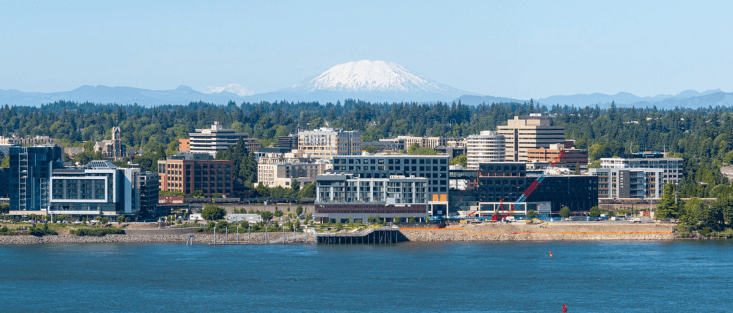
An article on a highway project in the Pacific Northwest caught my eye: However, the shiny new document leaves out an essential consideration when it comes to projecting the future effects of I-5 expansion in this long-constrained corridor, an omission that would have been much less noticed in a decade ago but which sticks out like a sore thumb now. It almost completely sidesteps the concept of induced demand, which posits that additional roadway capacity will prompt more trips as road users seek to take advantage of faster trips, ultimately cancelling out many of the promised benefits that come from adding that new capacity, especially congestion reduction. Opponents of a new and bigger bridge connecting Vancouver, Washington and Portland, Oregon claim that it would cause more people to use the bridge.  Supporters of the project assume that there would be no increase in the number of cars crossing the bridge.  That strikes me as kind of odd. Consider the following analogy.  A movie theatre is so popular that it often completely sells out.  The management committee is considering an expansion of the movie theatre.  One group claims that an enlarged movie theatre would attract more patrons.  The other group claims that enlargement of the theatre would not result in any increase in movie attendance.  Which of those groups would you expect to support expansion, and which would you expect to be opposed?  Do you see the problem? Of course there are many differences between movie theaters and bridges, and I promise we’ll look at those differences.  But I first wanted people to consider how odd it is that the opponents of highway expansion projects are typically the same people that believe it would induce more demand for its service. Supporters of bridge expansion are typically political leaders who wish to cater to their electorate.  There are two kinds of voters, those who pay attention to the bridge expansion issue, and those who do not.  I suspect that there is a strong correlation between voters who support bridge expansion and those who already use the bridge, if only be cause they are probably better informed about the situation than other voters.  When supporters of bridge expansion deny that there would be induced demand, they are implicitly suggesting that all of the benefits would go to existing users in terms of less traffic congestion.  But that outcome seems extremely unlikely, as it violates the law of demand.  When an increase in supply makes something cheaper (in terms of the opportunity cost of time), it leads to greater quantity demanded.  There would be induced demand. Opponents of bridge expansion also have an incentive to cater to voters with the most intense interest in the issue.  They may wish to argue that the bridge expansion won’t do any good at all, as it would induce so much extra demand that traffic congestion would become just as bad as before.  But that argument also violates the law of demand!  If there were no reduction in traffic congestion, then what would induce any new drivers to start using the bridge?  (In fairness, the author of this article does not claim that induced demand would prevent any reduction in congestion, but I’ve seen others make that claim.) One side is essentially arguing that demand curves are perfectly vertical, and the other is implicitly arguing that demand curves are perfectly horizontal.  In fact, demand curves slope downward.  So what’s the answer?  Should the bridge be built? Elsewhere in the article, the author makes it clear that his opposition to bridge expansion is linked to environmental concerns.  Ideally, you want to have a Pigovian toll to reflect any sort of traffic externalities, including congestion, pollution, global warming, suburban sprawl, etc.  If that toll were in place, then it would be easier to evaluate the project on a cost/benefit basis.  (Although even in that case there might be other complications, such as indirect effects on the usage of other roads that do not have Pigovian tolls.  So I don’t mean to suggest that a Pigovian toll on the bridge completely solves the problem, rather that it makes it easier to evaluate the pros and cons of a new bridge.) PS.  In previous posts I suggested that Vancouver, Washington was an attractive place for libertarians.  You can work in a state with no state income tax (except capital gains), and shop in a state with no sales tax.  And the Pacific Northwest tends to be pretty liberal on social issues like drugs, abortion and right to die.  So perhaps we also need to consider whether this bridge would allow for the expansion of the little libertarian paradise in southwest Washington.  Here’s a picture of Vancouver, with beautiful Mt. Adams in the background. (1 COMMENTS)

/ Learn More

Who Needs Miracles? On Nature and the Miraculous (with Alan Lightman)

How can we cultivate a sense of awe in our lives? Easy, says physicist and author Alan Lightman: Pay more attention. When we take the time to examine the world around us, from shooting stars to soap bubbles to everything in between, we can feel a sense of wonder and appreciation akin to spirituality. And […] The post Who Needs Miracles? On Nature and the Miraculous (with Alan Lightman) appeared first on Econlib.

/ Learn More