This is my archive

bar

The Workingest Folks Ever

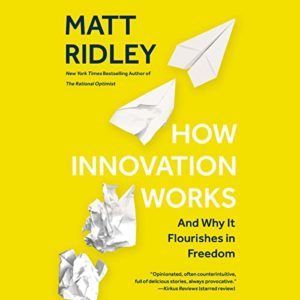
What’s the difference between invention and innovation, and which conributes more to our everyday lives? In this episode, EconTalk host Russ Roberts welcomes back Matt Ridley to discuss his newest book, How Innovation Works. Ridley’s book vividly illustrates that “innovation is the child of freedom and the parent of prosperity.” Innovation more often comes from practical people than scientists, he observes, and goes all the way back to Adam Smith’s pin factory. There’s a lot of food for thought and conversation here; we hope you’ll consider joining in!   1- What is the relationship of “tinkering” or “bricolage” to the scientific discovery method? Why do we tend to honor singular individuals versus tinkerers, and which do you think makes the greater contribution?   2- What does Ridley mean when he says, “Jobs, Bezos, and Edison have this one thing in common, which is that they spotted that innovation itself could be a product?” Why does this strategy work in some fields, such as electronics, but not others, such as vaccines?   3- Ridley says, “…the degree to which you have to get permission to go off and innovate in certain areas has become a real problem.” What sorts of problems is he referring to? How might we rediscover the virtues of “permissionless innovation“?   4- Ridley says, “There are cases where you can take the consumer to water, but he doesn’t want to drink.” He cites Google glass as an example. What other examples can you think of?   5- What is the dark side of innovation? Has innovation today become “just gadgets”? Does social media qualify as a positive innovation? What about your family dog? Explain.     BONUS QUESTION– Roberts asserts the following: “You could teach a whole class of economics around this line, I think. You (Ridley) say the following, ‘The chief way in which innovation changes our lives is by enabling people to work for each other’.” What economic concepts does this suggest? What activities/explorations could you build around this quote?   (0 COMMENTS)

/ Learn More

Escaping Paternalism Book Club Round-up

Thanks to everyone who participated in the Escaping Paternalism Book Club, and special thanks to authors Mario Rizzo and Glen Whitman for joining the discussion.  In case you missed any of the installments, here’s the full list. Book Club Announcement Book Club, Part 1 Book Club, Part 2 Book Club, Part 3 Book Club, Part 4 Book Club, Part 5 My Response to Questions My Final Response to Questions Jubal Harshaw’s Reaction Rizzo and Whitman Response #1 Rizzo and Whitman Response #2 Rizzo and Whitman Response #3 Rizzo and Whitman Final Response #4 (0 COMMENTS)

/ Learn More

Two Cheers for Small Business

We live in societies where we see a “near-universal appreciation for the aesthetic benefits of a thriving small business community,” but almost no empathy for small business owners. This is an interesting point made by Will Collins in an article published by The American Conservative and that makes use of James C. Scott’s work. Collins is thinking of the recent riots in the US which, as you would expect from riots, resulted in physical damages and looting at the expense of restaurants and shops. If many left-leaning commentators typically express enthusiasm for “neighborhood restaurants, locally-sourced produce, and independent bookstores”, “in the wake of the riots, however, condemnations of looting and arson have been strangely muted”. Though you may detect in the article a hint of nostalgia for a world of smaller shops and a certain antipathy towards big retailers, I think Collins has a point in highlighting that our societies tend to foster “a culture inimical to the character of the independent business owner.” The US is, or at least used to be, different the most European states in that regard, but certainly on my side of the pond there was a good deal of antipathy for shopkeepers. I was always struck by how it was common to refer to Margaret Thatcher with a certain disdain as “the daughter of a grocer”. You would expect that even people who deeply disagree with her would celebrate the upward social mobility and the achievement of somebody who comes out of a “petty bourgeois” environment. Not quite. The petty bourgeoisie is considered rather crass and vulgar, petty, a collection of prudes. The pursuit of money, an utter necessity for somebody who lives out of the oranges or the shirts she manages to sell, is seen as incompatible with higher pursuits. The great enemy of small business is red tape. It seems to me that those having a strong “appreciation for the aesthetic benefits of a thriving small business community” tend to think of it as a fish tank , which shall be preserved as it is, with exactly those fishes it came with. They take a static view of their community and care about it not changing. They are not sympathetic, instead, with people who are trying to set up a small firm or shop, that is: with more people trying to find meaning in the “zone of personal autonomy” that their shop comes to represent. Collins also makes a point many are making about the future of cities should Internet commerce take over the world. Will neighbourhoods simply be empty? As “small businesses help keep neighborhoods safe by attracting foot traffic and providing “eyes on the street” to informally monitor public spaces”, are we going to see crime spiking, as shops close? I tend to believe shops will be more resilient than people think. For one thing, somebody may be willing to buy an iPod online, but not necessarily her apparel or her medicines. Niche and highly specialised activities can benefit from personal contacts and handshakes (whenever we’ll go back to shaking hands). But also, for example, immigrants may prefer to go to small groceries run by people in their own community. Foodshops and small restaurants and takeaways can take over from shops that cannot compete with online retail. We will see. Cities are so central in our civilisation because, clearly, they are good at adapting to changing human needs. Still, the pandemic drove many to predict the end of the office as we know it, and thus to people preferring to live in suburban areas, fearing new pandemics and the consequent lockdowns, instead of in city centres. We will see. One interesting feature of crises like Covid19 is that they leave our imagination unbridled, but also, in the midst of an emergency, my impression is that we tend to overestimate changes that will be permanent and underestimate changes that will be transient. (0 COMMENTS)

/ Learn More

Implicit and Structural Witchery

You’re back in Salem during the 1690s.  After an exhaustive hunt for witches, the Lord High Witch Hunter files a bombshell report: Despite his best efforts, he’s failed to find any witches in Salem.  Don’t imagine, though, that the fight against witchery is over.  During his investigation, the Lord High Witch Hunter uncovered an enormous volume of “implicit witchery” and “structural witchery.”  For example, residents of Salem occasionally skip church, or lose interest during the sermon.  That’s implicit witchery, pure and simple.  Even worse, some leading merchants happily trade with Catholics and pagans.  That’s structural witchery at the highest levels of society. If you’re part of this society, you’d better not laugh.  That’s implicit witchery, too.  For anyone else, however, the Lord High Witch Hunter’s report is absurd.  The magistrate launches a massive witchhunt.  He fails to detect actual witches.  So he redefines “witchery” as “Lack of single-minded devotion to my faith.”  Why bother with this farce?  To make a thinly-veiled threat:  If you’re not part of the solution to witchery, you’re an implicit/structural witch.  And will be burned like a witch. Similarly, imagine that during the McCarthy era you fail to uncover any actual Communists.  The Lord High McCarthyite could admit he was wrong, but where’s the fun in that?  Wouldn’t it be better to declare that you’ve discovered a massive dose of “implicit Communism” and “structural Communism”?  As long as your society fears you, anything could count.  Perhaps support for progressive taxes is implicit Communism.  Perhaps the overrepresentation of left-wing academics in state-funded universities is structural Communism.  Yes, you can cry, “Bait-and-switch.”  But that sounds dangerously close to implicit Communism. Or suppose you’re in modern Iran.  The Lord High Inquisitor hunts for atheists, but can’t find any.  So he declares war on implicit atheism and structural atheism, which abound even in the Islamic Republic.  Shocking?  Not really, because almost anything qualifies as implicit atheism or structural atheism.  If this is such an obvious scam, how come hardly anyone in Iran says so?  Fear.  Minimizing the danger of implicit atheism is a prime example of implicit atheism. In the modern West, hardly anyone worries about in-the-flesh witches, Communists, or atheists, much less implicit or structural versions of these creeds.  But that’s because the targets have changed, not because the age of moral panic is over.  And while the list of targets is long, racists and sexists are plainly at the top.  The most obvious result is that people spend ample time trying to find racist and sexist individuals.  In practice, however, this is as frustrating as trying to find witches in Salem.  People today are about as likely to declare themselves racists and sexists as people in 17th-century Massachusetts were to declare themselves brides of Satan.  Part of the reason, no doubt, is fear; avowed racists do get punched in the face, after all.  The main reason, though, is that almost no one sympathizes with creeds that almost everyone hates. So what are you supposed to do if you want to continue the good fight against social ills you’ve already practically driven to extinction?  Move the goalposts all the way to Mars.  These days, the world’s best detectives would struggle to find outright racists and sexists.  Yet implicit racism, structural racism, implicit sexism, and structural sexism will always be in plain sight, because the definition expands as the phenomenon contracts. (0 COMMENTS)

/ Learn More

All Hail Lars Christensen!

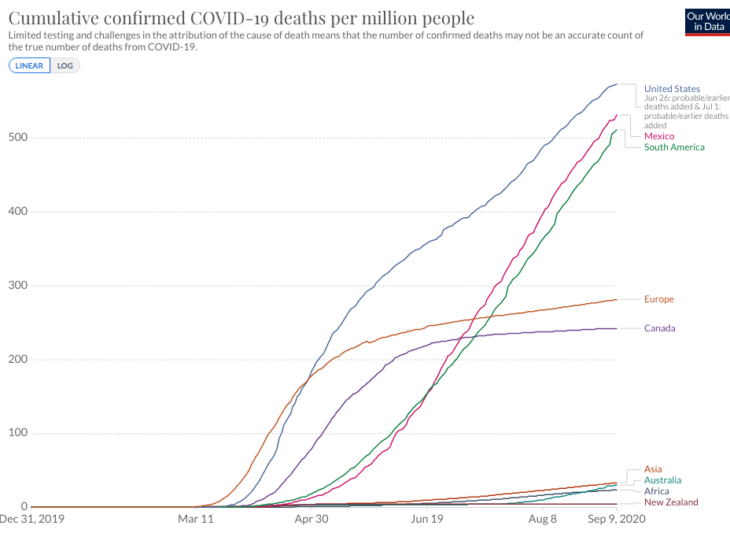
We are in the midst of a real business cycle. So this should be a feather in the cap for real business cycle theory, right? Actually, it’s looking more like the death knell of RBC theory. That’s because when we finally have an honest to God real business cycle, it looks utterly unlike anything we’ve ever seen before. For example, consider the unemployment rate, which increased from 3.5% in February to 14.7% in April. The entire 2020 recession lasted for only two months, far less than any previous recession in US history. But the weirdness doesn’t stop there. In the next 4 months the unemployment rate fell by 6.3 percentage points, down to 8.4%. For comparison, during the recovery from the 2008-09 recession it took an entire decade for the unemployment rate to fall 6.5 points, from a peak of 10% in 2009 to 3.5% in 2019. That means that during the recovery from the 2020 recession, unemployment fell roughly 30 times as fast as during the recovery from the 2009 recession. Read that again. I didn’t say 30% faster, I said 30 times faster. And before anyone says this is no surprise, let me assure you that when Lars Christensen predicted that unemployment would fall below 6% by November, almost everyone thought he was being wildly optimistic.  At the time, the most recent data showed 14.7% unemployment, and many people were throwing out figures like 20% unemployment for the summer months.   (Christensen’s May 11 post is excellent, well worth reading.) I suspect we may end up falling a bit short of Lars’s optimistic forecast (although it’s still very possible he will be correct.)  But what is even more amazing is that this striking fall in the unemployment rate occurred against very strong and unexpected headwinds.  As of June, Covid–19 deaths in the US were falling very rapidly (down 75% from April), following the previous pattern seen in Europe.  Many people anticipated that there would eventually be a second wave, but it was expected to occur when the weather got colder.  Instead, in the hottest part of summer the US got hit by a huge second wave, while deaths in Europe and Canada continued at a very slow pace.  Many states that had been re-opening their economy reversed course, and started restricting certain business sectors.  Here in California, significant parts of the economy were shut down once again. And yet, despite that backdrop of a severe and unexpected second wave of Covid-19 cases in the US, and renewed shutdowns in many southern states, we saw unemployment fall 30 times faster than during the recovery from the 2009 recession.  Imagine our recovery if the pandemic here had followed the European/Canadian pattern!  Real recessions look absolutely nothing like normal US business cycles.  They are radically different phenomena with radically different causes. [In fairness, the total employment data is somewhat less impressive than the unemployment rate data, but even total employment has increased at an explosive and unprecedented rate in recent months.] When market monetarists like me argued that the problem in 2009 was too little NGDP, i.e. tight money, we got lots of pushback on two grounds.  One group argued that the real problem was real.  The financial crisis was a real shock, and recoveries from financial crises tend to be slow.  These pundits were not well informed on US economic history.  The US has had lots of recessions associated with financial crises, and economic growth was typically quite rapid after the crisis ended.  And when you asked people why a financial crisis would cause RGDP to fall, the explanations tended to center around consumer loss of wealth and a lack of access to credit.  But why would a loss of wealth make people want to work less?  Why would less access to credit make people want to work less?  Ultimately, the answer was that the loss of wealth and access to credit reduced consumer spending and investment spending. So the problem wasn’t too little NGDP, it was too little consumption and investment spending?  Okay . . . On the left, economists were more sympathetic to the view that a shortfall of NGDP was the problem, but suggested that there was nothing more the Fed could do.  (As if the Fed had run out of paper and green ink.)  Actually, we now know there were lots more things the Fed could have done: 1.  Don’t pay interest on bank reserves. 2.  Do much, much, much more QE, buying unconventional assets if necessary to hit the target. 3.  Switch to price level targeting, which would raise inflation expectations and lower long-term real interest rates.  This policy would have meant the Fed would not have tapered in 2014, or raised interest rates in 2015.  Indeed they never would have stopped QE1 or QE2. The Fed’s recent move toward average inflation targeting is a tacit admission that they blew it in the 2010s with an inappropriately tight monetary policy that caused NGDP to grow too slowly, delaying recovery from the recession. I’m not sure the recovery in the unemployment rate during the 2010s could have been 30 times faster, but it surely could have been 4 times faster.  Indeed in the 18 months after December 1982, unemployment fell by 3.6 percentage points, which is 4 times faster than the 0.9 percentage point reduction in unemployment in the 18 months after the October 2009 peak.  Money was clearly much too tight in 2009. The market monetarist view of the Great Recession is looking increasingly persuasive, and if unemployment falls to 6% by November then Lars Christensen will be crowned king of the market monetarists. PS.  Because Lars made such an extreme contrarian prediction, let’s be generous and assume he meant the actual unemployment rate in November (announced in early December) would be below 6%, not the announced unemployment rate in November, which refers to October. (0 COMMENTS)

/ Learn More

What it Means: A Review of Having and Being Had, by Eula Biss

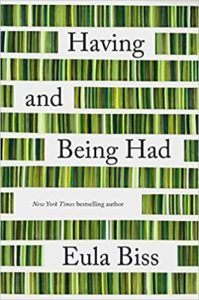
Eula Biss’s new book Having and Being Had is a poetic meditation on wealth and capitalism. Biss is a poet, and the book’s short essays/meditations/prose poems are filled with truly beautiful moments of writing. But what makes Biss’s book an intriguing read is not just her way with language. Biss’s poetic approach to her subject matter means she is willing–maybe even required–to turn her topics over and over again. This leads to discussions like that in “Consumers” which is an exploration of the meanings of the word “consumption.” While I take issue with Biss’s assertion that the word originally meant “a wasting illness” and later came to mean economic consumption (the word has been used in both ways since the early middle ages) I did very much enjoy her observation that currently we talk about “consuming” music or books despite the fact that these are resources we can use and not destroy.   “Consumers” goes off the rails later, as Biss makes a common error in her discussion of the idea of consumption in Adam Smith. She writes, “We still use the math of that time to subtract what is consumed at home from what is produced at work. In that crude equation, only work that earns money is productive.” I’m mystified by what Biss means by “the math of that time,” as if basic arithmetic no longer applies in the 21st century, and I’m equally mystified by how her reading of Adam Smith, who thoroughly understood that consumption and production are intertwined, and that consumption actually increases societal wealth rather than decreasing it.   But a few pages later, Biss catches my attention again, ending one of several pieces she titles “Capitalism” this way: After a pause, Bill admits that he doesn’t really know what capitalism is. In trying to explain it, I realize that I don’t know either. And I don’t know where capitalism began, or when. We agree that we will find out what capitalism is before we talk again.   There is something refreshing about Biss’s honest admission, particularly after reading so many non-economists simply asserting a definition of “capitalism” that means something like “all this” or “everything I don’t like.” Earlier in the book she wrote “What does it say about capitalism, John asks, that we have money and want to spend it but we can’t find anything worth buying?” I tore my hair out. I still feel this question says much more about Biss and John than it does about capitalism, but once I saw the question as part of a larger inquiry into what capitalism means rather than an assertion about its definition, I could at least leave my hair alone.   It is probably best to think of Having and Being Had as a focused inquiry into the layers of meaning of the words we use to think and talk about weath, economics, money, and work. It’s not a book about economics. It is a book about thinking about some of the things that economists think about, but from very different angles of approach. Biss returns again and again to words like “work,” “possession,” and “service,” with a goal both of understanding them in their many incarnations, and of making them new for readers who likely use them unthinkingly.   As a result, Having and Being Had is a book that economists may want to dip into for short pieces that will provoke classroom discussion. “Comforter”, which is about trying to find a washing machine large enough to wash a bulky comforter when one has moved up and out of a poorer neighborhood with easy access to laundromats with large industrial machines, is a fascinating meditation on questions of class and convenience. The essay would pair particularly well with Rosling’s The Magic Washing Machine , as Biss closes by noting that “I consider the possibility that the washing machine, more than the house, has changed my life.”    The essay “Passing,” which considers debt and credit as a means of “passing” as a member of a higher social class, would certainly provoke an interesting class discussion, as will Biss’s many meditations on the ways that race, class, and gender interact with the economic language she explores. Her endnote “On the Rules” she used to compose the book provides an interesting basis for a dicsussion about our unspoken cultural rules for how we talk about money and work. And I suspect many Econlog readers will also appreciate Biss’s examples of great figures from literary and economic history–Marx, Woolf, Stein–whose lives do not reflect the economic thinking of their works.    Biss never completes, and never really expects to complete. her quest to find out what capitalism means. “As I wrote, every word I touched seemed to crumble. I no longer knew what good meant, or art or work or investment or ownership or capitalism.” But her explorations are always interestingThere will be much to irritate economists in Having and Being Had, but I think there is much here for them to appreciate as well. It’s an exceptionally interesting and beautifully written example of one woman’s way of thinking about economic issues. (0 COMMENTS)

/ Learn More

Russ Roberts on the Curious Task of Epistemology

Matt Asher, host of the podcast “The Filter”, is a self-proclaimed fan of the long-running podcast, Econtalk, and of its host, Russ Roberts. Asher’s primary goal in this multi-faceted discussion was to reveal the epistemology of Russ Roberts and what has shaped, changed, and encouraged the world view that he shares on weekly episodes of EconTalk as well as through his books and articles. Topics range from behavioral economics, pandemics to religion. We hope you might respond to some of the questions posed.     1- What is the “Black Box problem” and how does it relate to Hayek’s quotation about “the curious task of economics”?  Do you agree that we tend to be more fooled by political promises than by product advertising claims for weight loss?    2- What does Roberts claim to be the differentiating factor between economists and physicists in predicting future outcomes?    3- Roberts often refers to the work of Nassim Nicholas Taleb as a strong influence on his thinking about risk and probability. What is the important takeaway point about averages illustrated in the flood mark housing investment story?    4- Would you include potential climate change outcomes in the same category of events associated with fearful fat tail distributions such as pandemics or war? Why or why not?   5- How is the individual perception of information critical to conclusions about rational behavior? How is risk a transaction cost? Russ mentions that despair isn’t measured and could impact decisions. What else might shape our decisions yet not be captured in data sets?   6- How does Russ compare Adam Smith’s philosophy from Theory of Moral Sentiments to religion as a means toward the development of the virtue of “getting outside oneself”? (0 COMMENTS)

/ Learn More

Henderson and Horton on Whether China is an Economic Threat

Scott Horton is a well-informed foreign policy analyst who interviews people mainly about foreign policy. Because of the potential foreign-policy implications of my recent Defining Ideas article on China, Scott interviewed me last week. His interview is titled, “David Henderson on the Supposed Economic Threat from China.” It goes about 42 minutes. There are two things I like consistently about being interviewed by Scott: (1) his energy and (2) the fact that I always learn something from him. Here are the highlights with approximate times: 2:47: Gains from trade don’t stop at the border. 4:00: The asymmetry in the gains and losses from trade and what that means for the discussion on economic policy. 9:45: Tariffs fell gradually after the war. 10:15: The Box bought down costs of international trade across oceans more than small reductions in tariffs did. 11:30: The role of improvements in technology in losses of U.S. manufacturing jobs. 14:45: Obama economist Jason Furman’s comment about the gains for the average U.S. family from Walmart. 16:50: The role (or not) of regulation in moving jobs to China. 17:40: The Economic Report of the President under Trump and its analysis of where the U.S. stands in degree of regulation relative to Western Europe and other advanced economies. 19:50: China’s economy and why it has done so well. [HINT: It’s not mainly slave or prison labor.] 21:15: TikTok. 22:40: “You didn’t dance well?” 23:30: How the U.S. feds made it easier for the Chinese government to blackmail federal employees. 24:40: Much of intellectual property is handed over to Chinese firms contractually. 26:25: Are “we” in competition with “them?” 27:40: One thing that Trump is most sincere about and most wrong about. 28:30: Increase in size of Chinese military. 31:30: The Blob: They make a good living by stirring the pot. 32:30: Scott teaches me something about Colin Powell and his role in getting George W. Bush to respond moderately to China after the Chinese government forced a U.S. Navy EP-3 airplane to land on Hainan Island. 34:00: The report of one of my students who was on that airplane. About 4 or 5 minutes in which we discuss nuclear war. 41:00: Are there interest groups in U.S. business that want the U.S. government to restrain its hawkish actions toward China?             (0 COMMENTS)

/ Learn More

Skidelsky on Economics

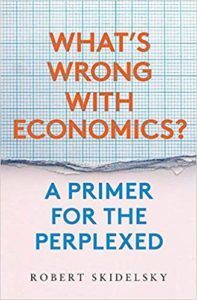
On our sister website, Law and Liberty, I have a review of Robert Skidelsky’s last book, What’s Wrong With Economics. I was unimpressed by the book. It looks to me like an attempt to build a straw man out of modern economics, which is blamed by Skidelsky for, of course, “neoliberal” policies. The book is strongly idoelogical but, leaving ideology aside for a minute, I was amazed by the view of the social sciences Lord Skidelsky proposes. He is apparently incapable of understanding the pursuit of social science as something different from policy punditry. It is revealing that Skidelsky is puzzled by a quote from Milton Friedman, who charmingly described himself as “somewhat of a schizophrenic”: “On the one hand, I was interested in science qua science, and I have tried—successfully, I hope—not to let my ideological viewpoints contaminate my scientific work. On the other, I felt deeply concerned with the course of events and I wanted to influence them so as to enhance human freedom.” Some economists, political scientists, or philosophers may enter their fields because of their political vision of how the world should be improved. Yet it does not mean that they do not try to challenge their own opinions about the facts. Nor does it mean that they may not be, in pursuing their studies, interested merely in understanding how or why a particular phenomenon happened. Friedman honestly described a difficult navigation which is hardly exclusive to the economist. (Consider a Democratic reporter at the Republican National Convention, for instance.) The review is here. (0 COMMENTS)

/ Learn More

The Risks of Friendship: A Socratic Dialogue

The scene: Ancient Athens.  Glaucon is standing in the Parthenon, wearing a face mask.  Socrates enters without a mask. Socrates: Greetings, Glaucon!  How do you fare during this awful pandemic? Glaucon: [jumps 5 feet]  What the hell are you doing?  Are you trying to kill me? Socrates: No, why would you think so? Glaucon: We’re indoors and you’re not wearing your mask! Socrates: I’m 20 feet away from you.  And the Parthenon is cavernous. Glaucon: You should be wearing a mask. Socrates: Very well. [dons mask]  Feel safe enough to talk now? Glaucon: [unconvincingly] Sure. Socrates: I suggest we go outside to continue the conversation with greater ease. [One minute later, outside the Parthenon; Socrates and Glaucon are 25 feet apart.] Socrates: I must admit, Glaucon, I’m very puzzled. Glaucon: About what? Socrates: About your level of fear. Glaucon: [with trepidation] Oh, I’m not afraid. Socrates: Well, what do you think are the odds that I’ve got the plague right now? Glaucon: Uh, one in a thousand? Socrates: Reasonable enough; I’m asymptomatic after all.  Now, supposing I was sick, what are the odds that I would have infected you within the Parthenon while wearing a mask? Glaucon: One in twenty? Socrates: Plausibly.  And what are the odds I would have infected you in the same scenario without wearing a mask? Glaucon: One in five? Socrates: Very well.  Now as we both know, susceptibility to the plague depends heavily on age and underlying conditions.  We’re both fifty.  Do you have any underlying conditions? Glaucon: Thankfully, no. Socrates: Then according to a table Plato compiled for me, your odds of death if infected are about 1 in 2000. Glaucon: It’s not just about the risk of death, Socrates! Socrates: It never is.  There is also the unpleasantness of the plague’s symptoms, and a small chance of long-run harm.  Still, the same goes for almost all risks.  Those who survive a fall from a horse usually suffer pain for a week or two – and a small fraction are maimed for life.  So we can still fruitfully compare your risk of death from plague to other mortality risks, never losing sight of the fact that death is only one of many possible tragic outcomes. Glaucon: [nervously] Fine. Socrates: Very well, let us calculate the risk I imposed on you earlier by not wearing a mask.  We multiply my risk of infection times the change in your infection risk times your mortality risk.  That comes to 1/1000 * (.2-.05)* 1/2000, which rounds to about 1-in-13 million. Glaucon: And that seems small to you. Socrates: Wouldn’t it seem small to any sober man? Glaucon: Well, is it really so awful to wear a mask? Socrates: I wouldn’t mind if the numbers were more favorable.  If I were endangering a thousand people like you, I’d happily wear the mask.  As it stands, though, your fear seems paranoid and your outrage seems unjust. Glaucon: Look, why should I have to endure any risk for your comfort? Socrates: You’re enduring a risk right now.  Surely you don’t imagine that your infection risk magically falls to zero as soon as you exit the Parthenon? Glaucon: Well, why should I have to endure an unnecessary risk? Socrates: It is “necessary” that we speak at all?  Hardly.  And we could slash our risk further by separating a hundred feet and shouting at each other. Glaucon: Now you’re just being difficult. Socrates: I only wish to understand you, Glaucon.  Is that your horse over there? Glaucon: Yes, Pegasus is his name. Socrates: A noble moniker.  Now do you know the annual risk of dying on horseback? Glaucon: About one in ten thousand? Socrates: Indeed.  Yet you’ve never fretted over the risk of death by horse? Glaucon: The daily risk is 365 times lower, or hadn’t you considered that? Socrates: Quite right.  The daily risk of death by horse is therefore about 1-in-4 million – less than one-third of the risk that terrified you inside the Parthenon. Glaucon: As long as I’m alone, I’m not exposed to any risk of plague at all. Socrates: And as long as you’re unhorsed, you’re not exposed to any risk of death on horseback.  Yet during the minutes you’re on horseback, you’re a model of composure.  Why then are you so fearful of plague? Glaucon: Plague is contagious.  Death on horseback is not. Socrates: I’ve seen you riding with your son, slightly endangering his life as well as your own.  That’s not precisely “contagion,” but you can hardly claim that you’re endangering no one but yourself when you ride Pegasus. Glaucon: If I catch plague, though, I could be responsible for the deaths of thousands. Socrates: Possible, I’ll grant.  If I were returning home from a plague-infested land, I’d understand your scruples.  You wouldn’t want to be the conduit for mass destruction. Glaucon: Indeed not. Socrates: By now, however, this plague is already well-advanced.  You’re highly unlikely to make it noticeably worse.  Indeed, by this point the average person infects less than one extra person. Glaucon: I might not be average. Socrates: You are right to say so.  Still, shouldn’t our knowledge of averages guide our behavior?  In any case, let us return to the key issue: Why are you so fearful of talking inside the Parthenon without masks when the risk of death is vanishinly low? Glaucon: Perhaps we should sponsor a raging Bacchanalia, then? Socrates: I think not.  A drunken festival of a hundred people would probably have a thousand times the plague risk of a two-person conversation.  We should avoid that until the plague subsides. Glaucon: So you admit the danger? Socrates: I always did.  I’m not saying that plague is harmless.  I’m saying that you’re reacting to risk qualitatively rather than quantitatively. Glaucon: Meaning? Socrates: You’re much more afraid of a tiny plague risk than a larger horseback risk.  Why do you think that is? Glaucon: Have you ever seen someone die of plague? Socrates: Have you ever seen someone die on horseback?  Both are terrible tragedies, with a long list of ugly secondary risks. Glaucon: Look, you’re in denial.  Everyone in Athens is scared of the plague.  Your risk analysis is beside the point. Socrates: How can risk analysis ever be “beside the point”? Glaucon: We as a society have decided to fight the plague, and you’re going to have to do your part, like it or not. Socrates: Glaucon, what is my profession? Glaucon: What? Socrates: I said, “Glaucon, what is my profession?” Glaucon: You’re a philosopher. Socrates: Indeed.  As as a philosopher, what is my mission? Glaucon: To defy and aggravate others? Socrates: Hardly.  As a philosopher, my mission is to improve the thinking of my fellow Athenians, my fellow Greeks, my fellow human beings. Glaucon: [sarcastically] Very noble. Socrates: I take a certain pride in my efforts.  How, though, am I supposed to improve their thinking? Glaucon: I don’t know. Socrates: The answer, seemingly, is: By asking questions. Glaucon: [weary] Yes, yes. Socrates: Now Glaucon, when you urge me to “do my part,” what do you have in mind? Glaucon: Wear the mask, Socrates. Socrates: I’m wearing one now, to put you at ease while we converse.  In more crowded conditions, I’ve worn a mask out of prudence and decency.  But as a philosopher, obediently wearing a mask is woefully inadequate. Glaucon: Well, what more should we do? Socrates: I don’t know about non-philosophers.  For we philosophers to “do our part,” however, requires us to challenge popular fallacies and innumeracy. Glaucon: Isn’t this just an elaborate rationalization for putting your own comfort above the lives of your fellow Athenians? Socrates: Possibly.  More likely, though, your agitation is an elaborate rationalization for putting conformity above reason. Glaucon: Your numbers could be wrong, you know. Socrates: Indeed, I suspect that all of my numbers are wrong.  As we learn more, each of my numbers will be revised. Glaucon: If you don’t really know the risks, why are you lecturing me? Socrates: Because, Glaucon, you’re approaching the uncertainty emotionally rather than analytically.  Uncertainty is a poor argument for panic. Glaucon: I was never “panicked.” Socrates: Very well, let us take off these masks, enter the Parthenon, and continue the conversation in comfort. Glaucon: Are you crazy, Socrates? Socrates: And a corruptor of the youth, from what I hear.  Do you think there will be a trial? Glaucon: Look who’s panicking now! Socrates: A fair point, my dear Glaucon.  A fair point. Glaucon: Look Socrates, it all comes down to this: There’s no reason not to just go along with society’s expectations here. Socrates: No reason?  What about friendship? Glaucon: I don’t follow you, Socrates. Socrates: Since this plague struck, I’ve barely seen you.  Mask or no mask, you avoid me, as you avoid almost all human contact. Glaucon: Well, what do you expect me to do? Socrates: Weigh the tiny risks to health against the immense value of friendship. Glaucon: You’re making too much of this, Socrates. Socrates: Am I?  The great Epicurus taught us that friendship is one of the highest of goods.  Friendship is essential to human happiness, and a life well-lived. Glaucon: You speak unjustly me to, Socrates.  I am and ever have been your friend. Socrates: I know, which is why your panic pains me so. Glaucon: If you’re really my friend, you will share my concern for my own safety. Socrates: I do, Glaucon.  If you were in serious danger, and I could save you by shunning you, I would grieve.  Yet shun you I would. Glaucon: Very gracious of you. Socrates: I know you would do the same for me. Glaucon: Again, most gracious. Socrates: The plain fact, however, is that you are not in serious danger.  By the numbers, you are in the kind of minor danger that you’ve always accepted in the past. Glaucon: And? Socrates: And so I say the time is long since past to resume our normal friendly relations.  In troubles times, minor adjustments are often wise.  But abandoning your friends out of fear of minor risks is folly, Glaucon. Glaucon: [forced] Well, thank you for your candor, Socrates. Socrates: [resigned] May we meet again in saner times, my friend. Glaucon: Good day to you, Socrates.  Good day. [Glaucon and Socrates go their separate ways.] (0 COMMENTS)

/ Learn More