This is my archive

bar

Where Crafty Comes From

Are you a crafter? If you weren’t before, maybe the pandemic has started you on a “maker” kick. I have lots of friends who’ve taken up knitting, woodworking, gardening, and a variety of other hobbies. Maybe you’re not crafty at all, but interested in exploring the human condition throughout history. Or maybe you’re just an avid aficionado of markets. No matter which, this episode with Virginia Postrel is sure to contain conversation of interest to you.   EconTalk host Russ Roberts welcomes Postrel back to the show to discuss her most recent book, The Fabric of Civilization. They discussed the evolution of spinning thread, fabric dying, and textile manufacturing. (Did you know that it takes more than SIX MILES of thread to make a pair of jeans???) What most surprised you in listening to this episode? Do you have a new appreciation for your own closet? For human innovation and ingenuity? Please help us keep this fascinating conversation going, and use the prompts below to explore with others.       1- What does Postrel mean when she says the Industrial Revolution was started by thread?   2- What is the origin of the term “Luddite,” and why is its common usage today ironic, according to Postrel?   3- Postrel points to two great technological advances in the history of textiles- spinning and fabric dying. The latter, she says, led to the chemical industry, which “changed everything.” What does she mean? To what extent should we consider this a net positive evolution? What does Postrel have to say about externalities, for example?   4- Postrel and Roberts have an interesting discussion on sumptuary laws. How did the purpose of these laws, and the incentive structures they created, compare in Confucian China, Renaissance Italy and Edo Japan? Can you think of any analgous laws that exit today? How would they compare?   5- When asked about the effect writing this book had on her, Postrel said it has made her appreciate mass production more, not less. How about you? Has this episode changed the way you feel? (0 COMMENTS)

/ Learn More

Two Bad Ideas on Student Debt, Part 2

    How about this: instead of forgiving everybody’s college debt, we force all the colleges who scammed millions of Americans into degrees in Useless Theory Masquerading As Valuable Life Skills to grant refunds. That would end the grift right quick. This is a November 16 tweet by Ben Shapiro. I’ve heard this idea repeated a number of times, with slight variations. Tucker Carlson argued for it last week on his show. Last week I posted about a bad way to handle existing student debt. I noted that University of Michigan economist Justin Wolfers agreed with my bottom line and also that we agreed  on some of the reasons for that bottom line. Ben Shapiro’s proposal above is also bad and is arguably worse. It’s much more of a violation of property rights than the Joe Biden-type proposal is. Here are the problems. 1. How would he identify those colleges that actually engaged in scams? Presumably he would need evidence that the college promised X and didn’t deliver X. That’s possible but my guess is that most colleges were far more circumspect and didn’t promise X. If they did, then the former students would have a justification for suing the college, but this justification would be independent of the amount of student debt. Student A who went into no debt or who paid off all his debt, but who got scammed, would have just as strong a case as Student B who owes $30,000. 2. If Shapiro is saying that we don’t need to find actual evidence of a scam, then he is advocating a taking: the fact that a student has debt but has a fairly useless degree would be enough in this case for Shapiro’s remedy. That’s a problem. It would amount to the government taking forcibly from college D to give to student B. 3. It could even be worse. When Tucker Carlson discussed this kind of remedy on his show last week, he almost licked his lips as he discussed Harvard’s $40 billion endowment. He seemed to be saying that this amount should be distributed to students who had debt. Was it all students or just students who went to Harvard? And if the latter, how many of them are struggling with massive debt and low-paying jobs? I bet it’s under 10%. If it’s the former, then what distinguishes this proposal in principle from Stalin’s grab of land and food from the kulaks? I understand that the Stalin move was way more extreme: Stalin murdered millions of innocent people. I’m talking about the principle here, not the consequences. 4. Establishing the precedent that a student who doesn’t get what he wants from a college can sue to get a refund would, I admit, have some salutary effects. Colleges would substantially raise their standards and might even, gasp, quit discriminating against Asians. (If you follow the link, you’ll see that Harvard dodged a bullet and a federal court found that it did not discriminate. The data I saw caused me to think otherwise.) But it would be better to establish that principle going forward than to penalize colleges that, along with students, thought they were operating under different rules. (0 COMMENTS)

/ Learn More

The importance of expectations

I often argue that current NGDP depends heavily on future expected NGDP. That’s also a prediction of modern New Keynesian macro models. However, this generalization is less true during the current Covid pandemic, as current output is artificially depressed by social distancing. But even social distancing cannot stop asset markets from looking ahead. The current price of assets such as houses is roughly equal to the 12-month future expected price (a bit lower due to trend inflation.) Consider the recent boom in house prices, occurring despite a severe recession with 10 million fewer jobs than a year ago: Home prices surged the most on the record in the third quarter, according to a report Tuesday from the Federal Housing Finance Agency. With record-low mortgage rates fueling demand for housing, prices jumped 3.1% compared to the prior quarter. That was the biggest gain in records dating to 1991, according to FHFA. Compared to 2019, prices were up 7.8% in the three months through September, the biggest jump since 2006. What’s going on here?  I’d point to three factors: 1.  An expectation that the Covid pandemic will be over within 12 months, probably even sooner, due to the many vaccines being developed. 2.  A long run downward trend in interest rates that began in the early 1980s and shows no sign of ending. 3.  Increasingly strict land use rules, motivated by “NIMBY” attitudes among the public. Because the first point is fairly obvious, let me focus on the other two.  We don’t know all the reasons why interest rates are trending lower, although demographics are probably one factor.  Population growth in slowing, and interest rates fell first in places like Japan, where population growth slowed earlier than in the US. (I suspect that our economy’s shift in emphasis from building things to creating ideas also plays a role.) But the second reason (lower interest rates) would not normally be enough, for “never reason from a price change” reasons. In a well functioning economy, higher housing prices should lead to more new construction.  Anticipation of these increases in production would limit the price increase.  That used to happen in the mid-20th century, when it was fairly easy to build houses in America.  In recent decades, however, it’s become harder and harder to build new homes, in more and more cities.  Thus we will increasingly resemble places like the UK, Hong Kong, Canada, Australia and New Zealand, where house prices have reached a permanently high plateau (in real terms) due to strict building limits. There are also lessons for monetary policy.  Just as expectations of high post-pandemic house prices create high house prices today, expansionary monetary policy that boosts expected future NGDP can boost NGDP right now.  Indeed this is basically the argument for average inflation targeting–create future inflation expectations to raise current inflation.  Bullish expectations can’t work miracles (for output) when a real shock like Covid causes people to hunker down, but in a normal recession the expectations channels is by far the most important part of stabilization policy–Nick Rowe likes to say it’s about 99% of monetary policy. (0 COMMENTS)

/ Learn More

Life-Years Lost: The Quantity and The Quality

A few weeks ago, the NYT reported that “The Coronavirus Has Claimed 2.5 Million Years of Potential Life.” If you read the original study, you’ll discover one crucial caveat: The authors’s calculations assume that COVID victims would have had the standard life expectancy for Americans of their age.  They freely admit that this is unrealistic and inflates their estimate: The SARS-CoV-2 virus is known to infect and replicate in many different tissues and exacerbates problems in several organ systems including the kidney, liver, heart, lungs and brain (Lu et al., 2020; Chandrashekar et al., 2020). Any individual with problems in these systems or the immune system is likely to be more vulnerable to SARS-CoV-2 infection and suffer more severe outcomes as has been demonstrated for immune deficiencies (Bastard et al., 2020). In addition, other health states qualifying as pre-existing conditions, such as obesity, hypertension, chronic kidney disease and diabetes are known comorbidity factors for COVID-19 (see CDC co-morbidity tables and references therein; https://www.cdc.gov/coronavirus/2019-ncov/need-extra-precautions/evidence-table.html) and these cohorts of individuals have a shorter than average predicted life span. Deaths due to complications with pre-existing comorbid conditions would artificially increase the person-years lost in these calculations but are difficult to quantitate in this current analysis. The authors argue that fixing this problem would only modestly cut their estimates.  I’m not convinced, but I’d rather focus on a much bigger issue: Taking quality of life into account, how many life-years has the reaction to COVID destroyed?  To see what I’m getting at, ask yourself: “Suppose you could either live a year of life in the COVID era, or X months under normal conditions.  What’s the value of X?”  Given the enormous social disruption and dire social isolation that most people have endured, X=10 months seems like a conservative estimate.  For what it’s worth, this Twitter poll agrees*: Suppose you could either live a year of life in the COVID era, or X months under normal conditions. What's the value of X that makes the AVERAGE AMERICAN indifferent? — Bryan Caplan (@bryan_caplan) November 9, 2020 So what?  Well, we’ve now endured 8 months of COVID life.  If that’s worth only 5/6ths as much as normal time, the average American has now lost 4/3rds of a month.  Multiplying that by the total American population of 330M, the total loss comes to about 37 million years of life.  That’s about 15 times the reported estimate of the direct cost of COVID. Casual readers will be tempted to declare that the cure has been much worse than the disease.  The right cost-benefit comparison, however, is not to weigh the cost of prevention against the harm endured.  The right cost-benefit comparison is to weigh the cost of prevention against the harm prevented.  You have to ask yourself: If normal life had continued unabated since March, how many additional life-years would have been lost?  I can believe that the number would have been double what we observed, even though no country on Earth has done so poorly.  With effort, I can imagine that the number would have been triple what we observed.  There’s a tiny chance it could have been five times worse.  But fifteen times?  No way. Upshot: The total cost of all COVID prevention has very likely exceeded the total benefit of all COVID prevention. Before you panic, note these key caveats: 1. This does not imply that zero COVID prevention was optimal.  The lesson is merely that we went much too far. 2. Prevention includes both private and government efforts.  The main lesson of the data is not merely that government overreacted, but that people overreacted. 3. As I’ve argued before, the initial costs of government action were moderate, because private individuals reacted strongly on their own.  Over time, however, government’s share of the burden has increased because private individuals’ have a strong tendency to lose patience and return to normalcy. 4. If a vaccine suddenly became available today, my calculations for the story so far would still hold.  Behavioral changes prevent deaths day-by-day.  They also drain life of much of its meaning day-by-day.   At this point, you could protest, “Hey Bryan, I thought you weren’t a utilitarian.”  So what if the cost of COVID prevention greatly exceeds the value of life saved?  My answer, to repeat, is that I have a strong moral presumption in favor of human liberty.  So while I respect individuals’ rights to overreact to moderate risks, I oppose any act of government that does not pass a cost-benefit test with flying colors. And no, I don’t think that an asymptomatic person who walks down the street unmasked is “aggressing” against passersby in any meaningful way. * You could object that my Twitter followers are self-selected to regard COVID prevention costs as high.  In point of fact, they consider the personal costs markedly less serious than the average costs: Suppose you could either live a year of life in the COVID era, or X months under normal conditions.  What's the value of X that makes YOU indifferent? — Bryan Caplan (@bryan_caplan) November 9, 2020 (0 COMMENTS)
/ Learn More

It Pays to be Positive?

Hong Kong will give $645 dollars to all those who accept to be tested for Covid19 and are positive. The number of cases, and deaths, are on the rise in Hong Kong but everything seems under control, given the fact Hong Kong’s population is 7.4 million. Lombardy, where I live, is the home of 10 million people and since the start of the pandemic we have had more than 180.000 cases and some 20.000 deaths. Yet this is understandably an outcome the Hong Kong authorities want to avoid, and so they are putting in place a system that incentivizes testing in this way. We will see how it goes. Income per capita in Hong Kong is around $ 50,000. I suspect that, everywhere, higher-income people, as they tend to be more exposed to the media, are eager to test no matter what. If there is a certain reluctance in lower-income people to test, perhaps because they fear the consequences of quarantine in terms of their work and their social life, perhaps subsidies such as Hong Kong’s might well counteract this wariness (I suppose it was designed with that goal in mind). One wonders why Western democracies didn’t try to do the same. After all, they have all distributed a staggering amount of money in the last few months. Linking some of it to testing would not have hurt – though of course if the subsidy was too high you could imagine some opportunistic behavior (including attempts to playing with the test’s results to score positive, to the extent that’s possible). I fear that’s because the testing capacity wasn’t there. Now it seems a similar approach might be enacted in Italy, too. Perhaps in the hope of saving the upcoming skiing season, the province of Bozen, in South Tyrol (a German-speaking region of Italy), has tested 70% of its population (over 350.000 people) in just a few days, with antigenic tests. People there are notoriously very law-abiding, but that’s not the same everywhere. Why should we rule out the idea that a monetary incentive could help? (0 COMMENTS)

/ Learn More

Judith M. Hermis Letter to Governor Newsom

  Earlier this month, Judith Hermis, one of my junior colleagues at the Naval Postgraduate School, wrote a letter to Governor Gavin Newsom and sent me a copy. I edited it and she accepted my edits. So the letter you see below is not the same one she sent. But it is true to the spirit and argument of her original letter. We talked on the phone and agreed that people need to speak out against Newsom’s and other officials’ wholesale infringements on our freedom of association. That’s why Judith gave me permission to quote it here. By the way, she sent this well before either of us knew that Newsom did not practice what he preached when he went to the French Laundry with a lot of people and dined indoors without masks–and then lied about it. Here it is: Dear Governor Newsom, I hope this message finds you and your family well. I am writing in response to the November 13 statement issued by the California Department of Public Health in connection with private gatherings. I am opposed to these mandates on freedom grounds. The Declaration of Independence states that Americans have unalienable rights to life, liberty, and the pursuit of happiness. These rights are impossible to maintain under the conditions of a coercive nanny state masquerading as a free republic. Second, and as important, government derives its just powers from the governed, not the other way around. If you think your office has the right to issue rules pertaining to the activities that go on within private individuals’ homes, you have sorely misestimated the bounds of your authority. I fail to find Constitutional grounds for your office or any administrative branch to whom legislative authority is delegated to issue mandates, proclamations, guidelines, or statements bearing the imprimatur of governmental authority to regulate the activity of individual citizens within private homes. The Declaration of Independence assures life, liberty, and the pursuit of happiness. It does not assure perfect physical safety from infectious agents. Moreover, as billions of humans from authoritarian societies, including members of my own immediate family, will willingly testify, perfect safety and perfect liberty are mutually exclusive goals. Many Americans, myself included, prefer liberty to safety because under liberty, those who wish to take additional precautions and private actions against, for example, contagious illness, are free to do so, while those who wish to live differently may also pursue their desires. Liberty maximizes the wellbeing of all citizens, including those who are more cautious and safety-oriented, and those who chose to live according to other priorities. Government mandates, by contrast, unreasonably deprive citizens of liberty under the guise of safety and force all citizens to comply with the desires of the most frightened members of society with no corresponding derivation of the government’s power from the governed. In plain English, the state government is attempting to coerce citizens to comply with the concerns of the most frightened individuals. This is antithetical to the conception of freedom America has long protected. In closing, I would like to remind you of the wise words of Benjamin Franklin, who stated that, “Those who would give up essential Liberty, to purchase a little temporary Safety, deserve neither Liberty nor Safety.” Please defend our liberty by immediately denouncing the actions of the Department of Public Health. Are they free to make suggestions? Yes. Are they free to issue binding guidance? No. Sacrificing liberty for safety is an unacceptable arrogation of private rights by the government of our beautiful state. Best, Judith M. Hermis Private citizen     (0 COMMENTS)

/ Learn More

Sullivan and Henderson Talk on School Shutdowns

Last Thursday, my Naval Postgraduate School colleague Ryan Sullivan and I made a case against school shutdowns in a Zoom talk to a local Monterey group called The Old Capitol Club. It’s an actual physical location in downtown Monterey and I’ve given 2 talks there in person in the last 20 years, something I refer to right at the end of this talk. This, of course, was remote. From about 23:00 to 25:15, I handle the issue of human capital vs. signaling to explain why I think the $2.5 trillion loss of human capital is overstated. I draw on Bryan Caplan’s The Case Against Education, which I point out should be titled The Case Against Schooling. At 32:38, a viewer named Hampton raises a question. I gave him a seat-of -the-pants answer. I later went to the data and came up with a much different answer. Going to CDC data that updated after our talk, I found that the number of American residents below age 15 who had died of COVID-19 is 83, up from 81. The number who had died who were between age 15 and 24 was 418. So I interpolated to get the number of between age 15 and 18, and got 0.4 of 418 = 167. This is substantially higher than the seat-of-the-pants answer I gave Hampton. It’s also an overestimate because we know that the mortality rate rises with age. So people in the age 15 to 18 category are substantially lower risk than people in the age 19 to 24 category.   (0 COMMENTS)

/ Learn More

The Anti-Jerk Law

You’ve probably had a boss who was a jerk.  Indeed, you may be working under a jerk of a boss right now.  Question: Would it be a good idea to pass an Anti-Jerk Law to protect workers from these jerky employers?  Like existing employment discrimination laws, the Anti-Jerk Law would allow aggrieved employees to sue their employer for jerkiness – and received handsome compensation if they prove their charge in a court of law. I doubt many people would endorse this Anti-Jerk Law.  On what basis, though, would they object? Libertarians might stand up for the “right to be a jerk,” but few non-libertarians would find that convincing. Economists might appeal to the standard economics textbook conclusion that mandated benefits – including the right to sue your employer for jerkiness – are inefficient.  But few non-economists would find that convincing.   Why, then, would normal people refuse to endorse an Anti-Jerk Law?  If pressed, the reason would probably be along the lines of, “Jerkiness is way too subjective.”  If you call your boss a jerk, he’s probably thinking, “No, you’re the jerk.”  Even if a large majority of the workers at a firm consider their boss a jerk, a contrarian might insist, “The boss is tough but fair.  You folks simply don’t measure up.”   Other people might muse: “Personality conflicts are a fact of life.  You can’t legislate them out of existence.”   What happens if you scoff at the subjectivity of jerkiness and pass your Anti-Jerk Law anyway?  All of the following: 1. Bosses try to avoid the appearance of jerkiness.  But bosses with poor social skills or bad luck still get sued. 2. Since bosses try to avoid the appearance of jerkiness, litigious employees don’t have a lot to work with. 3. As long as judges and juries are sympathetic, however, they lower the de facto burden of proof, allowing the war on jerks to continue indefinitely. 4. Bosses, in turn, defend themselves by trying to pre-emptively discredit litigious employees. 5. Cynical bosses go a step further by trying not to hire employees who are relatively likely to cry “jerk.” 6. Human resource departments institute Orwellian anti-jerk training, where participants get punished for pointing out that the HR folks are domineering and insulting.  In other words, HR reps exemplify the very thing they claim to oppose. 7. If so-called jerky managerial styles enhance productivity (think: athletic coaches), society forfeits major benefits.   As far as I know, no country has an Anti-Jerk Law in place.  But many countries ban “discrimination,” and the effects are much the same.  Once you pass discrimination laws…   1. Bosses try to avoid the appearance of discrimination.  But bosses with poor social skills or bad luck still get sued. 2. Since bosses try to avoid the appearance of discrimination, litigious employees don’t have a lot to work with. 3. As long as judges and juries are sympathetic, however, they lower the de facto burden of proof, allowing the war on discrimination to continue indefinitely. 4. Bosses, in turn, defend themselves by trying to pre-emptively discredit litigious employees. 5. Cynical bosses go a step further by trying not to hire employees who are relatively likely to cry “discrimination.” 6. Human resource departments institute Orwellian anti-discrimination training, where participants get punished for pointing out that the HR folks are hostile and bigoted. In other words, HR reps exemplify the very thing they claim to oppose. 7. If so-called discrimination enhances productivity (think: standardized testing), society forfeits major benefits.   Why do the same patterns emerge in both cases?  Because “he discriminated against me” is about as subjective as “he was a jerk to me.”  In both cases, they feel very real to the accuser.  In both cases, they feel very unfair to the accused.  If you knew neither party, you’d probably decline to even express an opinion. And with good reason. (0 COMMENTS)

/ Learn More

Daniel Haybron on Happiness

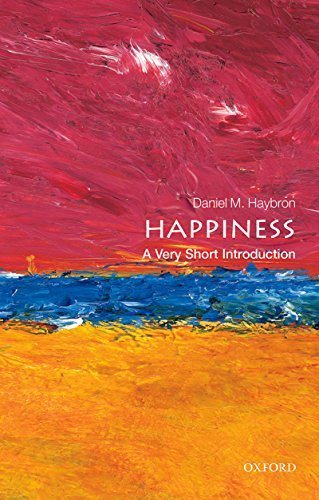
Philosopher and author Daniel Haybron of St. Louis University talks about his book, Happiness, with EconTalk host Russ Roberts. Happiness turns out to be a little more complicated than it sounds. Haybron discusses the good life and different philosophical perspectives on how to achieve happiness. The post Daniel Haybron on Happiness appeared first on Econlib.

/ Learn More

Elections Are Neither a Ruler’s Toy Nor a Sacred Panacea

Some Republican leaders have, at last, started to blame Trump for burning the bridges behind him after being fired by the electorate or, perhaps more exactly (nothing is grandiose in that presidency), for breaking what he thinks are his toys after he felt scolded. (Will he also scratch graffiti on the oval office desk?) This is more or less what the Wall Street Journal, a newspaper that tried to love Trump, argues, although more prudently, in two pieces: “A Bogus Dispute Is Doing Real Damage,” November 19, by columnist Peggy Noonan; and Lindsay Wise, “Some Republicans Call for Trump to Back Up Claims of Fraud,” November 20, 2020. Yesterday, the Wall Street Journal reported on weekend tweets of Mr. Trump attacking the Republicans who have called him to stop trying to subvert the election results (Catherine Lucey and Ted Mann, “Trump Continues to Challenge Election Results as Legal Options Dwindle,” November 22). Against the (Republican) governor of Maryland Larry Hogan, who had said that “We’re beginning to look like we’re a banana republic,” Trump tweeted that “Hogan is just as bad as the flawed tests he paid big money for!” Interestingly, this jab refers to a story revealed last week by the Washington Post, one of the newspapers that Mr. Trump used to blame as “enemies of the people.” At the exact opposite end of endangering American democracy to serve one’s political self-interest, lies the danger of sacralizing it. In the piece linked to above, journalist Lindsay Wise reports about Rep. Liz Cheney (R., Wyoming): Ms. Cheney, the top ranking Republican woman in the House, said that if Mr. Trump can’t stand up his fraud claims and show they would tip the election in his favor, he should “fulfill his oath to preserve, protect and defend the Constitution of the United States by respecting the sanctity of our electoral process.” In a classical-liberal perspective, nothing is sacred about ballots. They just need to be cast by eligible voters and be counted correctly. Perhaps this is what Rep. Cheney wanted to emphasize by speaking about the sanctity of the process. In the mind of populists (as I and other analysts define them), elections are supposed to reveal the will of the people, and they blame the electoral process if it doesn’t achieve that. In reality, the electoral process cannot reveal the will of the people, which is unknowable because it does not exist. It suffices for liberal democracy that the process deliver a good count of the votes cast by a majority or a plurality of the electorate. The populists have it exactly backward: they idolize democracy for what it cannot deliver and undermine its useful process. We can understand that moral rules develop to support voting because it is an institution that often fosters prosperity and offers some protection against tyranny. Contemporary economists who have formalized this theory of morals include Friedrich Hayek and, in game-theoretic terms, Robert Sugden. But this does not mean that democratic voting is a sacred panacea. (0 COMMENTS)

/ Learn More