This is my archive

bar

Rowan Jacobsen on Truffle Hound

Journalist and author Rowan Jacobsen talks about his book Truffle Hound with EconTalk host Russ Roberts. This conversation has nothing to do with chocolate. It’s about the strange world of underground fungi, found in the forest by specially trained dogs and used by chefs and home cooks around the world. You will learn about truffle oil, cooking with truffles, truffle hounds, and the economics of all of the above. (0 COMMENTS)

/ Learn More

Rowan Jacobsen on Truffle Hound

Journalist and author Rowan Jacobsen talks about his book Truffle Hound with EconTalk host Russ Roberts. This conversation has nothing to do with chocolate. It’s about the strange world of underground fungi, found in the forest by specially trained dogs and used by chefs and home cooks around the world. You will learn about truffle […] The post Rowan Jacobsen on Truffle Hound appeared first on Econlib.

/ Learn More

The Simplicity of Our System of Government

An interesting essay in Saturday’s Wall Street Journal suggests, if we go farther than the author, that “the simplicity of our system of government,” although a worthy ideal, has become a mere historical memory if not a propaganda tool for the democratic Leviathan. The story is about Andrew Jackson who, before his death, refused to be buried in a marble sarcophagus believed to have once contained the remains of a Roman emperor. The idea had been advanced by U.S. Navy commodore Jesse D. Elliot. (See Mary Beard, “A Tomb Not Fit for a President,” WSJ, October 16, 2021.)  Jackson’s reaction, Beard writes, stood as a symbol of the down-to-earth essence of American republicanism and its distaste for the vulgar bric-a-brac of monarchy or autocracy. … Jackson was 77 years old and in failing health; he would die a few months later. But his reply to the letter from Elliott outlining this offer was famously robust: “I cannot consent that my mortal body shall be laid in a repository prepared for an Emperor or King—my republican feelings and principles forbid it—the simplicity of our system of government forbids it. Every monument erected to perpetuate the memory of our heroes and statesmen ought to bear evidence of the economy and simplicity of our republican institutions and the plainness of our republican citizens … I cannot permit my remains to be the first in these United States to be deposited in a Sarcophagus made for an Emperoror King.” Jackson was in a difficult position. As president, he had been accused of behaving like a Caesar, in a style of autocratic populism that a few of his successors have copied. This may have added to the intensity of his refusal: He was certainly not going to risk an imperial burial. If the United States or any other Western country once illustrated “the simplicity of our system of government,” these days are long past. After Jackson, imperial presidents included Abraham Lincoln and Franklin D. Roosevelt. (For a revisionist history of the Civil War, see Jeff Hummel’s Emancipating Slaves, Enslaving Free Men.) The haughtiness of the presidents’ motorcades and omnipresent security theatre may be compared with Agathocles, a Syracuse ruler between 317 and 289 BC, who “prided himself on not using a bodyguard and cultivated an unassuming attitude in public.” As I argued in my post “Praetorian Guards from Ancient Greece to Palm Beach or the Hamptons” (January 14, 2019),  technological, social, and political conditions were different, but it is still worth reflecting on why democratic leaders are so much hated by part of the citizenry that they must be under the constant protection of praetorians (even after departing office). And that was true long before Islamic terrorism and 9/11. The two world wars of the 20th century as well as the Red Scare (while our own governments were getting very pink) accelerated the trend. Yet, until a few decades ago, one could still get a taste of “the simplicity of our system of government.” If you will pardon a personal anecdote, one of my memories of another epoch dates from the early 1990s: going to meet a senior minister in the French government, a friend and I entered by a backdoor of the government building, walked around an unmanned security checkpoint, and joined the minister in his dining room (or perhaps his office first) without seeing a single cop or any other soul. The rise of Islamist terrorism and 9/11 gave our Leviathans another great opportunity to buttress the surveillance state and the garrison state. For anybody who has known better in these United States or in a few other Western countries, it is difficult to believe that much is left of the “simplicity of our system of government.” The political and economic implications are becoming more visible. (0 COMMENTS)

/ Learn More

Angrist’s Critique of Card and Krueger

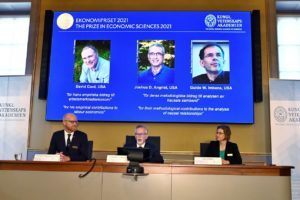
As in the original Card and Krueger survey, the administrative data show a slight decline in the employment from February to November 1992 in Pennsylvania, and little change in New Jersey over the same time period. However, the data also reveals substantial year to year employment variations in other period. In particular, while employment levels in New Jersey and Pennsylvania were similar at the end of 1991, employment in Pennsylvania fell relative to employment in New Jersey over the next three years (especially in the 14-county group), mostly before the 1996 increase in the federal minimum wage.So Pennsylvania may not provide a very good measure of counterfactual employment rates in New Jersey in the absence of a minimum wage change. This is from Joshua Angrist and Jorn Pischke, Mostly Harmless Econometrics, p. 231. Hat tip to economist D. W. MacKenzie, who gives a pared down version of this quote in “Economics Nobel Prize winners disagree, yet again,” October 15, 2021. His title, of course, refers to Angrist and Card, who, last Monday, were announced as 2 of the 3 winners of the 2021 Nobel Prize in economics. (0 COMMENTS)

/ Learn More

The Power of Compounding

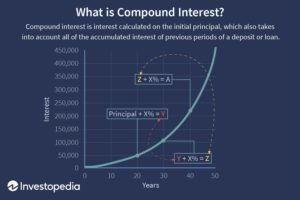
According to an apocryphal story, physicist Albert Einstein, when asked what was the most powerful force in nature, answered “Compound interest.” Whether it’s the most powerful force, it is powerful. Here’s a paragraph from Sterling Futures, October 15, 2021: Including dividends, the S&P 500 Total Return index, in the five years ended September 30, 2021, gained an astonishing +118%, an average annual growth rate of nearly 24%! That’s more than double the stock market’s long-term annual total return of approximately +10% going back 200 years, as described by Wharton Business School’s professor Jeremy Siegel in his seminal book, Stocks for the Long Run! Can you spot the error? The authors remembered to take account of compounding when discussing Jeremy Siegel’s book, but forgot to take account of it when computing the average annual growth rate of the S&P 500 Total Return index. They appeared to have divided 118% by 5 to get almost 24% annually. But here’s the right way. Let x = the annual growth rate. Then (1 + x)^5 = 100 + 118 = 218. Solve for x, which you can do on an iPhone. x = just over 16%, which is really good, but it’s not 24%. The power of compounding. By the way, Jeremy wrote the entry on stock market returns in David R. Henderson, ed., The Concise Encyclopedia of Economics.     (0 COMMENTS)

/ Learn More

Will Texas choose to be pro-business or pro-market?

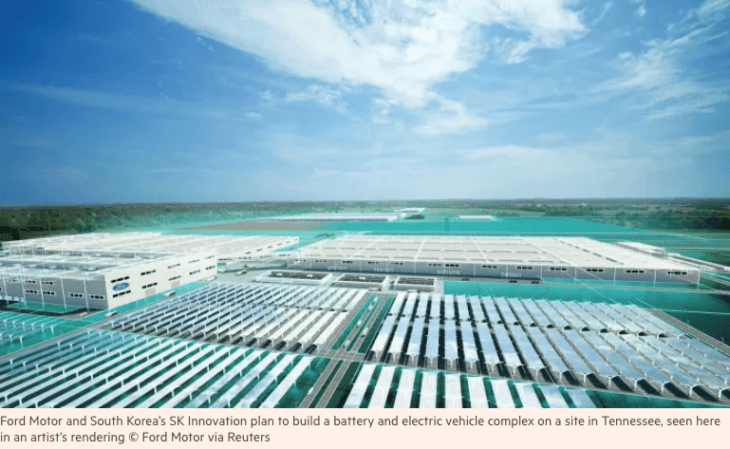
Tesla recent announced plans to move its corporate headquarters from California to Texas.  But there are some ironies associated with this action: And despite the state’s business-friendly reputation, Tesla can’t sell vehicles directly to customers there because of a law that protects car dealerships, which Tesla does not use. I would challenge the reporter’s use of the term ‘despite’.  Indeed, in a sense the Texas ban on direct sales from auto manufacturers is because they are pro-business, specifically, pro-car dealership business. Another irony is that Tesla produces a type of battery that can be combined with renewable energy sources, which is not exactly the most popular type of energy in Texas: In February, a rare winter storm caused the Texas electric grid to collapse, leaving millions of people without electricity and heat for days. Soon after, the state’s leaders sought — falsely, according to many energy experts — to blame the blackout on renewable energy. “This shows how the Green New Deal would be a deadly deal for the United States of America,” Texas Gov. Greg Abbott said on Fox News of the blackout. “It just shows that fossil fuel is necessary for the state of Texas as well as other states to make sure we will be able to heat our homes in the wintertimes and cool our homes in the summertimes.” Musk, a Texas resident since last year, seemed to offer a very different take Thursday, suggesting that renewable energy could, in fact, protect people from power outages. “I was actually in Austin for that snowstorm, in a house with no electricity, no lights, no power, no heating, no internet,” he said. “This went on for several days. However, if we had the solar plus Powerwall, we would have had lights and electricity.” I am in favor of shifting the economy toward more use of non-carbon sources of energy, such as nuclear, hydro, wind and solar.  For that reason, I am pleased with Tesla’s move, as I suspect it might begin to change the impact of the energy industry on Texas politics.  Here’s The Economist: Even without subsidies, wind and solar power are often the cheapest new source available, so sure to grow. They are also popular, having created a lot of jobs, especially in Republican states. Iowa, Texas, Oklahoma and Kansas are the country’s top wind-energy producers. Texas employs almost as many people in wind, solar and electricity storage as the entire mining industry that Mr Trump used to harp on. A carbon tax would be much better than clean energy subsidies, but apparently a carbon tax is politically impossible at the moment. In an ideal world, different energy sources could compete on a level playing field, perhaps after Pigovian taxes are implemented.  But politics will almost inevitably intrude; as it will be argued that non-monetary considerations (such as power outages) are also important.  Thus while many experts blamed Texas’s power outages last winter on problems in the natural gas industry, fossil fuel supporters blamed wind energy: [Texas governor] Greg Abbott, blamed a catastrophic grid failure in February on intermittent wind power—despite official findings that poorly maintained gas power stations were mostly to blame—and ordered the state regulator to penalise the renewables industry. . . . The Koch-linked Texas Public Policy Foundation made the running in blaming wind for the state’s recent blackout. Like the pro-gun lobby, another skilful circumventer of public opinion, the fossil-fuels camp has also propagated a powerful conservative mythology. In contrast to cosseted renewables, it claims to be a preserve of wildcatting free spirits, which is half true, and unsubsidised, which is not. The renewables industry’s ability to fight back has until recently been limited. It was for years too small to lobby effectively and its diverse technologies made it slow to get organised. It was therefore chiefly represented in the battle for influence by environmentalists. This was a good way to woo Democrats. But it helped its enemies on the right misrepresent the industry—now the source of around 20% of America’s electricity and over 400,000 jobs—as a left-wing boondoggle. It will be interesting to watch how this debate plays out in the next few decades.  Major automakers have announced plans to dramatically ramp up the production of electric cars.  These cars are becoming much more popular in the area where I live (Orange County.)  Just a few days ago, Ford announced plans for a massive new electric car and battery plant in Tennessee. Will Ford be able to convince conservative Texans to buy electric F-150 pickups?  The next decade will be very interesting. (0 COMMENTS)

/ Learn More

The Pros and Cons of Irish Democracy

If regular democracy isn’t doing so well, maybe it’s time to fall back on “Irish Democracy.” That’s what Yale political scientist James Scott calls the passive resistance of a society that doesn’t like what its rulers are doing to it. In his book “Two Cheers for ­Anarchy,” he writes, “One need not have an actual conspiracy to achieve the practical effects of a conspiracy. More regimes have been brought, piecemeal, to their knees by what was once called ‘Irish Democracy,’ the silent, dogged resistance, withdrawal and truculence of millions of ordinary people, than by revolutionary vanguards or rioting mobs.” These are the opening paragraphs of Glenn H. Reynolds, “The irrational COVID regime is driving many Americans to a healthy non-compliance,” New York Post, October 14, 2021. Reynolds is a law professor at the University of Tennessee and a well-known blogger at Instapundit. He goes on to detail some of the ways people are ignoring the oppressive regulations that various governments in the United States have imposed with Covid as their justification. I basically agree with him. The “silent, dogged resistance” is quite healthy. I do worry, though, about longer-term effects. I remember Milton Friedman saying in a talk, many decades ago, words to the effect: “The British follow all the laws, good and bad, the French ignore all the laws, and the Americans follow the good ones and ignore the bad ones.” I’m not saying his empirical observation was right even then. But I do worry that we will fall into ignoring the good rules as well as the many bad ones. (0 COMMENTS)

/ Learn More

Milton Friedman and “Zero Cost” Expanded Government

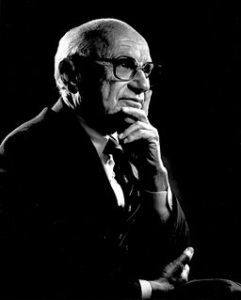
President Joe Biden has declared that his proposed $3.5 (or is it $5.5?) trillion “Build Back Better” social agenda will have a “zero” cost—as in $0.00! Why?  Because the added expenditures will be covered by increased revenues drawn from businesses and the “rich.” The President and other progressive Democrats, who have parroted the Biden claim, should reflect on the wisdom of the late Milton Friedman, who had a knack for crystallizing stark economic truths. During the early 1980s, when supply-side economics was the rage, Reagan Republicans promoted tax-rate cuts as a means of reviving the economy (because the cuts would increase people’s incentives to work, save, and invest), which Friedman believed distracted them from concern about what was happening to government outlays, which continued to rise throughout the decade. Friedman framed the fiscal issues of the day differently, and with far greater clarity than anyone else. He admonished everyone (including President Reagan’s advisors), to “Keep your eye on one thing and one thing only: how much government is spending, because that’s the true tax. . . If you’re not paying for it in the form of explicit taxes, you’re paying for it indirectly in the form of inflation or in the form of borrowing.” And make no mistake, government outlays have risen substantially, especially lately, increasing from $3.9 trillion in 2016 to $6.6 trillion in 2020 (including Covid outlays). Even without passage of the reconciliation bill, the White House estimates that federal outlays will continue their upward march through 2026. Friedman understood that the real taxes on the economy ultimately come in the form of government outlays siphoning off resources for public purposes that would otherwise be used in the private sector. If the government chooses to build a bridge or road, the concrete and steel could have been used to produce houses and office buildings. How the added government outlays are financed—through taxes, newly printed dollars and inflation, or debt—is of secondary importance, perhaps only marginally affecting people’s incentives. The costs of expanded government outlays will be incurred through the shift of resources from private-directed uses to public-directed uses. By declaring that his “Build Back Better” agenda has no costs, President Biden must be confused—if he truly means what he has been saying. He may think that the dollars expended for an expanded array of welfare recipients will come only at the expense of the “rich.” Not so at all. Those transferred dollars will enable the recipients to buy goods they could not otherwise buy, which means they can pull resources away from the production of the variety of goods that ordinary Walmart (and Home Depot and Kroger) shoppers, many with far less-than-privileged means, would have bought.   Richard McKenzie is an economics professor (emeritus) in the Merage Business School at the University of California, Irvine. His latest book is The Selfish Brain: A Layman’s Guide to a New Way of Economic Thinking (2021). (0 COMMENTS)

/ Learn More

An unsung success story

As a candidate, Donald Trump promised to ban Muslim travel to the US.  After being rebuffed by the courts, President Trump had to settle for a watered down ban on travel from a subset of Muslim countries.  Nonetheless, the US Muslim population continues to grow rapidly, and has achieved a great deal of economic success as well.  Here is The Economist: The past 20 years have mostly been golden for America’s Muslims. The community has more than doubled in size, to 3.5m. And its prominence in American life has increased exponentially.Traverse the overpasses of any big city and you will see metallic domes sparkling below. The number of mosques has also more than doubled since 2001. The minority’s secular growth is even more striking. Muslims are one of America’s most educated religious groups. More than 15% of doctors in Michigan are Muslim, though less than 3% of the state’s population is. And Muslim artists, journalists and politicians are catching up. While there remains substantial prejudice against Muslims, their upward mobility is likely to lead to interactions with non-Muslim Americans that reduces prejudice over time: Half of Americans, including a large majority of Republicans, say Islam encourages violence. That is twice the number who held that view in early 2002. “Though we try to integrate, these are things we live with,” Ali Dabaja, an emergency-care doctor from Michigan, told your columnist. And then he sobbed down the phone as he recalled the time a trucker in Florida tried to run him and his two headscarf-wearing sisters (one a doctor, the other a lawyer) off the road. . . .The anti-vaxxer Trump voters who are now likeliest to be hospitalised with the disease tend to be the most anti-Muslim Americans. The doctors treating them are quite likely to be Muslim. The irony of this is not lost on Dr Dabaja. “But when people are coping with the reality of death or the death of their loved ones,” he says, “their political agendas tend to fade.”   (0 COMMENTS)

/ Learn More

Good News on Oil Spills

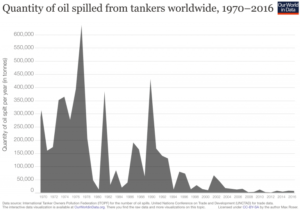
Max Roser, at the site “Our World in Data,” reports some encouraging news on oil spills. Their frequency has fallen over the last few decades and the amount of oil spilled has fallen dramatically over the last few decades. The graph above shows volume of oil spilled on the vertical axis and year on the horizontal. The big spikes are in the late 1970s, early 1980s, and early 1990s. HT2 Tyler Cowen. (0 COMMENTS)

/ Learn More