This is my archive

bar

Ludwig von Mises’ Decisive Blows Against Interventionism

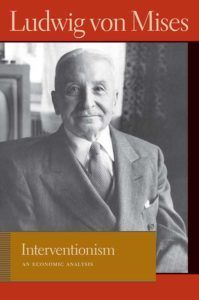
A Liberty Classic Book Review of Ludwig von Mises. 2011[1940]. Interventionism: An Economic Analysis. Indianapolis, IN: Liberty Fund.1 There is no small book that can take the place of Ludwig von Mises’ magisterial book, Human Action.2 However, if there were a contest for shorter publications that could substitute for it, his own book, Interventionism, would be high up on my list in this regard. Mises ranges widely over all sorts of interventions into what would otherwise be a free market economy, and strikes decisive blows at these unwise public policies. Here are some examples: Entrepreneurship “The entrepreneurs do not form a closed class or order. Any individual may become an entrepreneur…” (Mises, 1940, p. 3).3 It is impossible to underestimate the importance of this insight. Consider the situation before entrepreneurship was first “invented,” first undertaken by anyone. The situation might have been something along the following lines: there were hundreds of self-employed individuals—each fishing, grabbing coconuts, or something similar. Let us suppose they were all of similar productivity—each garnering 10 units of food, clothing, and shelter each day, which they daily consumed. But one of them saved a unit of sustenance every day. After a week, he turned to his neighbor with the following proposition: hey, come work for me, and I will pay you 15 units. How could our budding entrepreneur afford to pay such amount? Specialization and division of labor: two people, working together, could produce far more than double what each could produce on his own. Thus, the first “business firm” was born. It was an “immaculate conception.” Was there anything untoward going on? Of course not. There was no “exploitation” involved here. Voluntary action was the order of the day at each step of the process for both employer and employee. If this is not a powerful antidote to the socialists who claim that the entrepreneurial formation of the firm is “exploitative,” then nothing is. Minimum Wage Law As I write this review, news of the 2021 Nobel Prize in Economics Award has just been made public.4 The winners are David Card, Joshua D. Angrist, and Guido W. Imbens.5 What contribution of theirs was singled out for this honor? Why, their work on the minimum wage law. Mises never won the Nobel Prize in economics. This, in my assessment, casts serious doubt on the worth of that award. It is interesting in this regard to compare Mises’ view of this legislation with that of Card, Angrist, and Imbens. In the view of the latter, the different policies between New Jersey and Pennsylvania demonstrate that the minimum wage law actually raises compensation for the unskilled while there is little or no attendant unemployment for this demographic. This “research” has been subjected to numerous and devastating refutations, all of which would appear to escape the notice of the Nobel Committee.6 What, in sharp contrast, is Mises’ view of this pernicious legislation? He states as follows, “The authoritatively fixed wage rate tends to cause permanent unemployment of a considerable part of the labor force” (p. 30). Note the word “permanent.” This is in sharp contrast to the fact that these three economists have found no short term or temporary unemployment in their “natural experiments.” And, of course, they would not. It takes time for economic alterations to come into effect. When the minimum wage rose from $.40 to $.75 in 1949, virtually all elevators were manually operated. This law was highly successful in almost doubling the take home pay of all manual operators of elevators–in the short run. Not one of them was fired immediately after this new dispensation went into effect. At the lower wage, this type of labor and unsophisticated capital equipment was highly competitive with automatic elevators. Not at $.75, however. But it takes a few months to make this alteration. Nowadays, of course, the unemployment rate for manual operators of elevators is 100%, as it was in the early 1950s after the changeovers took place. Professors Card, Angrist, and Imbens would do well to contemplate this statement of Mises’: “If by an act of intervention wages are fixed at a point higher than the one given by market conditions, a part of the labor supply cannot be employed; unemployment rises. It is precisely the same situation as in the case of commodities. If the owners of commodities ask a price above the market they cannot sell their entire stock” (p. 32). There are “recalls” for all sorts of things in the modern era: cars, dishwashers, pharmaceuticals, etc. There are none, unhappily, for economists who do not realize that a price floor—set above equilibrium—will necessarily create a surplus. In the labor market this is called unemployment; in the goods market it is characterized as unsold surpluses. Confiscatory Taxation “Mises published this book in 1940. Yet, in reading it now, it is as if he were consulting the headlines circa fall 2021 yet again.” Mises published this book in 1940. Yet, in reading it now, it is as if he were consulting the headlines circa fall 2021 yet again. Says the author of this book in what might be easily construed as a warning to the tax woke: “Popular opinion is inclined to believe that the taxing away of huge incomes does not concern the less wealthy classes. This is a fallacy. The recipients of higher incomes usually consume a smaller proportion of their incomes and save and invest a larger party than the less wealthy. It is only through saving that capital is created. Only that part of income that is not consumed can be accumulated as capital. By making the higher incomes pay a larger share of the public expenditures than lower incomes one impedes the operation of capital and eliminates the tendency, which prevails in a society with increasing capital, to increase the marginal productivity of labor and therefore to raise wages” (p. 51). And this is to say nothing of the well-known phenomenon of tax shifting. For more on the topics discussed in this article, see “Ludwig von Mises’s Socialism: A Still Timely Case Against Marx,” by Steven Horwitz, Library of Economics and Liberty, October 1, 2018; and “Liberalism versus the State,” by Alberto Mingardi, Library of Economics and Liberty, October 1, 2018. See also “The Economics of Ludwig von Mises: Toward a Critical Reappraisal,” papers from symposium held before the 44th Meeting of the Southern Economics Association, Literature of Liberty, Institute for Humane Studies, 1976. At present, “The top 1 percent paid a greater share of individual income taxes (38.5 percent) than the bottom 90 percent combined (29.9 percent).”7 Yet, this is widely deemed “unfair” amongst the powers that be. Well, perhaps it is- unjust to the rich, not to the poor. However, as Mises eloquently demonstrates, if you have the best interests of the poor at heart, the last thing you want to do is to de-capitalize the economy and lower the productivity, and hence wages, of the less well-to-do. Profit In yet another issue that could have been seized from the headlines of 2021, Mises states: When the self-styled ‘progressives’ use the word profit they rant and rave. They would like to completely eliminate profits. In their view, the entrepreneur should serve the people altruistically, not seek profits. He is either not to receive anything—or to be content—if his business is successful, with a small margin over his actual costs. That the entrepreneur has to bear the possible loss is never objected to. But the profit orientation of the activities of the entrepreneurs is precisely what gives sense and meaning, guidance and direction, to the market economy based on private ownership of the means of production. To eliminate the profit motive is to transform the market economy into chaos” (p. 58). This attack on profits is highly objectionable. These “progressives” do not realize that the profit and loss system enables us to cooperate with one another. Let us say we decide we are too fat. We need to eat more rabbit food and less of what makes life worthwhile. Do we have to petition Washington, DC and ask them to tell farmers, bakers, grocers, etc., to produce more carrots and broccoli and less ice cream and chocolate? Not a bit of it. All we need do is purchase more of the former and less of the latter. Then profits will rise in the former, fall in the latter. According to Adam Smith’s “invisible hand” theory, the profit and loss system will work its wonders and entrepreneurs will be led by it so as to produce what is necessary for us to lose weight. But this means that profits must rise for leafy vegetables! If they are not allowed to do so, then we run into the “chaos” about which Mises warned us. Imagine if all the millions of changes of taste of this sort had to be accommodated by Washington, DC. “Chaos” might be too kind a description of what would ensue. Quibbles with the King According to that old aphorism of Ralph Waldo Emerson’s, “When you strike at the king, you must kill him.” Mises is, clearly, the “king” of economics. I am, equally clearly, not. I doubt that I will “kill him” with but a few criticisms of this otherwise magnificent book of his, but I feel obligated to at least register where he and I depart, and to explain why. Sovereignty I diverge from Mises when he writes: “… the consumers, not the entrepreneurs, determine the direction and scope of production. In the market economy, the consumers are sovereign” (p. 2). I much prefer Rothbard’s (1962) notion that under laissez-faire capitalism, both sides are sovereign. This latter author characterizes this phenomenon as “individual sovereignty.” Yes, the consumer wields the thumbs up or down power, but the businessman initiates production. All market activity is of necessity unanimous. Both sides are kings, not just one. The Mixed Economy In the view of Mises: “If within a society based on private ownership of the means of production some of the means are publicly owned and operated, this still does not make for a mixed system which would combine socialism and private property… The publicly owned enterprises, too,… must fit into the mechanism of the market economy; they are subject to the same laws of the market. In order to maintain their position they, too, have to strive after profits or at least avoid losses” (p. 5). This position is difficult to defend. The Army Corps of Engineers killed some 1,900 people in the aftermath of Katrina (Rockwell and Block, 2010). Their levies malfunctioned. Were that division of government a private company, it would have been sued into bankruptcy. Ditto for the National Highway and Traffic Safety Administration, which manages the nation’s highways, upon which just under 40,000 people perish in traffic fatalities annually (Block, 2009). Yet these managers are still in business. Something similar could be said about the United States Post Office and numerous other government enterprises. Their losses are met with ever more subsidies from taxation, not bankruptcy. When there are publicly owned and operated businesses in an otherwise free economy, these are islands of socialism. The State According to Mises: “In a market economy, the State concerns itself with the protection of the life, health, and private property of its citizens against force or fraud. The state insures the smooth working of the market economy by the weight of its coercive power. It refrains, however, from any interference with the freedom of action of the people engaged in production and distribution so land as such actions do not involve the use of force or fraud against… others” (pp. 8-9). Yes, “coercive power” is accurate, but the rest of this sounds like it could have been written in the civics textbook for middle-schoolers. This does not sound like any state ever known in the history of mankind. The governments of Monaco, Lichtenstein, Singapore, and Hong Kong (before the Chinese takeover) come closest to this ideal, but even they use “coercive power” in a manner that violates rights. They all are financed by compulsory taxation. As for the overwhelming majority of governments that have ever ruled on this third rock from the sun, the less said about them in this context the better. Monopoly Mises errs, too, in his view that there can be any such thing as monopoly, or monopoly prices, in the system of laissez faire capitalism. Yes, of course, there can be monopolies in the mixed economy, based upon government privileges and restrictions, but these are totally incompatible with economic freedom. Mises states: “… price control measures can be used with some degree of effectiveness… (in)… the case of monopoly prices. The price control measure may succeed in the case of monopoly prices if it does not intend to lower the prices below the point at which the competitive price would be in the nonmonopolized, unhampered market” (p. 29). And again, “… many industries would be able to exact monopoly prices and to realize monopoly profits… ” (p. 63).8 Rothbard (1962) expends an entire chapter refuting the idea that a monopoly, or a monopoly price, can co-exist with economic freedom. Yes, there can be a single seller of wheat, or oil, or copper, or any other product in a given geographical area but it is impossible to distinguish the prices that emanate from this institutional arrangement from perfectly competitive prices. Conclusion I have spent almost as much space nit picking at this book as I have in praising it. This might give the very false impression that I am neutral about it. I am not at all. Mises made magnificent contributions all throughout this book; space limitations prohibit me from delving into all of them. But I would mention in this regard in addition to what I covered in Part I of this review, his contributions on war and peace, foreign policy, his analysis of the economics of Hitler, Stalin, and Mussolini, tariffs and international trade and finance, the war economy, corporativism, hot money, credit expansion, production for profit versus production for use, and much, much more. I highly recommend this book. Footnotes [1] Ludwig von Mises. 2011[1940]. Interventionism: An Economic Analysis. Indianapolis, IN: Liberty Fund. [2] Mises, Ludwig von. [1949] 1998. Human Action, Scholars’ Edition. Auburn: Mises Institute. Also available at Econlib: Human Action. [3] All otherwise unidentified quotes are from this one book, now under review. [4] Nobel Prizes, Economic Sciences. Angus Deaton, 1968. [5] Alan B. Krueger would have assuredly shared in this prize but for his demise in 2019. This claim of mine is based on the fact that he, along with Card, authored the classic analysis of the minimum wage based upon so-called “natural experiments.” See in this regard Card and Krueger. 1994. [6] See for example Deere, Murphy, and Welch, 1995; Neumark and Wascher, 1995. [7] Summary of the Latest Federal Income Tax Data, 2020 Update. Tax Foundation, Feb. 25, 2020. [8] See also p. 78. Bibliography Block, Walter E. 2009. The Privatization of Roads and Highways: Human and Economic Factors; Auburn, AL: The Mises Institute Card, David and Alan Krueger. 1994. “Minimum Wages and Employment: A Case Study of the Fast-Food Industry in New Jersey and Pennsylvania.” American Economic Review, Vol. 48, No. 4, pp. 772-793. Deere, Donald, Murphy, Kevin M., Welch, Finis. 1995. “Employment and the 1990-91 Minimum-Wage Hike.” American Economic Review. 85, no. 2, May, pp. 232-237. Mises, Ludwig. 2011[1940]. Interventionism: An Economic Analysis. Indianapolis, IN: Liberty Fund. Neumark, David and William Wascher. 1995. “Minimum wage effects on employment and school enrollment.” Journal of Business Economics and Statistics. Vol. 13, No. 2, pp. 199-207. Rockwell, Jr., Llewellyn H., and Walter E. Block. 2010. “The Economics and Ethics of Hurricane Katrina,” American Journal of Economics and Sociology , Vol. 69, No. 4, October, pp. 1294-1320. http://www.walterblock.com/wp-content/uploads/V.335_The-Economics-and-Ethics-of-Hurricane-Katrina.pdf Rothbard, Murray N. (2004 [1962]). Man, Economy, and State, Auburn AL: Ludwig von Mises Institute, Scholar’s Edition; http://mises.org/rothbard/mes/chap16d.asp * Walter E. Block is Harold E. Wirth Eminent Scholar Endowed Chair and Professor of Economics at Loyola University New Orleans. As an Amazon Associate, Econlib earns from qualifying purchases. (0 COMMENTS)

/ Learn More

Sermons from Evolutionary Biologists

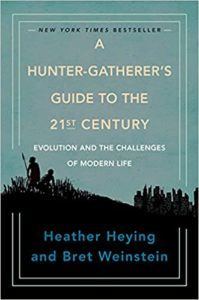
The best, most all-encompassing way to describe our world is hyper-novel. As we will show throughout this book, humans are extraordinarily well adapted to, and equipped for, change. But the rate of change itself is so rapid now that our brains, bodies, and social systems are perpetually out of sync… The cognitive dissonance spawned by trying to live in a society that is changing faster than we can accommodate is turning us into people who cannot fend for ourselves. –Bret Weinstein and Heather Heying, A Hunter-Gatherer’s Guide to the 21st Century (xii)1 Bret Weinstein and Heather Heying (henceforth WH) do not fit neatly into our contemporary political categories. They decry corporations and capitalism as though they are members of the blue team. But when it comes to cultural issues, especially surrounding male-female relationships and child rearing, they sound more like the red team. I read A Hunter-Gatherer’s Guide as soon as it was released, which happened to be a few days before the solemn Jewish holiday of Yom Kippur. So it struck me that the book might be considered a series of sermons. Setting aside science and politics, one can easily imagine their views on economic fairness, sexual conduct, and bringing up children as coming from a rabbi. As evolutionary biologists, WH marvel at the ability of humans to thrive in different environments. Unrivaled in our adaptability, ingenuity, and exploitative capacity, we have come to specialize in everything over the course of hundreds of thousands of years. We enjoy the competitive advantage of being specialists, without paying the usual costs of a lack of breadth. (6) WH say that we have achieved this through a combination of culture and consciousness. Culture is our shared habits and traditions, which allow us to function efficiently in stable environments. Consciousness is our ingenuity and willingness to experiment, which allow us to adapt to novel environments. In terms of Daniel Kahneman’s Thinking Fast and Slow, culture is like System 1, in which we respond automatically to stimuli. Consciousness is like System 2, in which we step back and think before acting. We have discovered how to swap out our [social] software and replace it as the need arises by oscillating between culture and consciousness. The human niche is niche switching. (10) WH focus on evolutionary fitness. Fitness is indeed often about reproduction, but it is always about persistence… Extinction is failure. Persistence is success… Each individual is the beginning of a line of descent, and the period over which its descendants persist is a good proxy for fitness. (12) WH argue that culture and genetics both evolve to enhance fitness. Asking if a particular trait is due to nature or nurture implies a false dichotomy between nature, genes, and evolution on the one side and between nurture and environment on the other. In fact, all of it is evolutionary… … any expensive and long-lasting cultural trait (such as traditions passed down within a lineage for thousands of years) should be presumed to be adaptive. (16-17) Whether a trait is cultural or genetic, if it is complex, costly and has persisted a long time, we can infer that it serves some function. We should treat it like Chesterton’s Fence, and not simply dismiss it as unnecessary. Given this framework, we should be wary of innovations that offer modest short-term gains with possibly large long-term risks. With an inevitable trade-off between efficiency and robustness, we should make sure to pay attention to the latter. Imprudent innovations that inordinately sacrifice robustness are what WH call the “Sucker’s Folly.” Instead, they advocate the Precautionary principle, which says that innovations should be introduced carefully and slowly. Economist Thomas Sowell is known for the saying, “There are no solutions, only trade-offs.” WH see something similar at work when we undertake medical interventions. The quest for magic bullets, for simple answers that are universally applicable to all humans in all conditions, is misguided. If it were that easy, selection would almost certainly have found a way. (64) Based on these sorts of considerations, WH offer advice on diet, sleep, and deciding how to treat medical ailments. Turning to issues of sex and gender roles, WH write Broadly speaking, there are three possible reproductive strategies; 1. Partner up and invest long term, reproductively, socially, and emotionally. 2. Force reproduction on an unwilling partner. 3. Force nobody, but also invest little beyond short-term sexual activity. (117) WH point out that women are constrained by biology to follow the first strategy. On the other hand, All three of these strategies are open to men, but the first one is the male strategy that is best for society, best for children, best for women, and best for all but a handful of men (118) They see the case for monogamy as strong. But they pivot to a concern about economic inequality, because men with very few resources are unattractive as husbands. This is exactly what has happened among men for whom a lack of economic opportunity and underfunding of schools have led to elevated mortality, crime, and imprisonment. In the United States, a large fraction of black men have been forced into such a situation. Men who avoid these bad fates find themselves in high sexual demand and tend to play the field, leaving many black women to raise families without a committed partner. Many in the ruling class have long pretended that this pattern derives from some imagined moral failing among black people, when instead it plainly emerges… in any population faced with similar conditions. (135) WH do not think highly of capitalism. Here are results of a search for the word “market.” in the book: The market is full of con artists… The market is selling infantile values (189) Markets prey on our sense of fairness (202) Malicious market forces are largely an expression of manipulation (228) The market should not be allowed to intrude on several things, including but not limited to love and sex, music, and humor. (122) … adults will provide a road map to the environment in which their children are growing up, unless market forces intervene (149) … economic markets prey on this tendency, destabilizing our sense of self and community (201) Markets prey on our sense of fairness. They fool us into thinking that everyone else is getting grapes (202) … the market once again trying to intrude on honorable human tendencies (203) What is “healthy,” of course, is ever more challenging to decipher, in no way helped by the presence of market forces in almost every decision (204) In short, almost every reference to “market” is pejorative. But one could easily argue that the market is an expensive, long-lasting trait and thus should be presumed to be adaptive. Unfortunately, WH seem to see no reason to investigate what positive functions it serves and what trade-offs might exist in attempting to do away with it or regulate it. “The book suffered from a framework in which the individual engages in a lonely battle with the natural and social environment.” In general, although I found the sermons in WH interesting and worthwhile, I felt that the book suffered from a framework in which the individual engages in a lonely battle with the natural and social environment. So if change has become rapid, making our environment hyper-novel, they wonder how as individuals we can fend for ourselves. Consider that in 1800 a farmer could probably fix nearly anything that broke on the farm. Even in 1950, untrained people could fix many of the tools that they used, including even automobiles. Today, so many of our tools have embedded computer chips that we are likely to be helpless when they fail us. I think that, in general, we are more dependent on other people and on technology to help achieve our goals than was the case in the past. For more on these topics, see “Can Evolutionary Psychology Explain Your Political Beliefs?” by Arnold Kling, Library of Economics and Liberty, February 3, 2014; and “The Social Learning Animal,” by Arnold Kling, Library of Economics and Liberty, June 5, 2017. But our relationship to the environment is mediated by institutions, of which the market is one. The question that I have about rapid change is whether our institutions can adapt so that we can exploit the benefits of novel ideas while minimizing the harms. In that regard, I am much more worried about academia, journalism, and political institutions than I am about the market. Footnotes [1] Bret Weinstein and Heather Heying, A Hunter-Gatherer’s Guide to the 21st Century. *Arnold Kling has a Ph.D. in economics from the Massachusetts Institute of Technology. He is the author of several books, including Crisis of Abundance: Rethinking How We Pay for Health Care; Invisible Wealth: The Hidden Story of How Markets Work; Unchecked and Unbalanced: How the Discrepancy Between Knowledge and Power Caused the Financial Crisis and Threatens Democracy; and Specialization and Trade: A Re-introduction to Economics. He contributed to EconLog from January 2003 through August 2012. Read more of what Arnold Kling’s been reading. For more book reviews and articles by Arnold Kling, see the Archive. As an Amazon Associate, Econlib earns from qualifying purchases. (0 COMMENTS)

/ Learn More

Jim Dorn on Mazzucato and Bauer

It is hard not to be impressed by the success of Mariana Mazzucato. In a few years, Mazzucato became a point of reference for the world left and her views are having a significant impact in the post-pandemic world, perhaps (perhaps?) because they reinforce the instincts and assuage the thirst for grandeur of the world’s politicians. Jim Dorn comments here on a recent article in which Mazzucato sings the praises of a “Cornwall Consensus” to take the place of the “Washington Consensus”. She writes: Whereas the Washington Consensus minimized the state’s role in the economy and pushed an aggressive free-market agenda of deregulation, privatization, and trade liberalization, the Cornwall Consensus (reflecting commitments voiced at the G7 summit in Cornwall last June) would invert these imperatives. Dorn reminds us that the so-called Washington Consensus “was not meant to be an exhaustive list or a blueprint for development. Nor was it a recipe for minimum government or neoliberalism”. But he also does something much more important. He compares the views of Mazzucato, a world famous economist, with those of Peter Bauer, a largely neglected figure when he was alive and an almost totally forgotten one now. Bauer was known as a critic of development economics (one of the very first). Bauer’s criticisms of foreign aid were grounded in his understanding of development, according to which, as Dorn aptly remarks, “It is more meaningful to say that capital is created in the process of development, rather than that development is a function of capital”. Mazzucato’s work can be read as suggesting instead that we ought to throw money at all possible research projects, hence the “entrepreneurial state” can do it better, since it commands more resources, than any private investors, who is pressed at a certain point (perhaps just a couple of billion ahead of a possible breakthrough) to exit and draw a line between profitable and unprofitable ventures. (0 COMMENTS)

/ Learn More

Is This Error Just Amusing?

Errare humanum est and I don’t want to cast the first stone lest I be lapidated immediately. But an error I just noticed is so amusing that it is difficult to keep it for myself. I was skimming through a book I thought I should read: Gerry Mackie’s Democracy Defended (Cambridge University Press, 2003). Mackie, a political scientist, defends democracy against social choice ideas according to which the political aggregation of individual preferences results in collective choices that are either irrational or dictatorial. See my review of a classic book by William Riker, who, with the help of social choice theory, deflated the pretensions of democracy to represent some sort of “will of the people” and who is one of Mackie’s favorite targets. On page 443, I stumbled on a sentence that seemed consistent with a few others that caught my attention: The new academic attack on democracy resuscitates discredited elite theory with the formally authoritative tools of social choice theory I wondered if the author was cognizant of Nobel economics laureate James Buchanan (1919-2013), who was simultaneously a strong anti-elitist, a strong believer in constitutional democracy, a strong opponent of mobbish democracy, and a strong critic of social choice theory. My article “The Impossibility of Populism” (Independent Review 24-3) evokes some of Buchanan’s ideas. At any rate, James Buchanan is one of the most interesting and challenging economists and philosophers of our time. I surveyed the bibliography in Democracy Defended and I saw no reference to any of Buchanan’s articles and books. I then looked up the index and did find an entry “Buchanan, James.” It points to eight pages of the book. The first page (p. 28) does mention the Nobel laureate but without any introduction: Schumpeter, Arrow, Buchanan, and their followers subsumed democracy to the market model and likened the voter to the consumer. This stroke me as a rough shortcut at best; but remember that I haven’t read the book. Wanting to learn a bit more, I followed the remaining pointers to the seven other pages of the book: I discovered with amusement these pointers to the same “Buchanan, James” are all about the homonymous James Buchanan (1791-1868), the 45th president of the United States! In other words, the index grossly confuses the two Buchanans. One hypothesis is that the index of Mackie’s book was subcontracted to a third party, a common practice requiring of course that the indexer understands what the author is talking about. I am quite willing to hypothesize that Mackie simply made an error in hiring his indexer. Yet, the fact that Mackie seemed ignorant of the work of James Buchanan, and likely not very cognizant of public choice theory either (at least when he wrote this book), suggests that Democracy Defended is perhaps not essential reading after all. (0 COMMENTS)

/ Learn More

Jennifer Frey on Education, Philosophy, and the University

Philosopher Jennifer Frey of the University of South Carolina talks about the state of the university in American education. Frey urges a stronger focus on virtue and human flourishing and a reduced focus on career preparation. Roberts, despite his sympathy with the examined life, challenges the virtue of philosophical enquiry. At the end of the conversation, both guest and host defend philosophy. (0 COMMENTS)

/ Learn More

Jennifer Frey on Education, Philosophy, and the University

Philosopher Jennifer Frey of the University of South Carolina talks about the state of the university in American education. Frey urges a stronger focus on virtue and human flourishing and a reduced focus on career preparation. Roberts, despite his sympathy with the examined life, challenges the virtue of philosophical enquiry. At the end of the […] The post Jennifer Frey on Education, Philosophy, and the University appeared first on Econlib.

/ Learn More

The Curse of a Government Job

I remember when Dr. Deborah Birx was called out after hosting a holiday gathering of her family. It was the kind of gathering that she had urged her fellow Americans not to have. What I didn’t know was the excuse she gave. Here’s an excerpt from the BBC report at the time: Explaining her decision to gather with her husband, daughter, son-in-law and two grandchildren, she told Newsy: “My daughter hasn’t left that house in 10 months, my parents have been isolated for 10 months. “They’ve become deeply depressed as I’m sure many elderly have as they’ve not been able to see their sons, their granddaughters. “My parents have not been able to see their surviving son for over a year. These are all very difficult things.” Those are all good reasons for getting together and ignoring the advice of people like Deborah Birx. What’s really striking, though, is that Birx seemed to see those reasons as being good enough reasons for her but was unable to see similar reasons as being good enough for the tens of millions of strangers whom she urged not to do what she did. So I think there are two main possibilities about what makes Dr. Birx tick. The first is that she can’t think about anyone’s family but her own. The second is that she can think about the situations of other families but doesn’t care about them. The middle paragraph of the quote above does suggest that she can put herself in other people’s shoes. So my guess is that it’s the second reason that applies. Either way, it doesn’t speak well of her. The title of this post is from a scene in one of my favorite movies, Harold and Maude. Maude tells the cop who pulled her over: Don’t get officious. You’re not yourself when you’re officious. That’s the curse of a government job. HT2 Jeffrey Tucker. (0 COMMENTS)

/ Learn More

What should have happened in 2008-09

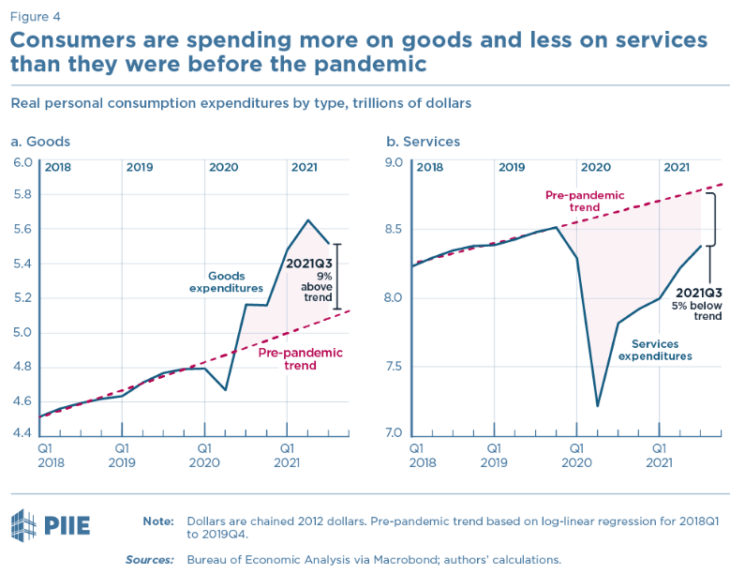
This post discusses what should have happened in 2008-09 and what did happen in 2006-08. Reallocation of resources. Instead, we got a deep recession in 2008-09. Fortunately, Fed officials learned from their mistake and when services tanked due to the Covid crisis they pumped up nominal spending enough so that the decline in services was mostly offset with a booming goods sector.  This is from a very informative post by Jason Furman and Wilson Powell: Between January 2006 and April 2008, housing construction plunged by more than 50% and yet the unemployment rate stayed low, rising from 4.7% to just 5.0%.  That’s how it should be. Productive resources were reallocated from housing to other sectors.  Then in late 2008, the Fed let NGDP plunge and output fell in almost all sectors of the economy.  Unemployment surged to 10% in late 2009, and then declined at an agonizingly slow rate. This time things were different.  Unemployment surged to 14.8% in April of last year, but has already fallen back to 4.8% as job losses in services were partly offset by job gains in goods production.  That’s how things are supposed to work.  You don’t want to move inside the production possibilities frontier, you want to move along the PPF. There can be a brief recession during a period of reallocation, but nothing like what we saw in 2008-09.  For that, you need overly contractionary monetary policy. HT:  David Beckworth (0 COMMENTS)

/ Learn More

Heather Cox Richardson’s False History

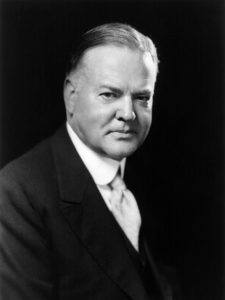
Historian Heather Cox Richardson, on her public Facebook page on October 28, 2021, wrote a long post about the Great Depression, Herbert Hoover, and FDR. Her story about Hoover’s tax policy is false. She writes: President Hoover knew little about finances, let alone how to fix an economic crisis of global proportions. He tried to reverse the economic slide by cutting taxes and reassuring Americans that “the fundamental business of the country, that is, production and distribution of commodities, is on a sound and prosperous basis.” But taxes were already so low that most folks would see only a few extra dollars a year from the cuts, and the fundamental business of the country was not, in fact, sound. When suffering Americans begged for public works programs to provide jobs, Hoover insisted that such programs were a “soak the rich” program that would “enslave” taxpayers, and called instead for private charity. What in fact did Hoover do? The opposite. Here are some excerpts from  economist Steve Horwitz in “Hoover’s Economic Policies,” in David R. Henderson, ed.  The Concise Encyclopedia of Economics. First, on taxes on imports, aka, tariffs: Even those with only a casual knowledge of the Great Depression will be familiar with one of Hoover’s major policy mistakes—his promotion and signing of the Smoot-Hawley tariff in 1930. This law increased tariffs significantly on a wide variety of imported goods, creating the highest tariff rates in U.S. history. While economist Douglas Irwin has found that Smoot-Hawley’s effects were not as large as often thought, they still helped cause a decline in international trade, a decline that contributed to the worsening worldwide depression. Second, on his massive increase in income tax rates: On top of these spending proposals, most of which were approved in one form or another, Hoover proposed, and Congress approved, the largest peacetime tax increase in U.S. history. The Revenue Act of 1932 increased personal income taxes dramatically, but also brought back a variety of excise taxes that had been used during World War I. The higher income taxes involved an increase of the standard rate from a range of 1.5 to 5% to a range of 4 to 8%. On top of that increase, the Act placed a large surtax on higher-income earners, leading to a total tax rate of anywhere from 25 to 63%. The Act also raised the corporate income tax along with several taxes on other forms of income and wealth. If you want to know more about how income tax rates increased at each level of income, go here. Before the web existed, the go-to guy who documented income tax rates at each income level from the early 1900s to the late 19800s was the late Joe Pechman of the Brookings Institution. Fortunately, the Tax Foundation has made that so much easier. HT2 Phil Magness. (0 COMMENTS)

/ Learn More

Remembering Luigi Einaudi and the Italian Economic Miracle

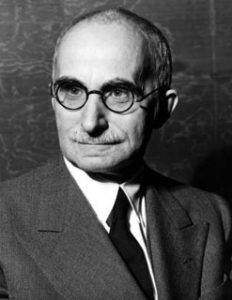
On this day in 1961 Luigi Einaudi (1874-1961) passed away. Einaudi was a household name for generations of Italians: a name associated with economics and, particularly, with free market ideas. He played a role comparable with that of Ludwig Erhard in Germany: he significantly contributed to the policies which brought about what is still remembered as the Italian economic miracle. This “economic boom” was fostered by relatively light-touch regulation and light taxation pursued in 1948-1963. Monetary stability was then a priority of the Italian Central Bank and the country decided to open up to trade and joined the European common market, thereby finding a wider consumer base for its products. In 1948-1963, the country grew on average at 6,5%. After the war and the end of fascism, Einaudi was the doyen and most prestigious of Italy’s economists. He was a committed free trader and a champion of liberismo (free market liberalism), though in his massive body of work that spanned over 70 years, many nuances can actually be found. His fields included both economics and journalism: Einaudi himself was actually pleased to self-define as a journalist and commented over economic events since he was a very young man. He was an “empirical” economist, and he constantly tested his views and opinions in a fruitful dialogue with the political and economic reality of the moment – with which journalism helped. He began to write Italian correspondence for The Economist when he was in his twenties and was a columnist, first for La Stampa in Turin and then for Corriere della sera in Milan, until he was forced to leave his position by the fascist regime. In the 1930s, he had opposed the Keynesian measures adopted by the government as well as Keynes’ “new economics”, expounding the classical liberal doctrine. His major articles are now available in English in this Palgrave three-volume set. After the fall of fascism, Einaudi served as Governor of the Central Bank and Treasury Minister. The free market economists were not many, but they still left a mark in the public policies of those years. Einaudi was very active in public debate (a great writer, but apparently not a great speaker). These economists were paradoxically helped by the fact that, after the war, Italy’s public administration was in such disarray that it was clearly impossible to entrust it with an ever growing list of tasks and this opened the way for somewhat “heterodox” individuals. In 1948, Einaudi was elected President of the Italian Republic (a largely ceremonial post). At the time of his election, he was 74. While he was Head of State, he continued to write, but published his works only after he left office. Here’s what Einaudi, then President, wrote in 1950 in response to Giorgio La Pira (1904-1977), the Christian progressive mayor of Florence who blamed unemployment on the lack of proper government measures. After having patiently explained to La Pira the many barriers to greater employment and economic growth which the very state he was head of kept in force, Einaudi notes: If unemployment only reached two million persons, this is due to the fact that in Italy, luckily, laws are not always enforced, that everybody disobeys as far as possible foolish and anti-social laws. Despite our innate noncompliance, however, something remains, enough to bring about unemployment and to drive many decent fellows to exacerbate it under the pretense of doing away with it. This was published after Einaudi left office. But I wonder if ever a head of state has been similarly frank! Einaudi’s last article was prepared for a meeting of the Mont Pelerin Society, of which he was a member, and later published by Bruno Leoni in Il Politico, the journal of the Political Science Department of the University of Pavia which he founded and edited. Leoni translated Einaudi’s piece into English. You can find it here. It is an interesting reflection, by and large autobiographical, on the role of economists when they enter in contact with politics. Here’s an interesting bit: I will not contend that the economist is not a slice of a man, but the whole of it with his nature, passions, inheritance of previous generations and vested interests. This remark would not be pertinent; nobody wants the astronomer or the physicist or the chemist to forget that he is also a man with children, a wife and parents, who lives in a society and is able to live in that society as a full citizen and not only as an astronomer, a physicist or a chemist. I say instead that separating the means from the ends is unreal and must be definitely avoided. The study of the means which should concern only the economist is not separable from the study of the ends. Means, when they are suitable, re-act on the ends. Means implying freedom are incom- patible with non-liberal ends. The article ends with a quotation from Francesco Ferrara that I am sure David Henderson will particularly appreciate. (0 COMMENTS)

/ Learn More