
This is my archive

bar

Why Dr Ehrlich Should Stop Worrying about the Population Bomb and Love Humanity

In a short piece published recently in Nature, Stanford University Professor Emeritus and “Population Bomber” extraordinaire Paul R. Ehrlich worries that overpopulation, “one of the most important factors in the hunger nexus,” is not discussed by the Scientific Group for the UN Food Systems Summit 2021. This is a mistake, he writes, because “continuing population growth could overwhelm even current levels of nutrition” while being the source of other “existential threats” such as “biodiversity loss, climate change, pollution, groundwater overdrafting and escalating conflict.” The biologist’s key proposition, usually traced back to an influential essay written by Thomas Robert Malthus over two hundred years ago, is that a significant reduction in human numbers would benefit the remaining inhabitants by giving them access to more and better resources. As was already obvious in Malthus’ days, however, a more numerous population in which individuals specialize in what they do best and trade with each other is always better off than a smaller one. Anyone concerned about the number of human beings is viewing them merely as consumers. People are, however, both consumers and producers. Their potential for wealth creation increases tremendously through trade and technological innovation. For instance, in his correspondence with Malthus the French economist Jean-Baptiste Say argued that the belief that a reduced population would “enable those which are left to enjoy a greater quantity of those commodities of which they are in want” was nonsensical because it ignored the fact that a reduction in manpower simultaneously destroyed the means of production. After all, one did not see that “the wants of the inhabitants are more easily satisfied” in thinly populated countries. On the contrary, it was the “abundance of productions, and not the scarcity of consumers, which procures a plentiful supply of whatever our necessities require.” This is why the most populous countries were generally better supplied than the thinly populated ones. In 1879, the American economist Henry George observed that “many communities still increasing in population” were also “increasing their wealth still faster.” Indeed, “among communities of similar people in a similar stage of civilization,” the “most densely populated community is also the richest” and the evidence was overwhelming that “wealth is greatest where population is densest; that the production of wealth to a given amount of labor increases as population increases.”  The “richest countries” were therefore “not those where nature is most prolific; but those where labor is most efficient — not Mexico, but Massachusetts; not Brazil, but England.” Where nature provides few resources, George commented, “[t]wenty men working together will…produce more than twenty times the wealth that one man can produce where nature is most bountiful.” This was because the “denser the population the more minute becomes the subdivision of labor, the greater the economies of production and distribution, and, hence, the very reverse of the Malthusian doctrine is true.” As was also well understood by many commentators, the greater the number of engaged human beings, the greater the likelihood of new beneficial inventions. As the British political economist William Petty observed over a century before Malthus, it was “more likely that one ingenious curious man may rather be found out amongst 4,000,000 than 400 persons.” Furthermore, because present and future technological and organizational advances build on previous ones, there would never be an end to the development of better ways of improving on what exists, and inventing new systems, methods, and devices. In his 1944 The Theory of Economic Progress, American economist Clarence Ayres explained the exponential growth of technology by the fact that “the more devices there are, the greater is the number of potential combinations.” The supply of natural resources was similarly “defined by technology and not by ‘nature’” because the history of every material is “one of novel combination of existing devices and materials in such fashion as to constitute a new device or a new material or both.” A few years before Ayres, the Progressive American historian Charles Beard had similarly observed that there can never be anything final about technological advances for the “solution of one problem in technology nearly always opens up new problems for exploration” and “[a]ctivities in one specialty produce issues for its scientific neighbors.” Beard saw no end to this process because of the “passionate quest of mankind for physical comfort, security, health, and well-being”. He added that until “people prefer hunger rather than plenty, disease rather than health, technology will continue to be dynamic” and that “[c]uriosity would have to die out in human nature before technology could become stagnant, stopping the progress of science and industry”. Perhaps the best short overview of the anti-Malthusian stance can be found in an essay published anonymously by the British vicar Francis Minton in an 1889 issue of the Westminster Review: The Malthusian theory does not accord with facts. As population grows, instead of production being less per head, statistics clearly prove it to be greater. The intelligence which is fostered in large communities; the advantages of the division of labour; the improved transit, which increases in efficiency with an enterprising people in proportion as numbers become large, and is impracticable until population has developed — are more than a match in the competition of production for any advantage a thinly scattered community may in some respects gain on a virgin soil. Malthus and his followers, while bringing prominently forward the needs of an increasing population, keep out of view the increasing means of supply which the additional labour of greater numbers will produce…. and so long as there are a pair of hands to provide for every mouth, with intelligence and energy ample production is assured, unless society erects artificial barriers by means of its laws regarding the distribution of wealth. Closer to us, uber-optimist economist Julian Simon believed that “it is only the past that gives us any insight into the laws of motion of human society and hence enables us to predict the future.” If the future was going to differ, he added, “the bias is likely to be in the direction of understating the rate at which technology will develop, and therefore underestimating the rate at which [natural resource] costs will fall.” Despite the prevalence of the current apocalyptic environmentalist rhetoric and the self-inflicted economic wounds of lockdowns, we do not doubt that Simon will once again be proven right and Paul Ehrlich wrong, provided that humanity rediscovers its curiosity, motivation to explore and innovate, and the desire to participate in trade and exchange instead of blame and self-flagellation.   Pierre Desrochers, is Associate Professor of Geography, University of Toronto Mississauga. Joanna Szurmak, is Research Services and Liaison Librarian, University of Toronto Mississauga. (0 COMMENTS)

/ Learn More

Who Was Henry Hazlitt?

Did you know of the Hazlitt/Samuelson connection? Earlier this week, Kimberly Fiorello, a state representative in the Connecticut legislature, had me spend an hour on Zoom with her and about 35 of her constituents to discuss Henry Hazlitt’s Economics in One Lesson. She’s a big fan of the book. She told me in advance that she would get things going after my short presentation by asking me who Hazlitt was. I was pretty sure I knew but I decided to research the question in advance. I found some pretty neat information, all of it in a 2004 piece written that Bettina Bien Greaves wrote for The Freeman. The piece is titled “Remembering Henry Hazlitt.” Two facts stood out that either I never knew or I had forgotten. Hazlitt debated prominent people: Hazlitt frequently debated prominent politicians on the radio: Vice President Henry Wallace, Secretary of State Dean Acheson, and U.S. Senators Paul Douglas and Hubert H. Humphrey. Hazlitt’s connection with economics great Paul Samuelson: Hazlitt must have been amused but somewhat chagrined when Samuelson, ardent Keynesian and author of the then-most-widely used college textbook, wrote Hazlitt that “one of the reasons [he] decided to go into economics” was because he had been impressed by a Hazlitt column assigned him when a college undergraduate. Hazlitt graciously thanked Samuelson for his letter. But he was too honest to let Samuelson believe he approved of his economics: “As you know, I venture to differ with you on some propositions in economics, and in my book, The Failure of the ‘New Economics,’ I may have expressed my differences with less than complete politeness. Nevertheless, I am enormously flattered to learn that something I wrote long ago influenced you and particularly that my article was one of the reasons that you decided to go into economics.”   By the way, Kimberly’s constituents were civil, interested, and fun to talk to. Here’s my 2004 review of Economics in One Lesson. (0 COMMENTS)

/ Learn More

The Supply-Chain Myth

When people don’t understand something, they often try to find a simple cause either hard and physical, or ethereal and spiritual. The “supply chain” is a good example: it seems it is often viewed as a few big pipes that bring toys from China, semiconductors from Taiwan, automobiles from South Korea, and meat from the Midwest. When something hard hits and damages a pipe, the goods get stuck inside. Alternatively, when the government does not brandish its wand, the ethereal supply chain fails and stuff disappears. Despite two centuries and a half of economic analysis, supply-chain talk typically ignores the crucial role of prices on the open market. Prices are bid up here and bid down there, continuously adjusting quantity supplied and quantity demanded, reconciling scarce resources and nearly infinite human desires. (See Hayek, “The Use of Knowledge in Society,” American Economic Review, 1945.) Except when government cap prices like during the first year and a half of the pandemic, or when the mob descends in a witch-hunt of “speculators,” “profiteers,” and “price-gougers,” goods keep moving in response to price signals and disruptions don’t last. As I was writing this, President Joe Biden, playing deus ex machina, asked the Federal Trade Commission to investigate oil-and-gas companies for illegal behavior (see Andrew Restuccia and Katy Stech Ferek, “Biden Asks FTC to Examine Oil, Gas Companies’ Role in High Gasoline Prices,” Wall Street Journal, November 17, 2021). This move to stealthily cap prices and create shortages is not very economically astute. Hadn’t Biden promised to “follow the science”? Now, consider the latest quarterly report of Walmart. It illustrates the vacuity of supply-chain incantations by revealing the company’s large inventories, higher sales, higher costs, and higher profits by some measures. The Wall Street Journal writes (Sarah Nassauer, “Walmart Raises Forecast and Says Shelves Are Stocked for Holiday Shoppers,” November 16, 2021)): Walmart said it had more products flowing through its supply chain this quarter than the same period last year when pandemic demand for some products strained supply. U.S. inventory rose 11.5% in the quarter as “preparation for an expected strong holiday season,” the company said. Weren’t we told that the mythical supply chain is clogged? The reality is that demand is increasing relative to supply, thereby pushing up prices and suppliers’ costs. But if it is profitable for a supplier to bring the goods to his customers, he will bid up the prices and pay the cost. Writes the WSJ: Walmart’s results highlighted the uneven impact of supply-chain snarls, as large companies with deep pockets continue to show they can work around disruptions that are hobbling their smaller competitors. Some of the biggest U.S. retailers, including Walmart, Home Depot Inc., and Target Corp., have chartered their own cargo ships to sidestep congestion at U.S. ports. What do you do if you don’t have “deep pockets”? Well, you go and borrow money or get capital from people who have deeper pockets than you. If you are unable to persuade anybody to put more money in your business or if your customers are not likely to keep patronizing you, it is a sign that you are not as efficient as your competitors. Perhaps that is why you have shallow pockets. Scale is not a decisive factor; otherwise, IBM would still be the largest computer company and Sears Roebuck the largest retailer. And everybody has access to freight brokers. Another factor must be kept in mind, though: our stifling level of regulation is certainly more stifling for small businesses than for large incumbents. Protection against competition is a major function of government regulation. It is true that a supply chain means something non-mythical for a company’s supply manager or a small businessman: on his assumptions or guess about future demand, he must line up suppliers (or buy commodities on exchanges), organize shipping if necessary, decide if it is economical to pay higher prices (formal or informal—as in “premium service” or fast delivery), arrange storage, and so forth. Indeed, it is as a management concept that the online edition of the New Palgrave Dictionary of Economics defines supply chains (the entry did not even appear in my 1987 print edition): Supply chains are all the resource and processes required to fulfill the demand for products. To understand how a relatively free economy works—how the general environment of free producers and free consumers functions—the priceless supply chain remains a myth. It would be more useful in a command economy where a central planning bureau managed the allocation of resources, goods, and people. In this context, the question a Russian official asked British economist Paul Seabright takes all its supply-chain meaning (cited by Philip Coggan, More [The Economist, 2020], p. 357): Who is in charge of the supply of bread to the population of London? (2 COMMENTS)

/ Learn More

“I Have Not Assumed Libertarianism”

Like The Problem of Political Authority, Huemer’s Justice before the Law begins with common-sense moral premises, yet reaches radical libertarian conclusions.  A tall order?  Indeed, but he delivers.  The key passage: One might be tempted to object that my critique of allegedly unjust laws presupposes a controversial, libertarian political ideology. For I have seemingly assumed that the only legitimate function of law is to protect individual rights, an assumption rejected by other ideologies. Other ideologies may claim, for instance, that law legitimately serves to promote moral virtue, to promote the good of society, or to reduce economic inequality. Therefore, one might think, those who do not subscribe to libertarian ideology need not be troubled by my allegations against the legal system. This objection is not correct. Libertarianism is controversial, but I have not assumed libertarianism. My premises are non-ideological intuitions shared by nearly all members of our society, whether liberal, conservative, libertarian, or other. For example, I assume that it is wrong to kill the healthy patient in the Organ Harvesting case (section 2.4.1). This is not a libertarian political premise; this is a moral judgment that seems obvious to nearly everyone. I argue that intuitions of this kind support the ascription of rights, including a general right against harmful coercion. I assume also that it is wrong to kill the hermit in the Island Hermit case, and I argue that this shows moral rights to be independent of law (section 2.3). Again, this is not a libertarian ideological assumption. In discussing particular laws, I deploy intuitions about analogous cases – for instance, the intuition that Sam wrongs Starving Marvin by preventing Marvin from reaching the marketplace (section 3.3). These, too, are non-ideological intuitions widely shared by those of varying political orientations. I have also argued that one ought to accept ethical intuitions as a source of justification for moral beliefs, provided that one accepts morality at all. Of course, my conclusions are congenial to libertarianism. But this cannot be a principled reason to set them aside. All of which fits neatly with my views on “libertarianism as moral overlearning“: The fundamental difference between libertarians and non-libertarians is that libertarians have overlearned common-sense morality.  Non-libertarians only reliably apply basic morality when society encourages them to do so.  Libertarians, in contrast, deeply internalize basic morality.  As a result, they apply it automatically in the absence of social pressure – and even when society discourages common decency. For example, non-libertarians routinely say, “A woman has a right to use her own body as she likes.”  But it never even occurs to them that this implies that prostitution should be legal.  Why?  Because non-libertarians only apply this principle in the exact situations where their society encourages them to do so.  They learn the principle without overlearning it.  Libertarians, in contrast, can’t help but see the logical connection between a woman’s right to use her own body and the right to have sex for money. To take a far larger issue, people across the political spectrum would agree that, “Accepting a job offer is not a crime.”  (What’s the moral equivalent of “Duh”?)  But most non-libertarians see no conflict between this principle and immigration restrictions.  Once you overlearn the principle, however, the whole moral landscape transforms.  You suddenly see that our immigration status quo is morally comparable to the reviled Jim Crow laws.  The fact that other people frown on the comparison doesn’t change the moral facts. The main reason why Huemer has not changed my mind about veganism, by the way, is that he fails to rest his case on comparably “non-ideological intuitions shared by nearly all members of our society.”  The wrongness of making animals suffer for minor gain is not obvious to most people.  In fact, even most self-styled vegans routinely make animals suffer for minor gain.  They could eat 5% fewer calories, drive 5% less, or live in a 5% smaller house – all of which would probably save the lives of rodents and birds, as well as vast numbers of insects.  And almost none of them condemn themselves for failing to do so, because that seems almost as absurd to them as it does to me. (0 COMMENTS)

/ Learn More

There is no magic wand

A recent essay by Yanis Varoufakis illustrates a frequent problem with media discussion of central bank policies: Central bankers once had a single policy lever: interest rates. Actually, the policy lever was open market operations; interest rates were one of the variables affected by those operations.  A tight money policy might raise interest rates if the liquidity effect dominated or it might reduce interest rates if the Fisher effect dominated.  Changing interest rates was not a monetary policy; it was the effect of a policy.  (To be clear, changing the interest rate on bank reserves (IOR) is a monetary policy; Varoufakis is discussing the previous (pre-IOR) policy regime.) Varoufakis says he favors a monetary policy of higher interest rates, but doesn’t tell us whether that is to be achieved via the liquidity effect or the Fisher effect.  One would hope that the rest of the article provided enough context to figure out his actual preference.  Unfortunately, the subsequent explanation was somewhat confusing: Of course, central banks fear that hiking interest rates will render governments bankrupt and cause a serious recession. That’s why the increase in interest rates should be supported by two crucial policy moves. First, because a serious restructuring of both public and private debt is unavoidable, central banks should stop trying to avoid it. Keeping interest rates below zero to extend into the future the bankruptcy of insolvent entities (like the Greek and Italian states and a large number of zombie firms), as the European Central Bank and the Fed are currently doing, is a fool’s wager. Instead, let us restructure unpayable debts and increase interest rates to prevent the creation of more unpayable debts. Here Varoufakis is clearly focused on the long run path of interest rates.  He’s not calling for a brief spike in rates that would be followed by a deep recession and a subsequent fall in rates (such as what the ECB did in 2011), rather he advocates a new regime with persistently higher interest rates.  That can only be achieved with an expansionary monetary policy, a higher inflation rate. Second, instead of ending QE, the money it produces should be diverted away from commercial banks and their corporate clients (which have spent most of the money on share buybacks). This money should fund a basic income and the green transition (via public investment banks like the World Bank and the European Investment Bank). And this form of QE will not prove inflationary if the basic income of the upper middle class and above is taxed more heavily, and if green investment begins to produce the green energy and goods that humanity needs. This is confusing.  If higher interest rates are to be delivered via an expansionary monetary policy, then how is that not inflationary?  Is he claiming that an expansionary monetary policy will permanently raise real interest rates?  If so, how? QE creates base money, which is currency plus bank reserves.  As a practical matter, bank reserves earn interest under most QE programs, at least when market interest rates are positive.  If the central bank did QE in a positive rate environment without paying IOR then you’d end up with hyperinflation, as we’ve seen in some developing countries with fiscal problems.  Because of the payment of IOR, there is no revenue bonus from QE to use to finance government spending.  Interest bearing reserves are swapped for interest bearing Treasury debt. Yes, the creation of currency produces a modest annual flow of revenue for the Treasury (called seignorage), but that’s true whether or not they also do QE.  To actually bring in the sort of money you’d need to finance major spending programs you’d need the sort of extreme money creation that leads to hyperinflation.  That’s not going to happen and Varoufakis clearly indicates he does not favor high inflation. Once hyperinflation is off the table, a few basic points become clear: 1. The Fed can only control nominal interest rates in the long run; real rates are determined by the market.  There is no magic wand by which the Fed controls interest rates.  It can permanently raise nominal interest rates, but only by creating inflation. 2.  Money creation (including QE) does not provide a large enough revenue source to fund major government programs.  Any basic income program or spending on major green initiatives will be funded by fiscal authorities, not a central bank. 3.  Existing QE programs (at least in the US) did not fund things like stock buybacks. Last time I looked, the Fed earned about $80 billion/year in profits, which is turned over to the Treasury.  There would be an immediately outcry if the Fed suddenly announced it was going to spend that $80 billion on UBI or carbon abatement.  Those decisions are and should be made by elected officials. (0 COMMENTS)

/ Learn More

David Rubenstein’s Weak Case for Fearing China

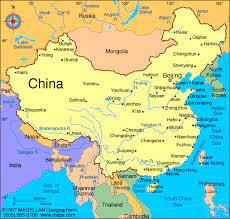
Tyler Cowen recently interviewed wealthy philanthropist David Rubinstein and, as with most Cowen interviews, the conversation ranged over many topics. I found most of them interesting. What particularly caught my eye, given current issues, was Rubinstein’s fear of China. Here’s part of the conversation. COWEN: Within, say, a 25-year time horizon, what do you think is the greatest risk to American prosperity? RUBENSTEIN: Probably the rise of China. China is a bigger population than we have by three times. Given the fact that they have a different type of capitalist system than we do — but they have a capitalist system, I would say — given their population base and their technology strengths, I think that we will have to recognize at 25 years from now, it’s unlikely we’ll be the biggest economy in the world. If we’re not the biggest economy in the world, it’s unlikely we can support the biggest military in the world and unlikely we’ll be the biggest geopolitical power in the world. Tyler often wants to move quickly to the next issue that interests him but he, like me, didn’t find this persuasive. So he probed: COWEN: But how would that harm our prosperity? I can see it might be bad for smaller Asian nations, bad for Taiwan, obviously, but many others. But why would we be worse off as economic entities? RUBENSTEIN: Generally, the most prosperous countries tend to be ones that are leaders in, let’s say, their given area. If we’re not the leader in technology and we’re not the leader in financial services because those worlds have shifted to China, we probably won’t get the profits and the most talented people coming here, and a lot of other things that you need to be a prosperous country. These are all things you need to be a prosperous country? Seriously? Would Rubinstein say that Canada, Japan, Germany, and Switzerland, to name four, are not prosperous countries? Rubinstein continues: We’ve been the biggest economy in the world since 1870, and probably, in about 10 years or so, as measured by GDP, we won’t be. By purchase [sic] price parity, we’re already not the biggest. True, but prosperity and size are two different things. Unfortunately Tyler didn’t probe further. I wrote here about why I don’t see China as an economic threat to us. I do see it as a military threat to countries around it. But it’s not a threat to us militarily either. The Pacific Ocean is awfully handy. (0 COMMENTS)

/ Learn More

The Toughest Generation?

There should be a science of discontent. People need hard times and oppression to develop psychic muscles. — Frank Herbert, Dune   Haidt and Lukianoff’s The Coddling of the American Mind famously argues that coddling is bad for kids.  As Haidt states elsewhere: Children’s social and emotional abilities are as antifragile as their immune systems. If we overprotect kids and keep them “safe” from unpleasant social situations and negative emotions, we deprive them of the challenges and opportunities for skill-building they need to grow strong. Such children are likely to suffer more when exposed later to other unpleasant but ordinary life events, such as teasing and social exclusion. If so, there’s an odd implication.  Namely: We are currently raising an extremely tough generation of white males. The logic: Virtually every other demographic group gets official sympathy, but white males get official disdain.  While the dose varies widely, “white male” is almost the sole demographic category Americans publicly pronounce in sneer italics.  (That naturally includes sub-sets, such as “straight white males” or “cis straight white males”).  So while every other group gets the short-run benefit and long-run harm of “coddling,” white males get the mirror image: short-run harm, long-run benefit. When I look at the world, however, I honestly see little sign that today’s white males are reaping the benefits of their own antifragility.  What’s going on?  I see three main responses:   1. I’m wrong.  Today’s white males are extraordinarily tough, just as Haidt-Lukianoff’s model predicts. 2. The dosage of abuse that today’s white males receive is too high to be beneficial.  As exposure therapy teaches us, you build toughness with moderate adversity, not terrible adversity. 3. The dosage of abuse that today’s white males receive is too low to be beneficial. Things have to get much worse for white males to counter all of the other coddling going on.   The main problem is #1 is that almost no one thinks this.  Including Haidt and Lukianoff, as far as I know. The main problem with #2 is that the dose of abuse still seems moderate.  Even if you’re stuck at a school with lots of brainwashing, how many times per day do you personally hear anyone say “white male” in sneer italics?  I doubt more than 10% of students can even say “once per day.”  According to a little poll I ran: How often do you *personally* hear someone say the phrase "white males" with sneer italics? — Bryan Caplan (@bryan_caplan) November 8, 2021 The main problem with #3 is that Haidt and Lukianoff are clearly disturbed by the current level of abuse of white males.  So it would be hard for them to save their model by downplaying the current dosage. What’s the real story?  My best guess is that the case against coddling mostly reflects focusing illusion.  Nothing is as important as you think it is, when you’re thinking about it.  Including coddling.  Coddling is mostly futile, but not deeply destructive.  As the nature/nurture literature predicts. (3 COMMENTS)

/ Learn More

Climate Shock Bet: Reply to Reeves

Here’s my point-by-point reply to Daniel Reeves.  He’s in blockquotes; I’m not. Daniel gets the last word if he wants it! Bryan seems to start by acknowledging that 6 degrees of warming (we’re approaching 1 degree so far, for those just tuning in) would be devastating and that a 10% chance of that by the end of the century warrants mitigation efforts. He even acknowledges that — warming being proportional to cumulative historical emissions — we can’t afford to wait. Not really.  My actual view is that I’m not qualified to judge these questions, and reading Climate Shock didn’t make me feel noticeably more able to judge.  As I explained at the outset of the bet, I would have to study this subject for years to directly judge the evidence. The whole point is to assess whether the alarmism is correct. If you dismiss the authors for the very fact that they think alarmism is correct then you are fundamentally closed-minded on this issue and probably shouldn’t have accepted the bet. (To be clear, I’ve paid up already.) Indeed you have, Daniel.  But in my own defense, I did warn you upfront that you were over-estimating my open-mindedness.  Given the complexity of the evidence, all a layman can honestly do is assess credibility.  Wagner and Weitzman didn’t wow me on that count. This sounds like assuming bad faith. My sense from the book was that the authors were incredibly conscientious and intellectually honest. But maybe I’m misunderstanding you and you’re agreeing that it’s impressive that the authors resisted the temptation to exaggerate the probability? My point is just that their claim was more modest than I expected.  This has two effects: (a) it slightly raises their credibility, but (b) made me slightly less worried about climate change. (Also some of the bias is trying to counteract the other side’s bias, which is what turns the whole topic into an epistemic nightmare. I don’t think you can just pin all the bias on the left. Isn’t there even greater right-wing bias to rationalize business-as-usual?) Both sides are intellectually dishonest.  Which is worse on this particular issue?  The right is probably worse on the details of the science, but the left is probably worse on the policy analysis.  Though again, I would have to study the issue for years to do more than guess. Some policy interventions — say, funding carbon capture — don’t have that possible failure mode. [of greatly slowing economic growth in LDCs] Side note: I think Pigouvian taxes should be philosophically fundamental to laissez faire capitalism (by maximizing how much faire we can laissez) and that we want a carbon tax even if — in light of geoengineering? — it’s lower than Wagner and Weitzman recommend. I also disagree that Pigouvian taxes are fundamentally impoverishing. I’m a fan of revenue-neutral carbon taxes. Wagner and Weitzman didn’t seem very optimistic about carbon capture as a primary policy solution.  See here and here for my views on Pigovian taxation.  You are correct that Pigovian taxes generally have a lower deadweight cost than regular taxation.  Indeed, they can have a negative deadweight cost.  Even so, high carbon taxes would plausibly sharply slow poverty reduction in the Third World. Wait, can I still win this bet on a technicality if Wagner and Weitzman inadvertently convinced you that we should pursue stratospheric aerosol injection (what they mostly mean by geoengineering in the book)? I don’t know how serious I am with that question but I’d love to understand your thinking more! No, because I’ve long been sympathetic to geoengineering, and the bet requires me to do a 180. I may be more trusting than you but I’d only have distrusted them on those grounds if they’d argued against nuclear energy. Wagner and Weitzman think policy intervention should be limited to carbon taxes. Nuclear energy doesn’t emit carbon so they are implicitly pro-nuclear. I’m sure they’d agree about the absurd regulatory burden as well. If they had wanted to signal their lack of left-wing bias, they would have gone out of their way to praise nuclear power.  So why didn’t they? (0 COMMENTS)

/ Learn More

What caused the inflation?

Consider the following two claims: 1. Given that NGDP quickly returned to the pre-Covid trend line, the recent bout of high inflation was caused by supply problems. 2. Given the recent supply problems, the recent bout of inflation was caused by the decision to bring NGDP quickly back to the previous trend line. If you see the world the way I do, it’s almost physically painful to read the media as they debate the cause of higher inflation.  It makes my hair hurt. What caused the recent bout of inflation?  What do you mean by “cause”? Here’s what I said in my recent book, entitled The Money Illusion: Similarly, a government policy could be said to have caused the Great Recession if—in a very plausible alternative policy setting—the exact same policy tool that was already being used would have avoided the recession. As an analogy, a bus driver might be said to have caused the bus to hit a tree if a different position of the steering wheel would have avoided the accident. We don’t think of bus drivers as “solving accident problems,” though we hope they will not cause accidents. Because I prefer to think of causation in terms of policy counterfactuals, I use the optimal policy as a benchmark.  I believe that it was appropriate to quickly bring NGDP back to the previous trend line, and as a result I might say that supply problems caused the recent bout of higher inflation.  I also expect NGDP to overshoot the trend line over the next 12 months.  If this does happen, then I will view an excessively expansionary monetary policy as causing the excessive inflation that is likely to occur over the next 12 months. On the other hand, if someone says that the previous 12 months of inflation was caused by an expansionary monetary policy, I certainly would not claim they were wrong; I’d simply assume they favored a less expansionary monetary policy.  Or perhaps they define “causation” differently from the way I do. The world is full of terms that have never been clearly defined.  Truth, reality, science, monetary policy, inflation, and causation are six examples of fuzzy concepts.  Show me an unambiguous definition of any of them. (0 COMMENTS)

/ Learn More

Emily Oster on the Family Firm

Author and economist Emily Oster of Brown University talks about her book, The Family Firm, with EconTalk host Russ Roberts. Oster argues that running your family life the way you’d run your own business makes for a better family in today’s crazy world. And where possible, the myriad of decisions you make should be based on hard data, at least when it’s available. (0 COMMENTS)

/ Learn More