
This is my archive

bar

Borderline cases

When should international boundary lines change?  This is a difficult question where a number of factors come into play: 1. Does the affected national government give consent? 2. Does the change affect de jure boundaries?  How about de facto boundaries? 3.  Do local residents favor a change? 4.  Are there severe human rights abuses against local residents? 5.  Would a boundary change involve a great deal of violence? Let’s illustrate a few of these points with examples: There are separatist movements in both Catalonia and Taiwan.  In both cases, the relevant central government is opposed.  In both cases, the regions are de jure part of a larger country (Spain and China).  In both cases, many local residents favor independence?  So why does the Chinese government’s case seem in some sense “worse” than the Spanish case? First, unlike with Catalonia, Taiwan has de facto independence.  And second, enforcing China’s claim to Taiwan would probably require a lot of violence, whereas Spain seems able to hold onto Catalonia without much violence. Or take Kosovo and the Crimea.  Why was the West more sympathetic to a border change in Kosovo than in Crimea?  Probably mostly because the Serbs had committed human rights abuses in majority Muslim areas of former Yugoslavia, whereas Ukraine had not committed major human rights abuses in Crimea. Kuwait (1990) and the Falkland Islands (1982) were two examples where boundary changes were successfully resisted and where there was opposition to change from local residents.  In contrast, Crimean residents did not exhibit strong opposition to the boundary change, and Ukraine did not receive outside military support. In my view, the first item on my list is the most important.  That might seem odd, given that these decisions seem so arbitrary.  The Czechs allowed the Slovaks to secede.  Quebec residents and Scots were offer referenda on independence.  In contrast, Spain refuses to give that option to Catalonia.  So why is this principle so important, given that the enforcement is so arbitrary? Central government consent is important because of point #5, the danger of violence.  The international community has decided that unless there is some sort of extenuating circumstances (i.e. Kosovo), boundaries should not be changed without the consent of the central government.  While this is an arbitrary rule, it minimizes the threat of violence.  Throughout the world, there are dozens of places where international boundaries don’t make sense.  If you allowed boundary changes without central government consent, it would open a can of worms.  There’d be many attempts for one region to break off and join another.  Often, the dispute would become violent. You might wonder why unconstrained boundary changes would necessarily end up in violence.  If the local people agree, why can’t the change occur peacefully?  There are two problems.  First, the local people don’t all agree–it’s complicated.  The majority of Northern Irish don’t want to be part of Ireland, but a large minority of Northern Irish don’t want to be part of the UK.  In former Yugoslavia, the ethnic map is like a jigsaw puzzle.  Whenever you move the line, you hurt one group. Economic considerations are also important.  If the oil-rich southeast of Nigeria declares independence, the rest of Nigeria would feel deprived of oil revenues. Even with all of these considerations, there are tricky cases that are hard to resolve.  Thus how much weight should be put on de facto boundaries that are not internationally recognized?  The US considers Taiwan to be part of China (de jure) but treats it like an independent country (de facto.)  Somaliland is another place that is de jure part of another country (Somalia) but is de facto independent.  How long does de facto independence have to last before it becomes internationally recognized?  In my view, the best policy toward Taiwan is the one that minimizes the risk of war.  But what policy is that?  The same question applies to Ukraine.  What weight should be put on deterring future aggression? America stole land from Mexico in the 1800s.  At what point do we no longer have the moral obligation to give it back?  Russia stole land from China in the 1800s, from Germany and Japan in 1945, and from Ukraine in 2014.  At what point does that theft become accepted by the international community?  At what point does the Golan Heights become part of Israel in a de jure sense?  Today, economic sanctions over the Crimea probably make more sense than economic sanctions over the Soviet theft of Königsberg or the Kuril Islands, but I’d be hard-pressed to provide a rigorous proof of that claim.  In other words, there are lots of “borderline cases”.  (Pun intended.) Europeans have wisely decided (outside of Yugoslavia) to accept international borders as of 1945, even though (for instance) lots of Hungarians live in Romania. They recall that the German claim on the Sudetenland was based on there being a large population of ethnic Germans in that part of Czechoslovakia.  It also makes sense to accept mutually agreed border changes, as with Czechoslovakia’s “velvet divorce”.  This principle is mostly accepted in Latin America, although that may be mostly because it’s the weaker countries like Paraguay and Bolivia that lost territory in the past.  In Africa, central governments are weaker, and the use of force to change boundaries is still an ongoing problem.  But even in Africa, the principle of central government consent is viewed as being very important. So what should we do about Ukraine?  Russian apologists insist that the Russians view NATO as a security threat.  That’s nonsense. Putin knows that NATO has no interest in invading Russia.  The real problem is that Russia has seller’s remorse over its decision to allow the Soviet Union to break-up.  It would like to grab back parts of the old Soviet Union that are ethnically Russian.  And it (correctly) fears that if those areas join NATO, it will be unable to do so.  Thus it’s too late to grab back the Baltic states.  NATO is not a threat to Russia, it’s a threat to Russia’s intention to grab territory from its neighbors. On the other hand, I’d oppose admitting any country into NATO that does not have clearly established boundaries.  That’s a recipe for war.  One compromise might be to assure Russia that NATO would not accept Ukraine until or unless the Russian government accepted Ukraine’s international borders.  The same assurance could be made for Georgia and Belarus.  That would give Russia an effective veto, while holding out the prospect of an eventual expansion of NATO if a future Russian government is more reasonable. (0 COMMENTS)

/ Learn More

Hanania in Austin

Thanks to the wonderful generosity of Steve Kuhn, Richard Hanania will be presenting his new book, Public Choice Theory and the Illusion of Grand Strategy, in Austin, Texas next week, with special guest Razib Khan. Free and open to the public! Location: Dreamland Dripping Springs, on the big outdoor stage Time: January 19, 6:30 PM – 8:30 PM The Schedule: 6:30-7:00 – Richard Hanania presents his new book 7:00-7:30 – Caplan interviews Hanania about the book 7:30-8:30 – Ask Me Anything with Hanania, Khan, and Caplan If you’re unfamiliar with Hanania’s work, I’ve blogged it here, here, here, and here.  His work on wokeism has probably won the most attention, but he got his scholarly start in International Relations, and his new book is a major advance in the field.  Public Choice Theory and the Illusion of Grand Strategy is not just a critique of the dogmatic “realist” school of international relations.  It strongly argues that most countries’ foreign policies are simply incoherent because (a) each interest group (military, defense contractors, human rights groups, bureaucrats, foreign allies) focuses on its own narrow set of issues, and (b) politicians who adjudicate conflicts between these interest groups myopically focus on the next election. Though Hanania puts “public choice” in the title, I’d say that it is really a book about behavioral political economy.   His voters are deeply irrational, his politicians have lots of slack, and a strong-willed leader occasionally destroys a country on a whim.  My favorite part is probably his discussion of sanctions, where Hanania argues that (a) sanctions hardly ever work, (b) leaders rarely even try to make sanctions work, (c) sanctions kill lots of innocents, but (d) sanctions prevail because politicians fear war but still want to “do something.”  In a word,  sanctions are yet another deadly expression of Action Bias – the urge to “do something” even if you know nothing good to do. More on Hanania’s later this month.  For now, I hope to see y’all at Dreamland on Wednesday! (0 COMMENTS)

/ Learn More

Inflation: Rates, Levels, and Time Periods

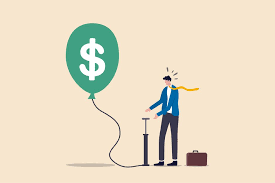
You might have seen that the inflation rate rose from the 6.8 percent reported in early December to 7 percent reported today. It’s important to understand what exactly is being reported. The reporters don’t necessarily do a terrible job, but readers often misunderstand. What is being measured in each case is the inflation rate over a 12-month period. Inflation between November 2020 and November 2021, which is what was reported in December, was 6.8 percent. Inflation between December 2020 and December 2021, which is what was reported this morning, was 7.0 percent. So it looks as if inflation is rising. Is it? No. The reason is that to know if inflation is rising or falling, we need to look at the latest data. So we need to compare the inflation rate in December with the inflation rate in November. In November, the Consumer Price Index rose by 0.8 percent, which implies an annualized inflation rate of 9.6 percent. But in December the CPI rose by 0.5 percent, which implies an annualized inflation rate of 6.0 percent. So inflation actually fell. One of the most careless statements I’ve seen on-line, and it’s in the headline of the news story referenced above, is that inflation rose by 7 percent. No. Prices over the last year rose by 7 percent. If you want to stick with annual, then to be correct, you would say that the inflation rate rose by 0.2 percent. If you want to report as accurately as possible what happened to inflation this last month, you would say that the monthly inflation rate fell by 0.3 percentage points and that the annualized inflation rate fell by 3.6 percentage points. One of the most important things I learned from Ben Klein in his Ph.D. monetary theory course at UCLA was always to distinguish between rates and levels. Levels tell us that prices rose. Rates tell us that the inflation rate fell.     (0 COMMENTS)

/ Learn More

Regenerative Agriculture and the Denial of Comparative Advantage: Part 2

Public Granaries Writing in 1770, the French economist and statesman Anne-Robert-Jacques Turgot observed that there were two ways to deal with a price spike that followed a bad harvest. The first was to transport “grain from provinces where the harvest is good to those where it is bad.” The other was to “store it up in abundant years for use in famine years.” Turgot wrote that the “two methods entail costs, and free trade will always choose that which, all told, entails the least cost.” He added, that “barring special circum­stances,” transportation was usually preferable since “the return of the funds is speedier” and the “waste product is less considerable, the grain being consumed the sooner.” Very often though, governments placed “obstacles in the way of transportation” and tipped the balance in favor of storage. In the two centuries and a half since Turgot wrote these lines, debates about food security have essentially been along similar lines. On the one hand are supporters of the so-called trade-based approach who promise a more abundant, affordable and reliable food supply through reliance on multiple foreign suppliers with comparative advantages in agricultural production. On the other are supporters of greater autarky and regional self-sufficiency. While the former had the upper hand at the end of the twentieth century, the latter have found new audiences in the wake of the 2007-2008 food crisis and the COVID-19 pandemic. One key problem for supporters of increased local self-reliance, however, is that because of natural calamities ranging from droughts and floods to pests and diseases, no traditional agricultural systems could consistently produce enough food to eliminate malnutrition and recurring famine and starvation. The Roman poet Virgil alluded to some of these problems in his Georgics. Weeds invaded the land. Voles and mice spoiled the threshing floor. Cranes and geese attacked the crops. Goats ate the young vines. Moles, toads and ants feasted on or undermined the farmer’s work. Although he did not mention fungus and insect pests, Virgil added that whatever production survived this onslaught could then be damaged or wiped out by summer droughts and winter windstorms, snow, hail or heavy rain. Even in good years, he added, a field might be accidentally set on fire. Even in good years, the key challenge of traditional agricultural systems was to make it through the “lean season” between crops, meaning the period of greatest scarcity before the first availability of new crops. For instance, in England the late spring, and especially the month of May, was historically referred to as the “starving time” or the “hungry gap.” This is why granaries were invented over ten thousand years ago. Going back at least to Pharaonic Egypt and Han China, some of these were built and controlled by the state, either for provisioning bureaucrats and soldiers or else for the stated rationale of being filled in good harvest seasons and emptied in lean ones, thus softening hunger cycles and price spikes. Some prominent present-day proponents of greater local food production have picked up on the absolute necessity of greater storage capacity to fulfill their vision. Journalist Michael Pollan thus argued in an influential essay that the “the food security of billions of people around the world” would benefit from a government-run strategic grain reserve which would “prevent huge swings in commodity prices” and “provide some cushion for world food stocks.” By buying and storing grain “when it is cheap and sell it when it is dear,” he points out, public-minded bureaucrats would “moderat[e] price swings in both directions and discourage[e] speculation.” Needless to say, in recent decades public granaries and “strategic” reserves were also often a key component of foreign aid and protectionist agricultural strategies. Their supporters have included the prestigious International Food Policy Research Institute (IFPRI); NGOs such as the Institute for Agriculture and Trade Policy (ITAP), OXFAM and Share the World’s Resources; several American consumer, environmental, religious and development groups and producers’ cartels; and the people in charge of the large-scale food reserves of India and China. Although recent proposals often take the form of special emergency reserves, international reserves, and “virtual reserves” controlled via commodity futures and options trading, their basic rationale remains the same. Government-run food reserves, however, have a long history of failure. As several analysts have documented in more recent times, they typically proved “expensive, ineffective, and generally short-lived.” They also proved unable to outperform futures markets that, through the buying and selling of commodities and their future delivery contracts, already smooth out long-term price volatility. Recent failures include Sahelian community-managed cereal banks that are small subsidized warehouses located in subsistence farming communities. As could be expected, their managers are tasked to buy grain when it is cheap and to sell it later at a discounted (but nonetheless profitable) price when it is dear. In practice though, cereal “community-run banks often run out of money. Borrowers default; bank managers price-gouge or simply steal money, leaving villages as hungry as before.” As one former NGO employee observed, people “stole, managers disappeared, or the bank was located too far for some villagers to get their food.” Supporters who acknowledged these problems could only defend this strategy by arguing that a “flawed solution to fight hunger is better than no solution.” Similar outcomes were observed in the strategic grain reserves set up throughout Africa under the aegis of the Food and Agricultural Organization of the United Nations after the first oil shock of the 1970s. As described by geographer Evan Fraser and journalist Andrew Rimas, two analysts not particularly enamored of market forces, the “seemingly limitless hoard” in silos proved “too tempting for local officials to ignore, and the program was plagued by politicking, mismanagement, and corruption.” A decade ago, an internal note suggested that about a third of the grain stock reserve under the supervision of the Food Corporation of India (FCI) was rotting in the open because of a lack of adequate storage space. Despite the “full knowledge of the precarious condition of food grains, governments, both at the centre and in states, were unable to protect the country’s precious food reserves.” The FCI was also accused of being unable to move stocks after acquiring them and having difficulty carrying out fumigation, “thus making preservation difficult.” According to the news report, the “apathy of the people and officials responsible for feeding millions may result in more losses in years to come. The big question which needs to be answered is whether anyone would be held responsible for this seemingly criminal negligence.” Far from being aberrations, however, such outcomes are typical of the history of government-run food reserves. Apart from the perennial temptation of public officials to dip into them for their personal benefit, they also proved extremely costly and technically challenging, especially before the development of modern technologies. Among other challenges, their operators had to aerate and turn the grain, control moisture levels, sell and replace the grain frequently if it was to be used as seeds, and repair and maintain large structures. Not surprisingly, Turgot observed that the large granaries built by the French state always increased “the share of the rats and weevils to no purpose.” At about the same time, the Englishman Walter Harte considered “public granaries quite detrimental, rather than useful in a free state” for “[n]ational and even provincial magazines of corn” quite naturally produced monopoly, an “undue fear of famine” and “much anxiety about hoarding up grain” that would then inevitably create pressures to stop exports. These factors, he added, were “one of the surest methods I know of bringing on a dearth.” The political philosopher and politician Edmund Burke similarly observed in 1795 that the construction of such granaries throughout the kingdom, would be at an expense beyond all calculation. The keeping them up would be at a great charge. The management and attendance would require an army of agents, store-keepers, clerks, and servants. The capital to be employed in the purchase of grain would be enormous. The waste, decay, and corruption, would be a dreadful drawback on the whole dealing; and the dissatisfaction of the people, at having decayed, tainted, or corrupted corn sold to them, as must be the case, would be serious. This climate (whatever others may be) is not favourable to granaries, where wheat is to be kept for any time. The best, and indeed the only good granary, is the rick-yard of the farmer… The Belgian historian Louis Torfs further added in 1839 that public granary managers who could rely on the public purse were never as careful in their purchases as private individuals who spent their own money. Other problems were that massive state-sponsored purchases drove up prices for everyone and safeguarding large warehouses during turbulent times always proved nearly impossible. Besides, while the building and maintenance of massive structures entailed enormous sums of money, it paled in comparison to the amounts required to provision a decent sized city for even a short period of time. As such, Torfs stated, the very notion of effective public granaries had always been impractical (“sans aucune valeur pratique”). Efficient provisioning, he concluded, should be left in the hands of farmers and merchants, with government intervention limited to guaranteeing freedom to trade and private property rights. In the end, as William Harte argued, the best public granaries were “vast tracts of country covered with corn,” wherever they may be. With the benefit of hindsight, we now know that trade liberalization and technical advances have delivered an ever more abundant, cheaper and more secure food supply. Promoting “solutions” that have always been plagued with unavoidable problems can only deliver the more expensive, scarcer and less food secure world of yesterday.   Pierre Desrochers, is Associate Professor of Geography, University of Toronto Mississauga. (0 COMMENTS)

/ Learn More

William J. Haga, An Appreciation

I learned this morning that my former colleague and mentor, Bill Haga, died at age 83 on January 6. Here’s his obituary. Rather than repeat what’s in the obituary, I want to give an appreciation and tell a bit about how important he was in my life. How He Inspired My Academic Writing I arrived at the Naval Postgraduate School in August 1984 and quickly found out that most of the faculty had voted against my being hired. But the chairman, Dick Elster, had wanted me and that made the difference. It was at some faculty meeting or faculty lunch in the first few months I was there that I met Bill. I found him fascinating. He had such unusual ideas and when I thought about them, many of them made sense. He  quickly struck me as a wise man and someone I wanted to be around. I wasn’t hired into tenure track but was instead an adjunct who had a year-to-year renewable contract. A tenure slot appeared in the spring of 1986, and I applied. By that time, I had turned around a lot of the faculty’s views on me and I got the offer. I accepted in May 1986. But that meant that I needed to start trying to publish academic peer-reviewed articles again. I went to see Bill to get his thoughts. I pointed out that with our just having purchased a house, I needed to do a lot of free-lance writing for Fortune and so I was wondering when I would have time for academic articles. “Do you have any ideas for an article?” Bill asked. “Yes,” I replied. “When I was the energy economist at the Council of Economic Advisers, I wrote a memo to Marty Feldstein and Bill Niskanen laying out an analysis of the International Energy Agency’s oil-sharing plan that I hadn’t found anywhere in the literature. Marty and Bill thought it was right. So I think I could turn that into a full-fledged article.” “How long do you think it would take?” asked Bill. “I think about a month,” I answered. “That’s the wrong way to think about it,” he said. “What’s the right way?” I asked. “Think about it in terms of hours,” he answered. “So how many hours will it take to write each section?” I was stunned. I thought he was crazy. I had always heard academics talk about how many months they needed. I had never heard anyone talk the way Bill talked. I estimated 10 to 15 hours. Then he said, “Write a draft and stick it under my door by 8:00 a.m. next Friday.” I foolishly said I would. By the next Thursday, I had made a lot of progress, much more than I would have thought possible. But I didn’t think I would make it. Bill seemed inflexible, though, and so I didn’t dare ask for an extension. Instead, I made a little more progress on Thursday afternoon. I went to bed early and set my alarm for 2 a.m. When the alarm rang, I got up, went into my office, and finished a draft by 6 a.m. I stuck it under his door and went home for breakfast and to be there when my daughter, Karen, age one and a half, woke up. I don’t know if Bill even read my paper. It didn’t matter. I looked at it with fresh eyes the next week, made minor changes, and sent it off. It was accepted and was the beginning of a stream of articles in energy economics that were the core of my research case for tenure 5 years later. I don’t think that would have happened without Bill. Bill’s Sense of Humor Bill had a great sense of humor, especially about the weirdness of academia. If you’ve read Kingsley Amis’s Lucky Jim, you’ll have a sense of the kind of weirdness and humor I’m talking about. One particular story stands out. Bill was supposed to put together a course with another professor. I’ll call him Ronald. The course was on communications. They tried to work together but had such big differences that they got in big fights. They quit talking to each other. I’m not sure if Ronald saw the irony. Bill did. “A course in communication, and we’re not willing to communicate,” he said, grinning. Bill as Teacher Bill was legendary as a teacher. When we had students in common, they would tell me about some of his methods. He did case courses and would call on people when they least expected it. So, for example, if student A had been called on the previous class and had done a so-so job, student A, early in the course, would think he wouldn’t be called on again for at least a few weeks. Wrong. Bill would make sure to call on him the next class. This strategy completely worked to cause a huge percent of the students to prepare. Bill also had a legendary “echo jar,” labeled as such. If a student asked a question that already been answered, he or she had to put a quarter in the echo jar. By the end of the course, with about 25 students in the class, there were a lot of quarters. He would take the quarters and buy as many doughnuts as they would buy and bring them to class. There were always a few left over and he would put them in the chair’s assistant’s office. I always had one or two. Bill as Baseball Fan and Commentator  If you’ve read Moneyball, you know about the 20-game winning streak the Oakland A’s had in 2000. Well, Bill and I had driven from Monterey to Oakland for that game. The A’s were up 11-0 over the Kansas City Royals but KC clawed its way back to an 11-11 tie. Here’s how Shayna Rubin sets it up for Scott Hatteberg’s home run in the bottom of the 9th: All of 55,000 eyes were watching Hatteberg launch that 1-0 pitch off Royals closer Jason Grimsley that Sept. 4 night. Just an hour earlier, when the A’s had a 11-0 lead, Hatteberg had kicked his feet up with a cup of coffee ready to celebrate history until he realized he was watching his team give up the comfy lead in real time. Here’s Bill King’s excited commentary on the home run. When we got in the car after A’s games, we would always turn on the radio to hear the after-game commentary. Bill would take every cliche the commentators used, and there were many, and make droll comments about them that had me in stitches. He did that for this game too. On the 110-mile drive home, we were so jazzed about the game that I didn’t pay attention to my speed. Driving through a 55-mph zone, I saw a red flashing light in my rearview mirror, looked down to see that  I was going 77 mph, and pulled over. Bill and I had the same fear of cops. I lowered my window and put my hands at 10 to 2 on the steering wheel. Bill, in the passenger seat, put his hands on the dashboard. The CHP officer noticed that and said to Bill, with a little humor in his voice, “You can put your hands down.” The last time I saw him was when I was on sabbatical at George Mason University in the spring of 2007. My wife Rena came for the middle 2 weeks of my sabbatical and we had lunch in Annapolis with him and his lovely wife Carline. I will miss him. (0 COMMENTS)

/ Learn More

The dream of a united Europe

Back when I was doing research on the Great Depression, I read the New York Times from 1929 to 1938 (on microfilm.) Occasionally, I came across articles discussing the possibility of creating a United States of Europe. The Economist has a fascinating article about Richard Coudenhove-Kalergi, who was the most prominent interwar figure pushing for the creation of the EU: Few Europeans remember Richard Coudenhove-Kalergi. But as Martyn Bond argues in a new biography, he deserves as much credit as anyone for creating the eu. In 1923 he wrote a bestselling book, “Pan-Europa”, advocating a United States of Europe. He launched a movement, the Paneuropean Union, which soon had thousands of members, including Albert Einstein and Thomas Mann. Adolf Hitler referred to him as “that cosmopolitan bastard”. He was probably the model for Victor Laszlo, the activist fleeing the Nazis in “Casablanca”. He counselled Winston Churchill and Charles de Gaulle on creating a European federation, and proposed Beethoven’s “Ode to Joy” as its anthem. Yet today his name is best known on the paranoid right. Over the past decade and a half, xenophobic nationalist groups all across Europe have put him at the centre of their conspiracy theories. Seizing on predictions he made of rising migration and intermarriage, they have imagined a secret “Kalergi plan” comprising the EU’s real mission: to destroy European nations through miscegenation. The problem with the European dream is that not everyone dreams of the same sort of Europe.  In 2016, British voters opted to leave the EU, the first country to do so.  On the other hand, the logic of European integration is still quite strong, as seen by the fact that very little has actually changed in Britain.  Here’s the Financial Times: Lamenting the “current direction of travel”, Frost complained that Boris Johnson is resiling from the dream of “a lightly regulated, low-tax, entrepreneurial economy, at the cutting edge of modern science and economic change”.  Other economic liberals voice similar concerns. Iain Duncan Smith, former Tory leader and co-author of a report for Downing Street on potential post-Brexit reforms, wrote recently: “We have yet to see the Government seize this opportunity” of moving from the “EU’s deeply risk-averse precautionary principle to . . a proportionality principle”. With personal and corporate tax rises just introduced, ministers pledging not to scale back employment rights and an increasing role for the state, the buccaneering post-Brexit vision of a low-tax, low-regulation UK seems more remote than ever. So long Singapore-on-Thames, hello Sweden. The Trump administration took the Brexit side of the debate, but one can argue that the US is the most important force pushing the world toward this sort of globalist structure.  The US has been in the forefront of the move to unify taxes and regulations across borders. Consider the following: 1.  Under the Trump administration, countries were punished for not adhering to US policies on everything from banking rules to economic sanctions.  Through our control of the SWIFT payment system, we were able to bend smaller countries to our will. 2. The Biden administration has successfully pushed through a global rule to prevent “excessive” corporate tax competition. 3. Several administrations have been in the forefront of demanding that international trade pacts go beyond reducing tariffs, and require unification of all sorts of rules and regulations affecting consumers, labor, and the environment. In this sort of world, the British have little hope of developing their own distinctive style of regulation.  And where they do have a bit of freedom, domestic interest groups often oppose any sort of change: The clearest changes so far are new immigration and agricultural subsidy regimes, neither very light touch. The state aid and takeover regulations seem more designed to facilitate governmental intervention than prevent it. In some sectors, wage inflation is practically an official policy. The new chemical safety regime offers more domestic bureaucracy for multinationals that need also to comply with EU regulation. Ministers are keen to break free of EU data laws but are rightly nervous of straying too far lest the UK lose its European data adequacy certification. In almost every trade-off, valuable market access was surrendered for a sovereignty that is being little used. On the size of the state, Tories are in an uphill struggle. MPs may fret about tax levels but neither they nor their voters evince much appetite for a return to austerity. The US increasingly dominates the global scene.  English is becoming the de facto global language.  American popular culture dominates almost everywhere.  Our identity politics (both left and right wing versions) are increasingly influential throughout the world.  Science is dominated by US universities. In a few decades, the entire Brexit debate will seem quaint, as smaller countries are crushed between hegemonic blocs such as the US, the EU and China.   A global free trade zone made up of independent states was a beautiful dream.  Global unification of taxes and regulations is becoming a dystopian nightmare.  For better and for worse, Richard Coudenhove-Kalergi’s vision is on the way to being achieved. PS.  Russia’s recent bullying of Ukraine is pushing Sweden and Finland closer to joining NATO.  China’s bullying of Lithuania makes the EU seem more attractive to Lithuanians.  For small countries, there is safety in numbers. (0 COMMENTS)

/ Learn More

Charge, Baby, Charge

Donald Shoup, famed author of the most fascinating possible book about parking, can also do comedy.  From his recent essay on “The Pseudoscience of Parking Requirements“: Everyone wants to park free, and most people consider parking a personal issue, not a policy problem. Rational people quickly become emotional about parking, and staunch conservatives turn into ardent communists. Thinking about parking seems to take place in the reptilian cortex, the most primitive part of the brain responsible for snap judgments about urgent fight-or-flight issues, such as how to avoid being eaten. The reptilian cortex is said to govern instinctive behavior like aggression, territoriality, and ritual display, which all play a role in parking. Parking clouds people’s minds, shifting analytic faculties to a lower level. Some strongly support market prices — except for parking. Some strongly oppose subsidies — except for parking. Some abhor planning regulations— except for parking. Some insist on rigorous data collection and statistical tests—except for parking. This parking exceptionalism has impoverished thinking about parking policies, and ample free parking is seen as a goal that planning should produce. If drivers paid the full cost of their parking, it would seem too expensive, so we expect someone else to pay for it. But a city where everyone happily pays for everyone else’s free parking is a fool’s paradise. I already knew the basic economics of parking when I started writing Build, Baby, Build.  But it was Shoup who convinced me that parking regulations were a major restriction on housing supply.  Residential parking restrictions sharply raise the price of multi-family housing, especially in urban areas.  Commercial parking restrictions sharply raise the price of even suburban land, indirectly raising the price of suburban housing.  All the parking spaces at the mall that are empty 99% of the year could have been housing instead! P.S. Build, Baby, Build update: The storyboards are complete.  My artist plans to have the pages done by June.  The full-color book will be available for sale in early 2023.  To whet your appetite, here’s the Table of Contents: Chapter 1: The Home that Wasn’t There Chapter 2: The Manufacture of Scarcity Chapter 3: The Panacea Policy Chapter 4: The Tower of Terror Chapter 5: Bastiat’s Buildings Chapter 6: Dr. Yes Chapter 7: Mission to YIMBY   (2 COMMENTS)

/ Learn More

An Obscurantist Age?

One worrying trend of our epoch is a celebration of irrationality by those who believe that their wishful thinking produces ideas that are necessarily true—from the Donald Trump crowd to the woke galaxy. Are we entering an obscurantist age? A story in the current issue of the Economist may vie for the place of Exhibit No. 1 (“Trans Ideology Is Distorting the Training of America’s Doctors,” January 8, 2022), although new candidates appear by the day. The Public Health movement, more a political movement than a field of scientific inquiry, has been working for a century or so (depending on the country) to translate its vision of a sanitary utopia into socialist proposals and policies. Core medicine itself has been hit by the anti-scientific agenda. In another Econlog post, I wrote: “If an adult wants to modify his body at his own expense, he should of course be free to do so, and we should respect his decision.” It’s called individual liberty. But the trans ideology, which we can view as part of the woke galaxy, goes much further by negating that there is such a thing as two biological sexes if you redefine them as genders. A large part of the intellectual and educational establishment seems to accept such claims. “Fear and Ignorance” is the subtitle of the Economist article. It reports on what is apparently taught in American medical schools: An endocrinologist told a class that females on testosterone had a similar risk of heart attack to males (they have a much higher risk). Debate about all this was apparently off-limits. … Professional bodies, including the American Academy of Paediatrics, have endorsed “gender-affirmative” care, which accepts patients’ self-diagnosis that they are trans. This can mean the prescription of puberty blockers for children as young as nine. … Affirmative care has done irreversible harm to some young people’s bodies. This has become especially clear from the experience of “detransitioners” who regret taking hormones or having their breasts or genitals removed. Puberty blockers also prevent bones from developing properly; when combined with cross-sex hormones they can lead to infertility and inability to have an orgasm. A 26-year-old student at a medical school in Florida who plans to become a paediatrician is shocked by what she has not been taught about these treatments. “With other diseases and treatments we are taught in such depth about every possible side-effect,” she says. Confused corporate executives, whom I criticized in my post of yesterday, look like small fry compared to that, even if their own contribution to muddled thinking should not be underestimated. The new obscurantists, like those in other times or places, are so persuaded that they have intuited the definitive truth, that they try to censor or bully those who don’t agree with them: An academic paediatrician (who did not want her name, institution or state to appear in this story) says that all medical students understand that they are expected to follow the affirmation model “uncritically and unquestioningly”. … Some trans-rights activists bully anyone who expresses concerns publicly. Reason and free debates are necessary conditions for liberty and prosperity. (0 COMMENTS)

/ Learn More

Reining in Emergency Powers

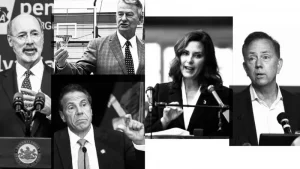
In my June 2021 article for Reason, “Economic Lessons from COVID-19,” I ended with this: Recall, though, an earlier anti-liberty episode that was not nearly as shocking as the lockdowns. In 2005’s Kelo v. New London, the U.S. Supreme Court gave its blessing to a city government’s use of eminent domain to expropriate property from homeowners and transfer it to a private entity, the New London Development Corporation. This sent shockwaves through the country. The Institute for Justice, which represented the losing side before the Supreme Court, has noted that the decision “sparked a nation-wide backlash against eminent domain abuse, leading eight state supreme courts and 43 state legislatures to strengthen protections for property rights.” Could we see a similar response to the lockdowns? Already there have been some moves at the state level to limit governors’ lockdown powers. A bill that passed both the House and the Senate in Ohio would have limited the Ohio Department of Health’s power to quarantine and isolate people, restricting it to only those who were directly exposed to COVID-19 or diagnosed with the disease. Similarly, in Michigan, the Senate and House passed a bill to repeal a 1945 law that Gov. Gretchen Whitmer had used to impose the state’s rather extreme lockdowns. Both bills were vetoed, but I doubt that will be the end of the story. Even if it doesn’t happen until this particular pandemic is over, there’s good reason to believe that some state legislatures will want a say in future decisions. Whatever the case for letting governors move so quickly early last year, that case gets weaker and weaker the longer the lockdowns last. At some point, legislators just might roll back those powers. Or so we can hope. Coming in June, my prediction might sound less impressive than it was: I wrote those paragraphs in January 2021 and there was a longer lag to publication than usual. Since then, some of the things I predicted and hoped for have come, and are coming, about. Here’s Reason writer Eric Boehm in “The Lockdown Showdown,” Reason, February 2022. Many state legislatures grappled with that issue in 2021, as more than 300 measures to limit governors’ unilateral emergency powers were proposed in 45 states. Such measures have been approved in at least a dozen states—including Pennsylvania, where lawmakers and the state’s voters approved a pair of constitutional amendments restricting emergency powers. Those laws, in turn, have sparked opposition from governors’ offices and from the public health community, which overwhelmingly backed 2020’s harsh lockdowns. Later in the piece, Boehm writes: According to a Kaiser Health News report published in mid-September, legislators in at least 26 states had passed laws to limit public health decrees since the start of the pandemic. That count includes rules limiting governors’ executive power, but it also includes states where lawmakers have exercised arguably excessive powers themselves by banning private businesses from imposing mask or vaccine mandates on employees and customers. Boehm also reports good news on Kentucky: To restore balance, state lawmakers in Kentucky passed what is so far the most aggressive limitation on gubernatorial emergency powers since the pandemic began. A three-bill package initially passed in January 2021 caps emergency declarations at 30 days and requires legislative consent—which can subsequently be revoked at any time—for an extension. The bills also prohibit the governor and attorney general from suspending state laws during an emergency and forbid emergency declarations that impinge on the right to worship or protest. Once an emergency declaration expires or is ended, a “substantially similar” one cannot be issued for 90 days. [Governor] Beshear vetoed the bills, but the state legislature overrode his veto in mid-February. A state district court issued an injunction against the new laws after Beshear argued that they would undermine Kentucky’s response to the pandemic and cause avoidable deaths. But the Kentucky Supreme Court overturned that injunction in September and told the district court to rehear the case on the merits. While that legal back-and-forth was playing out, the state legislature agreed to extend Beshear’s emergency pandemic powers until June 21, after which they were terminated. “The Supreme Court has confirmed what the General Assembly has asserted throughout this case—the legislature is the only body with the constitutional authority to enact laws,” House Speaker David Osborne and Senate President Robert Stivers, both Republicans, said in a joint statement on August 21, shortly after the state Supreme Court blocked the injunction against the law. Read Boehm’s whole article, though. Besides the issue I highlighted, it’s incredibly illuminating about how many governors and public health bureaucrats hate to have their powers reined in. And the governor of Washington state takes the prize for having what Friedrich Hayek called the “fatal conceit.” Boehm writes: During an October interview with a local TV station, Washington’s Democratic governor, Jay Inslee, provided a perfect example of the problems with the top-down approach that public health authorities have championed. More than a year and a half after the pandemic began, people have figured out their own strategies for managing risk and coping with the disease. But Inslee sees it differently: “There is only one person in the state of Washington who has the capability to save those lives right now, and it happens to be the governor of the state of Washington,” he said.       (1 COMMENTS)

/ Learn More

The Good Group

As a professor and public speaker, I’ve spoken to a wide range of student groups.  On reflection, my very favorite turns out to be: Effective Altruism.  Indeed, I’ve had positive experiences with 100% of the EA groups I’ve encountered. What’s so great about the Effective Altruists?  They combine high knowledge, high curiosity, and high iconoclasm.  When I ask EAs if they’ve heard of signaling, or the Non-Identity Problem, or pollution taxes, most of them say Yes.  The ones who say No are eager to get up to speed.  And if I defend a view that would shock a normal audience, EAs are more likely to be amused than defensive or hostile.  They’re genuinely open to reasoned argument. Though you might expect EAs to be self-righteous, they’re not.  EA is a chill movement.  While ethical vegans are greatly overrepresented in EA, they’re the kind of ethical vegans who seek dialogue on the ethical treatment of animals, not the kind of ethical vegans who seek to bite your head off. Most EAs are official utilitarians.  If they were consistent, they’d be Singerian robots who spent every surplus minute helping strangers.  But fortunately for me, these self-styled utilitarians severely bend their own rules.  In practice, the typical EA is roughly 20% philanthropist, 80% armchair intellectual.  They care enough to try make the world a better place, but EA clubs are basically debating societies.  Debating societies plus volleyball.  That’s utilitarianism I can live with. Why do I prefer EA to, say, libertarian student clubs?  First and foremost, libertarian student clubs don’t attract enough members.  Since their numbers are small, it’s simply hard to get a vibrant discussion going.  EA has much broader appeal.  Anyone who likes the idea of “figuring out how to do the most good” fits in.  Furthermore, to be blunt, EAs are friendlier than libertarians – and as I keep saying, friendliness works. Furthermore, while the best libertarian students hold their own against the best EA students, medians tell a different story.  The median EA student, like the median libertarian student, like almost any young intellectual, needs more curiosity and less dogmatism.  But the median EA’s curiosity deficit and dogmatism surplus is less severe. The good news is that most EA clubs already contain some libertarians.  And the best way to improve both movements is for the libertarians to regularly attend EA meetings.  It’s a great chance to spread superior libertarian logos while absorbing superior EA ethos. When I last spoke at the University of Chicago, one student defended education as a crucial promoter of social justice.  In response, I argued that Effective Altruism is what the social justice movement ought to be.  EAs know that before you can make the world a better place, you must first figure out how to make the world a better place.  This in turn requires you to prioritize the world’s problems – and calmly assess how much human action can remedy each of them.  Social justice activists imagine that these questions are easy – and as a result their movement has become one of the world’s major problems.  Probably like the twentieth-worst problem on Earth, but still. Perhaps the main reason why I get along so well with EAs is that their whole movement rests on a bunch of my favorite heresies.  First and foremost: Good intentions often lead to bad results.  EA exists because many good things sound bad, and many bad things sound good.  The very existence of their movement is an attack on Social Desirability Bias and demagoguery.  Furthermore, since EAs like to rank social problems by their severity and remediability, their movement is also a thinly-veiled attack on Action Bias and social stampedes.  No, we shouldn’t do “all that we can” to fight Covid, or global warming, or anything, because resources are scarce, some problems fix themselves, many problems aren’t worth solving, and many cures are worse than the disease.  Once you take these truisms for granted, fruitful conversation is easy.  And fun. (0 COMMENTS)

/ Learn More