This is my archive

bar

That Which is Unseen: Rental Housing Edition

I recently accepted a job as an Instructor at Western Carolina University. Given I currently live in Syracuse, New York, this position requires me to break my lease and move to North Carolina. When informing my landlord of my new job and what it means for our contractual agreement, he informed me that he’d be willing to waive the penalties for breaking the lease if I moved out sooner rather than later. The rental market in Syracuse is incredibly hot, and he could earn higher rent by re-renting my apartment than if I stayed. I had initially planned to remain in New York through the summer and only break one month of my lease. But the deal he offered me will save me about $4,000 in rent and utilities. He wins, I win, and I took the deal. When discussing this with some friends, one friend responded, “what a scum landlord.”  This rocked me back on my heels. How was the landlord being scummy? This seemed like a win-win: I was released from a contract I no longer valued and saved about $4k. He was likewise released from a contract he no longer valued and will be able to earn a higher rent. I asked my friend to elaborate, and my friend said, “he’s scum because now he can rent at an inflated price.”  My friend didn’t see a win-win situation. My friend saw a win-win-lose. I won. The landlord won. The future renter did not. Is this a proper evaluation? Here we need to look at both what is seen and what is unseen. What is seen is simple: I save money. The landlord earns more rent. The future renter pays a higher rent than I pay now. By what is seen, it does look like a win-win-lose. But what is unseen tosses that logic on its head. The apartment now becomes available sooner than it otherwise would have by releasing me from my lease. The number of rental units in Syracuse marginally increased. This means that the market rent marginally decreased from where it would have been if I did not vacate. Yes, the landlord is earning higher rent than a year ago, but that is an irrelevant comparison. The relevant comparison is what it would be if I wasn’t vacating. If I wasn’t vacating, the future renter would have to compete with other renters for fewer apartments, resulting in higher rents (if they could get an apartment at all). The future renter is also a winner here. When we look at both the seen and the unseen, the situation becomes a win-win-win. A quick note on prices: the rental and housing markets are very hot right now (and a recent study suggests about half of the increase in prices is due to work-from-home). I spoke to my landlord in the morning, and he already had a prospective renter by that afternoon. One can argue that this future renter is still a “loser” as they have to deal with the rising prices. But this assertion relies on a misconception of market pricing: no one promised you’d be happy at market prices. All price theory tells us is that higher relative prices signals increased value for the marginal unit. They send the signal that there are opportunities by reallocating resources. In this case, the higher market rent in Syracuse signaled to the landlord that his property was becoming more valuable. It signaled that my property right to the apartment was not as valuable as it had previously been to me. Additionally, the market rent signaled the future renter that they had better value this apartment or look elsewhere. This signal coordinated our activity: the landlord gets higher rent, I get released from a losing deal, and the renter gets an apartment. He may grumble about the rent price (as I know I will when I go to sign a lease in North Carolina), but he still wins. PS, there is another lesson here: talk to people.  You never know what opportunities may exist. Jon Murphy received his PhD in economics from George Mason University and is an Instructor at Western Carolina University. (0 COMMENTS)

/ Learn More

The Wonder of Economic Growth, Part Deux

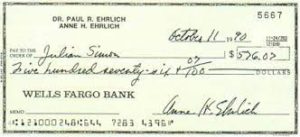
Here’s a link to the second installment of my OLLI talk on the wonder of economic growth. I gave it on Wednesday, March 25 and John Crompton has done a beautiful job of filming it and putting it together. He went above and beyond, finding pictures of William Nordhaus, Thomas Carlyle, and others. Some highlights (times are approximate): 0:30: Hans Rosling’s 200 countries over 200 years in 4 minutes. 5:30: The weird way actuaries measure life expectancy. (One little thing left out by the videographer because I walked too close to the camera: why the 1918-1919 flu was called the Spanish flu. It was because Spain was not at war and so its government did not censor. President Wilson had tried to cover it up.) 7:00: Julian Simon and Ted Baxter on population. 9:20: The check. “Honey, you lost the bet; send him the damn check and if you don’t, I will.” 10:30: How he gets it right and then blows it. 14:00: Andrew Yang’s UBI. 15:00: Homeless and housing. 16:30: Who gains from technology? 18:00: Yaron Brook on who gains from the iPhone. 18:40: Major decline in Hispanic and black poverty during the Trump years. 22:50: Pollution. Environmental quality is a normal good. The EPA did some good things. 25:00: The truth about Love Canal. 26:30: The New History of Capitalism and slavery. 28:30: The referee process for academic journals. 30:00: Greed and Milton Friedman. 32:50: Phil Donahue lets him talk. 34:10: Income inequality. 36:20: Income mobility. 37:10: Raj Chetty’s bait and switch. 39:40: My 4-minute video on good and bad inequality. 44:40: How much will global warming hurt the economy? 45:45: A little math. 49:40: Water: allow desal. 51:00: The crucial number: the elasticity of demand for housing. 52:00: How to deal with overcrowding of cities. 53:45: The role of entertainers and athletes in the economy. 55:20: Steph Curry. 55:40: How Draymond Green reminds me of Donald Trump. 56:20: Economics as a dismal science. Note: The picture at the top is of the check that Anne Ehrlich wrote to pay Julian Simon for winning the bet against her husband. (0 COMMENTS)

/ Learn More

20 Books to Read in Your 20’s

On April 10th, a Twitter account called “Art of Life” posted a list of “20 books to read in your 20s.” This resulted in a trend in which many Twitter users, including me, gave our own lists of 20 books. In this post, I’d like to elaborate a bit on why I chose each book.   1- Governing the Commons by Elinor Ostrom This book is a wonderful mix of rational choice theory and real-world empirical evidence. Many social scientists embraced a false dichotomy when it came to the “tragedy of the commons.” They believed that common-pool resources would inevitably be depleted, unless the resources were privatized or the users were regulated from the top-down by a centralized government. Elinor Ostrom looked at the empirical evidence and found that the range of possible solutions to commons problems was much wider. Resource users could talk with one another and engage in self-governance to preserve the resources they use. And in fact, they have done so many times. Self-governance is not a panacea, but this book provides a great examination of how it can work, and when it fails. 2- The Struggle for a Better World by Peter Boettke Classical liberalism all too often is seen, especially by its critics, as a conservative program, a defense of the status quo. But it’s fundamentally a doctrine of emancipation from oppression. This collection of essays by Peter Boettke does an outstanding job of laying out the humane and emancipatory vision of liberalism, and in the process Boettke also explains a lot of important insights from economics and political economy. 3- Manufacturing Militarism by Christopher J. Coyne and Abigail R. Hall As I noted in my review for Econlib, this book masterfully applies public choice theory to examine the deadly serious issues of war, militarism, and government propaganda. Reading this is a great way to understand public choice, and a very important read for addressing the serious harms of militarism. 4- Economic Gangsters by Raymond Fisman and Edward Miguel I first read this book before I started graduate school. There’s a lot to like about it. One is that the authors discuss how culture, violence, corruption, and other key institutional issues relate to the wealth and poverty of nations. They are development economists, and they do a great job of conveying why development is important and the broad range of issues that influence development. They also very effectively communicate the intuition behind the causal inference strategies that they’ve used in their academic research. Some of the strategies they used, such as the use of rainfall as an instrumental variable, have faced serious criticisms. But this book offers a really accessible way to understand why causal inference is difficult and what strategies social scientists use to try to assess causality.   5- Empire of Borders by Todd Miller This book explores how the U.S. Border Patrol has engaged in operations around the globe. We often think of the Border Patrol as simply patrolling U.S. borders, but they now also act as an instrument of U.S. foreign policy. This book helped inspire my paper with Chris Coyne on “U.S. Border Militarization and Foreign Policy: A Symbiotic Relationship” (which was recently published in the Economics of Peace and Security Journal). The book also influenced my working paper on “Border Militarization as an Entrepreneurial Process.”   6- Political Capitalism by Randall Holcombe People across the political spectrum lament the role that entrenched, elite interests play in politics. Randall Holcombe leverages the insights of Ronald Coase to explain political and economic power. He argues that for most people, the transaction costs of engaging in political exchange are prohibitively high. But some political and economic elites constitute a “low transaction cost group” and can therefore make political bargains, often at the expense of the rest.   7- Liberalism by Ludwig von Mises Much like Boettke’s The Struggle for a Better World, this classic by Ludwig von Mises lays out an inspiring case for liberalism, and weaves in many important economic insights. This book also contains some of Mises’s most controversial passages, so reading those in-context is helpful if you want to participate in contentious conversations about Mises’s legacy.   8- Beyond Politics by Randy Simmons This book is my favorite introduction to public choice. In addition to covering public choice, it also offers excellent insights on key issues like property rights. The book has lots of great examples to illustrate the theory, and each chapter ends with suggestions for further reading. An excellent resource.   9- Domination and the Arts of Resistance by James C. Scott This book examines how hierarchical power can distort the conversations people have. Think about it this way: if you express your grievances with your boss too harshly, then you are likely to get fired. If a peasant told the king that he was a fool, then that peasant might be executed. The incentives are clear, and this results in what Scott calls “hidden transcripts,” which are discourses among subordinate groups that are not heard by groups that hold power.   10- Elinor Ostrom: An Intellectual Biography by Vlad Tarko This is my favorite overview of Elinor Ostrom’s work. I’m often inclined to recommend it instead of Governing the Commons when people ask me how they can learn more about Ostrom. Governing the Commons covers one very important part of Ostrom’s research program. Tarko covers it all, from her early research on municipal water governance to her work on polycentricity and municipal policing to her later work on the commons. He shows how this research program fits into an overarching research agenda about self-governance. If you want to understand self-governance, and what Elinor Ostrom’s research can teach us about it, read this book.   11- Open Borders by Bryan Caplan and Zach Weinersmith Unlike all the other books on this list, this is graphic nonfiction. It’s a comic, illustrated by Zach Weinersmith of the outstanding web comic Saturday Morning Breakfast Cereal. Caplan and Weinersmith illustrate how immigration restrictions trap people in poverty, and in the process prevent them from enriching others through mutually beneficial exchange. Given the sheer gains from trade that immigration restrictions prevent, they require a very strong justification. Caplan and Weinersmith examine many of the arguments for immigration restrictions and ask whether social scientific evidence supports the concerns these arguments rest on.   12- Collective Action and the Civil Rights Movement by Dennis Chong Like Elinor Ostrom’s Governing the Commons, this book uses game theory, rational choice, and careful examination of historical evidence to examine how groups of people can devise solutions to collective action problems. In this case, the collective action problem concerns how to get people to participate in a social movement, especially when doing so is risky and the change sought is a public good.   13- The Limits of Liberty by James M. Buchanan James M. Buchanan is a legend, one of the seminal thinkers in public choice. In this book, he offers a contractarian account of the state, offering a case for limited, constitutional government and an analysis of where both government and anarchy can go wrong. As an anarchist, I found this book to be a challenging one, but a challenge worth facing and thinking through head on.   14- The Rise and Decline of Nations by Mancur Olson Mancur Olson is best known for his classic The Logic of Collective Action. This book extends the implications of his argument there. Since narrow special interest groups are better able to resolve collective action problems than the general public is, societies tend to develop various distributional coalitions and special privileges as they develop. This eventually slows down development and causes serious decline, unless this entrenched interest group power can somehow be dislodged.   15- Anarchy Unbound by Peter Leeson In this book, Peter Leeson makes two simple but important points. First, self-governance can work even in situations where people might expect it to fail, such as scenarios that involve a wide diversity of participants. Second, sometimes the feasible forms of stateless cooperation are preferable to the feasible type of state that a society is likely to have. Through history and sound economic theory, Leeson shows how self-governance has been underestimated.   16- Theorizing Feminisms edited by Elizabeth Hackett & Sally Haslanger I first read this book in a college class on feminist philosophy. What I really appreciate about it is the wide range of feminist perspectives it covers, including classical liberal feminism, second-wave radical feminism, Marxist feminism, intersectional feminism, and postmodern feminism. I highly recommend it if you want to understand the nuances and diversity of feminist thought.   17- Managerial Dilemmas by Gary Miller I read this book as part of studying for the Institutions and Development field exam at George Mason. It’s a really compelling analysis of the challenges associated with management, team production, and principal-agent problems. Miller proposed institutional solutions are insufficient, and then offers a nuanced discussion of the role of culture within firms.   18- National Economic Planning: What Is Left? by Don Lavoie This might be my favorite book of all time. Before I read this book, I did not properly understand the knowledge problem and its implications for markets and central planning. Lavoie offers a great explanation of the pitfalls of national economic planning. What’s more, he does so from a perspective that is explicitly radical and emancipatory, which makes his arguments more likely to reach socialists where they’re at.   19- Resistance Behind Bars by Victoria Law This book explores the experiences of women in American prisons, both the human rights abuses they suffer and the ways they resist. Rather than treating well-intentioned reforms as necessarily beneficial, Law argues that various types of reforms backfire. She shifts the prism away from what benevolent policymakers could to what prisoners can do for themselves. I reviewed this book a while ago at the Center for a Stateless Society.   20- The Social Order of the Underworld by David Skarbek Skarbek’s book analyzes the development of prison gangs. He argues that their purpose is to provide governance in prisons where the population has become too large for informal governance such as the reputation-based “Convict Code” to function. This book is an engaging account of how governance works and how incentives and constraints shape the evolution of governance institutions. (0 COMMENTS)

/ Learn More

Ian Leslie on Curiosity

Why are some people incurious? Is curiosity a teachable thing? And why, if all knowledge can be googled, is curiosity now the domain of a small elite? Listen as Ian Leslie, author of Curious, talks with EconTalk host Russ Roberts why curiosity is a critical virtue, why it’s now in dangerous decline, and why, when it comes to […] The post Ian Leslie on Curiosity appeared first on Econlib.

/ Learn More

Fond Memories of Southwest Airlines

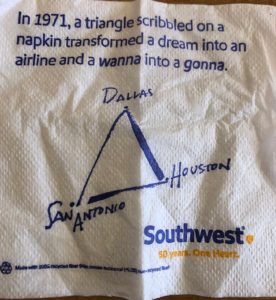
I flew Southwest Airlines from LAX to San Jose yesterday and the napkin I was handed with my drink brought back fond memories. From about 1973 on, after I took George Hilton’s class in transportation economics, I became an evangelist for deregulation of airlines. I used to have a bumper sticker on my briefcase that said: Deregulate Air Transportation: Ground the CAB. CAB, of course, stands for Civil Aeronautics Board. When I argued for deregulation, Exhibit A was Pacific Southwest Airlines (PSA) in California and Exhibit B was Southwest Airlines in Texas. Both showed how competition would work to make fares lower for passengers. When I was a summer intern in 1973 at the Council of Economic Advisers under Herb Stein, Herb made me an acting senior economist for the month or so between when Bob Tollison left and his replacement, Alan Pulsipher, arrived. I was attending meetings on airline deregulation with the Undersecretary of Transportation. Herb suggested after I reported on one of these meetings that we drop the issue because it seemed hopeless and our limited resources would be better used elsewhere. I argued that we should keep it up because it was using only a few hours of my week each week. I actually persuaded him. I still feel proud of that. For more on airline deregulation, see Alfred E. Kahn, “Airline Deregulation” in David R. Henderson, ed., The Concise Encyclopedia of Economics, 1st edition and Fred L. Smith, Jr. and Braden Cox, “Airline Deregulation” in David R. Henderson, ed., The Concise Encyclopedia of Economics, 2nd edition. Note: The link to Tollison has incorrect information. He was a senior economist from 1972 to 1973, not from 1971 to 1972. (0 COMMENTS)

/ Learn More

Neglecting Prices Is a Big Analytical Error

In an interesting story about the logistics of baby formula shipments, the Wall Street Journal quotes a reflection from a freight broker executive (see Paul Page, “Baby-Formula Shipments Come With High Security to Deter Cargo Thieves,” May 28, 2022). The reflection is interesting because it points to a confused view: During the Covid-19 pandemic, items favored by thieves included the paper goods and cleaning supplies that were in high demand and hard to find. “We were seeing things like hand sanitizers and masks targeted,” Mr. Bowyer said. “It wasn’t about the price of the product but the scarcity of it. And that’s something we are seeing now with the anxiety of parents who are looking for formula.” It was (and now is for baby formula) about the price of the product and not merely its scarcity. The only reason reason why thieves were interested in PPE was the price they could get for it on the black market. The government-capped legal price would not have motivated thieves more than they incentivized legit producers. The market-clearing price is the result of both scarcity and demand, that is, supply and demand, or, expressed in another way, a result of demand relative to scarcity. A four-leaf clover is also scarce but it’s price is very low (if at all positive) because the demand for it is also very low (if it exists at all). Mr. Bowyer correctly hints at demand in his last sentence. The price of baby formula motivates thieves because increased scarcity and continuing demand have pushed it up. (It’s the same when copper prices increase on world marketa and thefts of copper wire jump.) The big difference between PPE during the pandemic-related states of emergency and the current market for baby formula is that there are currently no government price controls on the latter. This explains why, in baby formulas, there is little if any black market other that what may be fueled by possible theft. Note that as much as theft is a real crime, black markets by themselves are a very useful outlet for voluntary transactions when prevented by price controls or other government interference. When trying to understand the economy and society, neglecting prices is a big analytical error. (0 COMMENTS)

/ Learn More

Joskow on Harold Demsetz

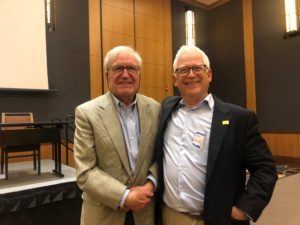
I spent Thursday evening and Friday at UCLA’s event in memory of one of my main mentors, the late Harold Demsetz. The event ended late yesterday afternoon with a bang: the keynote speech by MIT economist Paul Joskow (pictured above.) It was first-rate. Various people through the day talked about the importance of various of Harold’s articles. Joskow focused on his 1968 article in the Journal of Law and Economics, “Why Regulate Utilities?” Joskow pointed out that the basic insight in that article is that even if an industry is a natural monopoly, that doesn’t imply that getting to a competitive price requires government regulation of the natural monopoly’s price and output. Instead, Demsetz had argued, you could have competition for the market rather than competition within the market. How so? Various firms could compete on price for the right to be the lone producer. Joskow pointed out that that insight seems obvious but also that when Demsetz came up with it, it wasn’t obvious at all. He mentioned his MIT colleague Jean Tirole, who, in his textbook with Jean-Jaques Laffont, devotes 70 pages to laying out the insight. Joskow had said to Tirole that he used 70 pages to say what Harold Demsetz had said in 11 pages. Tirole had responded, “Yes, but we have more equations.” A large part of Joskow’s talk was on laying out how extensive the application of Demsetz’s insight has been, both in local U.S. governments and in poorer countries. He led with a story about his city of Brookline, Massachusetts. He pointed out just how left-wing Brookline is. It was one of the last cities in Massachusetts to get rid of rent control. In the last presidential election, 88% of the voters voted for Biden. Etc. But some years ago, there was a choice to be made between having an ambulance service run by the city government or putting it out for competitive bidding. The government chose the latter. The results were so good that later the Brookline government put garbage collection out for bidding. Joskow’s point, of course, is that even some left-wing governments understand the power of competition in what might be natural monopolies. He then turned to the record in poorer, developing countries. In many of those countries, governments are doing what Demsetz recommended: having competitive bidding to be the one producer in the natural monopoly industry. Joskow also pointed out that economists who are critical of Demsetz’s article will point out, correctly, that there are potentially big issues in such contracting having to do with uncertainty, sunk costs when it comes time to rebid, and a number of other things. But, he pointed out, many of these critics don’t then point to tough issues that arise when governments do it the old-fashioned way, either with government production or with regulation of a natural monopoly. In comparing the reality of competitive bidding with standard government regulation, they leave the latter unexamined. In doing this, they are guilty of what Demsetz called, in another path-breaking article, the Nirvana approach. (I’ve forgotten whether Joskow used this term. A number of economists through the day did refer to that insight. To a person, they called it the “Nirvana fallacy.” I had pointed out in the lunch roundtable that Harry DeAngelo of USC emceed and in which Joe Kalt of Harvard, Bob Topel of the University of Chicago, and I shared our reminiscences, that Demsetz had actually called it the “Nirvana approach.” The Nirvana approach consisted of three fallacies: the “free lunch” fallacy, the “grass is greener” fallacy, and the “people could be different” fallacy. So far, I don’t seem to have persuaded anyone to correctly refer to Harold’s term.) Joskow then went on to talk about how within various industries thought to be natural monopolies, there are components that are not. He gave the example, which many people have given, of electric utilities. Generation of electricity can be provided competitively. He ended with two points. First, he noted, a natural monopoly is not necessarily a natural monopoly forever. So it’s important to pay attention to how technology evolves so that we can pare down the parts that governments need to put to a bid and for the rest rely on regular competition within markets. The final point Joskow made is that the awesome citation count that Harold’s article has received is a major understatement of its influence. Citations measure references in other academic articles. But when governments in other countries make decisions based explicitly on Demsetz’s insight, that doesn’t show up in citations. But, he said, in these countries, “the name that’s always mentioned is Harold Demsetz.” Notes: I deal with natural monopoly in The Concise Encyclopedia of Economics entry, Monopoly, written by George Stigler. It’s at the end of his article. I don’t discuss, but should have discussed, Demsetz’s insight. Steve Globerman and I, in our recent book, The Essential UCLA School of Economics, do discuss the Nirvana approach at some length. You can download the book here. This is my bio of Harold in The Concise Encyclopedia of Economics. (0 COMMENTS)

/ Learn More

What “obvious” reason?

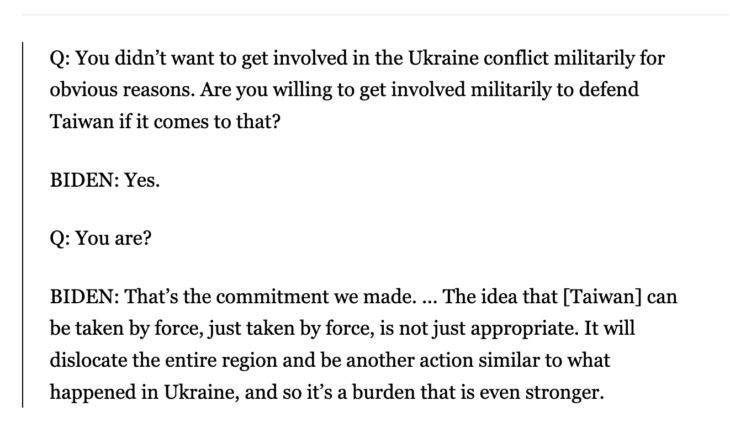
This exchange between President Biden and a reporter caught my eye: Most of the discussion in the press has focused on Biden’s confusing statements on Taiwan.  But I am more interested in the reporter’s question.  Why does the reporter think it’s “obvious” that the US should not get militarily involved in Ukraine? [BTW, you can argue that we are militarily involved, due to massive weapon’s exports to Ukraine and perhaps other forms of aid.  But (in context) the reporter is clearly referring to an unwillingness to send US troops to fight, so I’ll interpret the question that way.] To be clear, I agree with the decision to not have the US go to war with Russia.  I can think of many reasons to stay out of the Ukraine War, but most of them are not “obvious”. Here are the two most obvious reasons I can think of: 1. We have no formal defense treaty requiring us to defend Ukraine. 2. Russia has a lot of nuclear weapons, and it would be dangerous to engage in warfare that might escalate to a nuclear exchange. Are there other obvious reasons that I missed? Interestingly, Biden never challenged the reporter’s assumption that militarily defending Ukraine is obviously a bad idea. Given that Biden chose not to use the US military in Ukraine, he might well agree with the reporter.  But why?  Has the administration ever explained its rationale for not intervening? You probably see where I am going with this: 1. We have no formal defense treaty requiring us to defend Taiwan. 2. China has a lot of nuclear weapons, and it would be dangerous to engage in warfare that might escalate to a nuclear exchange. Presumably the reporter didn’t think it was “obvious” that defending Taiwan is a bad idea, or he/she wouldn’t have phrased the question that way.  That makes me wonder what the reporter had in mind when thinking about Ukraine. This completes the main point of the post.  But experience teaches me that some people might miss the point, and cite some non-obvious differences between Taiwan and Ukraine, of which there are many.  Here are 5 examples: 1.  Taiwan has an important semiconductor industry. 2.  Xi Jinping is a bad leader, but less emotional and unpredictable that Vladimir Putin. 3.  Ukraine’s sovereignty is internationally recognized, whereas Taiwan is officially part of China. 4.  Ukraine is bigger than Taiwan, and located in Europe.  Taiwan is smaller and an island.  Russian is more likely to invade multiple countries if it wins in Ukraine. 5.  Ukraine in a major food exporter. The first two suggest that defense of Taiwan might be more justified.  I has a crucial high tech sector and (compared to Xi) there is a greater risk that Putin would use nuclear weapons.  The final three point to Ukraine’s defense as being more justified.  But none of these five points are at all “obvious”. The reporter who said the US didn’t intervene in Ukraine for obvious reasons presumably didn’t think the obvious reason we held back from Ukraine is that it has no semiconductor exports, or that Putin is more irrational than Xi.  Those factors may be true, but they aren’t obviously decisive differences. So what is? PS.  Here’s the Financial Times: US secretary of state Antony Blinken says Washington will stay focused on China as the most serious threat to the international order despite Russia’s invasion of Ukraine. Translation:  Don’t bother us with facts, we’ve made up our minds. I’ve seen this in economics.  We now know that the 2000 tech stock price boom and the 2006 housing price boom were not bubbles.  But economists have already made up their mind, so . . . (0 COMMENTS)

/ Learn More

What the Economy of a Just War Should Be

It is only in the intellectual and political environment of an unfree society that wartime price controls can be easily justified. Two recent articles can serve to illustrate the conventional wisdom and its contrary. One story, by the Financial Times European economics commentator, imagines a speech that political leaders should deliver to accomplish “their chief task of preparing the public for the unavoidable hard choices to come” in the Russian war on Ukraine (Martin Sandbu, “Western Leaders Must Prepare Public for a War Economy,” Financial Times, May 1, 2022). It starts with “My fellows citizens,” and includes: Something like a wartime economy is being imposed on us — not of our choosing, but we must not shrink from it. That requires all of us to put the common good first. … We may have to ration some essential goods. That’s the conventional approach to war. We could rephrase: “My dear children: You’ll have to suffer. Everything will be controlled, including prices and yourself.” The second article, in The Economist of last week, is inspired by the Ukrainian government and suggests a refreshing approach (“Much of Ukraine Is Paralyzed by a Petrol Shortage,” The Economist, May 23, 2022): For the past three weeks the country has found itself in the midst of an acute fuel shortage … On May 19th the 550km road from Lviv to Kyiv had just two working petrol [gasoline and diesel] stations. Each had a queue tailing back several hundred metres. … With the war effort and agriculture taking priority, very little is left for anyone else. The deficits have spawned a shadow economy in the best Ukrainian tradition. On the local equivalent of eBay, enterprising citizens are offering an array of fuel-related services. In Odessa 100 hryvnia ($3.38) an hour will get you someone to hold your place in queues outside petrol stations … A senior manager at a big private fuel company says that price regulation has meant that suppliers are asked to sell petrol for less than it costs to supply it. The aim had been to keep fuel affordable for a struggling nation, but it removed any incentive to increase supply to the public, and it also introduced a black market. The unusual news is the government has now backtracked and acknowledged a need to “temporarily” suspend the controls, to allow retailers to regulate demand. Ms. Sviridenko [the economy minister] predicted the move would lead to increases in prices of 40%. Disregarding the “temporarily,” they seem have an economy minister who understands the economy! The more general point is that markets are as efficient at allocating resources in wartime as they are in peace time; efficient in a world of scarce resources, they are even more needed in situations of more scarcity. The government of a free country in a just war would completely eschew price controls (and thus avoid shortages). To provide fuel to the armed forces and public services, the government would simply have to bid on the market like everybody else—albeit with taxpayers’ money. And if it is deemed that certain groups of consumers could not afford fuel at market-clearing prices, the efficient way to go would be to issue them tradeable ration coupons which any consumer could sell or supplement depending on the intensity of his demand and the real cost of the resource as signaled by its price (and the opportunity cost of the tradeable ration coupons). I would however quibble about the magazine’s follow-up comment: The price rise will have an immediate impact on consumption in a nation where disposable income is severely curtailed. But it is unlikely on its own to end the fuel crisis. It will not end the crisis, of course, which will show up in higher prices; but it will certainly end the shortage (if ill-advised pressures don’t bring the controls back). That is, assuming that “crisis,” “high prices,” and “shortage,” and perhaps other words in the dictionary, are not all synonymous. (0 COMMENTS)

/ Learn More

Neoliberalism and design

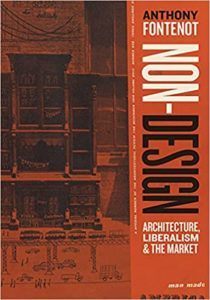
I try to stay away from books which take “neoliberalism” as their target. Yet I made an exception for Non-Design. Architecture, Liberalism & the Market by Anthony Fontenot and I suggest you make it too. Fontenot, who teaches architecture at Woodbury University, wrote a fascinating book arguing that economic thinking can influence architecture and design. Its work focuses on an unlikely parallel: that between tendencies in design theory in the 20th century and the renaissance of classical liberalism (which alas sometimes goes under the name of “neoliberalism”) after WWII. As some of you may remember, In the third part of The Constitution of Liberty (1960), F. A. Hayek devoted a chapter to housing and town planning. Convinced that “civilization as we know it is inseparable from urban life”, Hayek pointed out that “the market has, on the whole, guided the evolution of cities more successfully, though imperfectly, than is commonly realized”. Fontenot begins his book not with Hayek’s assessment of the unintended consequences of rent control or public housing. But he adds a concise and accurate presentation of the broader argument against top-down planning and for “spontaneous order”, hinting that such a theory had vast consequences, even at the intersection of urban planning and design, calling into question the very role of the designer as something more than an interpreter of consumers’ needs. Fontenot points to the works of Hayek, Mises, Michael Polanyi (the very originator of the expression “spontaneous order”) but also to Karl Popper, for his criticism of historicism, and to Ernest Gombrich, who channeled Popperian views in the history of art. In the 1950s, Hubert de Cronin Hastings, chairman of the Architectural Press, was animating the Townscape movement, an architectural and planning movement which emerged in the 1940s and advocated for urban density and respect for the individuals’ needs and wishes. Hastings called for an understanding of complexity in the urban landscape as “recognition of the urge of the parts to be themselves to make a new kind of whole”. “Hastings implored planners to ‘love, or try to love’ all the parts, including the common unplanned urban landscape with all the messy complexities that accompany a metropolitan democratic society”. According to Fontenot, he “relied on classical liberalism” for his new vision, including differentiating (as Hayek did) between a French radical rationalist approach (Le Corbusier and his disciples) and a British, more liberal one to landscape and planning. Fontenot thinks that “throughout the 1950s, the liberal economists’ message that the free market, as a value-free or neutral framework, was the only sensible alternative to state planning was generally known, if not accepted” and that influenced also thinking on urbanism and architecture. Though he successfully points to some assonance, it is not always clear there is a causal link (reading X by A influences B to write Z). Couldn’t it just be the case that some problems with planning, after much enthusiasm, were coming to surface? Writing on Jane Jacobs, Fontenot maintains that “a comparison of Jacobs’s main conclusion with those of Mises and Hayek shows a striking similarity in core principles”, insinuating that “an entirely new paradigm was emerging, one in which planning was beginning to be denied by a new generation who struggled to reorient itself with a different set of values that opposed the history of collectivist central planning”. The book hardly embraces these ideas and is strongly critical – to say the least – of the English architectural critic Reyner Banham. Banham is labeled by Fontenot a “free-market radical” for “his unwavering defence of free-market economics and the indeterminate city, matched only by his staunch and consistent rejection of planning”. Banham “suggested that the standards of design culture use contend with free-market economics, linking objects explicitly with their functions and technological evolution”, “finely tuned to the desires of the public”. “Highly sceptical of the various control mechanisms imposed on design by agencies such as the welfare state, the Council of Industrial Design, and the Museum of Modern Art, Barnham sought a free design philosophy”. It may well be that Fontenot, as a few other intellectual opponents of “neoliberalism”, exaggerates the importance and influence of the classical liberal tradition. It may well be that the link between a certain approach in politics and another in architecture or design is not as apparent as Fontenot maintains. The book however is a rich comparison of ideas developing in different realms, and a most suggestive one. Plus, those interested in the history of political ideas will learn a lot about design and architecture, and vice versa I guess. (0 COMMENTS)

/ Learn More