This is my archive

bar

We’re Number 5; We’re Number 5

An organization called feedspot has put together a ranking of the top 100 economics blogs. We’re [that is, EconLog] number 5! I hasten to add that you should take this with a grain of salt. But maybe not a whole salt shaker. After all, Marginal Revolution, which they misspell, was number 1, a ranking that seems reasonable. Personal note: When I moved to UCLA from Canada in the fall of 1972, the UCLA men’s basketball team was close to its peak, with Bill Walton, Keith Smooth-as-Silk Wilkes (who, by the way, was an econ major–I graded his exam in an undergrad course), and a number of other star players. After UCLA won the NCAA Final Four in late March 1973, many students on campus chanted “We’re Number 1, We’re Number 1.” Coming from Canada, I wasn’t used to people boasting so much. But I’ve been an American long enough that I now do it myself. (0 COMMENTS)

/ Learn More

The muddled thinking of protectionists

Pierre Lemieux has a new post discussing how some people oppose US gas exports because they drive up prices to American consumers. This is interesting, as the sorts of groups that gain and lose from gas exports are quite difference from the case of import competition.Economists traditionally support free trade because the gain to consumers from trade exceeds the cost to producers (in terms of lost profits and wages.) Protectionists are not convinced by this sort of cold utilitarian logic, pointing to the fact that the losses from imports are highly concentrated (such as autoworkers losing jobs) while the gains from imports are widely dispersed (slightly lower car prices for millions of consumers.)With exports, this all gets flipped around. If we restrict natural gas exports, millions of consumers benefit from slightly lower gas prices, while a smaller number of blue color workers lose good jobs in the fracking industry, and become “hamburger flippers” (to use the derisive terminology of protectionists.)Actually, if you apply the logic used by the auto industry protectionists to gas exports then not only should we not restrict exports; we should actually subsidize them, even if it means a greater increase in gas prices to consumers. It’s clear to me that while protectionists may believe that some sort of consistent logic supports their position, in fact it is comprised of an incoherent grab bag of faulty intuitions. It “seems bad” when auto workers lose jobs. It “seems bad” when natural gas consumers in New England pay higher prices. It’s an application of the idea that “something must be done”, when there are what Frédéric Bastiat would call negative “effects that are seen“, even of the positive unseen effects are even greater.   You might wonder if I am being inconsistent.  In the auto import case I favor the policy that helps the widely dispersed group (consumers), while in the gas export case I favor the policy that favors the concentrated (producer) group.  Actually, both policies have something in common; free trade maximizes the total welfare of society.  The only consistency in the protectionist position is that they always favor the policy that makes society as a whole worse off.  Their justification for that in the import tariff case (favoring the concentrated group of blue collar workers), would suggest that we should actually be subsidizing gas exports, even if it drives up gas prices for America consumers.  Good luck with that idea on Capitol Hill! (0 COMMENTS)

/ Learn More

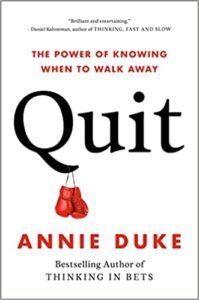
Annie Duke on the Power of Quitting

Annie Duke is angry that quitting gets such a bad rap. Instead of our relentless focus on grit and “going for it,” the former professional poker player, decision strategist, and author of Quit wants us to recognize the costs associated with sticking to a losing outcome. Listen as she explains to EconTalk host Russ Roberts how […] The post Annie Duke on the Power of Quitting appeared first on Econlib.

/ Learn More

Buying Failure with Student Loans

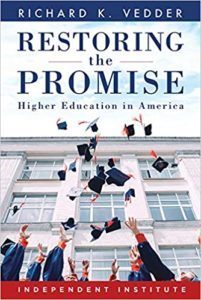
President Biden’s student loan-forgiveness scheme is the latest illustration of two economic truths. The first is that government subsidies buy what some people (the recipients) want at the expense of what other people (non-benefiting taxpayers) want. The second is that government subsidies often buy more failure, not more benefit. A lot is at stake. The Wall Street Journal recently estimated that the student loan-forgiveness scheme could cost taxpayers $1 trillion. The Administration almost immediately began accepting applications under the plan—and just as immediately ran in to court challenges. Right now (November 11, 2022), a federal judge in Texas (appointed by President Donald Trump) has struck down the plan, but appeals follow (more on that later). Start with the second economic principle: buying more failure. Advocates of the program point out that people who attend college enter better-paid jobs and more lucrative careers, than high-school graduates. And, as the argument used to go, can pay off student debt. In fact, the argument over-generalizes. Some who attend college enter better jobs and careers. Richard Vedder, an economist, in his 2019 Independent Institute book, Restoring the Promise, points out that some 40 percent of those who attend college fail to finish. Others graduate, but with weak academic records (the lowest quartile in class ranking). Like those who do not graduate at all, they have the same earning power as high-school graduates. Both dropouts and academically weak graduates have student debt, however, and must pay it off with non-college-enhanced incomes. Financial-aid programs began with the chief goal of making possible attendance by talented, qualified students without financial resources. Financial aid was and is intended, in the first instance, to help poor people. Despite much-increased assistance, though, students from families in the lowest quartile of income are only 10 percent of recent college graduates, according to Mr. Vedder. Increased financial assistance has enabled and encouraged millions of young men and women with little chance of succeeding in college to attend anyway. They spend what limited resources their families can provide, take large student loans, delay their work lives for up to four years—and buy no apparent income or career advantage over their high-school-graduate counterparts. In a Wall Street Journal opinion piece, Jason L. Riley argues that “…the objective shouldn’t be to funnel as many high-school grads as possible into college…. underemployment of college graduates…has been steadily worsening as the number of graduates has increased faster than the number of jobs requiring a bachelor’s degree. In 2020, 4 out of 10 recent college graduates were working at jobs that didn’t require a college degree.” The student loan-forgiveness scheme, a welcome talking point for some Democratic candidates in November who need larger numbers in the 18-30 bracket to get out and vote, will buy more failure of those least able to afford the lost years, discouragement, and misleading career expectations. But many “progressives” see progress as lowering admissions standards–especially academic measures such as standardized test scores and grade-point-averages–to admit more applicants from certain racial and economic categories. Combined with student loan-forgiveness now on a trillion-dollar scale, this completes the formula for buying more failure. Turn now, briefly, to the second economic principle: paying for what some want at the expense of what others  want. Critics of the scheme make the valid argument that many millions of Americans who worked for years to pay student debt should not now be forced to pay debts of other students. That argument is still more poignant when considering millions of college dropouts and academic underperformers–plus those who felt they couldn’t afford to attend–will pay for the program. Mr. Riley encapsulates the case against subsidies:  “…it’s a raw deal in economic terms for millions of Americans who never went to college or who chose a less-prestigious school to avoid accruing lots of debt.” The transparency of this “redistribution” plan, coming when Americans struggle economically, scared off some Democratic candidates but boosted others. What might be a corollary of the economic principle of subsidizing is that beneficiaries are more motivated to support a subsidy than the public (with many such schemes on the table) is to oppose it. This is suggested in a Brookings Institute rundown of political support for the scheme, reported to have approval of half of Americans—but opposition only of minorities of voters. In the article, William A. Galston reiterates the politics driving the scheme: “If it motivates previously disengaged younger voters to participate in the midterm elections, it will boost Democrats’ prospects, especially in contested races where turnout will be key.” Valid economic principles often (or always?) express underlying philosophical truths. Individual responsibility, a bedrock of freedom under limited government, is instilled, reinforced, and favored by a society that ensures that individuals experience the consequence of their judgments, choices, and actions. The choice to attend college, often at 17 or 18, is among the earliest important decisions of adult life–a first life-changing investment of money, time, and hope. Many billions in tax-payer money will skew this pivotal decision by further subsidizing the option to choose college over the option to take on the challenge of finding a first job and becoming self-supporting. The subsidy also converts this decision into an adult’s first encounter with entitlement, giving young Americans a “gateway” experience of life under the interventionist-welfare state. In all schemes that shift consequences from the individual to the collective, the first, most numerous, and most at-risk victims are those intended to benefit most. The judge in Texas, Mark Pittman, in his 26-page opinion, said the plan “…is either one of the largest delegations of legislative power to the executive branch, or one of the largest exercises of legislative power without congressional authority in the history of the United States.” It isn’t the first setback for the plan, which earlier a court temporarily blocked from implementation while it considered a request from Republicans in six states, including attorneys general, to block implementation permanently. The plan has gone ahead accepting applications and on November 19 the Wall Street Journal reported: The Biden administration asked the Supreme Court to allow it to move forward with its mass student-debt forgiveness program, which had been put on hold in lower-court litigation.”   Walter Donway is an author and writer with more than a dozen books available on Amazon and an editor of the e-zine Savvy Street. He was program officer or director at two leading New York City foundations in the healthcare field: The Commonwealth Fund and the Dana Foundation. He has published almost two dozen articles in the Blockchain Healthcare Review. (0 COMMENTS)

/ Learn More

Tocqueville on Lawyers and Liberty

It is risky to make pronouncements in a field that one is far from mastering. I hope that the little knowledge of legal theory I learned from Friedrich Hayek, from some Law & Economics writings, and from the French classical liberal tradition mitigate my ignorance. I trust my readers to tell me if I err, hopefully with specific citations, remembering that the hyperlinks in the previous sentence are only examples. Here is the problem as I see it. Legal theorists and especially practicing lawyers who know little about economics or who have been philosophically indoctrinated in legal positivism (the very contemporary idea that law is what the state decrees) confuse law and liberty. Not all of them, of course, but I would say most of them. In Democracy in America (Vol. 1, Chap. 16), Alexis de Tocqueville was right to criticize lawyers somewhat along those lines: Lawyers are attached to public order beyond every other consideration, and the best security of public order is authority. It must not be forgotten, also, that if they prize freedom much, they generally value legality still more: they are less afraid of tyranny than of arbitrary power; and, provided the legislature undertakes of itself to deprive men of their independence, they are not dissatisfied. [French original] Ce que les légistes aiment par-dessus toutes choses, c’est la vie de l’ordre, et la plus grande garantie de l’ordre est l’autorité. Il ne faut d’ailleurs oublier que, s’ils prisent la liberté, ils placent en général la légalité bien au-dessus d’elle ; ils craignent moins la tyrannie que l’arbitraire, et, pourvu que le législateur se charge lui-même d’enlever aux hommes leur indépendance, ils sont à peu près contents. Note in passing the questionable second clause of the first sentence in the quote. Had he been an economist, Tocqueville would have doubted that “the best security of public order is authority.” Both theory and history suggest that an autoregulated liberal social order is more secure than a society dominated by an authoritarian political regime. Russia and China provide current examples. (0 COMMENTS)

/ Learn More

George Selgin on the postwar economy

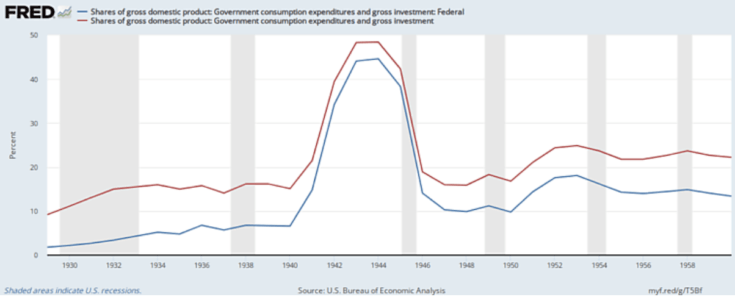
George Selgin has another excellent post in a long series on the Depression and WWII. This one points out that the economy did pretty well during the late 1940s, despite widespread forecasts of a major post-war depression: What lay behind this remarkable achievement? The proximate answer was a revival of private spending far exceeding what many economists, and Keynesians especially, predicted, and doing so by more than enough to compensate for a reduction in government spending that was itself greater than most had anticipated. Consider, for example, a pair of painstaking and influential but otherwise representative forecasts prepared just after V‑J Day by Everett Hagen, who was then chief of the Fiscal Policy and Program Planning Division of the Office of War Mobilization and Reconversion. Despite the late date, and the fact that Hagen somewhat overestimated postwar government spending while underestimating the pace of demobilization, his “more favorable” forecast underestimated 1946 GNP by about 12 percent, mainly by underestimating both consumer spending and private capital formation. Hagen’s “less favorable” forecast underestimated 1946 GNP by more than 15.5 percent. Both forecasts put the number of unemployed at 8.1 million during the first quarter of 1946, overestimating it by more than 5.5 million. But while the more favorable one had the unemployment level dropping steadily to 5.6 million by mid‐​1947, the less favorable one had it increasing to 9.3 million—an overestimate of almost 7 million! Did this spectacular failure in forecasting lead economists to reconsider their Keynesian models?  Apparently not.  Instead they (wrongly) denied that there had been much austerity: Some economists have insisted that, despite appearances, the federal government was still propping up the U.S. economy in the years that followed the war. . . . Harold Vatter (1985, pp. 151–2) also attributes the lack of a severe postwar slump to increased government spending. . . . But the actual record of government spending on all levels before and just after the war, as shown in the following chart, suggests that, while growth in the size of government may account for later gains in stability, it can’t have made much difference during the immediate postwar era. In those days, the federal government’s share of GDP, instead of being “several times” larger than its prewar level, was only one‐​and‐​one‐​half times as large, while the share of GDP consisting of spending by all levels of government had scarcely risen at all. The small difference—that between a range of 16–19 percent versus one of 14–16 percent—hardly seems capable of accounting for the difference between depression and prosperity! George provides this graph (the red line is total government output as a share of GDP): This reminded me of the austerity scare of late 2012, when many Keynesian economists warned that a dramatic shift toward austerity, which slashed the budget deficit from roughly $1,050 billion to $550 billion in just a single year, risked pushing the economy into recession.  Instead, RGDP growth, NGDP growth, and employment growth all sped up in 2013 (using 4th quarter over 4th quarter figures.)  When their forecasts didn’t pan out. Keynesians started arguing that there actually hadn’t been all that much austerity. Plus ça change . . .  BTW, in both periods, short-term rates were near the zero lower bound, a situation where monetary offset is supposedly (but not actually) ineffective. (0 COMMENTS)

/ Learn More

How I-Bond Rates Reset

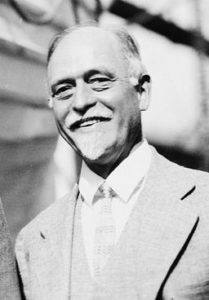
Bottom line: Real interest rates don’t reset on bonds you’ve bought; inflation adjustments reset, even on already purchased bonds, every 6 months. At pickleball a week ago, a number of us got talking about U.S. Treasury I-Bonds. My wife and I have each bought our quota of $10,000 annually for 2021 and 2022. A pickleball friend was wondering whether or how the I-Bond interest rate gets reset once you’ve bought the bonds. Although the federal government often explains things badly, in this case the Treasury does a good job. It’s here. But I’ll go through it anyway. The I-Bond interest rate is made of 2 components: a real rate that stays constant once you’ve bought the bond and a rate to adjust for inflation. The bonds that my wife and I bought had a real rate of 0.00%. The latest ones, which are selling between November 1, 2022 and April 30, 2023, have a real rate of 0.40%. (Actually, there’s a third small component, as you’ll see below.) The semi-annual inflation rate for the bonds we bought earlier this year was 4.81%. The semi-annual inflation rate for bonds bought currently is 3.24%. So on the bonds we bought earlier this year, we earned 0.00% (real) + 2*4.81% (inflation adjustment), which gives 9.62%. The formula is: Fixed rate + (2 x semiannual inflation rate) + (fixed rate x semiannual inflation rate). Notice that I’ve left out the third term in the calculation just preceding this formula. It’s for the inflation adjustment on the real interest rate, as any good Fisherian economist (named after Irving Fisher) can tell you. But in the case of the bonds we bought with a 0.0% real interest rate, that term goes to 0. Zero times anything is still zero. Notice something interesting. As far as I can tell, the inflation rate the Treasury uses is backward looking rather than forward looking. So because inflation was particularly high in the 6 months preceding May 1, 2022, my wife and I got an unusually high interest rate. What we investors care about in choosing investments is the future inflation rate. So, looking at buying an I-Bond today, if you expect the future inflation rate to be lower than the annualized rate for the 6 months preceding November 1 (3.24% * 2), you should be more likely than otherwise to purchase an I-Bond. Incidentally, I didn’t even know about the existence of I-Bonds until sometime in 2021. But it turns out that they’ve been around since 1998, as the Treasury link shows. The picture above is of Irving Fisher. (0 COMMENTS)

/ Learn More

Vox’s Words and Vox’s Actions

David Henderson has a couple of recent posts analyzing possible upcoming regulatory changes affecting gig workers. Reading his posts triggered the little memory imp that lives in the back of my brain, and brought to mind an additional point worth making. At the outset, however, I do want to give some credit to the Vox writer David cites, Rachel Cohen. David pointed out in his Hoover article that the vast majority of gig workers value the flexibility of gig work and prefer it over traditional employment. Cohen acknowledges this too, writing: Some groups representing freelancers and small businesses also urged the NLRB against revising its contracting standard, worried they would lose their prized independent status. They pointed to government surveys, like a 2015 GAO report that found more than 85 percent of independent contractors and those self-employed appeared content with their status. In 2018, the Bureau of Labor Statistics reported 79 percent of independent contractors preferred their contracting arrangement over a traditional job. The Small Business and Entrepreneurship Council issued a statement on Tuesday calling the Labor Department’s rule “out-of-touch with the modern economy and how people want to work.” Even acknowledging this point is a breath of fresh air to read, at least from a Vox article. However, there’s another downside to the proposed regulations which deserved a mention – these new rules will cost a lot of people their jobs. In her Vox article, Cohen also writes: One major legal entitlement employees enjoy is the right to join a union. Another is the right to be paid at least the minimum wage, and for businesses to pay a portion of their Social Security tax. That is, one effect of this regulation will be to make people more expensive to employers as they move from contractors to employees. And as they get more expensive, we would expect the quantity of workers employed to decrease. I would expect a writer at Vox to be particularly aware of this point, and not just because it’s elementary economics that anyone who reports on economics issues should be aware of. A few years ago, when California initially passed AB5, Vox released an article praising the new law as an unambiguous victory for gig workers. Unlike Cohen, the author of this article doesn’t even hint at the possibility that this legislation might have any downsides. But flowery analysis can only obstruct economic reality from view – it doesn’t prevent economic reality from taking effect. Appropriately enough, “vox” means  “voice.” Vox used its voice to describe AB5 entirely in beneficial terms, but as the old saw goes, actions speak louder than words, even at Vox. Remember those freelance workers mentioned by Cohen in her article? That’s what woke up the memory imp in my brain. After some quick Googling, I was able to rediscover an article I read just before AB5 was scheduled to go into effect in California. The key point: Vox Media, a large digital media company with an array of niche sites, abruptly terminated hundreds of freelance writers in the state of California. The company will cancel its agreements with about 200 contractors to comply with a new law that goes into effect on January 1, 2020. The law is known as California Assembly Bill 5—commonly referred to as AB5. The law was enacted to prohibit corporations from misclassifying workers as independent contractors instead of employees…Vox intends to replace the freelance writers with roughly 20 new part-time and full-time staffers. The author of that article goes on to point out that not only was this devastating to those whose contracts were cut, it would also hurt Vox, too: Vox will now need to hire people on a part-time and full-time basis and pay them expensive benefits. They will lose out on the 200 independent writers who offer knowledge, viewpoints and analysis that will be hard to match with 90% less people. Given Vox’s own actions when regulation of this very kind is on the horizon, I don’t think it’s too much to ask of Vox writers to preach what they practice.   Kevin Corcoran is a Marine Corps veteran and a consultant in healthcare economics and analytics and holds a Bachelor of Science in Economics from George Mason University.  (0 COMMENTS)

/ Learn More

The Eccentric Entrepreneur’s Venture

Suppose an eccentric entrepreneur is raising money for a new venture. It could be a  sort of metaverse hula hoop or some revolutionary way of financing a public good (in the economic sense) or whatever. He tells potential adult investors something like: You know I am an eccentric genius. If my idea works, you and I will make piles of money; if it does not work, I will not gain anything and you will lose your investment. According to my estimates and my entrepreneurial intuition, I think there is a good chance of the former. As you suspect I will run my baby as I want and your only real recourse if you are not happy will be to sell your participation if you can find a buyer. We may further imagine that the state under which the eccentric investor lives actually does want to increase information and reduce transaction costs in investment decisions—more than, say, deepen its surveillance and control powers. Recall that transaction costs are the costs of finding contractual partners, agreeing with them, enforcing the agreements, and such. Our ideal government has decreed that all corporations who offer the sort of caveat emptor conditions described above will have to append “EE” (for “Eccentric Entrepreneur”) to their corporate names. We may conjecture that this legal rule would meet Friedrich Hayek’s requirement that any new rule be consistent with the general system of rules of the spontaneous order of a (more or less) free society. Our eccentric investor creates an EE corporation through with he raises money from investors. In one case or the other, any adult is free to invest or not to invest and, of course, to refuse to patronize any third party who does (conservative bankers are likely to abstain). Suppose that, Mr. A or Ms. B, “natural equals” in James Buchanan’s terminology, or hedge fund C, whose own investors are natural equals as well, decides to invest money in our eccentric entrepreneur’s venture. What is the problem with this voluntary exchange? If nobody chooses to risk his money, there is no problem either, and no reason for the state to encourage investment by making people believe that there is no risk because of its benevolent regulation. One objection (typical of the Law & Economics school) is that the state can find other ways to further reduce transaction costs in order to compensate for the fact that the eccentric investor has more information about his venture than the potential investors do—the asymmetric information argument. For example, the state could force eccentric entrepreneurs to regular publish detailed and verified financial statements of their ventures. One problem with this sort of informational mandate is that they tend to grow non-stop over time, in volume and scope, as we have seen since the early 20th century. The more powerful “the regulator” becomes, the higher are the transaction costs that citizens face in their relations with their own government. A related idea worth remembering has been succinctly expressed in Geoffrey Brennan and James Buchanan’s book The Reason of Rules: There is no necessary presumption that simply because markets are imperfect, political processes will work better. (0 COMMENTS)

/ Learn More

The mystery of politics

Why do people vote for bad candidates? In some cases, they may be electing the lesser of evils. But there are many instances where voters clearly prefer bad politicians. In a recent article on the political situation in Argentina, the Financial Times makes this observation: “A year ago Larreta was well out front as the opposition candidate,” Germano said. But while praised for efficient management of Buenos Aires, critics say Larreta lacks charisma and struggles to connect with ordinary Argentines. I rarely see “charisma” cited as an important attribute for politicians in places like Switzerland, Denmark or Singapore. It does seem to be important in places like Argentina, Brazil and the Philippines. Why? Shouldn’t voters prefer boring but honest technocrats that will tirelessly work in the public interest? Why the attraction to “lovable rogues”?Think about the field of law. It seems to me that having a lot of charisma is more useful for a criminal defense attorney than for a judge. We want our attorney to be a passionate advocate for our cause. We’d like a judge to be a dispassionate arbiter of disputes. Now consider the field of politics.  Perhaps voters in highly successful places would prefer boring but competent administrators that will preserve the country’s good qualities.  In less successful places, voters might prefer highly charismatic leaders that will fight for their faction against the “bad guys”.  If I’m right, then the FT article might lead readers to think, “Hmm, if that’s what Argentine voters want, perhaps I should not invest in Argentina.”  I am currently reading a new book by Troy Senik that makes a strong case for Grover Cleveland being the most unselfish man ever to serve as president of the US.  But is that what we want?  Here’s Senik: Grover Cleveland was precisely the kind of self-made, scrupulously honest man that Americans often say they want as their president.  We had him for eight years.  And somehow, we forgot him.” One argument is that while personal qualities might be nice, what really matters is the candidate’s views on the issues.  I’m not willing to accept that as a complete explanation.  It might apply to a general election, but their are far too many examples of primary races where the clearly inferior candidate wins out over the superior candidate despite having almost identical views on the key issues.  (Why did Georgia primary voters opt for Herschel Walker over alternative GOP candidates?) Here’s a question for people that are knowledgeable about American history.  I know that George Washington is one of our greatest presidents.  (He’s also one of my favorites.)  But how would Washington rate if he had not led America to independence from Britain, and if he had not been America’s first president?  What if his domestic and foreign policy achievements had been roughly comparable, but he served as president in the 1820s, or the 1880s?  Might he be rated comparably to Cleveland, Coolidge, and other presidents that had personal integrity but boring administrations? Washington and Coolidge were among the very few presidents that walked away from the presidency despite clearly being able to win another term.  Senik makes a strong case that Cleveland had an amazing devotion to public service; often doing things that hurt him both personally and professionally because he thought it was the right decision.  But that sort of unselfish devotion to the public interest is rare in a successful politician.    It seems likely that the qualities we’d like to see in a leader vary with the situation.  For most of human history, people were organized into small groups, often fighting with neighboring tribes.  I suspect that the qualities that would be useful for a Viking leader might be different from the qualities useful in a highly complex and affluent market economy such as Singapore.  Because most of human history was more like the Viking world than 21st century Singapore, we may be hardwired to prefer the wrong kind of leader for the modern world. It’s obvious to me that voters in less successful countries are often choosing leaders that make their country worse off.  Less obvious is whether these leaders are making the voter’s particular faction worse off.  Should voters prefer a “fighter” that will strongly advocate for their cause?  How does the calculus change if that leader is also personally corrupt, and enriches himself with money and power at the public expense?   Fighting is often a negative sum game, and hence successful societies will often opt for boring leaders that cooperate rather than fight.  That’s basically the rationale behind the European Union.  But when voters are frustrated and angry, they’ll opt for charismatic politicians that are seen as being willing to fight against the other side. So how does Argentina get out of this trap?  How do they get to the position where a Grover Cleveland can successfully run for president of their country?  I don’t know.  Does the culture have to change first?  If they somehow get richer, will that make voters opt for more sensible candidates?  I suspect there are no simple answers.  Society is a highly complex system, and change can occur from many different directions.   It is also possible that a society might go into reverse.  It might become increasingly polarized and begin electing inferior leaders that are seen as “fighters”.  Recently, I’ve read a number of articles making the case that classical liberals are too nice, and that rather than politely follow the rules we need leaders that will destroy the other side.  (Grover Cleveland was a classical liberal, indeed the last small government Democrat to serve as president.)  I also wonder if charisma is a more important attribute for voters that favor an activist government.  Perhaps voters believe that in order to enact lots of new programs, you need a charismatic politician that can persuade a majority of legislators.  Franklin Roosevelt and Lyndon Johnson both had strong personalities and an activist agenda.  Cleveland was boring but lacked an expansive view of the role of government.  Senik (p. 104) quotes him as saying: “the people have a right to demand that no more money should be taken from them, directly or indirectly, for public uses than is necessary for [an honest and economical administration of public affairs.].  Indeed, the right of the government to exact tribute from the citizens is limited to its actual necessities, and every cent taken from the people beyond that required for their protection by the government is no better than robbery.” PS.  My wife and I recently began planning a long trip to Argentina.  I’d already purchased an Argentine guidebook when I found out that the monetary system in Argentina is completely screwed up, which makes things very difficult for tourists.  Now we are leaning toward Chile. (0 COMMENTS)

/ Learn More