
This is my archive

bar

Taxing the Rich: It’s Complicated

After months of debate, and substantial changes along the way, this summer Congress successfully enacted a landmark package of tax and spending cuts, a key component of Donald Trump’s legislative agenda. Trump’s “big beautiful bill” (HR 1) will reduce taxes by around $4.5 trillion while also cutting roughly $1.5 trillion in federal spending. It is very likely the most important bill this Congress will take up, arguably the most important bill in decades. And while there are many provisions in the sprawling 1,000-page proposal, much of the discussion is focused on the tax reduction. Tax cuts are a perpetual debate in contemporary American politics. Last time the GOP controlled both chambers and the White House during Trump’s first term, they succeeded in enacting a similarly large tax reduction package. In fact, the “big beautiful bill” makes many of the 2017 tax cuts permanent. Before Trump’s election in 2016, a unified Republican Congress passed two rounds of tax cuts—in 2001 and 2003—during George W. Bush’s administration. Going back even further, Ronald Reagan achieved the same feat in both 1981 and 1986 when Republicans controlled the Senate for six years. Over this 45-year time span, the debate over taxes has tended to focus on a single issue: the policy implications of reducing taxes that will disproportionately go to high-income Americans. For example, conservative economists in the 1980s proposed that cutting the top marginal tax rate (70% at that time) would generate greater government revenue, not less, due to increased production and employment. George H.W. Bush called this theory, known as the Laffer Curve, “voodoo economics” when he ran against Reagan in the 1980 GOP primary (for an overview see Domitrovic 2021 on the emergence of supply-side economics). As far as the recently enacted legislation, Trump echoes these arguments, calling it the most “pro-growth” and “pro-worker” law in American history (White House 2025). Critics of these claims abound, mostly among left-leaning economists. For example, Joseph Stiglitz has argued that the post-World War II experiment with “trickled-down economics” failed to achieve its primary policy objectives (Stiglitz 2015). Others argue that the sharp reduction in the top marginal tax rate has led to greater income inequality rather than a universal “rising tide” (Piketty and Saez 2007). A more recent article by David Hope and Julian Limberg (2022) supports these two claims—across eighteen OECD nations over the last fifty years, reduced tax progressivity has caused greater income inequality while having no discernable effect on economic growth or employment. “Simply put, whether one wants high-income Americans to pay more or less in taxes hinges on whether they view the rich in positive or negative terms.” I want to sidestep these policy debates and instead focus on a neglected part of the discussion: what the American public thinks about tax cuts. Specifically, why do Americans support or oppose tax cuts that primarily go to the wealthy on a per dollar basis? If there is one core argument in this piece, it is that the American public has complex and often contradictory views about progressive taxation. A key aspect of this claim is my research showing that Americans’ preferences for raising or lower taxes on the rich are largely informed stereotypes about “the rich” as a group (Ragusa 2015, 2017). Simply put, whether one wants high-income Americans to pay more or less in taxes hinges on whether they view the rich in positive or negative terms. What do Americans think about taxing the rich? Although a lot depends on question wording, surveys consistently show that Americans want the rich to pay more in taxes. For example, the 2024 Cooperative Election Study (CES) asked if “taxes on individuals earning $400,000 should rise.” A sizable majority of 69% said they support such a proposal. A recent poll by the Hoover Institution produced a nearly identical estimate despite differences in question wording—66% support having “high-income earners pay a larger share of federal income taxes.” Data from Pew show majorities support raising taxes on wealthy households as well. On a recent survey, 58% said “tax rates on household income over $400,000 should be raised” while only 19% said these households should pay less in taxes. It should be noted that support for increasing taxes on the rich is a relatively recent phenomenon. Gallup data from 1939, at the end of the Great Depression, showed that large majorities opposed “redistributing wealth” by levying “heavy taxes on the rich.” Sixty years later in 1998 when Gallup asked the same question, a majority of Americans continued to oppose such a proposal, albeit somewhat narrowly (51% to 45%). However, the most recent Gallup polls (in 2013, 2015, 2016 and 2022) show majorities support increasing taxes on the rich to redistributive wealth. But why do so many Americans today support raising taxes on high-income households? On its face, this seems like a rather simple question. Economic self-interest, ideology, and views on income inequality are all intuitive answers. And yet these explanations are either incomplete or wrong. A logical starting point is to consider raw economic self-interest. It stands to reason that high income Americans, who constitute a small share of the public, want their taxes to decrease, while low- and middle-income Americans want taxes on the rich to go up (presumably to pay for greater social services). Although certainly logical, there is mixed evidence on this hypothesis. For example, an often-cited review essay by Sears and Funk (1990) aptly titled “the limited effect of economic self-interest on the political attitudes of the mass public” found that attitudes towards taxation are shaped by economic self-interest only when the size of the tax reduction is substantially large and obvious. In most cases, self-interest is a moderate to poor predictor of Americans views on economic policies, according to Sears and Funk. I found a similar result in one of my papers on this subject—a measure of income was a poor predictor of whether Americans said they wanted taxes on the rich to go up or down (Ragusa 2015). Digging deeper into the CES data cited above, only one income bracket in 2024—those making over $500,000 per year—opposed a hypothetical plan to increase taxes on individuals earning over $400,000 per year. For respondents in the second highest income bracket—Americans earning between $350,000 and $499,999 per year—a majority supported a tax increase on high-income earners even though many of these respondents would see their taxes increase. Conversely, there are many in the lowest CES income brackets that say they want high-income earners to pay less in taxes. As far as why income is at best a modest correlate of views on taxing the rich, one answer is that a complex set intersecting ideals mute the effect of economic self-interest. Compared to citizens in many European nations, Americans report a stronger commitment to ideals like individual liberty, upward mobility, and equality of opportunity (Hochschild 1981). Recent research supports this contention. For example, a survey experiment by Ballard-Rossa, Martin and Scheve (2017) found that respondents who said one’s economic success is explained more by “hard work” rather than “luck” had less progressive views on taxation. A study by Hope, Limberg, and Weber (2023) found a similar result—wealth obtained from an inheritance reduces support for tax cuts that benefit the rich. Critically, however, in the Ballard-Rossa, Martin and Scheve study, even those who cited “hard work” as the source of a person’s economic success had progressive preferences on balance. A second possibility is that ideological considerations supersede economic self-interest. Although counterintuitive, a substantial body of work shows that Americans have “sociotropic,” or other focused, views that override their “pocketbook” motivations. In simple terms, low-income conservatives may prefer a less progressive tax structure for ideological reasons (e.g., limited government and individual liberty) while high-income liberals may prefer a more progressive tax structure (e.g., to promote equality). Public opinion polling confirms that Americans have ideologically motivated tax policy attitudes. For example, the Pew survey digs into this issue by providing crosstabs by both party and income. For Democrats, support for taxing the rich increases with income. In other words, Democrats in the highest income bracket are the most supportive of raising taxes on wealthy households. For Republicans it is the opposite—low-income Republicans are among the most opposed to taxing the rich. (A likely explanation for this counter intuitive finding is the effect of education on tax policy preferences.) Academic studies show similar ideological and partisan results (Ballard-Rossa, Martin, and Scheve 2017). An unresolved question remains, however: why do so many Americans support raising taxes on the rich, including many self-proclaimed conservatives? On the Cooperative Election Study (CES) survey, a whopping 44% of self-described “conservative” and 34% of self-described “very conservative” respondents say they support raising taxes on the rich. Simply put, ideology, on its own, is a strong but imperfect explanation for Americans tax policy preferences. A third possibility is that opinions on taxing the rich are not explained by an overarching ideology, which many Americans do not possess in the first place (Converse 1964), but by a specific set of policy objectives. For example, Americans often say they are concerned about the income gap between the rich and poor, so perhaps many want to raise taxes on the rich to alleviate inequality and increase government spending (while those who are unconcerned about inequality want the rich to pay less in taxes). Although there is disagreement in the literature, academic research has tended to refute this hypothesis, however. A famous study by Bartels (2005) concluded that many Americans have what he termed “unenlightened self-interest” (though see the Hope, Limberg and Weber 2023 study). Although Bartels found that there was a relationship between support for the two Bush era tax cuts and one’s perceived tax burden, attitudes were unrelated to broader views on income inequality in Bartels’ study. For example, those who said they were concerned about inequality were just as likely to say they supported the repeal of the estate tax, which increased the wealth gap. Bartels concluded that public attitudes were “ill-informed [and] incentive to some of the most important implications of the tax cuts” (page 15). What about socioeconomic stereotypes? In summary, economic self-interest and one’s policy views are imperfect explanations of Americans (rather complex) views on taxing the rich. My research suggests another factor plays a key role: socioeconomic stereotypes. A lengthy literature documents that stereotypes about groups affected by a policy powerfully shape how citizens think about that policy. In the economic realm, studies have shown that stereotypes about targeted groups shape attitudes toward welfare (see Fox, 2004 and Gilens, 1996, 1999) and social security (see Winter 2006) for example. From a theoretical standpoint, stereotypes operate as heuristics that simplify one’s thinking about a complex policy matter. In this literature, deservingness stereotypes are found to be particularly powerful. In brief, the concept of deservingness captures whether one thinks the targeted group has “earned” some beneficial policy outcome from the government. I examined this possibility with survey data that asked Americans to describe the rich in an open-ended format (Ragusa 2015). As you might imagine, the survey elicited a range of responses—some of the most frequent descriptions of the rich ere “highly educated,” “hard working,” “good job,” “arrogant,” “inheritance,” “luck,” “political influence,” and “drive expensive cars.” My analysis shows that these stereotypes powerfully shape views on taxing the rich (controlling for ideology, income, education, and a range of other factors). From a statistical standpoint, the analysis indicates that socioeconomic stereotypes have a similar effect size as ideology. As you might expect, respondents who described the rich using positive terms were much more likely to say they should pay less in taxes while those who described the rich using negative terms wanted the rich should pay more in taxes. All in all, Americans stereotype the rich—like other groups in society—and these stereotypes help reconcile seemingly contradictory views about the merits of raising or lowering taxes on high-income Americans (e.g. why support is so high in the abstract and why many self-described conservatives want taxes on the rich to go up). Indeed, the survey showed that most people have at least one negative stereotype about the rich, while a follow up study showed that modern media framing has increasingly focused on the rich as a group (Ragusa 2017). Not all stereotypes are the same, however. Respondents who described the rich using dispositional and prosocial terms were the most likely to say taxes on them should go down. In the literature “dispositional” refers to whether a targeted group is responsible for their circumstance (e.g. the rich became wealthy because of hard work) while the term “prosocial” is about whether the group is a net benefit to society (e.g. the rich are job creators). Conversely, Americans with situational and antisocial views of the rich (e.g., the rich became wealthy as a result of inherited wealth and are selfish) are those most in favor of having the rich pay more in taxes. Implications An overarching conclusion that emerges from the above is that Americans have a mix of complex, irrational and often ill-informed views on tax policy. Bryan Caplan’s excellent book The Myth of the Rational Voter (2008) studies this issue in far greater detail and makes a convincing case as to Americans’ inability to make sound economic decisions. In brief, Caplan argues that a downside to representative democracy is that voters often get what they want—that is, unenlightened policy outcomes. It isn’t just that people are uninformed. Rather, Caplan documents that people form their policy opinions on a mix of ideology, emotion, and biased thinking rather than fundamental economic principles. One piece of Caplan’s book that does not seem to fit taxing the rich specifically is his suggestion that voters’ biased decision-making leads to popular but economically unwise policies that pass. After all, cutting taxes on the rich is unpopular yet was recently enacted by Congress (just like the last time Trump was president in 2017). How can we reconcile this apparent inconsistency? I think there are two answers. First, Caplan argues there isn’t a perfect “1-1” relationship between what the public wants and what the public gets. Issue salience is a key moderating variable. When the public holds strong beliefs, the people are more likely to get their preferred outcome (even if it is irrational or ill informed). But when voters hold weak beliefs, lawmakers have greater flexibility and those policies are less likely to pass. Given everything cited above, I think it is fair to say voters have highly malleable and thus weak positions when it comes to taxing the rich. A second possibility is that Americans actually don’t want the rich to pay more in taxes. In fact, you could argue the opposite. Although popular when asked about in the abstract, surveys that force Americans to select an appropriate level of taxation often show far less support for raising taxes on high-income individuals and households. For more on these topics, see Bryan Caplan on the Myth of the Rational Voter. EconTalk. Redistribution, by Dwight R. Lee. Concise Encyclopedia of Economics. “Do the Poor Vote Their Self-Interest?” by Dwight R. Lee. Library of Economics and Liberty, August 5, 2013. For example, the Hoover Institution data cited earlier purported to show that 66% want high-income Americans to pay a larger share of federal incomes taxes. And yet a follow-up question revealed that 73% want a top tax rate that was less than what high-income earners currently pay. Ballard-Rosa, Martin and Scheve’s (2017) study found a similar result— although people prefer a more progressive tax structure in the abstract, when forced to set hypnotical tax rates, Americans’ answers don’t differ very much from current tax rates. In conclusion, Americans opinions on taxing high-income earners are complex and often contradictory, despite the strong opinions on the side of raising taxes on the rich in the abstract. Given the central role that taxation plays in domestic politics, this is cause for concern as it suggests the public is ill equipped to perform one of their basic duties. References Ballard-Rossa, C, Martin, L., & Scheve, K. 2017. “The Structure of American Income Tax Policy Preferences.” The Journal of Politics, 79, 1-16. Bartels, L. M. 2005. “Homer Gets a Tax Cut: Inequality and Public Policy in the American Mind.” Perspectives on Politics, 3, 15–31. Caplan, B. (2008). The Myth of the Rational Voter: Why Democracies Choose Bad Policies. Pinceton, NJ: Princeton University Press. Converse, P. E. 1964. The Nature of Belief Systems in Mass Publics. In D. E. Apter (Ed.), Ideology and Discontent, London: Free Press of Glencoe. Cooperative Election Study. 2025. CES 2024 Data. Accessed July 2, 2025: https://tischcollege.tufts.edu/research-faculty/research-centers/cooperative-election-study Domitrovic, B. 2021. The Emergence of Arthur Laffer: The Foundations of Supply-Side Economics in Chicago and Washington, 1966-1976. London, UK: Palgrave Macmillan. Fox, C. 2004. The Changing Color of Welfare? How Whites’ Attitudes Toward Latinos Influence Support for Welfare. American Journal of Sociology, 110, 580-625. Gallup. 2022. Average American Remains OK With higher Taxes on Rich. Accessed July 2, 2025: https://news.gallup.com/opinion/polling-matters/396737/average-american-remains-higher-taxes-rich.aspx Gilens, M. 1996. Race Coding and White Opposition to Welfare. American Political Science Review, 90, 593-604. Gilens, M. 1999. Why Americans Hate Welfare: Race, Media, and the Politics of Antipoverty Policy. Chicago, IL: The University of Chicago Press. Hochschild, J.L. 1981. What’s Fair? American Beliefs About Distributive Justice. Cambridge, MA: Harvard University Press. Hoover Institution. 2025. New Poll: What Americans Need to Know About the Trump Tax Cuts. Accessed July 2, 2025: https://www.hoover.org/news/new-poll-what-americans-need-know-about-trump-tax-cuts Hope, D. & Limberg, J. 2022. “The Economics Consequences of Major Tax Cuts for the Rich.” Socio-Economic Review, 20, 539-559. Hope, D., Limberg, J. & Weber, N. 2023. “Why Do (Some) Ordinary Americans Support Tax Cuts for the Rich? Evidence from a Randomized Survey Experiment.” European Journal of Political Economy, 78, 1-15. Pew Research Center. 2025. Most Americans Continue to Favor Raising Taxes on Corporation, Higher-Income Households. Accessed July 2, 2025: https://www.pewresearch.org/short-reads/2025/03/19/most-americans-continue-to-favor-raising-taxes-on-corporations-higher-income-households/ Piketty, T. & Saez, E. 2007. “How Progressive is the U.S. Federal Tax System? A Historical and International Perspective.” Journal of Economic Perspectives, 31, 3-24. Ragusa, J. M. 2015. “Socioeconomic Stereotypes: Explaining Variation in Preferences for Taxing the Rich.” American Politics Research, 43, 327-59. Ragusa, J. M. 2017. “Do the Rich Deserve a Tax Cut? Public Images, Deservingness, and Americans’ Tax Policy Preferences.” In Bart Meuleman, Femke Roosma, Tim Reeskens, and Wim van Oorschot (Eds.), The Social Legitimacy of Targeted Welfare, London: Edward Elgar Press. Stiglitz, J. E. 2015. “Inequality and Growth.” The Political Quarterly, 86, 134-155. Sears, D. O., & Funk, C. L. 1990. “The Limited Effect of Self-Interest on the Political Attitdues of the Mass Public.” Journal of Behavioral Economics, 19, 247-271. White House. 2025. Myth vs. Fact: the One Big Beautiful Bill. Accessed July 2, 2025: https://www.whitehouse.gov/articles/2025/06/myth-vs-fact-the-one-big-beautiful-bill/. *Jordan Ragusa is a professor in the political science department at the College of Charleston. His research focuses on several intersecting topics: American and South Carolina politics, the Congress, political parties, elections, political economy, and statistical methods for the social sciences.  He is the author of two books: Congress in Reverse: Repeals from Reconstruction to the Present and First in the South: Why the South Carolina Presidential Primary Matters. For more articles by Jordan Ragusa, see the Archive. This article was edited by Features Editor Ed Lopez. (0 COMMENTS)

/ Learn More

The Cost of Building Progress

Book Review of: Why Nothing Works: Who Killed Progress–and How to Bring It Back by Marc J. Dunkelman,1; and Abundance by Ezra Klein and Derek Thompson.2 Vera Coking and the Cost of Progress In 1961, Vera Coking and her husband purchased a home in Atlantic City, New Jersey. They paid $20,000 for the modest three-story house, or about $215,000 in 2025 dollars. Coking was looking for a summertime home, not an investment. But if she had been looking to make money, she would have been hard pressed to do better. Twenty years later, Coking received an offer of one million dollars from Bob Guccione of Penthouse who wanted the land for a casino he was developing. She turned it down. Then, in 1993, another casino developer tried to buy the land to use as a limousine parking lot. Once again, Coking refused the offer. This time, however, the developer refused to take “no” for an answer. Since a voluntary exchange wasn’t going to work, the developer went to the state instead. Specifically, he turned to the state’s Casino Redevelopment Agency, which sought to use the power of eminent domain to kick Coking out of her house against her will. A new parking lot, the developer argued, would better serve the public interest than an old, single-family home. And if it happened to serve the developer’s private financial interest along the way, well, that was just a one of those happy accidents along the road to progress. Luckily for Coking, her case attracted the attention of the public interest law firm, The Institute for Justice. With their help, Coking was able to secure a modest victory in court. She kept her house, not because the court rejected the principle of eminent domain altogether, but because in this particular case, the state’s plan put “no limits” on what the developer could do with the land, in the words of Superior Court Judge Richard Williams. The developer, one Donald J. Trump, would have to park his customers’ limousines somewhere else. Markets, Government, and the Barriers to Abundance I was reminded of the Coking case while reading two recent books, both of which argue persuasively that America has made it too difficult to build new things, and that making building easier again could unleash a new wave of prosperity and growth. Those books, Marc Dunkelman’s Why Nothing Works and Ezra Klein and Derek Thompson’s Abundance, are noteworthy in many respects, but not least because of their rather surprising political orientation. Klein, Thompson, and Dunkelman all identify as progressive liberals, and their books are aimed at convincing the center-left to adopt the kind of pro-growth position that is more often associated with the political right. To a liberalism that has devoted much of its energies to arguments about how to divide the economic pie more equitably, Klein, Thompson, and Dunkelman seem to suggest that we focus instead on how to make that pie bigger for everyone. That suggestion—which I should stress is only implicit in the two books—echoes a point that has long been made by conservatives, classical liberals, and libertarians. And, indeed, there is much else in these books for such readers to appreciate. As the authors demonstrate with a vast range of specific examples, a big part of the reason why Americans haven’t built as much as we could and should have is that government has gotten in the way. Left to their own devices, free markets are generally amazing in their capacity to discover innovative, efficient, and scalable ways to produce the things that people want. But when government rules impede markets’ ability to build new housing, we wind up with a crisis of affordability and homelessness. When government puts up barriers to the development and marketing of new pharmaceuticals, we wind up waiting decades for cures that could have been delivered in years or months. In these and a host of other similar cases, unleashing abundance means cutting back on the size and scope of government and letting the creative destruction of free markets rip. However, cutting back on government regulation of the market, according to the authors, is merely a necessary step toward abundance. It is not a sufficient one. The problem is not merely that government has hobbled markets; it is that government has also hobbled itself. A variety of factors, including the “rights revolution” of the second half of the twentieth century and an increasing emphasis on rigid proceduralism, have left government crippled in its ability to get things done. However well-intentioned these developments may have been, their effect was to establish a host of new “veto gates,” each capable of bringing projects to a grinding halt. And thus we find ourselves in a situation where extending subway lines in New York City takes decades and winds up costing twenty times as much as similar projects in other cities around the world, where the projected costs of a clean energy project in Maine almost doubled seven years after its approval without a single mile of line ever being built, and where California has been struggling to even start a functioning high speed rail line that was first approved in 1982. “If we want to start building again, something must change.” If we want to start building again, something must change. But what, exactly? Economic growth is a tremendous good, but as the case of Vera Coking shows, we don’t necessarily want economic growth at any cost. So, what sort of framework do these books offer for understanding the nature of our problem, and for distinguishing good growth from bad? The Jeffersonian Trap and Procedural Paralysis For Dunkelman, much of the problem can be traced to the rise of “Jeffersonianism,” a philosophy of governance driven by a skepticism of large, centralized institutions, and which seeks to protect individuals from overbearing authority by pushing state authority down and out. It is this Jeffersonian philosophy which supported the creation of a vast new array of rights over the course of the 20th century, rights designed to protect individuals, communities, and the environment against the oppressive power of both big government and big corporations alike. Some such protections are necessary, Dunkelman concedes, but a central claim of the book is that Jeffersonianism has been carried too far, and what is needed now is a corrective swing back toward a more “Hamiltonian” philosophy of centralized, expert authority. Dunkelman’s distinction captures two broad public attitudes toward political authority, but those public attitudes fall well short of the coherence we might expect from rigorous philosophical systems. And this limits their utility in understanding—let alone guiding—political decision making. For example, Dunkelman recounts how, in the 1970s, progressives and police unions during joined forces to limit the discretionary power of police chiefs. The goal of the movement was to protect officers from various abuses of power, which sounds Jeffersonian. But by limiting the discretionary power of police chiefs, the reforms wound up increasing the discretion of beat cops, thereby leaving ordinary citizens more vulnerable to the unchecked authority of the police. A similar pattern can be found in many other Jeffersonian reforms. Laws enacted to protect the natural environment from exploitation by big corporations necessitate the creation of large new government bureaucracies to define, adjudicate, and enforce those rights. In each case, we can describe the change as decentralizing power in a sense. But often, attempts to abolish power simply redistribute it, and the framework of Jeffersonianism vs Hamiltonianism doesn’t tell us much about the net power wielded over individuals. Nor does it provide a useful guide for thinking about how power ought to be distributed in order to promote either economic growth or the other values we might wish to pursue. Klein and Thompson offer less in the way of an overarching theoretical framework than does Dunkelman. But one theme that runs clearly throughout their book is the idea that abundance has been thwarted by an overemphasis on proceduralism. Proceduralism, in this context, means the conviction that governmental legitimacy is to be earned by compliance with an “endless catalog of rules and restraints.” Laws and regulations prove their merit by surviving notice-and-comment sessions, environmental reviews, court challenges, and so on. These procedural constraints are designed to serve two legitimate goals—legitimacy and accountability. But the actual result, according to legal scholar Nicholas Bagley, on whose work Klein and Thompson draw, has been a system that “frustrate[s] the very government action that progressives demand to address the urgent problems that now confront us.”3 Instead of focusing on procedures, Klein and Thompson argue, we should focus instead on what actually matters to people—outcomes. No one cares how many reports were written in the process of approving the construction of a new bridge. What they care about is whether the bridge gets built, safely, cheaply, and quickly. All this sounds like common sense, except for one big problem: governments have no way of directly selecting outcomes. Governments can create institutions; they can create laws; they can create taxes and subsidies. And they can hope and intend that these creations will ultimately generate certain outcomes. But whether those outcomes materialize or not is a matter that depends on a whole host of factors, the vast majority of which are outside of government’s direct control. Consider an analogy. I might want my son to become a talented runner. But he won’t make much progress toward that goal by simply focusing on the outcome. (“To-do today—become a great runner!”) It simply isn’t actionable. A good coach will break the outcome down into concrete steps or procedures. Focus on your form, control your breath, and put in the miles. Trust the process. A good process doesn’t guarantee a good outcome. But it makes that outcome more likely by making clear the steps you need to take to get there. The same is true for government. Procedures are a way of focusing the government’s attention on the things that are under its control, in order to make the outcome which is not under its control more probable. Procedures are not only helpful, but they’re also unavoidable. The only way to achieve an outcome is through some kind of process. The only question is whether we’re going to clearly and carefully define that process or leave it up to chance and the discretion of the parties involved. Ill thought-out procedures will not only make the desired outcome less likely; they also create opportunities for the process to be captured and manipulated by groups seeking to promote their own special interest at the expense of the common good. Capture, Cronyism, and Government Failure All this leads to one of the most surprising omissions of the two books. For all their focus on the failures of government policy—either to build things itself, or to properly incentivize and support market actors in doing so—there is shockingly little discussion of the field of study which has developed the most systematic account of the nature and causes of government failure: public choice theory. With the exception of Klein’s brief discussion of Mancur Olson’s classic, The Rise and Decline of Nations, there is precious little discussion of rent-seeking, agency capture, or the underlying structural incentives that generate the many pathologies that Dunkelman, Klein, and Thompson observe. And without a clear diagnosis of the problem, the authors struggle to provide a cure that is clear, compelling, and politically realistic. Many of the core findings of public choice theory were usefully summarized in Peter Schuck’s 2014 book, Why Government Fails So Often: And How It Can Do Better.4 Schuck draws particular attention to the problems of information and incentives that bedevil so many government undertakings. In brief, government officials often lack the detailed, context-specific, and rapidly changing knowledge necessary to produce socially desirable outcomes and often are under-incentivized to pursue those outcomes anyway, even if they knew how to do so. Moreover, these defects are not temporary or easily corrected. They are, according to Schuck, rooted in an “inescapable, structural condition: officials’ meager tools and limited understanding of the opaque, complex social world that they aim to manipulate.” Schuck’s concerns especially apply to Klein and Thompson’s call for a more expansive government role in fostering innovation. Klein and Thompson claim that the popular idea that government is “lousy at picking winners” is a myth that “bears little resemblance to history.” Drawing heavily on the work of Mariana Mazzucato, they argue that the American government has in fact played an expansive role in developing many of the technologies and conveniences that shape our modern world.5 From the iPhone to shale drilling to federally subsidized mortgages, there is hardly any aspect of our lives that is untouched by government “picking.” But the story told by Mazzucato is not without its critics. A greater familiarity with the public choice literature, or with Alberto Mingardi and Deirdre McCloskey’s detailed criticism of Mazzucato’s book, might have led Klein and Thompson to at least take these criticisms seriously.6 Unfortunately, there is little in the way of acknowledgement of these objections, let alone critical engagement with them. It is shocking, for instance, that the words “cronyism” or “rent-seeking” do not appear a single time in the pages of Abundance. If government is to be in the business of identifying and subsidizing potential “winners” in the economy, we will of course hope that it will do so based on the best available scientific and economic insight. But both theory and ample experience (do we still remember Solyndra?) show that this is far from certain. Government favors will often be awarded not to the most deserving but to the most politically well-connected. And the bigger the prize, the fiercer will be the competition to forge those connections. The outcome of such a competition will almost certainly not be favorable to the poor, the small, or the outsiders. Innovation is a process of trial and error, and both markets and governments will produce plenty of failures. But there are massively important differences between the nature of these failures. Private businesses are gambling with their own money, giving them an important incentive to carefully balance risk and reward; when governments invest, they’re playing with other people’s money. Private businesses fail in a way that tends to be small and localized; government failures occur on a much larger scale. Finally, and perhaps most importantly, the failures of private businesses are temporary—failing firms are driven out of the market by the ruthless process of market competition. Government failures, in contrast, face no such screening process. Even the most abject failure of a government program tends to benefit some small, concentrated interest group, and that interest group has much stronger incentives to fight for the preservation of that program than anyone else does to end it.7 Abundance and Comparative Political Economy The point of these criticisms is not to discredit the abundance agenda. To the contrary, the overall vision offered by Dunkelman, Klein, and Thompson is grand and inspiring. It is an agenda that has the potential to unite progressive liberalism’s traditional concern for advancing the interests of the poor with classical liberalism’s emphasis on the creative power of free, competitive markets—a brilliant adaptation of what Brink Lindsey called the “liberaltarian” agenda.8 It is, moreover, an agenda that channels our energies in a positive-sum direction, one that yields compounding dividends over the long term.9 For more on these topics, see Richard Epstein on Property Rights, Zoning, and Kelo. EconTalk. Arthur Diamond on Openness to Creative Destruction. EconTalk. Marianna Mazzucato on The Value of Everything. EconTalk. For introducing and popularizing this agenda, the authors of these two books deserve our praise. Where they fall short is in the question of how—what are the concrete steps we can take from here to meaningfully and sustainably promote abundance?10 Answering this question will require a deeper engagement with the methods of comparative political economy—methods advanced by scholars like Peter Boettke, Mark Pennington, and others.11 Many difficult questions and challenges lie ahead. But if we are lucky, the abundance movement is just getting started. Footnotes [1] Marc J. Dunkelman. Why Nothing Works: Who Killed Progress–and How to Bring It Back. Feb. 2025. [2] Ezra Klein and Derek Thompson. Abundance. Mar. 2025. [3] Nicholas Bagley, “The Procedural Fetish.” Niskanen Center, 7-Dec-21 [4] Peter Schuck, Why Government Fails So Often: And How It Can Do Better (Princeton: 2014). [5] See Mariana Mazzucato, The Entrepreneurial State: Debunking Public vs. Private Sector Myths (Anthem, 2013). [6] See Alberto Mingardi and Deirdre McCloskey, The Myth of the Entrepreneurial State (AIER, 2020). [7] See, for discussion, Jonathan Rauch, Demosclerosis (Three Rivers Press, 1994). [8] See Brink Lindsey, “Liberaltarians”. Cato Institute, 04-Dec-06. In an interview with Lindsey, Steve Teles describes the connections between the abundance movement and liberaltarianism. See “Steve Teles on Abundance: Prehistory, Present, and Future,” 11-Jun-25. [9] As such, the abundance movement has natural affinities with the “longtermist” branch of effective altruism. On longtermism, see William McAskill, What We Owe the Future (Basic Books, 2022). On the overriding long-term importance of economic growth, see Tyler Cowen, Stubborn Attachments: A Vision for a Society of Free, Prosperous, and Responsible Individuals (Stripe, 2018). [10] The sympathetic critic Noah Smith makes a similar point. See his “Progressives Take their Best Shot at Abundance (But It Falls Short),” 17-Jun-25. [11] See Peter Boettke, “The New Comparative Political Economy,” 12-Dec-05; and Mark Pennington, Robust Political Economy: Classical Liberalism and the Future of Public Policy (Edward Elgar, 2011). *Matt Zwolinski is a political philosopher at the University of San Diego who teaches and writes about issues at the intersection of philosophy, politics, economics and law. He is director of USD’s Center for Ethics, Economics, and Public Policy, co-director of USD’s Institute for Law and Philosophy, and a Senior Fellow at the Niskanen Center. As an Amazon Associate, Econlib earns from qualifying purchases. (0 COMMENTS)

/ Learn More

Medical Practice Without Consent

While informed consent and respect for autonomy govern how health care practitioners interact with their patients, this new ethos is absent when it comes to the government asserting authority over adults’ health decisions. The government dictates what kinds of health professionals adults may consult. It determines what medicines adults may purchase and under which circumstances they may consume them. It bans adults from ingesting substances or engaging in activities that the government decides are unhealthful, regardless of individual risk-benefit priorities. I want to point out roads leading to a future where the government respects the autonomy and rights of all adults. –Jeffrey A. Singer, Your Body, Your Health Care,1 (pages 2-3) Jeffrey A. Singer, a physician, argues for deregulation in health care to empower individuals to make their own health care decisions. His book’s title, Your Body, Your Health Care, harkens back—consciously or otherwise—to a 1970 volume Our Bodies, Our Selves, which was dedicated to female empowerment in that era’s feminist movement. While not focused on healthcare alone, the popular book radically shifted the conversation around women’s health, empowering women to understand, manage, and advocate for their own bodies and medical care. “Except under dire circumstances, we would be offended if a doctor gave us no choice concerning the manner of treatment.” Except under dire circumstances, we would be offended if a doctor gave us no choice concerning the manner of treatment. Dr. Singer is at least as offended by the government presuming to be dictatorial regarding treatment. Today, we are accustomed to only being able to consume medications that have been approved by the government. In many cases, a doctor’s prescription is necessary. But we can imagine a regime in which you can decide on your own, with institutions, including the Food and Drug Administration, playing only an advisory role. Singer asserts: If one supports the doctrine of informed consent, then one must logically respect the right to self-medicate. (page 13) But later Singer writes, The complexity, sophistication, and risks posed by many modern pharmaceuticals and the threat of tort liability would lead manufacturers to continue to market many drugs as prescription-only. p. 60 I am afraid that “the threat of tort liability” imposes costs while providing uncertain benefits. In that regard is not necessarily better than regulation. I would prefer to see the FDA lose its monopoly on drug certification. One can imagine that the function of drug certification would be privatized and advisory-only. Consumers should be informed about what private certification bodies recommend concerning the drugs that they are considering taking. But I can imagine that to have the resources and the incentives to test thoroughly, private certification organizations might require government subsidies. Singer argues that the government should not tell us who we can or cannot consult regarding our health. Ideally, states should repeal all health professional licensing laws. Licensing laws do little to protect the public from poor quality care and serve as barriers to new entrants and innovations in the health care professions. States could accredit third-party certification organizations to perform licensing boards’ functions. Such organizations could review the credentials, education, and real-world experience of domestic and international applicants and certify them as competent to provide various health care services. (page 39) The trick will be to make sure that consumers are represented by such certification organizations. Otherwise, there might not be much change from the current situation, where rent-seeking by providers is predominant. Singer opposes the War on Drugs. If the government ended its war on drugs, people would be able to purchase them from legal suppliers. They would comparison shop. They would know with confidence the drugs they are buying, the dosage, and the purity. (page 151) With marijuana legalization, it does not appear to me that consumers have become so well informed and protected. Purity and dosage are more reliable in the case of alcohol, which is heavily regulated. For libertarians, the phenomenon of drug addiction represents a challenge. There is not a unitary self. There is the self that is addicted, and there is also the self that would prefer not to be addicted. Perhaps a solution is for an individual to designate someone else with something comparable to “power of attorney” when it comes to potential drug addiction. My designee would be allowed to take steps to block my access to addictive substances. For more on these topics, see Adam Cifu on the Case for Being a Medical Conservative. EconTalk. “American Healthcare as Viewed by an Entrepreneur,” by Arnold Kling, Library of Economics and Liberty, September 1, 2014. Robin Feldman on Drug Patents, Generics, and Drug Wars. EconTalk. Your Body, Your Health is a bracing challenge to the status quo regarding health care regulation. Although along the way I have expressed quibbles regarding Dr. Singer’s recommendations, I certainly endorse re-thinking public policy in these areas to try to enhance consumer autonomy. Footnotes [1] Jeffrey A. Singer, Your Body, Your Health Care. April 8, 2025. *Arnold Kling has a Ph.D. in economics from the Massachusetts Institute of Technology. He is the author of several books, including Crisis of Abundance: Rethinking How We Pay for Health Care; Invisible Wealth: The Hidden Story of How Markets Work; Unchecked and Unbalanced: How the Discrepancy Between Knowledge and Power Caused the Financial Crisis and Threatens Democracy; and Specialization and Trade: A Re-introduction to Economics. He contributed to EconLog from January 2003 through August 2012. Read more of what Arnold Kling’s been reading. For more book reviews and articles by Arnold Kling, see the Archive. As an Amazon Associate, Econlib earns from qualifying purchases. (0 COMMENTS)

/ Learn More

Let Me Be Forgotten (with Lowry Pressly)

What do we lose when every moment is recorded, every action scrutinized, and every past mistake preserved? Philosopher and author Lowry Pressly joins EconTalk’s Russ Roberts to discuss why privacy isn’t just about secrets or information control, the necessity of spontaneity, the importance of moral growth, and what we need to become fully human. From […] The post Let Me Be Forgotten (with Lowry Pressly) appeared first on Econlib.

/ Learn More

Magical Thinking

I worry that people are looking for quick fixes to our current fiscal problems, when in fact we will need to take painful steps in order to get fiscal policy back to a sustainable track.  In this post, I’ll look at three recent examples:Here is Arthur Sants: The administration’s “crypto czar” David Sacks told CNN, that it “could create trillions of dollars of demand for our Treasuries practically overnight”.Sacks’ prediction is almost certainly wrong. In fact, it is questionable whether it would create any net increase in demand. Even if people did buy stablecoins at this scale, they would have to take money out of the banks to do this. The banks would then need to sell Treasuries to finance these withdrawals. On top of this, customers withdrawing deposits from banks would cause a decrease in the money supply as banks would have fewer assets to lend against. Remember, stablecoin needs to be backed one-to-one. Whereas banks can lend out a lot more money than they hold in deposits. Senator Ted Cruz has argued that the payment of interest on bank reserves represents a huge cost to the Treasury.  David Beckworth is skeptical: Senator Cruz’s proposal would end IORB. But would it also end payments to the banking industry from the federal government? Not really. For a given level of liquidity demand, banks would simply shift from holding reserve balances to holding Treasury bills (T-bills) if reserves no longer earned interest. The payments from the federal government to banks would continue, just in the form of interest on T-bills rather than interest on reserves. I have never been a fan of paying interest on bank reserves.  But ending this policy would not provide substantial revenue to the federal government, The recently passed “Big Beautiful Bill” contains a number of provisions that reduce taxes and government spending.  In some cases, the tax increases are scheduled to phase out in a few years, whereas the spending cuts are not scheduled to begin until after the next midterm elections.  But how likely is it that a future Congress will eliminate popular tax cuts?  Recall that many of the tax cuts passed in 2017 were originally scheduled to end this year, but Congress opted to extend them indefinitely.  If the Democrats take the House in 2026, will they want to see the scheduled Medicaid cuts take effect? PS.  This is from AI Overview: Delayed Rules:  The House bill delayed the implementation of two Biden administration rules aimed at simplifying Medicaid enrollment and maintenance until 2035, according to the Kaiser Family Foundation. These rules aimed to reduce barriers to enrollment in Medicare Savings Programs (MSPs) and align MSP applications with Medicare’s Part D Low-Income Subsidy (LIS).   Delayed Implementation of Work Requirements: The Senate bill includes a provision that allows states experiencing implementation challenges to potentially delay Medicaid work requirements until December 31, 2028, at the discretion of the HHS Secretary.   Provider Tax Cuts Delayed:  The Senate also delayed implementation of provider tax cuts until 2028. These cuts had been a point of concern for the health care industry.   Waiver Expirations:  While some states currently have Medicaid waivers for continuous eligibility, CMS will not renew approval for expenditure authority, and the earliest expiration date is in December 2025.   Overall Impact:  These delays offer some breathing room for hospitals and states, allowing for potential adjustments to the law and further lobbying efforts. However, the cuts and changes still pose significant challenges for those relying on Medicaid. PPS.  Slightly off topic, but more and more people are coming around to my view that tariffs foreshadow a future VAT.  Again, it’s one of those “Nixon to China” things: And, if we want to spitball here, tariffs could even lay the groundwork politically and psychologically for a future transition to an actual big-boy VAT. Citizens and businesses might recognize that consumption taxation you can see is better than consumption taxation that you can’t. A future administration could leverage dissatisfaction with tariffs to propose replacing them with a more economically efficient and lower-rate VAT.Politically, the VAT would then become not a “new” tax but rather a tax cut (in rate terms only) eliminating import tariffs. As Churchill once said: “Americans can always be trusted to do the right thing, once all other possibilities have been exhausted.” (0 COMMENTS)

/ Learn More

My Weekly Reading for August 3, 2025

  Canada Seeks To Jail Freedom Convoy Organizers for 8 Years by J.D. Tuccille, Reason, July 30, 2025. Excerpt: While Americans rightfully resent the lockdowns, mask mandates, and other intrusions into their liberty that accompanied the COVID-19 pandemic (not to mention politicians’ flouting of their own rules), most of us had it pretty easy compared to people elsewhere. In Canada, for example, pandemic restrictions were tighter and lasted longer than in the United States. That prompted public pushback culminating in the protest known as the Freedom Convoy and draconian retaliation against demonstrators by the Canadian government. While the government’s actions have since been ruled unconstitutional, two of the Freedom Convoy’s leaders have been convicted for their efforts and potentially face prison sentences longer than those handed out to killers and rapists.   Are Stablecoins CBDCs in Disguise? No by Nicholas Anthony, Cato at Liberty, August 1, 2025. Excerpts: Only CBDCs [Central Bank Digital Currencies] involve governments having direct access and control over your financial activity by default. For that reason, stablecoins are no more CBDCs than [are] mobile banking apps or debit cards. For any of these electronic payment mechanisms to be a CBDC, the government would have to take over their production from private companies and strictly control every aspect of their use. The threat of such a government takeover is always in the background, but that threat is not unique to stablecoins. And: It is only with a CBDC that your financial information would be held with the government by default. In contrast, a stablecoin in this scenario carries the same risks to civil liberties as a debit card. Rather than having direct control, overzealous governments must first go to the bank or stablecoin issuer to request information. This air gap separating individuals from the state is by no means ideal. In fact, when I’m not writing about the risks of CBDCs, I’m often writing about how financial privacy in the United States has been an illusion for decades. However, it’s important to maintain distinctions in this conversation because things could become much worse.   Lawmakers Sue ICE To Protect Right To Visit Detention Centers Unannounced by Autumn Billings, Reason, August 1, 2025. Excerpt: The lawsuit argues that a new rule implemented by the Department of Homeland Security (DHS) and Immigration and Customs Enforcement (ICE), which prohibits visits to ICE field offices and requires at least seven days’ notice before touring a facility, blocks members of Congress from ensuring DHS compliance with federal law and properly overseeing how taxpayer dollars are being spent. Section 527 of the DHS Appropriations Act protects the legal right of members of Congress to visit immigration detention centers, stating, “none of the funds appropriated or otherwise made available to the Department of Homeland Security…may be used to prevent” members of Congress or their staff “from entering, for the purpose of conducting oversight, any facility operated by or for the [DHS] used to detain or otherwise house aliens.” According to the act, no prior notice is required for lawmakers, but DHS may require congressional staffers to provide notice at least 24 hours in advance.   Gail Heriot on the Minimum Wage Gail Heriot, Instapundit, July 29, 2025. Excerpt: A few years ago, when the Commission did a report on whether to get rid of the special minimum wage for severely disabled employees, the parents and families of the affected employees (overwhelmingly Down syndrome sufferers) were strongly in favor of keeping it.   I am so #$^#% tired of do-gooders who think they know what’s good for these folks and that their parents and families don’t.  It should be obvious that removing the special minimum wage will result in job loss.  Indeed, one of the advocates for eliminating the special minimum we spoke to even ADMITTED this. The alternative theory is that most of these “do-gooders” are not do-gooders at all, but just a wholly owned subsidiary of the SEIU.  Maybe they actually WANT these people to lose their jobs, so that SEIU workers can get two jobs–the one that used to be performed by a Down syndrome employee and one baby-sitting the now-unemployed Down syndrome employee. DRH note: Gail Heriot is the only blogger at Instapundit whose posts I read without exception. I always learn from them.   (0 COMMENTS)

/ Learn More

F.A Hayek: Education Is an Obligation, Not a Right

Friedrich A. Hayek Is there a right to education? Even in today’s polarized political environment in the United States, the overwhelming majority of citizens think there is such a right, and many hold that it applies through the completion of college.1 Every one of the fifty state constitutions includes language providing for free public education, although the language of rights is not explicitly cited. But to Friedrich Hayek, such expressions reveal confusion about both what rights are and what role education should have in a free society. Hayek warns us that the inevitable consequence of the right to education is an expansion of the state and an abridgement of personal liberty. In writing against the establishment of “positive rights” such as the right to education, Hayek is taking an extremely contrarian position. Already by 1948 the United Nations Universal Declaration of Human Rights, in Article 26, described education as a “basic right.” The full article states that: 1. Everyone has the right to education. Education shall be free, at least in the elementary and fundamental stages. Elementary education shall be compulsory. Technical and professional education shall be made generally available and higher education shall be equally accessible to all on the basis of merit. 2. Education shall be directed to the full development of the human personality and to the strengthening of respect for human rights and fundamental freedoms. It shall promote understanding, tolerance and friendship among all nations, racial or religious groups, and shall further the activities of the United Nations for the maintenance of peace. 3. Parents have a prior right to choose the kind of education that shall be given to their children. Throughout the 1960s and 1970s, US states adopted or amended language in their constitutions to provide free public education. By 2009, the European Union in Article 14 of its Charter of Fundamental Rights declared that “[e]veryone has the right to education and to have access to vocational and continuing training.” Hayek is thus very much out of the mainstream with his views on education. His position is guided by his deeply-held philosophical principles, an examination of which may be instructive. Positive and Negative Rights Hayek clearly differentiates positive rights from negative rights, a distinction which lies at the heart of his rejection of education as a right. Negative rights, such as the right to freedom of expression or of religion, always have the dual character of restricting the power of the state and of protecting individual liberty. These take the form of “the state shall not…”. Positive rights, by contrast, place a demand or obligation on the state to do something specific. The right to vote, for example, is a positive right (one of the few Hayek recognizes), since its exercise cannot be accomplished by individuals left to themselves, as is the case with the right to free speech. Instead, the state must hold elections, produce ballots, open polling places, count ballots, publicize the results, etc. Positive rights require the consent of a counterparty which has voluntarily accepted its role to secure such rights. They are more common in private associations and in the private sphere than in the political realm. A member of a country club, for instance, may have positive rights to reserve a tennis court or a dining room, by terms spelled out in the bylaws to which the member has consented by joining the club. The club has the obligation to comply under the terms of the bylaws, and the member retains the right to exit the club by resigning if it fails to fulfill its obligations to the member. Even in the private sphere of the family, Hayek notes that it is meaningful to speak of a child’s “right to be fed, clad, and housed,” since the parents are the de facto consenting counterparties of those rights. In the case of political rights, “we are all made to support the organization of government,” and as a result, we do have legitimate claims upon government to secure our political rights and to have a share in the services government provides (LLL 302).2 This of course raises the question of what services the government should rightly provide. Just as Hayek never believed in laissez-faire economics, he also rejects the minimal state. Hayek thinks it is “unquestionable” that the government should use its power of taxation to provide those services which the market cannot secure adequately, if at all, such as public goods (LLL 400-401). Other legitimate functions of the state include the administration of the law and courts, police and defense, enforcement against monopolies, central banking, establishing and upholding standards such as weights and measures, rules of traffic, and others. Hayek argues that many citizens and politicians fall into the error of thinking that since the state can legitimately use taxes to fund some services, it should provide all the services we might want in a near ideal society. For Hayek, it is too easy to move from such legitimate rights and their counterpart duties into a demand for a list of socially desirable things claimed under an ill-defined notion of “social justice.” He writes: To the negative rights which are merely a complement of the rules protecting individual domains and which have been institutionalized in the charters of organization of governments, and to the positive rights of the citizens to participate in the direction of this organization, there have recently been added new positive ‘social and economic’ human rights for which an equal or even higher dignity is claimed. These are claims to particular benefits to which every human being as such is presumed to be entitled without any indication as to who is to be under the obligation to provide those benefits or by what process they are to be provided. (LLL 303). “Society” is not a counterparty. There is no one in fact who voluntarily takes up the responsibility to provide others with these positive social and economic rights. In this regard, Hayek takes issue with Franklin Delano Roosevelt’s much-heralded “Four Freedoms” speech. It thoughtlessly combines well-established negative political rights (freedom of speech and freedom of religion), with which the state is able to comply, with novel and baseless positive social and economic rights (freedom from want and freedom from fear) which have no obligor. For Hayek, the whole of the UN Declaration of Universal Human Rights makes this error. It illicitly asserts a right to, among other things, employment, paid holidays, cultural life, and, as we have seen, an education. As socially desirable as these all may be, they are not rights in any sense of the word which a court would recognize. There is no counterparty for whom it is clearly the duty to secure these “rights.” Most seriously for Hayek, the UN Declaration treats society as something constructed by design and directed by a conscious will, not as the result of spontaneous order generated by millions of individual actions and choices cohering into structures and institutions which have proven themselves as useful for social order. Hayek worries that this confusion about rights threatens the preservation of the genuine rights upon which life in a free society entirely depends. He writes: To speak of rights where what are in question are merely aspirations which only a voluntary system can fulfil, not only misdirects attention from what are the effective determinants of the wealth which we wish for all, but also debases the word ‘right’, the strict meaning of which it is very important to preserve if we are to maintain a free society (LLL 307). The belief in these positive rights assumes society is a hierarchy whose members all serve one end, not a spontaneous order of free individuals (LLL 275, 305). For Hayek, every case in which society is thought of as a taxis and not a cosmos comes with a cost to liberty. He writes that individual freedom is lost since all must do what they are instructed to (LLL 304). This in turn makes society “totalitarian in the fullest sense of the word” (LLL 305). Earlier in this text, Hayek writes that only a government with totalitarian powers can try to bring out equal positive and economic rights (LLL 283). Even assuming the state could achieve this ideal of social justice (which it cannot for Hayek), the cost would be the complete loss of individual liberty. The expansion of personal rights to include education, then, does not benefit the citizens, but instead robs them of their freedom. Hayek writes: Though some of the aims of the welfare state can be achieved only by methods inimical to liberty, all its aims may be pursued by such methods. The chief danger today is that, once an aim of government is accepted as legitimate, it is then assumed that even means contrary to the principles of freedom may be legitimately employed. (CL 376) Hayek on Education What then is Hayek’s view of education? He holds that education is a duty of every citizen, not a right. The state may legitimately require a certain level of education for everyone, such as a high school diploma, even against the parents’ wishes. This compulsion alone should be enough to signal that education is a not right, since in no other cases does the government compel the exercise of a “right.” The requirement of a certain level of learning is in the interests of both the state and the citizens. Hayek notes that societies with democratic institutions fare better when their citizens are educated (CL 499). In addition, a basic education fosters a common set of values in the society. For the citizens, education benefits them by equipping them with the skills they need to offer their goods and services to others in a competitive market economy. In cases where the parents cannot afford to educate their children, the government should provide funding. Hayek holds that only in the rarest cases should the government operate the schools. “The distinction of the state’s power to mandate education from the state’s role in providing the education is key to Hayek’s argument.” Requiring education in the populace is a legitimate demand of the government. Hayek approvingly cites what John Stuart Mill calls “almost a self-evident axiom” that the state should compel a certain level of education for all citizens. For both Mill and Hayek, the proper role of the state is confined to requiring “parents and guardians to provide for those under their care a certain minimum of education” (CL 499), but not to be the provider of the provider of that education. The distinction of the state’s power to mandate education from the state’s role in providing the education is key to Hayek’s argument. And it is exactly this which gets lost in the widespread view that education is a right. The “Right” to Education Missing in State Constitutions Hayek’s worry that the supposed right to education would lead to an expansion of the government’s power is borne out when we look at the state constitutions and their articles on education. Not one of the 50 U.S. state constitutions ever uses the language of a “right to education.” Instead, the constitutions speak of the state’s obligation to provide a free public education where the schools are run by the government. In fact, 37 states have “Blaine Amendments” or other language prohibiting the funding of non-public primary and secondary schools. The “right” to education has led to state-sponsored schools, the support of which at the primary and secondary levels alone represents 6-7% of the U.S. GDP, which is larger than the retail sector. In many districts, the public school is a de facto monopoly. This is very far from Hayek’s vision of state-operated schools being rare. There are at least three issues with the current system of state-sponsored schools. First, just as you would not want the government as the only source of information and news (LLL 419-420), you should not want it as the sole provider of education. Hayek quotes Mill’s statement in On Liberty that a state school system can be used to mold people according to the whims of those in power and thus “establishes a despotism over the mind” (CL 498). Second is a fairness issue. Hayek fervently believes that the state should treat all citizens equally. While some parents and students are happy with the educations being offered by their local public schools, only 22% of parents in a recent survey3 felt positive about the direction of education and only 8% of teens in another survey reported that their schools did an excellent job.4 Families with higher incomes have more ability to give their children an alternative to the local public school, which is another way of saying that the children of the poorest families are most at risk for the worst academic outcomes. Third are the poor results. In a recent report issued for the 2024 school year, only 28% of 8th grade public school students were rated as proficient in math,5 and only 30% of 8th graders were proficient in reading.6 Is it meaningful to speak of the right to a free public education when less than a third of the students meet even basic levels of proficiency? In fact, there are now lawsuits in which former students are suing their public schools for negligence and breach of implied contract to educate them to a standard of proficiency. Those schoolchildren who do not attain proficiency in reading and math face a lifetime of lower earnings and have very little chance of improving their socio-economic status, an outcome which Hayek would say is manifestly unfair. For more on these topics, see “Legal Safeguards Against Omnipotent Lawmakers,” by Pierre Lemieux. Library of Economics and Liberty, May 1, 2023. “School Vouchers and the Inverse-Hirschman Scenario,” by Phillip Magness. Library of Economics and Liberty, December 4, 2017. “Is State Education Justified?” by Kevin Currie-Knight. Library of Economics and Liberty, April 6, 2020. Far from empowering the individual citizen, the supposed right to education has created an educational monopoly for many of the nation’s students, with low levels of academic attainment and reduced earnings potential as its consequences. The Hoover Institution estimates a $31 trillion loss in GDP in today’s dollars due to learning deficits from the pandemic alone.7 One response to this grim reality would be to insist on the right of parents to choose the school for their children under Article 26.3 of the UN Declaration. Although Hayek is completely dismissive of the UN Declaration, the assertion of parental rights is true to his philosophical principles both because these rights serve to limit the coercive power of the state and because parental rights recognize the authority of the government to require education while allowing the market to provide parents with options for their children. Footnotes [1] James Diamond, Jocelyn Durand, and Charlie Rolason, “Vast majority of Americans believe students deserve an equal opportunity to pursue higher education.” Ipsos. July 11, 2022. [2] References are to the Collected Works of Hayek, University of Chicago Press, volume XVII, The Constitution of Liberty, abbreviated as CL, edited by Ronald Hamowy, and volume XIX, Law, Legislation, and Liberty, abbreviated as LLL, edited by Jeremy Shearmur. [3] Alli Aldis, “New K12 Teacher Survey Indicates Morale Crisis Among Educators.” EdChoice. May 7, 2024. [4] Claire Cain Miller, “Today’s Teenagers: Anxious About Their Futures and Disillusioned by Politicians.” New York Times. January 29, 2024. [5] NAEP Report Card: Mathematics, 2024. Grade 8. Nation’sReportCard.gov. [6] NAEP Report Card: Reading, 2024. Grade 8. Nation’sReportCard.gov. [7] Eric Hanushek and Bradley Strauss, “A Global Perspective on US Learning Losses.” Hoover Institution. February 14, 2024. *Mike Kane is an historian of philosophy interested in political theory, political economy, and the relationship of philosophy and economics. (0 COMMENTS)

/ Learn More

Diocletian, the Roman Empire, and Forever Failing Price Controls

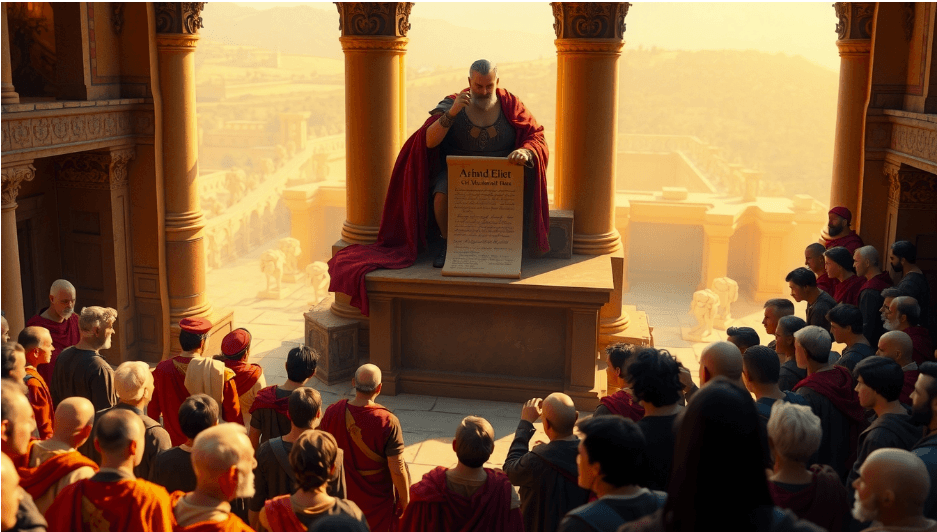
The Roman Empire was in trouble. During the fifty-plus years known as the Crisis of the Third Century (235-284 AD), the throne of Rome changed some 26 times, with the Roman Army engaging in a steady diet of crowning and removing claimants to the throne. These autocrats, known as “barracks emperors,” because they often came from among the ranks of the army itself, were generally disastrous in their administration of the Empire, due to a glaring lack of experience in political matters.  As they were beholden to the military, much of economic policy was geared towards keeping the soldiers happy. Severus Alexander, who while not a soldier owed his throne to the Praetorian Guard, began debasing the purity of silver coinage so that he could double the pay of his soldiers, while simultaneously paying for military campaigns against the Alamanni Germanic tribes. His occupation with the Alamanni left Rome’s other borders undefended, leading to attacks and invasions from other parties such as the Sassanids, leading to his assassination by the very Praetorian Guard which had placed him into power. This, however, is of ancillary interest to our story; what is important about these invasions is that Severus devalued the currency further to pay off his invaders so that he could concentrate on the Alemanni, laying the foundation for continued inflationary policy by his successors. By the time Diocletian came to power in 284 CE, his (non-immediate) predecessor, Aurelius, had done much to restore some semblance of order to the Empire, reunifying what had broken into three kingdoms and expelling invaders such as the Sarmatians and Vandals from Roman territory. Diocletian expanded on these actions, even going so far as to form a quartet of governing individuals, called the Tetrarchy, which co-administered the Empire with him at the head. However, the inflation continued, and the Emperor worsened it via a massive increase in military and public works spending. Making matters worse, years of increasingly poor harvests – poor, in part, because public policy forced laborers into inefficient activities such as building a new capital at Nicomedia instead of actually farming – combined with already extant inflationary pressures from monetary devaluation to cause widespread unrest, especially within the military. Remember, given that he owed his power to the goodwill of the soldiers, it was hardly in the Emperor’s best interests to have them ragged and hungry. Diocletian Issuing his Edict on Maximum Prices to assembly of merchants and farmers   Citing the influence of “evil traders,” in 301 CE, Diocletian issued his Edict on Maximum Prices, which instituted widespread price controls on over one thousand different items, from rice, to bed linens, to the wages to be paid to craftsmen (for those interested in the full scope of the price controls, and English translation of the Edict can be found here). Diocletian preemptively placed the blame for any failures of his policy on greed, launching into invective against wicked speculators and evil profiteers who conspired to rob into beggary a helpless public. Of course, he omitted the cost of increasing the number of provinces from 40 to 105, each requiring additional military and civilian officials. This alone increased the number of high-salaried public officials fivefold. Additionally, the base pay for military personal increased sixfold, newly appointed praetorian prefects and vicarii had to be accounted for, along with their staffs, palaces befitting the tetrarchs had to be erected, and the costs of a massive increase in public works projects budgeted for. All of this was being spent against a currency which, remember, was being systematically devalued, and to a degree that the government would not accept their own currency in payment, but demanded instead goods in trade. Predictably, the impact of the Edict was disastrous. The penalty for overcharging was death. The penalty for “hoarding” goods was also death. With the value of currency declining, and no way to mitigate this decline due to fixed prices, the only way to officially sell anything at all was at a loss. As a result, producers either refused to produce any goods or services, produced just enough to appear to comply with government policy while selling off-book on the black market, or simply resorted to barter with other producers. Shortages became the order of the day, and hungry Romans soon resorted to violence in a competition to obtain whatever was available. This was especially prevalent among the soldiers that the Edict was mostly designed to benefit, as they had little to trade except for money that no one wanted for goods that scarcely existed.  Soon, in order for some semblance of market stability to be restored, merchants, farmers and consumers simply ignored the policy; starving soldiers grateful for the return of food and clothing were hardly going to arrest the lawbreakers. Some 1200 years before the birth of Thomas Gresham, Diocletian demonstrated that bad money drives out good, and that attempting to ameliorate bad fiscal policy – whether prohibitive taxation, currency manipulation, or more contemporarily relevant, high tariff schemes – with more bad fiscal policy is never the solution. Whether in ancient Rome, the Soviet Union, or modern Western democracies with mixed economies containing a reasonably high level of free-market principles, price controls never work out to anyone’s benefit.   Tarnell Brown is an Atlanta based economist and public policy analyst. (0 COMMENTS)

/ Learn More

We Have Never Been Woke Part 2: Of “We” and “Wokeness”

At the end of my last post, I said I’d be following up by describing both some of Musa al-Gharbi’s modes of analysis and assumptions in his book We Have Never Been Woke, and outline who is the “we” he describes, and what he means by “woke.” First, the ground rules. Musa al-Gharbi sets out his examination of the woke, and of the elites, using a method of analysis he calls “analytic egalitarianism.” What he means by this is that all social groups will be considered according to the same rules: The behaviors of white and racial and ethnicity minorities, men and women, and LGBTQ and “cishet” (cisgender, heterosexual) Americans will be discussed in equivalent terms. This is a commitment that is perhaps more radical than it appears to be at first blush. The idea of holding everyone to the same standards and rules is a more radical approach, al-Gharbi says, because sociologists and scholars of late have used a very asymmetrical (and thus inegalitarian) methodology, casting identical behavior in very different lights based on the identity group of those engaging in that behavior: For instance, when racial and ethnic minorities demonstrate a preference to hire, promote, mentor, and otherwise do business with coethnics, this is frequently analyzed in terms of in-group solidarity or building and leveraging social capital, and these behaviors are lauded. When whites engage in the exact same behaviors, they tend to be analyzed in a completely different way—almost exclusively through the lenses of racism and discrimination—and those who engage in such behaviors are pathologized and denounced…Indeed, even when harmful behaviors by other actors are recognized and condemned, responsibility is often still laid at the feet of the historically dominant group. For instance, hate crimes committed by African Americans are regularly attributed to white supremacy; women’s abuse and exploitation of other women (or men) is blamed on the patriarchy. As I’ve discussed elsewhere at length, while these tendencies may be well intentioned, they are also profoundly condescending—and the tortured explanations they produce tend to obscure far more than they elucidate about why certain phenomena occur, or how social orders persist, and who they serve (or don’t). Analytic egalitarianism is also applied to considerations of racism. Musa al-Gharbi describes and endorses the definitions of racism put forth by Karen and Barbara Fields: In equally processual terms, Karan and Barbara Fields defined “racism” as the action of applying a social, civic, or legal double standard based on someone’s (perceived) ancestry. This is roughly the definition we will adopt here…However, it is critical to note that the Fields’ definition of racism was not focused on the application of double standards that specifically favor the historically dominant group. Instead, any racialized double standard is “racist” on their definition, irrespective of its intent or purported beneficiaries… As Karen and Barbara Fields put it, “Racial equality and racial justice are not figures of speech, they are public frauds, political acts with political consequences. Just as a half-truth is not a type of truth but a type of lie, so equality and justice, once modified by racial, become euphemisms for their opposites.” But while al-Gharbi’s modes of analysis might, as he suggests, seem fairly radical compared to standard sociological analysis (at least in the sense of being a very different approach), there is one important respect in which it not particularly radical – it actually adheres more closely to many of the scholarly works that social justice advocates often claim as inspiration: Consuming prominent analyses of the post-2010 era, one might gain the impression that wokeness became institutionally dominant because huge numbers of elites and elite aspirants read a bunch of Marx, Theodor Adorno, Michel Foucault, and Kimberlé Crenshaw, were completely convinced by their respective arguments, and are now trying to reshape institutions and society writ large in accordance with the prescriptions of these thinkers, as derived from their texts. In reality, many of the practices associated with wokeness betray, if anything, a lack of deep knowledge or engagement with the literatures that are purported to have spawned the dispositions, discourses, and practices in question. He uses the example of Patricia Hill Collins, who “invented the ‘matrix of oppression’ framework illuminating that race, class, gender, and sexual oppression are intimately related and mutually reinforcing.”  Describing her work, he observes how it has been cited in support of “the idea that some groups are uniformly and objectively more oppressed than others on the basis of intersectional advantages and disadvantages,” as well as “the widespread notion that people who are the most oppressed can understand society most clearly, and therefore those who identify with a greater number of, and more severely oppressed, identity categories should be given more deference and respect” in their social analysis than, say, cishet white men. But there’s a catch: The problem with making these attributions, however, is that Collins rejected each of these ideas directly and unequivocally in Black Feminist Thought (the text that introduced the Matrix of Oppression framework). This is a regularly occurring theme throughout al-Gharbi’s book. The ideas and arguments put forth by social justice advocates often have little resemblance, or are even diametrically opposed, to the actual contents of the work such activists often reference and claim as inspiration. Thus, Wokeness is clearly not a result of people being indoctrinated into social justice activism through a deep reading of primary texts like these…Critically, these superficially deep yet substantively shallow modes of speaking about hot topics, big ideas, and influential thinkers are a product of enculturation, not studying in any traditional sense, not even when these discourses are adopted in college (as they often are). So what is wokeness? And who, exactly, is it that has never been woke? Invoking any politically charged term runs the risk of kicking off a never-ending series of disputing definitions. In order to avoid this, al-Gharbi tries to clarify what he means by the term and its usage: Of course, the current ambivalence in the meaning, usage, and likely future of “wokeness” raises the question of what I mean by “woke” as used in this text. Let me start by marking what I do not intend: “woke” will not be used as a pejorative or a slur here. Beyond this, and perhaps to the consternation of some readers, I will decline to provide an analytic definition of the term. An analytic definition is one that is always and everywhere true by virtue of the meaning of the words used. The classic example is that “bachelor” refers to an unmarried man. This is analytically true – being an unmarried man just is what it is to be a bachelor. But not all ideas can be defined in such analytic terms – they instead refer to clusters of overlapping and interrelated but still logically distinct concepts. But lacking an analytic definition does not mean a concept cannot be meaningfully recognized and discussed: In fact, many of the most meaningful words in the English language are difficult to precisely define, as analytic philosophers have been demonstrating for centuries now. Consider “love,” “knowledge,” “justice,” “freedom,” “beauty.” The fact that these terms cannot be defined cleanly and unobjectionably doesn’t imply they’re meaningless and should not be used. Musa al-Gharbi traces out the history “wokeness” as a political and social term, finding that “goes back a long way” and seems to have originated in the 1860s with an pro-worker, antislavery organization called the Wide Awakes: “In the parlance of the times, to be ‘Wide Awake’ was to be alert to social injustice, and to be committed, militantly, to do something about it.” It eventually turned to a phrase encouraging vigilance – to “stay woke” was to keep oneself constantly alert to the risks of injustice that abound. Focusing on its modern usage and the cluster of concepts around which the idea of wokeness congeals, al-Gharbi says: Indeed, there are certain views that seem to be discursively associated with “wokeness” by both critics and sympathizers alike. Ticking through these may be useful to add some texture to our discussions because many who would now be hesitant to self-identify as “woke” may nonetheless continue to identify with some version of these beliefs – and may also view it as reasonable to associate these particular commitments with the term “woke.” Among these ideas are support for “antiracism, feminism, LGBTQ rights, and environmentalism” while seeing all these ideas as directly tied together; an “aesthetic embrace of diversity and inclusion” paired with acknowledging past wrongs against vulnerable populations; a “focus on identity, subjectivity, and lived experience,” along with validating people’s individual perceptions of the same; a commitment to “explicit acknowledgement of various forms of privilege”; a belief in “‘unconscious bias’ which creates the need to ‘work’ on oneself” but is never fully eradicable; and a “tight focus on disparities between groups,” although this focus is applied in a way that is asymmetrical. Thus, “disparities between men and women that favor men are presumptively viewed as evidence of sexism (while those that favor women are unproblematic),” and racial or ethnic disparities “that favor whites specifically are taken as evidence of racism” but “if other racial or ethnic groups outperform whites on various measures this is often ignored: the focus is on whites.” Additionally, al-Gharbi notes that wokeness harbors an “approach to identity that is, for lack of a better term, somewhat mystical.” According to the woke, “race is held as a fiction in need of being abolished and transcended” and is “held to be biologically unreal,” yet at the same time race is said to be permanent and immutable based on the biology of your birth, and “virtually any social phenomenon should be analyzed and discussed in terms of race, and failure to do this is viewed as an unwillingness to be ‘real.’” Gender and sexuality, to the woke, are “fluid, nonbinary, and socially constructed” and are thus artificial and even arbitrary social constructs, but at the same time gender identity and sexual orientation are innate, unchangeable, and fixed at birth such that “people can essentially be ‘born’ gay or born trans (i.e., ‘born in the wrong body’).” However, al-Gharbi makes it clear that he thinks this “mystical” approach to identity is not in itself a critique of woke ideas: The discursive association of the aforementioned ideas with “wokeness” therefore implies nothing about their “rightness” or “wrongness.” The observation on the “mystical” nature of beliefs about identity is likewise intended as a description, not a critique. As a Muslim, I don’t necessarily view it as a problem to hold beliefs with these sorts of deep tensions (see: free will and divine providence, for instance) – however, it is important to be aware of, and wrestle with, apparent contradictions. So if this is wokeness, who are the woke? Musa al-Gharbi identifies wokeness as the dominant ideology of a group of people he calls “symbolic capitalists”: The Americans most likely to profess beliefs associated with wokeness tend to be the Americans most likely to become symbolic capitalists: highly educated, relatively affluent white liberals. Symbolic capitalists are social elites – highly educated and highly paid professionals. According to al-Gharbi, “what is often referred to as ‘wokeness’ can be fruitfully understood as the ruling ideology of this increasingly dominant elite formation.” Thus, wokeness is a movement not of the common people, but of the elites: The genuinely marginalized and disadvantaged in society are not the folks who tend to embrace and propagate these ideas and frameworks. Instead, highly educated and relatively affluent professionals associated with the symbolic economy are the most likely to embrace (and enforce) these norms, dispositions, and discourses. In fact, the political preferences of the woke not only don’t match the ideas and preferences of those the woke claim to seek to uplift – it often conflicts with the desires of these very people: For instance, many highly educated white liberals, eager to demonstrate their alignment to causes like Black Lives Matter, aggressively embraced “defunding the police,” even though African Americans themselves generally rejected this aspiration…However, publicly striking the “right” posture on this issue seemed to matter more to adherents than advancing the stated preferences of Black people or building and sustaining viable coalitions that could achieve concrete change. This extends beyond policy differences to perceptions of daily reality: After 2011, there were dramatic changes in how highly educated white liberals answered questions related to race and ethnicity. These shifts were not matched among nonliberal or non-Democrat whites, nor among nonwhites of any political or ideological persuasion. By 2020, highly educated white liberals tended to provide more “woke” responses to racial questions than the average Black or Hispanic person; they tended to perceive much more racism against minorities than most minorities, themselves, reported experiencing; they expressed greater support for diversity than most Blacks or Hispanics. White Democrats also became significantly more likely to perceive others in their social circles as “racist,” even as nonwhite copartisans moved in the opposite direction (and white non-Democrats were flat). But before going too much further down this line, it’s worth taking a break here and examining what, exactly, a symbolic capitalist is supposed to be? What is it to participate in what al-Gharbi calls the “symbolic economy,” what is the “symbolic capital” used by this group of elites, and how does it relate to woke ideology? These ideas will be outlined in more detail in the next post. (0 COMMENTS)

/ Learn More

Joshua Rauh on Federal Spending, Tax Revenue, Economic Growth, and Deficits

On July 26, Joshua Rauh, a senior fellow at the Hoover Institution, testified at the Reagan Library before the House Ways and Means Committee. I learned a lot from his testimony and want to share it. Here are some highlights. A growing economy is essential for expanding economic opportunity for all Americans. It is deeply concerning, then, that in its January 2025 Economic Outlook the Congressional Budget Office (CBO) projected real GDP growth to average just 1.8 percent over the next decade. To put that in perspective, had growth been that low over the last 50 years, the US economy today would be nearly 40 percent smaller. There is a strong link between a well-performing economy and rising incomes across the income distribution. We’ve seen this relationship clearly over the last two decades. From 2008 to 2016, the economy grew at an annual real rate of just 1.7 percent. During that time, median real wages rose 0.4 percent per year. In comparison, from 2016 to 2019, real GDP grew at 2.7 percent, leading to median wages rising 1.1 percent per year. And: Pro-growth tax reforms depend on accurate, trustworthy, and transparent scores from the Joint Committee on Taxation (JCT) and the CBO. These agencies are currently falling short of that standard. For example, the JCT’s conventional model remains opaque. It is built on decades-old code and is supplemented by “off-model” calculations that are poorly documented. Key parameters—such as how rate changes affect tax avoidance and evasion—are kept hidden, making it difficult to evaluate their results. Congress should require that scorekeepers enhance transparency, modernize their outdated models, disclose key assumptions, and publicly benchmark their parameters to relevant scholarship. In addition, the scorekeepers should offer sensitivity analyses of their scores or offer candid, systematic assessments of the confidence they have in specific estimates. These reforms would build trust in the official scores and provide lawmakers with more information, which will facilitate further pro-growth tax reforms. And: As I noted, my recent academic work suggests that the CBO and the JCT may understate the effects of these provisions on the economy. This could translate into substantial differences in the CBO’s assumed GDP growth rate and its deficit effects. Using the CBO’s rule of thumb workbook, if annual productivity growth is 0.25 percentage points higher, the annual GDP growth rate over the next 10 years will average 2.1 percent. This contrasts with their current forecast of 1.8 percent. CBO estimates that such a difference in growth would result in an additional $1 trillion reduction in the deficit over the 10-year budget window. If annual productivity growth is 0.5 percentage points higher, annual growth would reach 2.5 percent and deficits would fall by an additional $2 trillion over the 10-year budget window. This would offset more than half of CBO’s projected 10-year deficits from the bill and, importantly, fully cover the projected deficit impact in the final years of the budget window. And that is before accounting for any additional tariff revenue raised by the administration. (italics added) And: Finally, and perhaps most importantly, future growth depends on spending restraint. The primary fiscal challenge facing the United States is not insufficient revenue, but excessive spending. According to the CBO, federal revenues in 2025 are projected to reach 17.1% of GDP, very close to the historical average of 17.3% from 1974 to 2024. In contrast, federal spending is expected to be 23.3% of GDP, more than two percentage points above its historical average, and is projected to rise further in the coming decade. On Josh’s  last point, note that if the government were able to get federal spending down by 2 percentage points, the deficit would be 4.2% of GDP rather than 6.2%. Why does this matter? Adding 4.2 percent of GDP to the federal debt would keep federal debt constant as a percentage of GDP if nominal GDP grew by 4.2 percent. That would be a nice accomplishment on the way to actually reducing federal debt as a percentage of GDP. (Note: This mathematical claim holds when we start with debt in the hands of the public equaling GDP, which is approximately true today. When those numbers are not equal, it gets more complicated.) I highly recommend reading the whole testimony, which is not that long. (0 COMMENTS)

/ Learn More