This is my archive

bar

Reducing “Tax Expenditures” Can Hurt Economic Growth

1062733970 In my last TaxBytes column, I laid out the strange economics of so-called “tax expenditures.” I gave as an example the tax deduction for mortgage interest. That provision leads some people to own rather than rent and others to buy a more expensive house than they would have. Those are bad effects. But, I noted, it would be more straightforward for economists and politicians to say that those provisions have bad effects rather than using the convoluted language of tax expenditures. It gets worse. Sometimes economists and politicians use the term tax expenditures to refer to tax provisions that have good effects on economic growth. They do that because they are stuck in the Haig-Simons view of income. According to this view, named after early 20th century tax scholars Robert M. Haig and Henry C. Simons, it doesn’t matter whether income comes from working or from interest and capital gains—all should be taxed equally. This view has sometimes been summarized as “A buck is a buck.” This is from David R. Henderson, “Reducing ‘Tax Expenditures’ Can Hurt Economic Growth,” TaxBytes, Institute for Policy Innovation, September 13, 2023. Read the whole thing.   (0 COMMENTS)

/ Learn More

Don’t Screen for Cancer

Conventional wisdom is that more information is always better, but oncologist Vinay Prasad rejects that way of thinking and argues that cancer screenings can do more harm than good. We love bucking conventional wisdom here on EconTalk, and we hope you find this conversation illuminating. Deciding what cancer screenings to receive or not is something most people don’t even realize is a decision, but Prasad wants you to question blind acceptance of the status quo to make better choices for your health. I was surprised to learn that oncologists generally have no way to tell if a cancer in a particular patient is likely to grow quickly (and be a threat) or stagnate and pose no threat. Let us know what you thought was interesting about this conversation. Join us in the comments, or use the prompts below to start your own conversation offline.     1 – Prasad describes cancers as farm animals to illustrate the potential effectiveness of treatments. Did anything about that metaphor for cancer surprise you or seem different from the conventional narrative about cancer?   2 – Some people dismiss concerns about over-diagnosis of cancers with, “Just don’t treat it then. It is better to know if there is a cancer.” What is the problem with that way of thinking from Prasad’s perspective?   3 – Patients generally feel good about having their cancer removed and say that the screening saved their lives even though many incidents of cancer would have never grown or spread. Do you think this is an insurmountable problem for Prasad’s attempt to increase skepticism of cancer screening? What evidence do you think might be persuasive to patients considering screening?   4 – Why is it important to know the “all cause” mortality rate after cancer treatment rather than just the mortality rate from that cancer? How does the example of breast cancer treatment illustrate this difference?   5 – Prasad emphasizes that one of the problems with screenings is the lack of informed consent – patients are encouraged to receive the screening as a matter of routine with no discussion of the potential risks. Why do doctors present the screenings this way? What changes do you think would reduce this problem? (0 COMMENTS)

/ Learn More

Great Quarterbacks Aren’t Actually Paid that Much 

In just the past few months, NFL quarterbacks have been signed to contracts that pay them a jarring amount of money. Justin Herbert of the Los Angeles Chargers just signed a contract for 5 years that is worth a total of $262.5 million ($52.5 million per year); former NFL MVP Lamar Jackson signed with the Ravens for 5 years, $260 million; and Jalen Hurts of the Philadelphia Eagles reached a contract agreement for 5 years and $255 million. Go back a few years and you see even more examples, including Aaron Rodgers (4 years, $200 million) and Patrick Mahomes (10 years, $450 million).  At face value, this seems like an incredibly large salary for tossing a pigskin. These figures are especially shocking when you consider that the current running back market is such that the top players at the position are struggling to sign for even $12 million a year. What explains this insane amount of money being spent on great quarterbacks? Economics can. I was listening to Nick Wright on his podcast “What’s Wright? With Nick Wright”, my favorite sports podcast. Despite not having an economic background (as he points out), he understands key economic concepts like “thinking on the margin” and “opportunity cost” that we preach to our undergraduates.  Employers, acting as rational economic agents, pay salaries based on a variety of factors, but most notably: the employee’s opportunity cost, the player’s marginal product of labor, and the employers’ opportunity cost. The employee’s opportunity cost is the opportunity cost of their time, so what else they could be doing with their time other than being an NFL quarterback for their specific team. (There’s also the alternative of not being an NFL quarterback, but the salary earned from playing in the NFL is almost always higher than any other alternative). The marginal product of labor for an NFL quarterback is how much extra value (in terms of points, number of wins, likelihood of success, etc.) this player brings to the team. This is why it doesn’t really pay to have two highly paid quarterbacks on your team, since the second one does not add much marginal value to the team, even though they are highly skilled in their own right. For NFL teams, their opportunity cost of signing their quarterback (player X) is who else they could sign to play the position if not for player X. This is where marginal analysis can really come into play. Is the cost of signing Justin Herbert really $52.5 million a year? Well, in pure monetary terms, yes. However, compared to an average quarterback, the Chargers are only paying him an extra $20 million. Let me explain.  The opportunity cost of paying a top-tier quarterback (assuming you want at least some baseline level of performance) is the salary you pay the top-tier quarterback minus the cost of a competent quarterback.  So, what is the going rate for basic competency in the NFL? Derek Carr recently signed with the New Orleans Saints for 4 years/$150 million. (In reality with not-fully guaranteed contracts that are often used in the NFL, it’s really guaranteed to be 3-years for $100 million dollars, or $33.33 million per year). Derek Carr is the epitome of a baseline competent quarterback. According to Mike Sando of the Athletic, who yearly polls 50 NFL coaches and front office personnel, Carr ranked 14th in the NFL.   Daniel Jones also recently signed a large contract with the New York Giants for 4 years and $160 million. (Taking the whole contract in mind, it’s really 3-years for $112.5 million, or $37.5 million per year). In the same aforementioned poll, Jones ranked 20th among starting NFL quarterbacks, putting him right around average to just below average.  So, it costs anywhere between $33.34-37.5 million per year just to have a basic, competent quarterback in the NFL. The real cost that NFL teams like the Chargers, Ravens, and Eagles face with their superstars is not the $50ish million, but instead the $50 million minus $33.33 million (or, $16.67 million). At the margin, that’s not too bad! You are facing a cost roughly the same for a superstar quarterback (compared to the counterfactual competent one) about as much as you would pay for a high-quality wide receiver or offensive linemen.  In short, don’t be fooled by the headlines. Top-level superstar quarterbacks are not being paid that much money relative to other quarterbacks. If anything, they are paid too little (due to the artificial constraints imposed by the NFL by way of a salary cap); but, alas, another point to be made a different day.   Justin Callais is an Assistant Professor of Economics at the University of Louisiana at Lafayette and a Research Fellow with the Archbridge Institute.  (0 COMMENTS)

/ Learn More

Henderson Response to a Particularly Weak NYT Editorial on Antitrust

Is antitrust enforcement good per se, no matter what its effect on consumers? Reading an August 26 New York Times editorial, one could easily conclude that the Times editors think so. Indeed, the content of the editorial is in tension with the editorial’s title. The title is “Americans Pay a Price for Corporate Consolidation.” You might think on that basis that the editors would point out how consolidation of corporations would create market power, causing consumers to pay higher prices. But you would be wrong. The editors explicitly reject the idea of judging mergers by their effects on consumers. There are powerful forces arrayed on their side, specifically the head of the Federal Trade Commission, Lina Kahn, and the head of the Department of Justice’s Antitrust Division, Jonathan Kanter. If Kahn, Kanter, and the Times editors get their way on enforcement of current law, the odds are high that we consumers will be worse off. This is the opening paragraph of David R. Henderson, “To Antitrust Enforcers, Consumers Are Irrelevant,” Defining Ideas, September 14, 2023. Another excerpt: One of the striking things about the Times editorial is that the editors admit that the more stringent enforcement of antitrust will not help consumers. For example, the editors discuss the DOJ’s and the FTC’s proposed tighter rules for allowing mergers. They start by suggesting that the tighter rules will increase competition, which “keeps pressure on prices.” But then in discussing the looser restrictions that came about early in the Reagan administration and under subsequent administrations, they write: It wasn’t enough to show a merger would reduce competition; the government generally sought to block deals only when it could show a merger would result in higher prices for consumers or that it would clearly cause some other quantifiable harm—a standard that was rarely met. Did you catch that? The standard was rarely met. In other words, when companies proposed mergers and the federal government’s antitrust enforcers approved, those measures were not expected to hurt consumers. So much for the Times’s argument, then, that tighter rules on mergers will “keep pressure on prices.” That line makes sense only if the pressure is upward, that is, to keep prices high. Finally, how to get more competition: allow it: The Times points out that we are now left with “four major airlines, three major cellphone companies, and two dominant makers of coffins.” Of the three industries mentioned, the one I know best is airlines. The Timespoints out that US airfares are significantly higher than European fares. There’s a reason for that, a reason that immediately suggests a solution. The reason is that the EU allows many more airlines. Cut-rate Ryanair, for example, based in Ireland, flies between London and Sofia, Bulgaria, and charges a fare under $100. The US government should follow suit: allow foreign airlines to compete on domestic routes. If the federal government did so, we could conceivably have six or seven major airlines competing on heavily traveled routes such as San Francisco to New York or Los Angeles to Chicago. Moreover, although I don’t know much about the coffin industry and hope not to for at least another twenty years, state governments in the past have helped cement the dominant position of the leading coffin producers. Indeed, one of the many victories of the pro-market public interest law firm called the Institute for Justice was in getting rid of the restrictions that prevented a bunch of monks in Louisiana from selling lower-priced coffins. Are the Times editors even aware of that victory for competition? Read the whole thing.   (0 COMMENTS)

/ Learn More

The challenge facing YIMBYs

Over the past 6 years, I’ve read a number of news articles pointing to California legislation aimed at making it easier to build housing. But have these bills actually been effective?   California recently enacted two new housing bills, one of which makes it easier to build on church owned land and the other reduces barriers to construction in certain coastal areas.  According to Reason magazine, the bill relating to church owned land comes with a number of restrictions: Any new housing made legal by the bill would have to be offered at below-market rates to lower- and moderate-income residents. Developers would generally have to pay prevailing wages to construction workers. The new housing would also have to come with at least one parking space per unit unless other state or local laws dictated a lesser minimum standard. S.B. 4 projects also couldn’t be built in industrial zones or near active oil wells. (There are a lot of those in Los Angeles.) The list goes on.  Nonetheless, Reason suggests that these initiatives will have a big impact: The state will build more housing with S.B. 4 and S.B. 423 in effect. At a minimum, they’ll provide evidence that removing regulatory barriers can unleash a lot of badly needed housing. I hope they are correct, but I have my doubts.  I worry that if you go from a situation why there are 12 reasons why it’s not feasible to build housing in California, to a situation where there are only 7 reasons why housing construction is not feasible, you still end up not building housing. Did previous bills have an impact on housing construction in California?  If so, it’s hard to see any impact in the data for housing starts: At first glance, it seems as though the YIMBY forces are having a surprisingly easy time rolling over their opposition, as one reform after another is making it through the California legislature, beginning with SB 35 back in 2017.  But I wonder if the surprisingly weak NIMBY opposition reflects the fact that they understand these reforms will have little effect—that there will continue to be enough regulatory barriers to prevent any meaningful surge in California homebuilding.  I hope I’m wrong about this and certainly believe the reforms are better than nothing.  But at the moment I don’t see much evidence that anything meaningful has changed in California.  Home building here is currently so weak that even a 10% or 20% increase would not significantly move the needle—the state needs a dramatic rise in housing construction. Meanwhile, in other areas the California legislature seems determined to ruin the business climate.  (This and this both occurred in just the past week.) PS.  Chris Elmendorf has a good twitter thread discussing another California housing reform bill.    (0 COMMENTS)

/ Learn More

When Ideal Theory Leads to Substandard Theorizing

David Friedman once said “I read Rawls’ A Theory of Justice early on and never was able to figure out why anyone took it seriously, beyond the fact that it provided arguments for conclusions they wanted to reach.” Politics can very often lead people into reverse arguments – starting with a conclusion and then crafting arguments which seem to justify that conclusion. John Rawls seemed to admit this as well, remarking in A Theory of Justice that “We want to define the original position so that we get the desired solution.”    David Schmidtz argues at many points throughout his book Living Together that the way Rawls frames the original position fails to do justice to the question of justice. In order to reach the “desired solution”, Rawls stipulates that everyone will voluntarily act in perfect accordance with the demands of justice – because this incredibly unrealistic assumption is necessary in order to reach the solution Rawls desires. Schmidtz writes: Assuming perfect compliance leads down one road, realistic assumptions down another. We assume perfect compliance not because realistic assumptions go nowhere but because they don’t go where Rawls wants his theorizing to go. In another section, Schmidtz explains why Rawls’ approach of handwaving away the issue of compliance from his armchair is a mistake: Yet what makes x merely a “distracting detail” is that it makes no difference to the question at hand. Nothing changes when we set it aside. Therefore, whether x is a mere distraction is a matter for discovery, not a stipulation.  For example, suppose we aim to determine water’s boiling point. To keep it simple, suppose we classify altitude as a distracting detail and set it aside. That idealization may sound reasonable, but it would, as a matter of contingent fact, be incompetent. Why? Because altitude is no mere distraction when determining water’s boiling point. As it happens, boiling point is a function of atmospheric pressure, and atmospheric pressure is a function of altitude…It takes experience to know whether altitude is a mere detail. Simplifying is risky. It is fine to set aside details to reveal an underlying logic operating across worlds. But if we set aside the fact that incentive structures affect behavior in law-like, robustly predictable ways, then we aren’t setting aside details to reveal a system’s underlying logic. We are setting aside the underlying logic. Rather than setting aside what makes no difference, we are setting aside what changes everything.  It is easy to slide form ignoring to ignoring with prejudice: setting details aside not because they don’t affect the argument but precisely because they do.  There’s another issue Rawls hand-waves away in his Theory of Justice that beyond what Schmidtz points out. Rawls’ theory is a form of hypothetical social contract theory. This theory argues that under certain stipulated conditions people would have hypothetically agreed to a given social arrangement, and this stipulated hypothetical agreement therefore generates real world, enforceable obligations to support that arrangement. Rawls is not lacking in ambition with his hypothetical agreement either. Not settling for a mere majority rule, Rawls says consent must (and would be!) unanimous. Ever the idealist, Rawls says “the requirement of unanimity is not out of place and the fact that it can be satisfied is of great importance. It enables us to say of the preferred conception of justice that it represents a genuine reconciliation of interests.” Why is Rawls so sure there would be unanimous agreement in the original position? This is his entire justification on that point: To begin with, it is clear that since the differences among the parties are unknown to them, and everyone is equally rational and similarly situated, each is convinced by the same arguments. Therefore, we can view the agreement in the original position from the standpoint of one person selected at random. If anyone after due reflection prefers a conception of justice to another, then they all do, and a unanimous agreement can be reached. Rawls simply stipulates that the only possible sources of disagreement are ignorance, irrationality, and personal bias. Therefore, in the original position where everyone is equally knowledgeable, rational, and has no knowledge of their personal position, there cannot be any genuine disagreement about justice. In Rawls’ vision, there are no genuine differences in thinking among different minds. Remarkably, it also turns out that the solution to the issue of justice that would be most persuasive to these perfectly informed, perfectly rational, perfectly unbiased hypothetical people is…the system John Rawls himself prefers without needing the benefit of being in such a superhumanly privileged position. It’s fair to say Rawls succeeded in tailoring the original position with all the assumptions necessary to reach his desired result, but I must admit I find this only serves to undercut his case rather than enhance it.     (0 COMMENTS)

/ Learn More

Why the August Jobs Report Adds Up to a Weak Economy

Americans say the economy is the most important problem facing the country. But major headlines covering the latest jobs report for August do their best to downplay this concern. The New York Times’ headline covering the news was, “August Jobs Report: U.S. Jobs Growth Forges On,” but the economic reality is far less cheerful.  Sure, the jobs report beat the consensus estimate by economists. But that high-level look at the data fails to address underlying issues keenly felt by many Americans that are apparent with more scrutiny. And these problems won’t be over unless policies out of D.C. substantially and quickly improve. Last month, 187,000 jobs were added, according to the payroll survey, compared with the anticipated 170,000. But the jobs added in the prior two months were revised lower by a cumulative 110,000 jobs, bringing the net jobs added in August to just 77,000. This extends an ongoing trend of downward revisions over the last several months. According to the household survey, the unemployment rate, a weak indicator of the labor market’s strength, jumped substantially from 3.5% to 3.8%. Coupled with news of slow wage growth of just 0.2% last month, there is growing concern among Americans trying to make ends meet.  We know the higher unemployment rate isn’t from too few jobs available. The number of job openings has been nearly double that of those unemployed for a long time, though decreasing quickly. Instead, the higher rate suggests a sluggish economy in which there are more unemployed or ghost job openings from companies that do not intend to hire but want to gauge interest and competition.    There is some good news. The labor force increased by 736,000, which raised the participation rate to 62.8% in August. This is the highest rate since February 2020, just before the shutdowns in response to the COVID-19 pandemic.  More people entering the labor force and higher participation rates appear promising. However, the increase in the labor force was a combination of 222,000 more people employed, with the other 514,000 people becoming unemployed. And diving deeper, 4.2 million more adults remain not in the labor force compared with February 2020.  Many of these individuals have been unemployed for years, so obtaining employment could be difficult due to a lack of productivity signals in their resume on top of employers dealing with a stagnant economy. The rise in the unemployment rate, lackluster wage growth, and the possibility of unfilled job openings all point to a weak labor market. Add in ongoing stagflation, as too-high inflation continues, and Americans are rightly concerned about the future.  Some blame the Federal Reserve for this weakness because of its fight to bring down inflation after creating it. However, Milton Friedman debunked this tradeoff between lower inflation and a higher unemployment rate decades ago. Specifically, there’s no long-run tradeoff between the two, so the Fed must focus on the single mandate of price stability instead.  The Fed has been working to combat inflation by hiking its interest rate target to a multi-decade high of 5.5% and slowly reducing its bloated balance sheet. This is why you’ve seen car loan and mortgage rates soar to multi-decade highs. These higher rates significantly disrupt the new car and housing markets.  But this is the resulting bust after the artificial post-pandemic “boom” as new money moves throughout the economy and manipulated interest rates create malinvestments. We felt the higher inflation rate last year from the Fed’s actions of close to 9%, and now it’s about one-third of that rate, but this remains about 50% higher than its 2% flexible average inflation target. The Fed has stated that it may raise interest rates further. And I believe that it will be forced to raise its target rate to about 6% before this hiking cycle is over. But just raising this rate won’t be enough to curb inflation for long if Congress’ deficit spending remains unchecked. This will force the Fed to monetize it to avoid putting more pressure on Congress to get their irresponsible fiscal house in order. President Biden and Democrats in Congress made this situation worse with the passage of the misnamed Inflation Reduction Act, which is likely to cost about four times the initial $300 billion estimate over a decade. Their wasteful spending, along with Republicans’ excessive spending before them, has led to a fiscal crisis, the most significant national threat.  Congress will unlikely make the needed reforms to the primary drivers of the deficit of mandatory spending programs like Social Security and Medicare because of rent-seeking in politics. This will likely result in the Fed not sufficiently cutting its balance sheet to stop inflation. Rather, the Fed will probably choose to increase its balance sheet, putting more inflationary pressure on the economy when that’s the last thing it needs. A vital measure of the economy known as real gross domestic output, the real average of gross domestic product and gross domestic income, has declined in three of the last six quarters. While I don’t want there to be a hard landing, this is the situation that central planners by Congress spending and taxing too much, President Biden regulating too much, and the Fed printing too much have left us.  There will be efforts by the government to correct these government failures, but we shouldn’t double down on past mistakes. Let’s learn from these failures and remember the most recent lesson in the 1980s: President Reagan cutting regulations, Congress passing tax cuts (but spending too much), and Fed Chairman Paul Volcker cutting the balance sheet.  Initially, the cuts to the Fed’s balance sheet contributed to soaring double-digit interest rates, and the economy suffered a double-dip recession. However, afterward, the economy was able to heal from the prior hindrances of past presidents, congressional members, and the Fed, resulting in a long period of economic prosperity, which is often called the Great Moderation.   What we have today is an economy where the government is growing, and markets aren’t as much. This must be reversed. When workers, entrepreneurs, and employers are free to engage in voluntary transactions, competition thrives, innovation flourishes, and resources are allocated efficiently. Moreover, free markets promote consumer choice and personal freedom. When government interventions, such as wasteful spending, excessive regulations, and high taxes, are removed, markets can function more efficiently and respond dynamically to changing economic conditions. Striking the right balance between constitutionally limited government functions and preserving the freedom of markets is crucial for achieving a vibrant and prosperous economy. Rising unemployment, stagnant wages, and the specter of inflation require a multifaceted approach. Raising interest rates hasn’t been enough. The government must focus on responsible fiscal and monetary policies, including reducing government spending, addressing burdensome regulations and taxes, and substantially cutting the Fed’s balance sheet.  Americans are still suffering, and there is no time to waste in aggressively assessing these measures that cause economic strain so that people can get back to flourishing instead of merely “making it.”    Vance Ginn, Ph.D., is president of Ginn Economic Consulting, chief economist or senior fellow at multiple state thinks across the country, host of the Let People Prosper Show, and previously the associate director for economic policy of the White House’s Office of Management and Budget, 2019-20. Follow him on X.com at @VanceGinn.   (0 COMMENTS)

/ Learn More

The Large Benefits of Short-Term Health Insurance

    Competition Works, Even in Health Insurance On Monday, I watched a fascinating discussion on Zoom that the Cato Institute hosted: health policy experts Michael Cannon of the Cato Institute and Brian Blase of the Paragon Institute discussing a Biden administration proposal to force people off short-term health insurance. It made me more aware of an insurance option that I hadn’t been aware of. The reason is that to the extent I pay attention, I do it as a parent helping my adult daughter find health insurance. But she lives in California, whose government, in its wisdom, bans such policies. The big surprise I had was not that allowing a competitive option is good for customers. Duh. The surprise was that letting people buy these policies did not seem to drive up premiums in the Affordable Care (ACA) market. So allowing them is a double win. Background The 1996 Health Insurance Portability and Accountability Act (HIPAA) allowed state governments to have short-term limited duration health insurance (STLDI). The contract could last up to 364 days. But after the Patient Protection and Affordable Care Act (PPACA, henceforth ACA) was implemented in 2014, the Obama administration, concerned that healthier people would buy these contracts, leaving a sicker pool and, therefore, higher premiums and taxpayer subsidies in the ACA market, limited the plans to 3 months. This was implemented in 2016 and reversed by the Trump administration in 2018. The Analysis Being able to be insured for a whole year has been valuable to millions of people. And losing one’s insurance after 3 months can be catastrophic. Imagine, as has happened, that you have such a short term policy starting in January and you get cancer your first month. With a limit of 3 months, you get thrown off and can’t get an ACA plan until the next January. No insurance company pays the thousands or, more likely, tens of thousands, of dollars for your treatment. And that comes about not because of a big bad insurance company but because of explicit and intended government policy. That’s horrible. So you don’t have to convince me that giving people this competitive option and letting them have it for a whole year is a good idea for them. Even better, these policies can be renewed twice so that you can be covered in one policy for 3 years. That means that if your health deteriorates during that time, you’re safe from new underwriting by the insurance company that adjusts for your higher risk. Note the bitter irony. The heads of two presidential administrations said, “Our approach would preserve the right of Americans who have insurance to keep their doctor and their plan,” (Obama in 2010) and “If you have private insurance, you can keep it,” (Biden in 2019). Yet Obama took away private insurance from people with short-term plans and Biden proposes to do the same. One thing that’s great about these plans is that in the states that allow them, people can buy relatively low-price insurance with deductibles that are lower than those in the ACA plans. The Pleasant Surprise Even though I like the idea of allowing people to buy health insurance and not be thrown off health insurance before they can replace it, I did buy the argument of the critics of STDLI plans that such plans would attract the relatively healthy, thus driving up premiums and taxpayer subsidies for the sicker people left in the ACA plans. I still think such plans would attract the relatively healthy. But here’s the pleasant surprise, from a study by health economist Brian Blase, president of the Paragon Institute and author of “Short-Term Health Plans, Long-Term Benefits,” September 2023. States that were favorable to STDLIs actually have had ACA rates fall between 2018 (when the feds re-allowed them) and 2023. States that were unfavorable to STDLIs either because their governments restricted the plans to 6 months or banned them (or made regulation so onerous that insurers chose not to offer such plans) had ACA rates rise or fall less than in favorable states. In states that banned such policies, the ACA rates rose the most. See Table 8 on page 11 for the empirical results. How would you account for this. Here’s what Blase wrote in 2021, and quoted in his 2023 study, to explain that somewhat surprising finding: The 2018 short-term plan rule may have, in fact, helped improve the individual market. This could have occurred because short-term plans forced insurers selling ACA-compliant products to offer more attractive products because of the added competition and because people with short-term plans who got sick or injured had short-term plans pay their expenses instead of moving to the individual market to get coverage to pay their expenses. In short, it’s win-win-win for people with STDLI plans, people with ACA coverage, and taxpayers. This letter to HHS Secretary Xavier Becerra, Treasury Secretary Janet Yellen, and Acting Secretary of Labor Julie Su from some heavy-hitting health policy economists and analysts gives more detail.   (0 COMMENTS)

/ Learn More

Dani Rodrik, Forerunner of Mounting Tyranny

We all make errors at one time or another. I may one day write about mine, but it will be too long for a post. For the moment, I want to speak about those of Dani Rodrik, the well-known professor at Harvard’s School of Government. His 2017 book Straight Talk on Trade is a compendium of his errors and those of his fellow establishment members, who together constitute a sort of symbolic John the Baptist as a forerunner of the mounting tyranny. Thinking of a comment on another of my posts, I was led to reread my Regulation review of Rodrik’s Straight Talk on Trade. I am not unhappy with what in French we may call an “envolée littéraire“—which, according to a knowledgeable friend, translates into “a flight of literary fancy” without any pejorative connotation: Although he portrays himself as a dissenter against “the establishment,” “the elites,” and “the reigning market fundamentalist ideology,” Rodrik is a good representative of the privileged few who have ruled America and most Western countries since the 1960s: half‐​capitalist and half‐​socialist, half‐​populist and half‐​elitist, half‐​democratic and half‐​authoritarian, half‐​free‐​trade and half‐​fair‐​trade, half‐​postmodern and half‐​moralizing, half‐​bourgeois and half‐​punk. Such folks have spent more than a half‐​century burdening people with a dense network of regulation and surveillance, continually bossing ordinary people around, and pragmatically building a half‐​police‐​state. How was that different from the “case‐​by‐​case, hard‐​headed pragmatism” that Rodrik advocates? Contrary to what he claims, it is not free‐​traders who have provoked the populist reaction, but the privileged class of which he is himself a member. It is because of people like him that populist and protectionist Trump was elected. In the forthcoming Fall issue of Regulation, out of (Guttenberg and virtual) press later this month, a feature of mine emphasizes another aspect of the phenomenon: the continuity between “Trumponomics” and “Bidenomics.” (0 COMMENTS)

/ Learn More

Emergent Tokyo

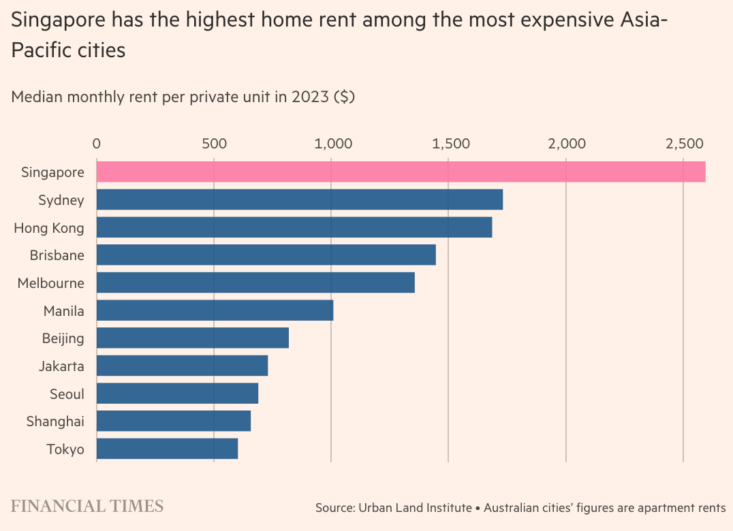
I recently read a very interesting book on urban planning (or lack of planning) in Tokyo, entitled Emergent Tokyo.  Tokyo is one of my favorite cities, and is also the world largest metropolis (with a metro population of 38 million.)  Much of Tokyo’s dynamism comes from the spontaneous way it developed: As the Japanese government attempted to rebuild their devastated capital city, they initially drafted a comprehensive plan, but soon concluded that they lacked the budget to carry it out. And so, in areas where neither the government nor the country’s real-estate  and transportation mega-corporations could properly fund reconstruction efforts, whole neighborhoods instead rapidly rebuilt themselves.  Working on a small scale, residents rebuilt homes and shops using scraped-together funds while relying on little more than their collective grit and inventiveness, and black markets full of micro-entrepreneurs sprung up around the city’s major train stations.  These neighborhoods were not initially planned, per se—they emerged, and their ramshackle, spontaneous spirit can still be felt today when walking Tokyo’s backstreets. This approach was adopted out of harsh necessity, but the resulting  neighborhoods have a striking charm: intimate townscapes with exceptional vitality and livability, featuring a fine-grained urban fabric comprised of numerous small buildings. Because of Japan’s light touch zoning it is relatively easy to build housing in Tokyo, and thus the city is not as “unaffordable” as you might expect.  Tokyo has also avoided the bland uniformity of the major cities in China.  I highly recommend the book to people interested in urban design—the graphics are especially well done. The book contains a number of interesting observations about Japan that were new to me: Despite these attempts to portray the Japanese as a harmonious and homogeneous people since time immemorial, the idea of Japan as a homogeneous nation is actually a relatively recent development.  Ironically, the dominant ideology in early 20th-century Japan explicitly held that Japan was a multi-cultural society originating from a melting pot of various Asian ethnicities—which, according to imperialists at the time, gave Japan the intrinsic capacity to incorporate other nations into the Japanese Empire. Netflix has a charming Japanese TV series called Midnight Diner, which shows a tiny bar similar to those discussed in this book. PS.  After writing this post, I came across an interesting NYT story on Tokyo housing: Two full-time workers earning Tokyo’s minimum wage can comfortably afford the average rent for a two-bedroom apartment in six of the city’s 23 wards. By contrast, two people working minimum-wage jobs cannot afford the average rent for a two-bedroom apartment in any of the 23 counties in the New York metropolitan area. . . . Some cities, like Singapore and Vienna, have bucked the trend by using public money to build affordable housing. Almost 80 percent of Singapore residents live in public housing. In Tokyo, by contrast, there is little public or subsidized housing. Instead, the government has focused on making it easy for developers to build. A national zoning law, for example, sharply limits the ability of local governments to impede development. . . . “In progressive cities we are maybe too critical of private initiative,” said Christian Dimmer, an urban studies professor at Waseda University and a longtime Tokyo resident. “I don’t want to advocate a neoliberal perspective, but in Tokyo, good things have been created through private initiative.” I do wish to advocate a neoliberal perspective. PPS.  Check out Tokyo in this graph from the Financial Times:   (0 COMMENTS)

/ Learn More