This is my archive

bar

A Pro-Market and Pro-Social Economy

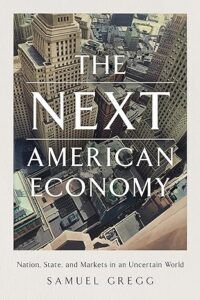
Book Review of The Next American Economy: Nation, State, and Markets in an Uncertain World, by Samuel Gregg.1 In The Next American Economy (2022), Samuel Gregg provides a refreshing defense of free markets, emphasizing the need to frame the case for economic liberty within a broader narrative about America’s values and identity. We need this book to help reframe the disagreement over trade protectionism and industrial policy. Gregg opens by examining the alignment between former President Donald Trump and Senator Elizabeth Warren on the need for greater government regulation of the economy. This may be one of the oddest “horseshoes” in American politics. Skepticism of free markets, which has historically been the province of the political Left, is increasingly embraced by thinkers and elected officials on the Right. An illustration comparing the ideas of self-labeled National Conservatives (“NatCons”) and President Biden’s tariff and subsidy policies would like more like a near-total eclipse than a Venn diagram. Many on the populist right pine for an era in which America “made things” and had plentiful, family-supporting employment complete with generous salaries, benefits, and retirement plans. Nostalgia is nice, but it is important to remember that those jobs came at tremendous costs: injuries of the fast and slow types, the torpor of repetitive work, and pollution of the natural environment. These challenges were a necessary and integral part of the nation’s economic history, but hardly a paradise lost. How many of us would wish these types of jobs for our own children? Nonetheless, this left-right economic policy pincer hasn’t come from nowhere. As Gregg notes, the years following the collapse of the Soviet Union, the rise of the “new world order” and economic globalization have unleashed a tremendous amount of economic change over a shockingly brief period. The onslaught of robotics-driven automation, the rise of China as a global low-cost (and low-wage) manufacturing power, and the teeth-rattling shock of the 2008 financial crisis have undermined confidence in the neoliberal consensus in favor of market capitalism and free(r) trade. While these observations are correct, it bears mentioning that, despite some setbacks, most Americans have benefited significantly from tighter integration with the global economy. “As tough as he is on NatCon policy proposals, Gregg doesn’t dismiss the NatCon criticisms of free trade and market orthodoxy. The downsides, he says, are both real and grave.” As tough as he is on NatCon policy proposals, Gregg doesn’t dismiss the NatCon criticisms of free trade and market orthodoxy. The downsides, he says, are both real and grave. He acknowledges that free-market advocates have often oversold their case, making predictions—about growth, peace, and China—that have either not been fully realized or turned out to be wrong. Curiously absent from Gregg’s concessions, however, is how the U.S. government failed to forward-position resources to buffer employment disruptions that neoliberal policies have caused or accelerated. While organized labor insisted on a reinvigorated Trade Adjustment Assistance program and increased investment in retraining as part of the North American Free Trade Agreement (NAFTA), much of this investment turned out to be poorly targeted, since the main culprit behind unemployment of manufacturing workers turned out to be automation, not trade. Mistakes, as they say, were made. As artificial intelligence bears down on jobs and skills, we should be careful not to make the same mistakes again when it comes to under-resourcing workers for the stresses, uncertainties, and strains of economic transitions. These complexities and failures notwithstanding, Gregg makes the case that there’s no plausible alternative to the mostly free markets of neoliberalism. He insists on the obvious: the dynamism of the American economy has, for most people in most places, paid off in economic terms. “You’ve never had it so good” can be an extremely irritating stance, but that does not make it any less true. In contrast to the wealth that free markets have produced, Gregg argues, state capitalism encourages unproductive rent-seeking behavior, elevates politics in picking winners and losers, and hinders America’s competitiveness and economic dynamism. No system of political economy is perfect; favoritism always finds its way into the laws and rules that govern it, and the owners of capital are just as inclined as ardent socialists to seek such favors. But only free markets have demonstrated the power to raise living standards over time. It is worth noting at this point that even the Nordic states, like that bastion of survival-of-the-fittest capitalism, Sweden, exhibit little patience with failing industries and actively seek to weed out low performing firms that would otherwise hinder growth. The Swedes just pair their commitments to markets with commitments to workers. By contrast, state capitalism, plagued by cronyism, short-term thinking, and political opportunism may temporarily preserve some legacy industries and jobs, but only at the cost of stunting or strangling emerging ones. This economic sleight-of-hand is possible only because protectionism and industrial policy generate temporary relief, while their long-run costs are hidden and diffuse. Effectively, protectionism and subsidies amount to stealing from the future: creating a drag on economic growth, lowering incomes, raising prices, and ultimately reducing opportunity and mobility. State capitalism, as Gregg recognizes, trips over the issue of complexity. The United States has a $26.3 trillion economy–with millions of firms, staffed by 160 million workers, spread across a continent-sized nation. The notion that such an unruly behemoth could be centrally planned and coordinated and produce better (or even equivalent) results is, well, hilarious. It has never worked for any country at any time, and it won’t work for us either. As Gregg shows, strong, dynamic economies aren’t “built”; they emerge from countless decisions made by entrepreneurs, business owners, workers, and consumers. This “invisible hand” (if Adam Smith could see the way his metaphor has been abused and demonized, he’d probably demand its excision from his works) is unrivaled in its ability to allocate financial and human capital toward their best uses, precisely because it is not planned. Markets depend on price signals and highly localized and contextualized conditions and actors that seek to balance opportunity and risk in pursuit of profits—economic gains, which by any reasonable accounting, redound largely to the benefit of workers, shareholders, and, through philanthropy, future generations. Somehow, though it is no one’s specific intention, markets spread prosperity in ways that centralized planning never has. The late Tom Wolfe once wrote that an American plumber lives a life of luxury that would have made the Sun King blink. Market capitalism, not central planning, made that possible. What sets Gregg’s defense of free markets apart, though, is how he pivots from economics to philosophy, sociology, and morality. Most fundamentally, Gregg contends that the best case for free markets is grounded in a broader narrative about America’s values and aspirations. According to Gregg, Americans throughout history have viewed the nation as a “commercial republic,” in which economic activity is the lifeblood of society. This economic activity, Gregg argues, is profoundly pro-social, inextricably tied to moral and social virtues that healthy societies need. Framing the argument for free markets as an outgrowth of social preferences, behaviors, and American values allows Gregg to answer a core objection to the free market system: that it is rooted in, and reinforces, social vices—such as Machiavellianism, selfishness, and greed. On the contrary, Gregg insists, commercial republics are built around virtuous instincts, ones deeply ingrained in America’s DNA, which favor mutuality and community, entrepreneurship and problem-solving, and freedom and respect for individuals. By engaging in free economic exchange, Gregg contends—contra Ayn Rand—people work together to solve problems and cultivate habits of social interaction that lead, over time, to healthy societies. Through free economic exchange, societies advance materially and socially because free markets require parties to consider the interests of their neighbors, friends, and competitors alike. Free markets encourage us to become more other-regarding and empathetic not less. This does not mean, of course, that self-interest disappears; rather it shows us how self-interest, by necessity, entails other-interest. When individuals or businesses flout socio-commercial norms, the demands of mutuality and fairness—what Adam Smith called “loveliness,” our innate need to be regarded by others as honorable—reassert themselves in a variety of ways. The principles of justice that govern our most proximate relationships are embedded in norms—legal, social, and economic—that govern our relationships with others we may never meet. A system of free trade punishes those who discriminate against out-groups or treat customers and clients unfairly. “Bad actors”—those who take a sociopathic approach to human exchange generally, including in the market—often find themselves arraigned in courts of law and the court of public opinion. (For anyone in doubt, the executives of the company formerly known as Enron will be happy to explain.) Market mutuality, then, serves as the underlying source of the market mechanism—along with legislatures, laws and courts—for fusing self- and other-interest and enforcing the norms that guide the market process. In that process, both the individual good and the common good are nurtured and supported. This understanding of the fundamentally social nature of market economics, as Gregg explained in his recent appearance on our Hardly Working podcast,2 is heavily indebted to the Scottish Enlightenment and one of its chief protagonists, Adam Smith. According to Gregg, the Smithian tradition discovered core “anthropological truths”—foremost, that people are by nature free, rational, self-interested, creative, and fallible, but also “sympathetic,” associational, and ethical. Smith, of course, is most well-known for his 1776 book The Wealth of Nations, which has rightfully established him as the father of capitalism. However, it is Smith’s 1759 work The Theory of Moral Sentiments that shows how the “gears” of human development drive the market. This lesser-known and underappreciated book does much to dispel the caricature of Smith and other free market advocates as proto-“greed is good” Gordon Gekkos. Much to the contrary, the Smithian tradition helps explain and celebrate the pro-social instincts embedded in the human tendency, as Smith put it, to “truck, barter, and exchange.” For more on these topics, see Samuel Gregg on The Next American Economy. Podcast episode with host Juliette Selgren. AdamSmithWorks.org, Apr. 28, 2023. “Trade, Nations, and War in an Enlightened Age,” by Samuel Gregg. LawLiberty.org, Nov. 15, 2018. “The Revanchist Right,” by Arnold Kling. Econlib, Sep. 24, 2023. The economic arrangement of free enterprise and limited government, Gregg contends, flows from Smith’s insights about human nature. Of all possible arrangements, this one is best suited to our self- and other-interested nature. These expressions of interest are like partners in a waltz: they work best when they focus on what they create together rather than what they contribute individually. Call it “coopetition”3 on the grandest scale, a dance America has mastered to a degree never equaled in human history. It would be a shame and tragedy if, by ill intent or simple misunderstanding, we stopped the music now. Footnotes [1] Samuel Gregg, The Next American Economy: Nation, State, and Markets in an Uncertain World. 2022. [2] Podcast episode available online at Samuel Gregg on the Next American Economy with host Brent Orrell. AEI: Hardly Working Podcast, episode 104, September 14, 2023. [3] For the origin of the term “coopetition” see “The Rules of Co-opetition,” by Adam Brandenburger and Barry Nalebuff. Harvard Business Review, Feb. 2021. * Brent Orrell is a senior fellow at the American Enterprise Institute, where he works on job training, workforce development, and criminal justice reform. David Veldran is a Research Assistant at the American Enterprise Institute. As an Amazon Associate, Econlib earns from qualifying purchases. (0 COMMENTS)
/ Learn More

The Good Life Is the One Where Anxiety Falls by the Wayside

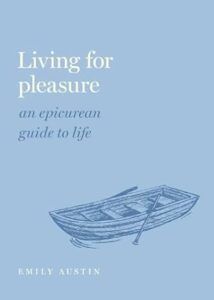
Book Review of Living for Pleasure: An Epicurean Guide to Life, by Emily A. Austin.1 The name Epicurus is often associated with indulgent hedonism. This stereotypical mischaracterization, which has found its way into pop culture and even into supermarket names, suggests a life of excess is the route to happiness. However, a new book by philosopher Emily A. Austin shines a light on the nuanced nature of Epicurus’s belief system, and it turns out the ancient Greek philosopher called for a much more measured approach to pleasure seeking. Furthermore, Epicureanism has a surprising amount to offer those of us caught up in the fast-paced mania of modern life. In Living for Pleasure: An Epicurean Guide to Life, Austin plunges into the often-misunderstood world of Epicureanism, explaining in enjoyable, easy-to-read prose the intricacies of Epicurus’s hedonism. As for as the man himself, Epicurus’s life was an embodiment of his beliefs. He established a commune known as the Garden, where he propagated his teachings. This was a sanctuary, located just outside the walls of Athens and therefore outside the emotional turbulence of Athenian society. There, he and his followers fostered a life fundamentally dedicated to tranquility (ataraxia) and thoughtful pleasure. Austin takes great care to highlight how Epicureans distinguish amongst different kinds of human wants and desires. She discusses three types of desires, specifically, which she labels necessary, extravagant, and corrosive. Necessary desires, such as for food and shelter, are indispensable for a comfortable life. Without them, we cannot achieve the tranquility necessary for true happiness. Extravagant desires, though not essential, can enhance our enjoyment. However, we must be careful with them, since too much of a good thing can contribute to anxiety, especially if we do not have a healthy attitude toward indulgence. Corrosive desires, meanwhile, engender anxiety and unhappiness due to their limitless nature. An obsession with amassing wealth and power, for example, is a path to unhappiness, according to the Epicurean belief system. Since there is no natural limit to the amount of these things a person can amass, our desires for them can never be satisfied. If we apply this way of thinking to contemporary society, it becomes clear that many of us already subconsciously subscribe to a subtle form of Epicureanism. This is the case, for example, when we eschew high-stress careers in order to spend more time with family or to pursue hobbies or other passions. When I finished high school, I pursued a career in music in New York City rather than go to college right away. I knew this might mean lower earnings over my lifetime, but it allowed me to do what I loved and to take a break from the competitive pressures of schooling. This is not to say Epicureanism is against societal advancement or wealth accumulation. While Epicurus did advocate that one should “live unnoticed,” he himself was an important man about Athens. He would likely say that we should try to make a proactive difference with our lives, but at the same time caution us against being too caught up in day-to-day human affairs. Keep a good head on your shoulders, in other words, and do not develop a chip on your shoulder. This is especially true in the case of the relentless pursuit for limitless goods, since these distract from the mellifluousness that makes us happy. In a world obsessed with reputation and political maneuvering, Epicureans also have a healthy skepticism toward elites. They see the pursuit of zero-sum status and politics as paths to anxiety, and mostly steer clear of the unhealthy people and activities associated with these power struggles. Austin points out how Epicurus would probably be horrified by the state of modern social media, and she herself has chosen to close her social media accounts, despite the inconveniences this creates for her. Epicureans are also modestly skeptical of intellect. Intelligence, according to Austin, is a “conditional good,” not being good or bad in itself but rather something that can be wielded for either purpose. The conditional nature of intelligence is something all too obvious in our society today, where elites routinely use their intelligence, prestige, and insider access to knowledge as cudgels to beat down their opponents. Epicureans emphasize friendship as a core value in pursuit of the good life, with trustworthiness and reciprocity in particular being foundational to forming strong friendships. The best moments in life are those we spend creating pleasant memories in the company of those dearest to us. These moments enable us to maintain tranquility during other, more painful times, as well. Indeed, recalling fond memories with friends is apparently how Epicurus himself dealt with a painful bout of kidney stones at the end of life. Epicurus One intriguing aspect of Epicurus’s philosophy is his views on science. With almost prophetic (albeit severely limited) understanding, Epicurus perceived atoms centuries before science could prove their existence. He envisioned a world governed by physical laws and believed that our experience in reality is rooted in sensory perception of objective phenomena, thereby providing a scientific basis for his hedonistic philosophy, which emphasizes pleasure and pain as the core values. “It is a philosophy ultimately grounded in what can be demonstrated as real, as opposed to dogma or ideology—which are more fundamental to the rival Stoic worldview.” Although Epicurean philosophy might be called “materialistic” for this reason, terms that are more appropriate might be “scientific” or “empirical.” It is a philosophy ultimately grounded in what can be demonstrated as real, as opposed to dogma or ideology—which are more fundamental to the rival Stoic worldview. Death, to Epicurus, is pure annihilation, because it means the end of sense perception. Being a state of non-existence, death is also something not to be feared. This did not exclude spirituality for Epicurus. He believed in deities, but he held that they did not meddle in human affairs. One aspect of Austin’s book that warrants criticism is she occasionally veers into the territory of contemporary politics, airing grievances about, for example, conservative responses to the COVID-19 pandemic. These digressions feel out of place in an otherwise tightly focused philosophical exploration, and they risk dating the book in the future. It is easy to see how a reader five or ten years from now might find these political interjections petty and irrelevant, distracting from the timeless nature of Epicurean philosophy. Nevertheless, this critique is relatively minor in comparison to the contribution that Austin’s book made to this reader’s understanding of Epicurean thought. Living for Pleasure is not just a book about philosophy, but, as the subtitle suggests, it is also a guide for how to live a fulfilling life rooted in tranquility. Austin is careful to note she is a philosopher, not a therapist, but it is hard not to see her book as having something of a “self-help” character. To be clear, this is meant as a compliment and not a criticism. Not only does Austin’s book serve as a tool to educate the reader about history and philosophy, but it offers practical advice for living as well. That Epicurean ideas still resonate in a 21st-century context is a testament to why the school of thought remains one of the most studied in ancient Greek philosophy (alongside Stoicism and Scepticism). Epicurus reminds us that the pursuit of happiness is not found chasing unlimited wants, but rather by fostering peace of mind. The good life involves focusing on pleasure tied to necessary desires. With the right attitude, we can enjoy some extravagance too. However, this should be kept within limits, as an unhealthy attitude toward excess can easily turn corrosive. Corrosive desires, meanwhile, must be kept in check. For more on these topics, see Kieran Setiya on Midlife. EconTalk. Daniel Haybron on Happiness. EconTalk. “Kurt Vonnegut and The Idle Rich,” by Nikolai Wenzel. #ReadWithMe Series, Econlib, Aug. 13, 2020. Above all, Epicurus reminds us that the key to finding tranquility is through healthy, trusting friendships, through doing those things that make us happy, and by avoiding the things that make us anxious. Living for Pleasure is a must-read for anyone seeking guidance on how to maintain such a healthy, balanced lifestyle. It makes a persuasive case to why Epicurus should be given more attention in the pantheon of great thinkers. The book stands out as one of the best of the year; it offers timeliness advice to anyone searching for the path toward a more content and serene life. Footnotes [1] Emily A. Austin, Living for Pleasure: An Epicurean Guide to Life. * James Broughel is a senior affiliated scholar with the Mercatus Center at George Mason University and a senior editor with the Center for Growth and Opportunity at Utah State University. As an Amazon Associate, Econlib earns from qualifying purchases. (0 COMMENTS)
/ Learn More

Blank Slatism vs. Old Spicism

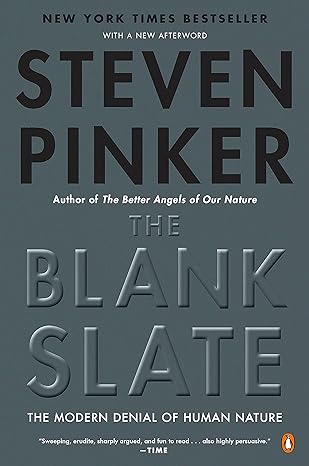
I will refer to these convictions as the Blank Slate: the idea that the human mind has no inherent structure and can be inscribed at will by society or ourselves. —Steven Pinker, The Blank Slate: The Modern Denial of Human Nature1. p. 2 “If your grandfather hadn’t worn it, you wouldn’t exist” —slogan on Old Spice deodorant Steven Pinker published The Blank Slate in 2002 to argue that some popular academic dogmas about human nature have been falsified by evolutionary psychology. Like the Old Spice slogan, evolutionary psychology sees human traits as arising from the imperative to have surviving children. So I like to refer to evolutionary psychology as Old Spicism, in contrast to Blank Slatism. Pinker writes, During the past century the doctrine of the Blank Slate has set the agenda for much of the social sciences and humanities… The social sciences have sought to explain all customs and social arrangements as a product of the socialization of children by the surrounding culture… A long and growing list of concepts that would seem natural to the human way of thinking (emotions, kinship, the sexes, illness, nature, the world) are now said to have been “invented” or “socially constructed.” … According to the doctrine, any differences we see among races, ethnic groups, sexes, and individuals come not from differences in their innate constitution but from differences in their experiences. Change the experiences—by reforming parenting, education, the media, and social rewards—and you change the person. Underachievement, poverty, and antisocial behavior can be ameliorated… p. 6 The Blank Slate is the doctrine that people’s minds have so little inherent structure that they can be readily reconfigured through deliberate social engineering. Pinker argues that this doctrine is often tied up with two other doctrines: the Noble Savage, which sees violence and other undesirable human traits as arising from harmful modern social arrangements; and the Ghost in the Machine, which sees the mind as something separate from the physical brain, and hence not subject to genetic determinants. The doctrine of the Noble Savage has been debunked by primatologists and anthropologists. They find fierce competition and violence to have been prevalent among prehistoric humans as well as our chimpanzee relatives. Pinker derides the Ghost in the Machine, arguing that mental phenomena ultimately can be reduced to physical activity in the brain. But today, one can read Erik Hoel’s The World Behind the World as raising doubts about our ability to complete the project of reducing the mental to the physical. Even so, it seems well established that people differ in their cognitive abilities and in psychological propensities, and that at least some of these differences can be shown to be grounded in genetics. Pinker regards the genetic differences among healthy humans as small. Natural selection works to homogenize a species into a standard overall design by concentrating the effective genes—the ones that build well-functioning organs—and winnowing out the ineffective ones. … All species harbor genetic variability, but Homo Sapiens is among the less variable ones. p. 142 He says that the data support thinking of people as individuals, rather than in terms of racial groupings. People are qualitatively the same but may differ quantitatively. The quantitative differences are small in biological terms, and they are found to a far greater extent among individual members of an ethnic group or race than between ethnic groups or races. But… Individuals are not genetically identical, and it is unlikely that the differences affect every part of the body except the brain. And though genetic differences between races and ethnic groups are much smaller than those among individuals, they are not nonexistent. p. 143 “On the delicate issue of race, intelligence, and personality, Pinker says that some average group differences might be biological, but he himself believes that differences in historical social experience are more important.” On the delicate issue of race, intelligence, and personality, Pinker says that some average group differences might be biological, but he himself believes that differences in historical social experience are more important. And he emphasizes the large within-group variation in characteristics, which again argues for treating people as individuals. When it comes to gender, Pinker says that because of the way they differ in reproductive organs, we should expect to observe differences between men and women in their sexuality, parental instincts, and mating tactics…[but] one would expect them not to differ as much in the neural systems that deal with the challenges that both sexes face, such as those for general intelligence. p. 144-145 Pinker argues that gender differences have been established, including Men have a much stronger taste for no-strings sex with multiple or anonymous partners… Men are more likely to compete violently… The ability to manipulate three-dimensional objects and space in the mind also shows large differences in favor of men. … Also, confirming an expectation from evolutionary psychology, for many traits the bell curve for males is flatter and wider than the curve for females. That is, there are proportionally more males at the extremes. Along the left tail of the curve, one finds that boys are more likely to be dyslexic, learning disabled, attention deficient, emotionally disturbed, and mentally retarded… At the right tail, one finds that in a sample of talented students who score above 700 (out of 800) on the mathematics section of the Scholastic Assessment Test, boys outnumber girls by thirteen to one, even though the scores of boys and girls are similar within the bulk of the curve. p. 344-345 This argument about the right tail was made by Larry Summers in 2005 when he was President of Harvard, resulting in a controversy that got him fired. Perhaps Pinker anticipated such a controversy when he wrote in favor of “equity feminism” rather than “gender feminism” (the connotations of those terms may have been clearer to Pinker in 2002 than it is to me today). Equity feminism is a moral doctrine about equal treatment that makes no moral commitments regarding open empirical issues in psychology or biology. Gender feminism is an empirical doctrine committed to three claims about human nature. The first is that the differences between men and women have nothing to do with biology but are socially constructed in their entirety. The second is that humans have a single social motive—power—and that social life can be understood only in terms of how it is exercised. The third is that human interactions arise not from the motives of people dealing with each other as individuals but from the motives of groups—in this case the male gender dominating the female gender. p.341 Gender issues are contested even more today than they were twenty years ago. Some evolutionary psychologists explain the tendency of cultures to repress female sexuality as a way to limit unwanted pregnancies and to reassure a man who supports a child that the child is his. But with birth control, and now paternity testing, should all cultural barriers to female promiscuity be lifted? Or does the sexual marketplace function better if women are more chaste? These and other arguments are raging. In the end, for all of Pinker’s attempts to use common sense, logic, and evidence to make the case for Old Spicism, and for all of his efforts to claim a progressive opinion regarding race and gender, his project apparently failed. In the academic community to which The Blank Slate was addressed, Blank Slatism is still much more widely held than Old Spicism. Politically, Blank Slatists are a concentrated force, situated on the far left. Old Spicists may agree that the ultimate goal should be to treat people as individuals, but in the meantime they cannot agree on how to deal with differences in male-female or white-black outcomes. Their views range from well left of center to the far right. For more on these topics, see Erik Hoel on Consciousness, Free Will, and the Limits of Science. EconTalk. Paul Bloom on Psych, Psychology, and the Human Mind. EconTalk. “Cooperation Requires Large Brains,” by Arnold Kling. Econlib, Apr. 23, 2023. If anything, Blank Slatists are more militant now than they were in 2002. Old Spicists are still around, and they still appear to me to have the stronger arguments, but on campus their influence has diminished. Differences in outcomes between men and women or between whites and blacks are viewed as stemming from power structures. And Blank Slatists continue to view individual differences as less important than group differences. Footnotes [1] Steven Pinker, The Blank Slate: The Modern Denial of Human Nature. *Arnold Kling has a Ph.D. in economics from the Massachusetts Institute of Technology. He is the author of several books, including Crisis of Abundance: Rethinking How We Pay for Health Care; Invisible Wealth: The Hidden Story of How Markets Work; Unchecked and Unbalanced: How the Discrepancy Between Knowledge and Power Caused the Financial Crisis and Threatens Democracy; and Specialization and Trade: A Re-introduction to Economics. He contributed to EconLog from January 2003 through August 2012. Read more of what Arnold Kling’s been reading. For more book reviews and articles by Arnold Kling, see the Archive. As an Amazon Associate, Econlib earns from qualifying purchases. (0 COMMENTS)

/ Learn More

John Locke: Physician, Philosopher, and Defender of Freedom

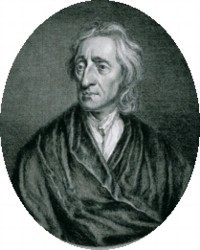
John Locke Bacon, Locke, and Newton—I consider them the three greatest men who have ever lived, without any exception. —Thomas Jefferson, 1789 Many people forget that John Locke was a physician, and many who know that he was a physician presume that his life-long practice of medicine exerted very little influence over his work as a philosopher. In fact, however, there is good reason to think that Locke’s philosophical views were deeply shaped by the practice of medicine. Caring for patients enhanced his respect for the prerogatives of individuals, tempered his trust in the judgments of experts, including government officials, concerning what is best for others, and engrained in him a deeply empirical approach to human knowing and its limitations that pays more attention to real-world results than to theoretical predictions. His writings both draw on his medical practice and offer deep insights on contemporary medicine and biomedical science. In the breadth and depth of his impact on those who came after him, Locke is one of the most influential physicians who ever lived, though his contributions are not contained in medical textbooks. A deep thinker of the Enlightenment, Locke also stands today as one of the founders of economic and political liberalism, a leading light of the philosophical school of empiricism, one of the greatest contributors to the field of epistemology, and probably the single thinker who exerted more influence over the American founders than any other. Essential concepts of contemporary political discourse including freedom, natural rights, representative government, and the right of revolution have all been powerfully shaped by his writings. Locke’s Life Locke was born in Somerset, England. His father was an attorney, and both his parents were Puritans, meaning he grew up in a nonconformist home. He studied at Westminster School in London and then attended Oxford University. Finding the curriculum less than engaging, much of his education was self-directed. He earned bachelor’s and master’s degrees in his 20s, working with great scientists of the day including Robert Boyle, the chemist who described the relationship between gaseous pressure and volume, and Robert Hooke, one of the first scientists to study microorganisms and the person who coined the term “cell” to denote the basic unit of life. While at Oxford, Locke met and befriended the man who would become the Earl of Shaftesbury. Attracted to the study of medicine, Locke earned the older man’s trust and moved to London to become a member of his household. Although he would not earn his medical degree until his 40s, Locke continued his medical studies with Thomas Sydenham, “the English Hippocrates,” whose empirical approach to medicine emphasized detailed patient observation and record keeping. Later, Locke persuaded Shaftesbury to undergo surgical drainage of what was likely a hepatic abscess—a radical procedure for the day—which proved successful and may have saved his patron’s life. In 1672, Shaftesbury was appointed Lord Chancellor, exerting great influence over not only British politics but also Locke’s political understanding. Unfortunately, Shaftesbury’s political fortunes soon foundered, leading Locke to leave for France. As the situation improved, Locke moved back to England, but in 1683 the Rye House Plot to assassinate King Charles II and his brother James was discovered. Although there is no evidence Locke was involved, he was a member of the Whig party, which opposed absolute monarchy and advocated for a parliamentary system. Locke judged it best to flee the country again, this time for the Netherlands, where he remained for more than six years. Human Understanding Within a year of Locke’s return in 1689, he published four great philosophical and political works: the Essay Concerning Human Understanding, Part 1 and Part 2, the Letter Concerning Toleration, and his First and Second Treatises of Government. These writings reveal that he is much more of a forerunner to Adam Smith, Friedrich Hayek, and the “knowledge problem” than many commonly suppose. The first, heavily influenced by Sydenham, argues that the human mind at birth is a blank slate, upon which experience writes all our knowledge. Locke denies the widely held belief in innate ideas, such as the existence of God and mathematical and moral truths. He argues that our sense of personal identity is grounded in continuity of experience. Above all, he argues that the human capacity to know is limited, requiring us to guard against allowing misunderstandings to lead to errors in practice. Locke is first and foremost an opponent of intellectual pride, the refusal to acknowledge that we do not know everything, that others may have something to teach us, and that everyone still has more to learn. As a physician, he never reached a point at which he believed he had seen everything there is to see, or that he had arrived at a theory of medicine that could reign untouched for all time. Like his teacher, Sydenham, he held that the human organism, health, and disease are so rich and complex that no physician could ever completely encompass them. We can advance in knowledge, but we will always have a long way to go. Writes Locke, There is not so contemptible a plant or animal, that does not confound the most enlarged understanding…. The workmanship of the all-wise and powerful God, in the great fabric of the universe, and every part thereof, farther exceeds the capacity and comprehension of the most inquisitive and intelligent man, than the best contrivance of the most ingenious man does the conceptions of the most ignorant rational creatures. (An Essay Concerning Human Understanding, Book III, Chapter VI) Locke was, in the best sense of the term, a skeptic. He believed that observable phenomena should always take precedence over theoretical systems. A physician’s theory might dictate that a patient should get better under a particular treatment regimen, but what matters most is not the theory but the patient, and if one approach does not work in practice, physicians should be prepared to consider another. What matters most, and in a sense what is most real, is not the knowledge in textbooks or journal articles, but the particular patient at hand, and all the physician’s labors should always be directed at serving the best interests of the patient. On Toleration In the Letter Concerning Toleration, Locke argues that open-mindedness for religiously divergent points of view is a Christian virtue and that states should not concern themselves with the spiritual interests of their subjects, thus helping to establish a principle of separation of church and state. The limitations of the human intellect imply that no person or state can claim to know with certainty the one true religion, meaning that the rights of others to see religious matters differently should be respected. However, Locke’s toleration did not extend so far as atheism, which he derided as denying the very foundation of moral and political life. Locke’s reservations about compelling any form of religious belief bear implications for science and medicine. To regard our own way as the one and only true way is to convict ourselves of hubris, whether religious, medical, or intellectual, and thereby to cut ourselves off from the possibility of further learning. Others necessarily see things from different vantage points, and it is always possible that their perspectives permit observations that we have missed. The mind of the person of faith, like that of the physician and scientist, should always be prepared to consider new possibilities. Truths are most likely found not in unassailable dogmas but in the restless quest for new knowledge. “Locke’s great virtue was not certainty but curiosity, a continuous striving to understand that never ceases to examine its own assumptions and seek out new opportunities for learning.” Locke’s great virtue was not certainty but curiosity, a continuous striving to understand that never ceases to examine its own assumptions and seek out new opportunities for learning. The practice of medicine is not the application of certain knowledge to the cases of individual patients. To the contrary, it is best conceptualized as an unfolding adventure, in which new discoveries remain both possible and necessary in the enhancement of patient care. The senior physician has more experience to draw upon than the neophyte, but in comparison to a “God’s-eye” understanding of medicine, both are at a very early stage in the expedition. In all such cases, dogmatism must be avoided. Locke writes, He that in physick shall lay down fundamental maxims and from thence drawing consequence and raising dispute shall reduce it into the regular form of a science has indeed done something to enlarge the art of talking and perhaps laid a foundation for endless disputes, but if he hopes to bring men by such a system to the knowledge of the infirmities of men’s bodies, he is [much mistaken]. Locke would regard with sympathy the view that patients can have whatever and as many diseases as they want, meaning that medical preconceptions should never blind physicians to the reality of each patient. Occam’s razor—the idea that the simplest explanations are to be preferred—may make a great deal of sense theoretically, but the mind of man is an imperfect instrument, and what to its lights seems preferable does not necessarily correspond to the way things really are. Unlike mathematics, where truths can be deduced from definitions, axioms, and theories, medicine and natural science address realms of inquiry where empirical approaches must always be preferred. As opposed to closed-mindedness, toleration is an effective strategy in advancing knowledge. By avoiding dogmatism and censorship, each inquirer is more likely to encounter diverse perspectives, and this lively interchange of ideas creates an environment in which knowledge is most likely to be advanced. So long as faith, ideas, science, and medicine remain uncontested and static, no improvement is possible, but the exchange of different perspectives allows both sides to see the matter anew, and thereby stimulates new discoveries. Locke would likely regard with enthusiasm multidisciplinary conferences, journal articles, and professional meetings that foster such lively interchange. First Treatise: Against Oppression Locke’s greatest contributions to political philosophy are found in the First and Second Treatises of Government. The First Treatise attacks Robert Filmer‘s Patriarcha (1680), which defends hereditary and absolute monarchy on the grounds that, in the Genesis account, God gave Adam and his descendants unlimited power over other persons and all of creation. Locke contends that Adam did not have absolute authority over his children, authority should not be transmitted hereditarily, and no person has a right to make slaves of others. Besides, asks Locke, who today could legitimately claim to be the heir of Adam—at least more so than anyone else? At first glance, it might seem that monarchical government plays little or no role in contemporary medicine and natural science. After all, there are no kings or queens, and most medical schools, universities, hospitals, and health systems undergo frequent transitions in leadership. No one claims a right to a job as dean, president, or board chair because of the circumstances of their birth, and it is a rare exception when a leadership post transfers directly to the offspring of a previous incumbent. Yet Locke’s critique of absolute authority is not so irrelevant to contemporary circumstances as it might appear, and his reflections on the point merit careful consideration. Locke is nothing if not an ardent opponent of oppression, especially the suppression of ideas. He believes that the love of truth must supersede all other loyalties, and that all other virtues arise from it. Physicians and scientists should be ardent defenders of the truth, even when such defense places them at odds with institutions to which they are beholden. A medical school may wish to save face, a hospital may wish to limit its legal liability, and a health system may wish to press its competitive advantage, but from Locke’s point of view, the physician must put truth first, even when doing so has the potential to damage the physician’s career prospects. The rights of conscience must not be abridged. Writes Locke, The imagination is always restless and suggests a variety of thoughts, and the will, reason being laid aside, is ready for every extravagant project; and in this state, he that goes farthest out of the way, is thought fittest to lead, and is sure of most followers: And when fashion hath once established, what folly or craft began, custom makes it sacred, and it will be thought impudence or madness, to contradict or question it. The suppression and distortion of ideas, as well as all offenses against the best interests of patients, should be resolutely called out. The conscience of the profession of medicine and the healthcare industry resides not in the policy and procedure manuals of universities and health systems but in the hearts of every physician and scientist, and it is the calling of professionals to speak out in such matters. To be a professional is to profess something, to be willing to say what needs to said and do what needs to be done in the service of such higher goods. To preserve such prerogatives requires constant vigilance, lest institutional and cultural pressures erode them. Second Treatise: In Praise of Freedom The Second Treatise is one of the greatest works in the history of political philosophy. Following Thomas Hobbes, Locke invokes the idea of a state of nature, but his state of nature is not a state of war of each against all but one of relative peace and comfort, in which people own property and stand in equality to one another. When they agree to be governed, they do so to protect their pre-existing rights of life, liberty, and property, which they retain. So long as governments protect these rights, they retain their legitimacy. Should they threaten them, though, they become tyrants, and the people have the right to rebel. Governments, Locke held, exist for the benefit of the people, not those who govern. The relevance of Locke’s Second Treatise to contemporary medicine and biomedical science can hardly be exaggerated. The last few decades have witnessed a sea change in the profession of medicine, in which a declining number of physicians hold an ownership interest in their practices and more and more are employed by large group practices, hospitals and health systems, and even investor-owned corporations. As such, an increasing percentage of physicians find themselves under pressure to serve the interests of their employer and those, including federal and state governments, who pay for their work, instead of the interests of their patients. Consider, for example, physicians who judge it in their patient’s best interest to seek consultation or refer a patient to a colleague or institution outside their own. From the point of view of a physician employer, such a decision might appear a form of “leakage,” sending a potential revenue source to a competitor, and the institution might attempt to enforce rules against it. Or physicians might press for a diagnostic test or form of therapy for which the employer will not be able to collect payment, thus undermining its bottom line. Under pressure from their institutions to relent, how should physicians in such a situation respond? Extrapolating from Locke, such institutions are founded not for their own benefit but to promote the good of patients. Those who think that diseases and injuries and the patients who suffer them exist to provide revenue to medical practices, hospitals, and health systems have things backwards. In fact, such institutions exist to serve patients. And in most cases, it is the physician and other health professionals caring for the patient face to face, who therefore know the patient best, who are best equipped to make judgments about what best serves the patient. To uphold their professional responsibility, physicians must resist the impulse to allow economic expediency to trump the patient’s good. Likewise, contemporary biomedical science could glean important lessons from Locke. Ostensibly, contemporary scientific journals encourage freedom of thought and debate, welcoming new and divergent points of view, so long as they are supported by reasoned argument and empirical evidence. In fact, however, many such journals enforce an oft unspoken orthodoxy, ruthlessly suppressing economic, political, and philosophical perspectives that do not conform. Consider, for example, the COVID-19 pandemic, when thoughtful critics who raised prescient questions about the effectiveness of lockdowns, stay-at-home orders, and masking were in many cases cancelled without a hearing. Writes Locke, “The end of law is not to abolish or restrain, but to preserve and enlarge freedom.” Applied to medicine, this would mean that the proper purpose of physicians joining together in groups and perhaps selling their services to medical practices and hospitals is not to render them easier to control, but so that they have even wider latitude to do what they know needs to be done in the interests of their patients. Likewise, journals of biomedical science should welcome more diverse points of view and reasoned opposition to widely accepted perspectives, an approach much more likely to stimulate scientific discovery than the enforcement of any rigid orthodoxy. For more on these topics, see Peter Berkowitz on Locke, Liberty, and Liberalism. EconTalk. Anupam Bapu Jena on Random Acts of Medicine. EconTalk. “Re-Imagining Medicine,” by Richard Gunderman. Econlib, Jul. 4, 2022. “John Locke and the New Course of Enlightenment Reason: Empiricism,” by Walter Donway. OLL, Apr. 19, 2023. Practicing medicine convinced Locke of the importance of serving higher purposes—the protection of the liberty, natural rights, and dignity of each human being. From patients he learned that each human person represents a far more rich and complex reality than the human mind can fully grasp. This led him to doubt that any person in authority can safely presume to know what is best for others, to argue that governments exist to serve the people and not the reverse, and to declare that when institutions grow so large and powerful that they threaten the flourishing of individuals, they may and should be replaced. Locke’s insights apply not only to civil governments but also to medicine and biomedical science themselves, which sometimes pose their own threats to the pursuit of truth and human flourishing. *Richard Gunderman is Chancellor’s Professor of Radiology, Pediatrics, Medical Education, Philosophy, Liberal Arts, Philanthropy, and Medical Humanities and Health Studies at Indiana University. He is also John A Campbell Professor of Radiology and in 2019-21 serves as Bicentennial Professor. He received his AB Summa Cum Laude from Wabash College; MD and PhD (Committee on Social Thought) with honors from the University of Chicago; and MPH from Indiana University. (0 COMMENTS)

/ Learn More

Yossi Klein Halevi on the Palestinian-Israeli Conflict

In 2018, author Yossi Klein Halevi wanted Palestinians to understand his story of how Israel came into existence. At the same time, he wanted Palestinians to tell him their personal and national stories, too, about the same land. The result was Letters to My Palestinian Neighbor, a candid, heartfelt book that engaged Jews and Arabs around […] The post Yossi Klein Halevi on the Palestinian-Israeli Conflict appeared first on Econlib.

/ Learn More

Profits Drive Inflation If No Consumer Resistance?

It is a strange opinion that profits—or for that matter wages—“drive” inflation, but it does help an economist maintain his spirit of tolerance and view a pedagogical opportunity in every error. A Wall Street Journal reporter is at it again with a story of yesterday titled “Outsize Profits Helped Drive Inflation. Now Consumers Are Pushing Back.” The reporter (or perhaps his editor) writes as if it were obvious: Extraordinary corporate profits were a driving force in last year’s surge in inflation, a pressure that is now easing rapidly as customers push back. I wrote about that strange idea before (see “Not Very Sophisticated Thinking About Inflation,” EconLog, May 3, 2023), but I just discovered a similar story from the same journalist who had inspired my first reaction. I will not repeat everything I said in my previous post, but let me emphasize a few points with a special focus on yesterday’s story. If increasing profits were “driving” inflation a year ago, why didn’t businesses “drive” it earlier? Why don’t they always drive inflation to increase their profits? Indeed, why don’t they “drive” hyperinflation to make hyper-profits? The reason is simply and rather obviously that “they,” which means every individual business, cannot charge the prices they want to increase profits. The journalist implicitly answers that it is because consumers have just now started “resisting.” But why don’t they always resist? A passing knowledge of economics suggests the answer: consumers do always resist. A consumer tries to get the lowest price possible and each business tries to get the highest price it can charge. Competition (which is entailed by free markets) drives prices down to a level where the typical business earns only a normal return on capital; otherwise, other businesses would enter the market (which is what a free market implies). Consumers who think that the price is too high don’t buy; suppliers who think that it is too low put their money elsewhere. Another question: Why, instead of profits or wages (which are the price of labor services), isn’t it the price of green peas that drives inflation? Absurd, of course, for that is just one of millions of prices. But it’s the same if you take the price of any other good or service. It is all prices together that “drive” inflation; more exactly, their simultaneous increase is inflation (as opposed to up or down changes in relative prices). Why do all prices rise together? In other words, what drives inflation? That is the real question (of which I said a few words in my previous post). Saying that it is this or that price that causes inflation confuses cause and effect: the cause is inflation; the effect is that all prices rise–over and above their relative changes. Profits, that is, returns higher than the normal return necessary to attract capital, is a residual: whatever remains after revenues and costs have been accounted for is left to the owner (the “residual claimant” as the theory of the firm calls him or them). But it is a bias of the ex-post accounting mind to consider a residual as a determinant of the total. Consider the following analogy, even if it is imperfect like all analogies. You bake a delicious cake for yourself. It then strikes you that some people may want it more than you do. You go to a homeless tent settlement and tell the occupants: “Cut for yourself the pieces you want,” thinking that you will eat whatever is left if anything. Strangely (given that your homeless beneficiaries don’t pay anything for your charity), a residual piece is left, which you happily eat. It doesn’t make economic sense to say that the cake was all eaten because of your piece, that your selfishness “drove” the complete eating of the cake. Without theoretical guidance, wrong questions are asked and wrong answers are given. Trying to explain why consumers did not resist inflation earlier, the WSJ story opines, citing “many economists,” seem to claim that consumers were confused by “the surge in energy and food prices” that followed the Russian invasion of Ukraine: Many economists think that the second surge, coming on top of the pandemic, led to such confusion among consumers about where prices should be that they briefly became more accepting of above-cost price rises. Consumers are never “confused” about “where prices should be”; each one is individually concerned about the prices he pays. Every consumer wants to pay as little as possible and never more than what the good is worth for him. Those who doubt the rationality of ordinary consumers should consider how quickly the increase in the prices of brand-new cars after the pandemic very rapidly led many of them to turn to the used-car market (see my post “Do Used Car prices Vindicate Adam Smith,” February 11, 2022). It is remarkable how efficient ordinary people in their private activities if they are free, often more than armchair social analysts. The reporter also writes: There is a broad consensus among economists that the role of profits in fueling inflation is one feature of the recent inflationary episode that made it different from the 1970s. I don’t know about this broad consensus, but I note that seven months ago the journalist referred only to “some economists.” The broad consensus seems to be mainly among the “economists” that journalists interview. To be fair, our WSJ friend does mention a few economists, including “researchers of the Bank of England,” who may softly disagree with the supposed “consensus.” The crowning of this theory-less analysis is that it is even not clear that profits are actually decreasing: see Justin Lahart, “How Rising Profits Could Prevent the Economy From Faltering,” Wall Steet Journal, December 3, 2023. Good economic analysis does not provide a magic crystal ball, but bad analysis muddles the present as well as the future. It seems to me, although I have no hard evidence, that economic voodoo has never been as prevalent in the financial press (at least in the Wall Street Journal and the Financial Times) as it is now. I just ran into another example, again in the Wall Street Journal of this morning (perhaps because it is my major breakfast newspaper), where the author calls “deflation” the decrease of some relative prices, the mirror error error of calling “inflation” the increase of some relative prices: “Goods Deflation Is Back. It Could Speed Inflation’s Return to 2%,” December 3, 2023). (0 COMMENTS)

/ Learn More

Drug war propaganda

The dire warnings about the effects of pot legalization failed to pan out. But that has not stopped drug warriors from arguing that a soft on drugs approach would be disastrous. Consider this recent article in the OC Register: So in 2014, with the best of intentions, voters passed Proposition 47. This reduced a great many drug-related offenses from felonies to misdemeanors, and kept a great many low-level drug offenders out of jail. The money saved on incarceration would go into effective addiction treatment, among other things, reformers said.Since then, there has been an interesting, and perhaps tragic, convergence of events:Drug offense arrests have plunged 85% — from 137,054 in 2014 to 20,574 in 2022, according to data from the California Department of Justice.While drug overdose deaths have more than doubled — from 4,519 in 2014 to 10,410 in 2022, according to data from the California Department of Public Health. Sounds bad!  But what happened in other states? In 2014, California had only 9.6% of all drug overdose deaths in the US, despite having 12% of the US population.  (Are you surprised, given what you see reported in the media?)  In 2022, that figure actually fell slightly—to 9.5%.  So there’s no evidence that California’s drug crime liberalization had any impact on overdose deaths.  (National data is from here and here.) Portugal’s drug decriminalization program (which was adopted in 2001), is another example often cited as a failure.  So how is Portugal doing 20 years later? Drug overdose deaths per million in Portugal are relatively low by Western European standards, and are less than half the rate of neighboring Spain.  In fairness, things have gotten worse in the last three years, as spending on treatment programs was cut back.  So Portugal is far from perfect. But it’s certainly not an example of a failed program: In 1999, Lisbon carried the moniker of the “heroin capital of Europe.” Consequential diseases such as HIV infection reached an all-time high in 2000, with 104.2 new cases per million people. . . . By 2018, Portugal’s number of heroin addicts had dropped from 100,000 to 25,000. Portugal had the lowest drug-related death rate in Western Europe, one-tenth of Britain and one-fiftieth of the U.S. HIV infections from drug use injection had declined 90%. The cost per citizen of the program amounted to less than $10/citizen/year while the U.S. had spent over $1 trillion over the same amount of time. Over the first decade, total societal cost savings (e.g., health costs, legal costs, lost individual income) came to 12% and then to 18%. Oregon is another often cited example of drug decriminalization that failed.  But there’s not much evidence that drug overdose trends there are any worse than they would have been without decriminalization: The decriminalization of low-level drug possession in Oregon was not associated with a statistically significant increase in drug-related deaths during the first year after that policy took effect, according to a study reported today in JAMA Psychiatry. The researchers reached a similar conclusion regarding fatal overdoses in Washington, where simple possession was decriminalized as a result of a February 2021 decision by the Washington Supreme Court. Keep in mind that even if state level drug decriminalization had no effect on aggregate drug deaths in America, you would still expect studies to show an increase in drug deaths in the individual state that decriminalized.  That’s because the decriminalization of drugs in a single state will draw drug users from other states.  But those external effects are typically not picked up in empirical studies. This means that national drug decriminalization is likely to look even more effective than decriminalization in a single state. And finally, most of the benefits from the full legalization of drugs do not occur with decriminalization.  The illegal and often violent drug trade continues to operate.  Overdose deaths due to poor quality drugs continue to occur.   If there are public policy weaknesses in other areas, such as maintaining public order, those problems may get worse if drug users migrate to your state from elsewhere: Three years ago, Oregon voters approved a groundbreaking ballot initiative that eliminated criminal penalties for low-level drug possession. The result of that “reckless experiment,” New York Times columnist Bret Stephens claims, has been a “catastrophe” featuring increases in “opioid overdose deaths,” “shooting incidents,” and public nuisances such as discarded needles, “human feces,” and “oral sex.” Stephens’ assessment, which draws heavily on a story by Times reporter Jan Hoffman that was published on Monday, combines legitimate concerns about drug addiction and public order with misleading implications based on out-of-context statistics. (0 COMMENTS)

/ Learn More

A Passionate Panel on Parking. Really?

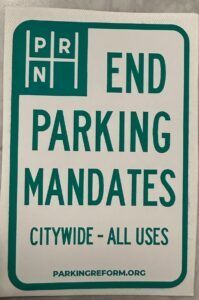
Yes, really. I gave my keynote speech at the Arizona State University (ASU) conference yesterday morning, and it was only my second favorite talk I attended. Which one beat it out? A panel on mandated parking. All 3 of the speakers made cogent, passionate, fact-filled arguments against parking mandates. The moderator who asked questions was Stephen Silvinski of the Pacific Legal Foundation, who did an excellent job of asking the right questions. The three presenters were Yassami Ansari, vice mayor of Phoenix; Tony Jordan, co-founder of the Parking Reform Network; and David King, an associate professor at ASU’s School of Geographical Sciences and Urban Planning. How could this have been interesting? And why would it matter? Stephen Silvinski got answers by asking each how he or she came to be involved in this issue. That’s when I got really interested. David King led by telling how he had had a friend in Minneapolis who wanted to start a coffee house in an old mansion that people could walk to. It would have had a capacity of 13 seats. The city planners looked at their formula and decided that to get permission, his friend would have to provide 7 parking spaces. That would mean demolishing the old mansion next door. The coffee house never was built. So David started looking into it and he came across a book by UCLA professor Donald Shoup titled The High Cost of Free Parking. That led him to a Ph.D. program at UCLA and ultimately to an academic position at ASU. The other two told how they got involved. What was clear in each case was a fair degree of passion for the cause and an understanding of how absurd mandated parking is. David King put it well: “The [government] planners pretend that they have this amazing expertise.” Ansari pointed out that when developers looked at a new project and consider the required parking spaces, the projects didn’t “pencil out.” That is, they weren’t worth it. Someone in the audience asked why there’s still such belief in mandated parking. Tony Jordan suggested that one reason is that people can use the mandated parking requirement as a bargaining chip to get other things they desire in return for a variance. King stated that one reason temperatures have been so high at night in Arizona during the last few summers is that the asphalt for increased parking soaks up heat during the day and releases it at night. Here’s a map showing where some degree of parking reform has occurred in the United States.   (1 COMMENTS)

/ Learn More

Confabulatory and Comforting and Utterly Groovy

Neuroscientist Robert Sapolsky says we have no free will. That’s a BIG claim. What are the implications of that??? And if we don’t have free will, is there a science of showing how we’re supposed to function once we accept that there’s no free will? These are the sorts of (very difficult!) questions EconTalk host Russ Roberts discusses with Sapolsky in this episode. Have a listen, and let us know what you think!   1- How did Sapolsky come to a scientific view that all our actions are pre-determined? What does he mean when he describes human action as merely a part of the “seamless arc of biology?” To what extent are you convinced by Sapolsky’s argument?   2- Why do we “remember” only the seemingly meritocratic reasons for people’s success? (Recall the example of the the Stanford graduate and the gardener. Why, according to Sapolsky, should we  not regard the graduate’s achievement as any greater?)   3- Roberts found Sapolsky’s book to be a very Christian book. Why does he think this, and why does Sapolsky disagree? How does Sapolsky respond when Roberts asks him whether free will is possible in a world with an omniscient God? How does Sapolsky answer when Roberts asks, “how do we see ourselves as human beings in the world within this view?”   4- Sapolsky asserts that the absence of free will does not mean that people’s behavior doesn’t change; it does. How can change occur if humans have no agency? How can learning occur, which Sapolsky insists still happens?   5- What is the difference between sentience and free will? (Think of the story of sparrows’ instincts.) If not free will, what then separates humans from other species? (Are we just “simply cursed with the gift of consciousness???)   Bonus Question. Sapolsky insists that while we do not understand consciousness, AI may give us opportunity to do so. Why do you think he believes this, and to what extent might he be correct? (0 COMMENTS)

/ Learn More

Costs and the Entrepreneurial Mindset

We often hear that profits get a bad rap. But costs are just as often cause for complaint. Many economists treat costs as friction that can create market failures.  For example, barriers to entry are blamed for monopolies.  Private solutions to externalities are often deemed impossible if transaction costs are too high.  Public goods must be provided by government if the cost of making the good excludable is too high.   However, much economic research shows that costs are not the friction they are often supposed to be.  For example, Harold Demsetz described the substantial ambiguity about what a “barrier to entry” even is and how to measure them for antitrust purposes.  Ronald Coase famously noted that transaction costs do not seem to be much of a problem in solving externalities.  Similarly, Coase pointed out that public goods are often provided by private means.  Elinor Ostrom spent many years showing how costs weren’t an insurmountable barrier in solving common pool resource problems. And yet, despite all this evidence and multiple Nobel Prizes, costs in principles, intermediate, and even advanced economics textbooks and discussions are presented as something that causes market failure.  I don’t know why there is such this disconnect between theory and evidence.  I suspect part of it is the dominance of the Marshallian line of thought that treats costs as objective rather than subjective.  But that is a conversation for another time. Instead, I argue that costs are not a friction but rather a lubricant for the market process.  In a similar manner to how profits act as a signal to entrepreneurs, costs can as well.  In a typical economics class, students are taught that profits act as a signal for potential market participants.  If there is profit to be had, firms will enter the market until profit returns to a normal level.  If there are losses, firms will exit the market.  Profit signals that more resources should go to this market.  Losses signal that fewer resources should do to this market.  So far, so good. But most textbooks stop there.  The role of costs and revenue in determining profit are left purely mathematical.  Profit is total revenue minus total cost.  Total revenue is known (or estimated).  Total costs are known (or estimated).  Therefore, profit is known (or estimated). And that is that.  If costs exceed revenue, then firms will not enter the market.  Thus, if entry costs are sufficiently high, then a firm will not enter a market even if firms already in the market are earning extra-normal profits. I take issue with this story.  I think high barriers to entry and transaction costs signal opportunity to the entrepreneurial mind.  If there is a way to break down these barriers, to reduce costs, that an unprofitable situation becomes profitable.  Thus, the role of the entrepreneur is not to simply coordinate resources within a firm (as he is often treated in textbooks).  Rather, the role of the entrepreneur is to find ways to reduce costs.  The innovation, the churn, the advancement of the market process comes from the entrepreneur looking for ways to reduce costs and turn a profit.  Costs do not prevent the market from functioning: they create the very incentive for the market to thrive!   Human history, and much economic research over the past century, has shown how insignificant a barrier costs truly are.  Even industries that are well-protected from competition by governments still face pressures as people constantly find ways around the barriers to entry to compete.  Simply because there are (presumably) high costs to enter a given industry does not imply that the market has failed or will fail.  Market “frictions” (even things like sticky wages) do not imply market failure or a role for government.  Same with transaction costs.  Rather, they shout to the entrepreneur that there are opportunities if these barriers can be overcome.  They are a signal the market uses to function.  If we are to meaningfully talk about market failure and government intervention, we need to talk more about incentives rather than costs.  High costs are neither necessary nor sufficient to declare market failure.   Jon Murphy is an assistant professor of economics at Nicholls State University. (0 COMMENTS)

/ Learn More