
This is my archive

bar

Bonus Weekly Reading for June 16, 2024

  Two more articles, one I read late in the week and one I read this morning, are too good to pass up. The Dark Side of Alexander Hamilton by Jeffrey Rogers Hummel, Reason, July 2024. This is Jeff Hummel’s review of William Hogeland, The Hamilton Scheme: An Epic Tale of Money and Power in the American Founding. Excerpt: Hamilton was one of the prime architects of the Constitutional Convention, held in secret. There he revealed himself as a closet monarchist: Expressing his admiration for the British system of government as the world’s best, he declared that he preferred a lifetime president with an absolute veto over all legislation. He was appalled that senators would be chosen by the states; indeed, he wished to see the states and their militias virtually obliterated. Yet some increase in central power was better than none, so Hamilton was willing to disguise his actual views when contributing to the Federalist Papers. Many historians have dismissed Hamilton’s convention remarks as a mere aberration, but Hogeland reveals that these extremely oligarchic inclinations informed Hamilton’s efforts throughout his career. And: By the time Washington had called out 12,000 militia [to end the Whiskey Rebellion], which would march under Hamilton’s effective command, overt resistance had subsided, mainly due to the calming influence of Gallatin, Findley, and even Husband. To buy time, the government had sent commissioners to negotiate and promise amnesty to any who signed a loyalty oath. Much of the area’s population did so—but when the militia arrived, that didn’t matter. Hamilton presided over a reign of terror in which the government’s men broke into houses and many Americans were arrested without charges and held for long periods under degrading conditions. Hamilton was attempting to gather evidence to drag perpetrators back to Philadelphia for trial, in violation of the Bill of Rights’ guarantee that all criminal trials be conducted in the district in which the crime had been committed. Hamilton hoped to find enough evidence to hang Gallatin, Findley, and Husband. By the way, when I used to walk by the front of the Treasury Building on Pennsylvania Avenue, when I was a summer intern at the Council of Economic Advisers in 1973, I noticed a statue and finally asked someone who it was of. It was of Albert Gallatin, a Treasury Secretary after Hamilton. Jeff Hummel has told me in private conversations that Gallatin was a financial genius who put his talents to noble ends, something that comes across in Jeff’s review.   Biden Keeps Blaming Others for His Economic Mistakes by Veronique de Rugy, Reason, June 13, 2024. Excerpt: Government overspending, an activity the Biden administration has taken to a new level, has sent the country into an inflationary spiral. Through trillions of dollars in COVID-19 relief programs, infrastructure spending, vote-buying student loan forgiveness programs, and a political “Build Back Better Agenda,” the White House has flooded the economy and decimated consumers’ purchasing power. We’re paying more and getting less for everything from energy to food. According to the House Budget Committee, the average family of four is paying around $1,143 more each month than it was in early 2021 for the same goods and services; this includes increased gasoline costs. Rather than reversing course, President Joe Biden is telling voters the private sector is to blame and that he has the answers. He’s doubling down by proposing more stifling, job-killing regulations to “fix” the problem—regulations which will inevitably send inflation to new heights. And: Once again, however, the Biden administration found a convenient and private sector scapegoat. It has unleashed the power of the Department of Justice on RealPage, a U.S. software provider that helps landlords determine market pricing for their rental properties. The existence of a company like this shouldn’t be controversial. Almost every industry today uses a similar tool, from grocery stores to airlines, to make better decisions about pricing their inventory based on supply and demand. But the administration needs someone to blame, and there are not many other viable targets for it to shoot at.   (0 COMMENTS)
/ Learn More

The Possibility of Despotism in America

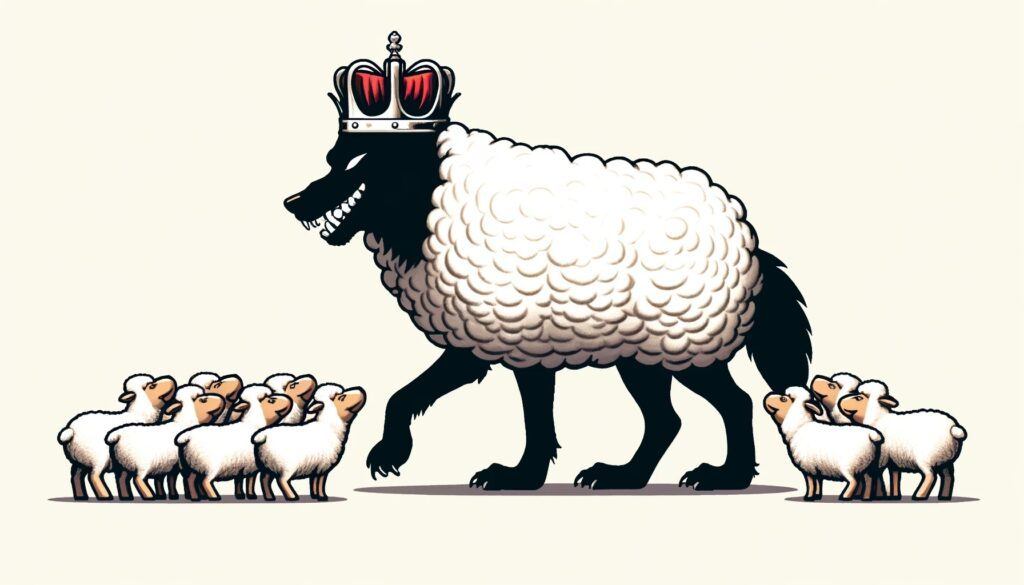
Economics is interested in despotism and tyranny if only because the profile of government interventions depends, at least partly, on the nature of the political regime. Moreover, the recent school of constitutional political economy analyzes alternative constitutional arrangements. Economists have analytical tools to study the consequences of government intervention or non-intervention. It is thus not surprising that a recent issue of The Economist tried to explain “Why America Is Vulnerable to a Despot” (May 16, 2024). It is true, on the one hand, that the decentralization of American government would make it difficult for a despot to take over the system in violation of the Constitution. For the same reason, manipulation of national election results is very difficult if at all possible. State and local governments (not to speak of the populace) are armed, although not as heavily as the federal government. Most police officers are employed by local and state governments. The federal government itself is a diverse assemblage of power centers that may not all yield to a despot’s will. As The Economist notes, “getting any organization that employs 25,000 lawyers to do one person’s bidding is hard.” Add to this that the 4,540 economists working at different levels of government may not all be willing to ignore their methodology or falsify their numbers, just as Mussolini’s government did not find economists easily compliant. A federal despot’s attempt at controlling America could also produce a civil war, which, at least in the long run, might not be worse than the French tyranny and sequels that followed the 1789 Revolution. On the other hand, the magazine The Economist reviews how an elected despot could overcome the checks and balances of the American system. It often appears as if the American presidency has accumulated almost czarist powers. The president is arguably more powerful than his counterparts in many European countries. Appearances to the contrary, he is more powerful than prime ministers in British parliamentary systems. His powers in case of an emergency declared by himself are practically unlimited. The 1807 Insurrection Act allows him (the included “her” would not necessarily be better) to deploy the army or navy in the country if federal law is ignored. The Economist notes: The Brennan Center, a think-tank at New York University, has identified 135 statutory powers that accrue to the president when he declares a national emergency. These include things like the power to freeze Americans’ bank accounts or, under a law giving the president emergency powers over communications that was passed in 1942, to shutdown the internet (which thankfully would be pretty hard in practice). In theory Congress is meant to review and potentially revoke the president’s declarations after six or 12 months. In practice it is casual about curtailing them. Over 40 emergencies are currently in force. Some of them are more than a decade old. Abraham Lincoln suspended habeas corpus. Franklin D. Rosevelt interned American citizens of Japanese origin by executive order. The temptation has not disappeared. President Joe Biden was able to sidestep a Supreme Court decision on student loans by invoking an emergency. The Defense Product Act is regularly invoked by US presidents, including by Donald Trump during the Covid epidemic. By declaring an emergency, real, apprehended, or fabricated (pushing the red nuclear button would be the ultimate justification), the would-be despot could become a real despot. A large majority of Americans might support him until it is too late, especially if the Supreme Court grants the president immunity from prosecution. Despotism is difficult to imagine without tyranny. The free press would be a big obstacle. Yet, part of the media might side with the despot. The rest would be accused of being “enemies of the people” and their “fake news” would be met with veiled threats or regulatory restraints. Which business can now survive without appeasing Leviathan? Courts would be attacked as opposing the “will of the people.” Perhaps all that is too pessimistic. America is quite probably the country that harbors the largest proportion of people with an instinct for individual liberty and some understanding of the two words of the expression. Individual liberty represents a threat to despotism whether right or left. Yet, a would-be despot is unlikely to identify with tyranny, injustice, and servitude; he would claim to defend democracy, justice, freedom, and sovereignty. He would hide behind a majority. The tyranny of the majority is, at best, a multi-person despot. Classical liberals and libertarians have been crying wolf for more than a century, but the disguised wolf has kept growing. The danger does not threaten only America. ****************************** The danger of despotism. By DALL-E under the influence of your humble blogger. (0 COMMENTS)

/ Learn More

My Weekly Reading for June 16, 2024

  Some highlights of my weekly reading. Most Palestinians Don’t Want Hamas Rule, Poll Shows by Matthew Petti, Reason, June 13, 2024. Excerpt: The Palestinian Center for Policy and Survey Research (PCPSR) released its latest poll data from the West Bank and Gaza on Wednesday. It turns out that Palestinians are unhappy with all of the current options—including the Biden administration’s plan for international governance of Gaza. The last Palestinian election was held in 2006. Although no party won a majority, Hamas had the largest bloc in parliament, with 44 percent of the votes. The Bush administration encouraged Palestinian security officers to launch a coup d’etat against Hamas, which led to a Palestinian civil war. Since then, Hamas has ruled Gaza and Fatah has ruled the West Bank, both as one-party states. If parliamentary elections were held today, most Palestinians wouldn’t vote for either option. Hamas would get 32 percent of the vote, Fatah would get 17 percent of the vote, and a full 50 percent would either sit out of the election or vote for a third party. The survey showed similarly abysmal turnout rates in a presidential election—with one twist. If the former guerrilla leader Marwan Barghouti were allowed to run, he would handily defeat both the Hamas and Fatah candidates. Barghouti has been imprisoned by Israel since 2002 for his role in several attacks on Israelis, which he denies ordering. Since then, he has said that he accepts the pre-1967 borders of Israel and called for “peaceful popular resistance.” But: That said, when PCPSR asked Palestinians what the best path to independence was, 54 percent said “armed struggle,” as opposed to 16 percent who supported peaceful resistance and 25 percent who supported negotiations. It was a drop from December 2023, when 63 percent chose armed struggle.   Documenting Communism (Part I) by Charles Palm, Defining Ideas, June 12, 2024. So many excerpts that it’s hard to choose. Read the whole thing. Documenting Communism (Part II) by Charles Palm, Defining Ideas, June 12, 2024. Excerpt: Eighteen million people, out of a population of a hundred million adults, in those fifty or so years, passed through the Gulag, and millions perished. It was a pervasive part of Soviet life, and seeing how it was managed would provide insights into how Soviet communism itself worked. We got the full range of documentation: secret police records, policy memoranda and minutes of meetings, laws, decrees, judicial rulings, regulations on camp administration and operations, lists of prisoners, budgets, reports of the vast industrial enterprises operated by the Gulag administration, data of hunger strikes and mass rebellions, and documents on camp culture, education and health. We got records documenting every aspect of the Gulag: three million pages.   The Tragedy and Triumph of The Killing Fields by Bradley J. Birzer, Law & Liberty, June 14, 2024. As far as we know (and historians are still trying to document these things), there was no more intense genocide in the twentieth century than that committed by the Khmer Rouge. Though reported numbers vary, the Khmer Rouge murdered anywhere from 25% to 47% of the seven million-strong Cambodian population in the three years it ruled. As the Khmer Rouge openly stated: “All we need to build our country is a million good revolutionaries. No more than that. And we would rather kill ten friends than allow one enemy to live.” The U.S. Cricket Team’s Guide to Winning at Everything by Robert Tracinski, Discourse, June 14, 2024. The joke that immediately made the rounds after the surprise U.S. win in Dallas is that Pakistan didn’t lose to “India-B” (one of the Indian national cricket teams), they lost to “India H-1B.” India vs. Pakistan is the most intense rivalry in cricket, fueled by the geopolitical rivalry between the two countries. It’s a bit like the Yankees vs. the Red Sox, but with nuclear weapons. The U.S. cricket team is dominated by Indian immigrants who are here on H-1B visas, awarded to skilled workers, particularly in the tech industry.   (0 COMMENTS)

/ Learn More

When China innovates

Western countries frequently complain that Chinese firms do not innovate, rather they copy western ideas and technology.  So how does the West respond when Chinese firms actually do innovate? Nicholas Welch and Kevin Zhang have an interesting article on the US response to innovation in the Chinese electric vehicle industry: Since Chinese EV manufacturers “poach” Western designers, many people might assume that only the Chinese are stealing product ideas and intellectual property. But in the world of EVs, we’re actually starting to see the Chinese innovate (out of competitive necessity) and Western EV manufacturers starting to “borrow” stale Chinese designs. . . . I think the real rationale for the tariffs is that the US EV industry — and the Japanese and Korean automakers that have US manufacturing operations — just doesn’t have very competitive offerings on the market. Therefore, the US has made the strategic decision to prioritize building a competitive EV industry at the expense of the American consumer in the short-term. Adam Tooze has an excellent article explaining that the world has seen an unexpectedly rapid growth in green energy over the past few years, almost all due to China: China’s huge surge in renewable energy, above all in solar power, actually puts us on track for the first time to meet these objectives. As Ember reports it has taken experts around the world by surprise: Each year the IEA has upgraded predictions: from 2021 to 2022 to 2023 the IEA’s accelerated case scenario predicted that 2023 annual additions would be 218 GW, 257 GW, and 406 GW, respectively. With recent updates from China, the actual additions for 2023 are 444 GW according to BNEF. To put the scale of additions in 2023 into context, annual additions of solar capacity had not broken 200 GW per year until 2022, which itself was a record year. Having shattered all previous experience of renewable power rollout, China’s huge surge in solar now actually puts us within striking distance of achieving a net zero path, driven by green electric power. . . . What we are witnessing is the most rapid take-up of a significant energy technology in history. Was China praised for this innovation?  Just the opposite: The response of Western politicians? Protectionism. Of course there are complex motives. They need to build coalitions to sustain the energy transition. They are worried about the CCP regime in China. They want to escape extreme dependence on imported sources of energy (though of course in the renewable space it is capital equipment not energy they are importing). But the more basic question is simply this. Are Western government and societies willing to prioritize the energy transition if it is not their drama, not their success story? Or, if the PV panels and the electric vehicles are from China, do other interests take priority? One of the most impressive examples of Chinese innovation is the social media site TikTok.  How did the US government respond?  By banning the app.  We are also doing all we can to stop innovation in China’s computer chip industry. I see a certain ambivalence in Western attitudes toward China.  We don’t want China to be a highly successful technology superpower, because that supposedly threatens our national security.  We don’t want China to be a non-innovative middle income country that merely borrows technology from the West, because that supposedly threatens jobs in our less dynamic industries. We seemed happiest with China when it was a highly inefficient low income country with its people living on the edge of starvation, cut off from the rest of the world.  North Korea with a billion people.  China’s not likely to accommodate our wishes, nor should it. There is also a reluctance to acknowledge Chinese achievements in science, despite the fact that by some highly respected measures they are among the world leaders in scientific achievements.  Nationalism distorts our view of the world. PS.  Reason magazine has an excellent article on Chinese innovation.  They point out that estimates of Chinese intellectual theft are essentially worthless (although it undoubtedly occurs quite often.)  There’s also this: The final piece in the “we wuz robbed” argument is the claim that Chinese companies “steal” the I.P. of their American partners in joint ventures. China’s prowess at the negotiation table is undeniable, and it wields its bargaining power aggressively to trade access to Chinese markets for learning. Yet the American companies that claim to be victims enter into these agreements freely and rarely come out net losers. These U.S. businesses have raked in trillions in sales and pocketed hefty profits—a testament to their ability to navigate the competitive landscape. The hawks vastly overestimate the value of any I.P. that can actually be stolen. Clueless about the technologies that most concern them, the hawks fixate on the blueprints without appreciating the craftsmanship required to bring them to life. After all, the secrets of technological innovation aren’t hidden. The recipes for making microchips have been available in university libraries for almost 70 years, but building them takes far more than just following instructions. (0 COMMENTS)

/ Learn More

Reflections on Flags and “Flag Day”

It is strange that there should be a Flag Day, which is today June 14. That’s in the United States. I don’t know of another country in the (more or less) free world where such a day exists, although governments have many other ways to inspire national pride and obedience. A flag can represent a group or an abstract ideal. If it identifies a private group, like an association or a company, it is innocuous. It is different when it represents a public group of which some members are forced to belong. Except for the rulers of the group and their favorites, the flag then represents a forced identity and some service obligations. Nazi flags at official events or official flags in the old American South were examples. An individualist would despise this sort of flag. Flag Day was proclaimed by the progressive Woodrow Wilson in 1916, a bit like the Pledge of Allegiance was invented in 1892 by Francis Bellamy, a socialist who preached that Jesus was too. Schoolchildren were long obliged to salute the flag and recite the pledge of allegiance: American exceptionalism, at least in the Western world. A few decades after Woodrow Wilson’s proclamation, the Supreme Court fortunately ruled that the First Amendment prohibited American governments from imposing such professions of faith. A flag attached to a territory, typically a national flag, can also symbolize an ideal. Many Americans look at their flag that way. Woodrow Wilson believed that the Stars and Stripes represented “liberty and justice.” His conception of liberty of justice was obviously not shared by everybody, including the victims of eugenics, which was first legislated under his governorship in New Jersey. The only way an official flag can be truly representative of everybody in a territory is to represent a common ideal, shared by everybody. A common ideal necessarily excludes victims of public discrimination or exploitation. From a libertarian or classical liberal perspective, a national or territorial flag can be respectable only if it symbolizes an ideal of equal liberty. We should not expect people exploited or discriminated against by their government to sheepishly worship the latter’s flag. But many do, which points to what Bertrand de Jouvenel called “the mystery of civil obedience” (see his On Power). A number of hypotheses have been proposed to solve this mystery, from a habit of a species (probably genetically wired) to government propaganda and resistance as a problem of collective action. The ideal of equal liberty for everyone is not easy to achieve. In his Why I, Too, Am Not a Conservative, James Buchanan presents this ideal as a hope and a faith, even if we know since Adam Smith that an autoregulated social order of equally free individuals is possible and conducive to general prosperity. One danger is nationalism, which is what most territorial flags try to fuel. At the other extreme, too much diversity can exclude the possibility of common values necessary for the maintenance of a liberal society. For example, imagine two religious sub-groups of individuals who worship respectively god A and god B, and believe that their god wants them to kill infidels. The set of common values would be the null set, and equal liberty impossible. There is in America and in many Western countries a memory of, or a hope for, the ideal of individual liberty (and property), which alone can efficiently prevent a continuing clash between individuals and their beliefs, preferences, and lifestyles. Finding a national or territorial flag that unambiguously conveys this ideal is not an easy quest. ****************************** (0 COMMENTS)

/ Learn More

Equalize, or Minimize?

Here’s a thought experiment that recently occurred to me that I’d like to run by you, dear EconLog readers. I think the intuitive reactions one might have to this thought experiment might do a lot to clarify how one conceives of justice.  Suppose you live in a world where there is a military draft. In addition, let’s stipulate that a military draft is unjust. (If you’re in favor of a draft and find yourself resisting the thought experiment on those grounds, just substitute the draft for some other policy you would consider unjust.) However, not every citizen is eligible for the draft. Only half the population can be drafted. Let’s say the basis for who is eligible is something completely arbitrary – those who were born on even numbered days are eligible to be drafted, while those who are born on odd numbered days are exempt from the draft.  Let’s say that ending the draft is outside the Overton window – there is no realistic chance this policy can be revoked. However, you are in the unique position of being able to modify the draft with some kind of executive order. You can’t repeal it, but you can make it so those born on odd days become eligible for the draft. Assume nothing else would change if you did so – so for example, if you expand the draft, assume that twice as many citizens will actually get drafted, so nobody with an even numbered birthday sees their chances of being drafted lowered as a result.    So here’s the question – what is the right thing to do?  Should the draft be expanded, on the grounds that those born on even days have been treated unfairly by being subject to an unjust policy that other citizens don’t face? That is, should you pull the policy lever that increases the number of people who face injustice, in order to equalize the distribution of injustice?  Or should you decline to expand the draft, on the grounds that the policy is unjust and if injustice can’t be repealed, as few people as possible ought to be subject to it? That is, should you allow the policy to apply unequally to citizens, in order to minimize the number of people who are subjected to injustice?    What do you think? (0 COMMENTS)

/ Learn More

Is art as progressive as science?

A few years ago, I answered the question in this post’s title in the negative: It seems to me that human progress is very uneven:Technology: Very rapid progressScience: Rapid ProgressPublic morals: Slow progressSports: Slow progressHuman personalities: No progressArt: No progress Now, I wonder if this judgment was too hasty.  Perhaps I was thinking about the issue in the wrong way.  In this post, I’ll suggest that I was mixing up stocks and flows, and that this distorted my view of the relative progress in these two fields. To be clear, I understand the argument for why science seems much more progressive than art.  Science has advanced enormously over the past few centuries, whereas many of the best-regarded artists in music, painting, poetry and the theatre did their work hundreds of years ago. But now I wonder if this is a sort of “apples and oranges” comparison.  It seems to me that a field can be judged either by its stock of achievements, or its flow of creativity.  Thinking back on my earlier post, I believe I was comparing the stock of scientific knowledge to the flow of artistic creativity.  Let’s reverse those criteria, using physics as a stand in for science.  What’s happened to the stock of artistic achievement, and what’s happened to the flow of scientific creativity? During the first 30 years of the 20th century, physicists discovered the structure of the atom.  They developed the theory of quantum mechanics.  They developed special and general relativity.  Undoubtedly there were many more discoveries, but those are some of the most important.  Fields of applied physics such as astronomy also saw important discoveries, including the structure of stars, the existence of galaxies and the expansion of the universe. Unless I’m mistaken, the past 30 years have not seen discoveries of this importance, although progress continues to occur in many areas.  Nonetheless, from a “flow of creativity” perspective, you could argue that physics is in decline, and that the greatest achievements occurred many years in the past.  Who is the Einstein of today? Now let’s consider artistic knowledge from a “stock perspective”.  I would argue that the art world is significantly ahead of where it was 100 years ago, and vastly ahead of where it was 200 years ago.  This progress has taken several forms: 1. New artists continually appear on the scene, adding to our stock of artistic creations.  Painting such as Picasso’s Guernica did not exist 100 years ago.  If you go back 200 years, then entire styles such as Impressionism and Post-Impressionism did not exist. 2. Our understanding of the field of art has improved relative to where it was in past centuries.  In the mid-1800s, Vermeer’s paintings existed, and were not completely unknown to art connoisseurs.  And yet most art experts lacked the ability to appreciate his greatness.  Today, even people with just an undergraduate course in art history can appreciate Vermeer.  Many more examples could be cited, especially as you move up in time toward the present.  Thus by 1890, Vermeer had been “discovered” and yet Van Gogh remained undiscovered. Goethe was one of the supreme minds of the early 19th century.  In his book entitled Italian Journey, he shows what a superbly educated European might have been able to know about painting back in 1816.  And yet I suspect that I know even more about painting than Goethe did.  That’s not because I have a better mind, rather it’s because I’m standing on the shoulders of giants, looking out over a field of knowledge that has expanded dramatically in the past 200 years.  As an analogy, a college sophomore majoring in physics might well know more physics than did Isaac Newton. So why the perception that art is regressing while science advances?  I see several possible reasons: 1. Lots of abstract art and atonal music makes no sense to most people.  But it’s also true that quantum mechanics and relativity make no sense to most people.  Given enough time and progress, any field of human endeavor will advance beyond the comprehension of most people. 2. But people are willing to accept models such as quantum mechanics and relativity, when told that these models underlie the technology that leads to things like lasers or iPhones.  For this reason, science is more respected than art.  But the fact that people who don’t understand either field accept one of the two as a matter of faith is hardly a good argument for the claim that science is more progressive than art. 3. People apply a double standard.  They judge art on a flow basis—how does the flow of good new art compare to the flow of good new art in previous eras?  In science, they look at the accumulated stock of knowledge, which is generally increasing.  That’s a double standard, favoring science. In my view, most of the traditional fields of art and science are well past their “golden age.”  Rapid progress tends to occur when new techniques open up possibilities for creativity—the knowledge equivalent of the Oklahoma land grab, when people rushed in to take land that was suddenly available.  In science, techniques like deciphering the genome have recently allowed big gains in our understanding of how and where ancient peoples migrated.  Areas of science without new techniques tend to eventually stagnate.  In art, painting has stagnated and filmmaking has taken over as the most vibrant visual art over the past 100 years. In my own field (macroeconomics), things seem to have regressed in recent decades.  Fewer economists seem to understand that low interest rates don’t imply easy money.  Fewer economists seem to understand that fiscal stimulus is largely ineffective due to monetary offset.  Fewer economists seem to understand that the Fed determines the long run rate of inflation.  Fewer economists seem to understand that trade barriers don’t improve the economy.  Macro is declining in both a stock and a flow sense. (0 COMMENTS)

/ Learn More

Should We Reexamine Adam Smith’s Views of Animals?

  The most famous passage in Adam Smith’s An Inquiry into the Nature and Causes of the Wealth of Nations is this: It is not from the benevolence of the butcher, the brewer, or the baker, that we expect our dinner, but from their regard to their own interest. We address ourselves, not to their humanity but to their self-love, and never talk to them of our own necessities but of their advantages. Just a few sentences prior to it, though, Smith writes: Nobody ever saw a dog make a fair and deliberate exchange of one bone for another with another dog. Nobody ever saw one animal by its gestures and natural cries signify to another, this is mine, that yours; I am willing to give this for that. When an animal wants to obtain something either of a man or of another animal, it has no other means of persuasion but to gain the favour of those whose service it requires. I wonder if Smith understated the ability of animals or, at least, the ability of cats, to engage in exchange. Check out this heart-warming video. I found plausible the idea that the cat thought he was exchanging something that someone else thought to be valuable, a leaf, for something he valued, a piece of fish. HT to my lovely wife, who is always on the lookout for sweet animal stories. (0 COMMENTS)

/ Learn More

Let the Poems Out of the House

What is a poem? What is it meant to do? Who is it meant for? Poet Dana Gioia and host Russ Roberts explore these questions and more as they talk about the meaning of poetry. The conversation touches on many personal topics: death, loss, family, and our common humanity. At the beginning of each episode, Roberts mentions EconTalk’s tagline: “Conversations for the Curious”.  This conversation certainly fits the bill, as the two explore what poetry in various forms has meant to them and their families. Dana Gioia’s career as a writer, poet and critic has spanned several genres, including as a librettist for opera and jazz artists. He has done public advocacy work within the arts as the Poet Laureate for the state of California and as chairman of the National Endowment for the Arts. Here’s an excerpt from Gioia on his powers as a poet: You know, when I was a young, ambitious writer at Stanford and Harvard and imagining how I’d make my mark, I had this very English-department notion of what a poem is, and its relationship to the great tradition and the history of ideas. But, nowadays, I think of what a poem is, is this instrument of language that you create, that is one-half a game and one-half a kind of spiritual exploration. But, the highest thing that you can do is to be useful, is to have these words be useful to people in the dilemmas of their actual lives. If you’re lucky, they will find uses for your poem that you don’t even imagine. But, I had a very odd thing where I wrote a poem and I had people talk about it in a totally different context. And I read the poem, and I realized it applied to that context equally. In fact, I rather liked that as much as I liked my own. Because, poems are like children. Once they’re out of the house, they do things that you didn’t imagine and you may not approve of. But, what you’re trying to do is to make them able to lead independent lives. I know that sounds very odd, but once my poems are published, I’m simply one of the readers. I probably may be the best-informed reader, but if they belong anywhere at all, they belong in the language, into the readers of the language. Gioia and Roberts agree on the power that poetry has within ordinary lives, whether for a writer or economist, mother or child, opera lover or pop-song-enthusiast. Do you agree? Their discussion reminded me of scraps of poetry I memorized when I was younger, as a high school or college student, and how they occasionally resurface in my daily life. As an enthusiastic choral singer over the years, many of these poems are songs and have managed to engrave themselves into my brain, almost by accident, but somehow remain, through their words and rhythms, relevant to emotions and thoughts that I have years later. What did you take away from Gioia and Roberts’ discussion? You may want to consider some of the questions below:   1 – Much of Roberts’ and Gioia’s conversation centers around poetry’s power to connect us with past and future generations. Russ quotes from a few line from Septimus in Tom Stoppard’s play Arcadia: We shed as we pick up, like travellers who must carry everything in their arms, and what we let fall will be picked up by those behind. The procession is very long and life is very short. We die on the march. But there is nothing outside the march so nothing can be lost to it. The missing plays of Sophocles will turn up piece by piece, or be written again in another language. Ancient cures for diseases will reveal themselves once more. Mathematical discoveries glimpsed and lost to view will have their time again. You do not suppose, my lady, that if all of Archimedes had been hiding in the great library of Alexandria, we would be at a loss for a corkscrew? Sophocles, as a great tragic playwright, was certainly a kind of poet. Archimedes and ancient doctors, however, belong to what we would characterize as science. What about other human forms of expression and ideas? Do scientific or economic ideas also sometimes serve in this role of poems, connecting human to human?   2 – Gioia describes poetry as something that is “meant to be heard.”  Historically, he points out, poetry has always been connected to song and performance. Perhaps this is true to some extent of any knowledge expressed in human language, it is more than just the visual representation on the page. Can ideas exist independent of discussion? To what extent is poetry a conversation as well as a performance?   3 – In the opening part of the conversation, Gioia reads a poem that he wrote, Meet Me at the Lighthouse. This is dedicated to his cousin, who died at a young age. It begins a discussion about the poem itself, which contains allusions to jazz, Yeats, and classical mythological topics, as well as references to the poet’s memory of his cousin. How do these allusions work together within the unit of the poem to evoke meaning? What do they express about Gioia himself, or his cousin?    4 – Gioia mentions the Latin word for poem is the same as its word for song, carmen. Modern popular music often functions like poetry. Is there a particular poem that has stuck with you throughout life? What was it about that poem that was so meaningful and why do you remember it? If the poem has a musical setting, how does that enhance it? What is it about the music that is necessary to the poem, or is it necessary at all? Does this apply equally to different genres and eras of musical poetry: J.S. Bach, opera, ancient epic poems, Bob Dylan, Taylor Swift (of the Tortured Poets Department), Kendrick Lamar?   Related podcasts  Dana Gioia on Learning, Poetry, and Studying with Miss Bishop, EconTalk Dwayne Betts on Beauty, Prison, and Redaction, EconTalk Cheryl Miller on Hertog and the Humanities, The Great Antidote Zack Weinersmith on Beowulf and Bea Wolf EconTalk   More to explore Shannon Chamberlain on The Freedom of Poets: Thomas Wyatt as a Character in Wolf Hall at the Reading Room and, related, Garth Bond’s The Freedom of Poets 2: Thomas Wyatt and Petrarch Sarah Skwire’s The Opportunity Costs of J. Alfred Prufrock at EconLib Sarah Skwire on Milton’s Poetry and Prose: From the Liberty Fund Rare Book Room at the Online Library of Liberty Confucius’The Shi King, the Old “Poetry Classic” of the Chinese at the Online Library of Liberty The Bard and The Professor: Adam Smith’s Influence on the poet Robert Burns at AdamSmithWorks Adam Smith Also Teaches Good Teaching at AdamSmithWorks The Imitative Arts: Some Fun With Adam Smith’s Artistic Opinions at AdamSmithWorks Ancient Perspectives on the Value of Poetry at the Reading Room The Poet as Intellectual: How the Romantics Took on Thomas Malthus at the Reading Room   Nancy Vander Veer has a BA in Classics from Samford University. She taught high school Latin in the US and held programs and fundraising roles at Paideia. Based in Marburg, Germany, she is currently completing a masters in European Social and Economic History at the Philipps-Universität Marburg. (0 COMMENTS)

/ Learn More

Henderson on South Royalton Austrian Conference

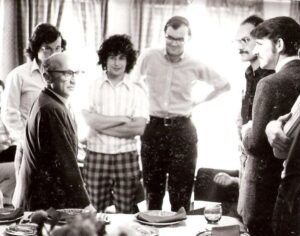
Later this month is the 50th anniversary of the South Royalton, Vermont conference on Austrian economics. Liberty Fund asked Richard Ebeling, one of the attendees to write the long essay, and then two people who attended (Mario Rizzo and I) and one person who didn’t (Geoffrey Lea) wrote responses. Here’s an excerpt from my response: Like Richard Ebeling, I was excited to attend the first Austrian Economics conference in South Royalton, Vermont. My motivation was different from Richard’s. I didn’t regard myself as an Austrian economist, but I did find Friedrich Hayek’s work on the socialist calculation debate, and Ludwig von Mises’ work more generally, profoundly insightful and important. I was also a big fan of Hayek’s The Road to Serfdom, the first thing by Hayek that I had read. I had read Hayek and Mises in the late 1960s when I was a young undergraduate mathematics major at the University of Winnipeg. I never took a course in Austrian economics: all of my reading was on my own. In the fall of 1971, when I applied for the Ph.D. program at UCLA, I knew a lot about UCLA’s strong free-market orientation and was looking forward to taking classes from Armen Alchian, Harold Demsetz, and Sam Peltzman, the three UCLA economists whose work I had read. While I knew that none of them was an Austrian economist, I hoped that some of them would be sympathetic. So I took a chance on my application letter, writing, “I would like to be in a graduate program where, if I refer to Mises, people don’t assume that I’m mispronouncing the name of a childhood disease.” It worked, if you judge by the outcome: I was offered full tuition plus a 2-year teaching assistant position paying $440 per month for a 9-month year. That was more than this kid from rural Manitoba had imagined he could get and, more relevant, more than I was offered at my second choice, the University of Chicago. The person who had motivated me to get into economics was Harold Demsetz, whom I had met in January 1970, when he gave 3 talks at the University of Winnipeg. I was hooked on economics. Although I almost always took Demsetz’s advice—he was my dissertation advisor and my mentor—in this case I went against his advice. I told him that I had received an offer to attend the South Royalton conference at someone else’s expense, and the program looked interesting. The three main speakers were Murray Rothbard, Israel Kirzner, and Ludwig Lachmann. I had read, and been impressed with, much of Rothbard’s Man, Economy, and State. Demsetz’s friend and colleague Ben Klein had assigned Israel Kirzner’s Competition and Entrepreneurship in his industrial organization class earlier that year. While I don’t recall Klein saying why he liked the book, I think one reason was that Kirzner rejected the idea that perfect competition had anything to do with perfection. I do remember that Ben liked the idea of dynamic evolving competition that Kirzner, and the Austrians in general, refreshingly brought to the economic discussion. So I was surprised that Demsetz discouraged me from going to the South Royalton event. He told me that, now that my course work was done, I should be digging into my dissertation immediately. But I needed a break after two intense years, and this “busman’s holiday” seemed like what the doctor ordered. I probably batted a thousand on Demsetz’s advice: taking it on every other issue and rejecting it on this one. The conference was well worth it. Here’s a link to Richard Ebeling’s leading essay, Mario Rizzo’s response essay, and finally my responses essay. Geoffrey Lea’s response is yet to come. Don’t miss the part in my essay about Frances Hazlitt’s comment to Milton Friedman. The people in the photo are, from left to right, Harry Watson, Milton Friedman, Jerry O’Driscoll, Jack High, and Richard Ebeling. Personal note: I had a major medical test yesterday. The results were negative; I never like the word “negative” as much as I do when I hear it from doctors. I was sweating the test on Monday and Tuesday morning and having the test Tuesday afternoon. Thus the absence of blog posts Monday and Tuesday. (0 COMMENTS)

/ Learn More