This is my archive

bar

Letting Markets Work: Urban Planning

For some reason, urban planning has become a hot topic on social media. Even more strangely, it has become ideologized. In the name of the community, left-wingers are generally for state-run public transportation and government housing. In the name of families or individuals, many right-wingers want more suburbs and, particularly, taxpayer-funded highways to accommodate cars. They all want the government to subsidize their lifestyles. But with regard to urban planning, we need to get it out of the way. In various parts of the world, the disastrous results of modern urban planning are evident. In the US, after the passing of the Highway Act in 1956 and the Urban Renewal program of the 1960s and 1970s, the federal government started subsidizing the construction of highways, and state and local governments started regulating building more heavily than in the past. As a result, entire communities were destroyed to make room for highways. This not only fostered racial segregation but, over time, resulted in Americans losing ‘third places’ (places other than their homes and workplaces where they interact with other people). Americans see less of one another than in the past. In Argentina, different but equally interventionist urban planning has also caused significant damage. By subsidizing not just highway construction and maintenance but also energy and gas prices for years, successive Argentinian administrations fostered the creation of low-density suburbs and gated communities that are now proving unsustainable. Indeed, as market prices slowly begin to be reintroduced, many homeowners are starting to realize that they were living beyond their means. In the meantime, they complain about the perpetual traffic jams that are now part of their daily lives, since people like them moved to the suburbs when they became government-subsidized. No wonder. In a way, the failure of urban planning is unsurprising. Following Hayek and Mises, we find that planners cannot possibly gather more knowledge than markets and will thus inevitably fail at economic planning. Why would this not apply to urban planners? Urbanism is also about making ends meet in conditions of scarcity. Unfortunately, just like in the case of other planners, urban planning enthusiasts do not simply seek to accommodate other people’s preferences. Instead, they actively seek to influence others’ choices. Admittedly, there is some momentum across the United States for relaxing construction codes and permits for building denser housing. In hundreds of cities across America, parking requirements are being reduced or eliminated, while changes in zoning allow builders to build more housing in less space. Opposition has been, and it still is, stiff by so-called NIMBYs (‘not-in-my-backyard’ adherents) who want housing supply to remain low so their own home prices stay high. Their motive is certainly illiberal, but they are right about their incentives: Wherever more housing is built, lower home prices ensue, as the recent example of Austin shows. Higher supply brings prices down. Who would have thought? While the left celebrates more housing, it usually demands active government intervention to ‘compensate’ through public transportation for the reduction in the number of cars. But there is no reason why these systems should be state-run or even subsidized. Historically, transportation systems have rarely been designed top-down by anyone. Instead, they have sprung up spontaneously through the interaction of private operators and the public’s demands. It has been an unfortunate fact, but not an inevitable one, that urban planners take it upon themselves to regulate transportation.  In city centers across the Western world, particularly in historic districts where streets have traditionally (without planning) been narrow, a fierce debate over cars is also present. Some welcome restrictions on cars, whereas others loathe them. Every case is different, but when it comes to street changes, why not follow demand? Fewer cars on a given street means fewer car drivers, which is certainly detrimental to them. But what about others? If it is shown that a given area is more in demand by pedestrians or cyclists than by car drivers, why should the latter be subsidized or privileged over the former? Of course, the problem of how to allocate scarce resources would not exist at all if all roads were private, an idea that seems crazy to the general public but, as Murray Rothbard argued in For a New Liberty, need not be impossible. In any case, progress is slowly being made. New York’s new congestion pricing is a step in the right direction. Car drivers should not be entitled to subsidies by non-drivers. The left also demands government housing, but it is unclear whether this helps lower home prices. Besides, spending government resources on housing necessarily implies inefficiency, since the public sector diverts resources that would have been used for more productive purposes. And last, but not least, the government also takes longer to get anything done and maintains a bureaucracy, which costs money in itself. Remember the joke that getting government help is like having it break your legs and give you a pair of crutches? In this case it’s more like getting both legs broken but getting just one crutch. When it comes to urban planning, the government creates problems and cannot even fix them. Make no mistake: The lobby for significant government intervention in urban policy is here to stay. NIMBY-boomers, car makers, and highway contractors can all benefit from urban planners with the power to lure people into their own schemes. But the harm that they cause to renters or pedestrians, which grows by the minute, shouldn’t deter libertarians from advising a policy on urbanism for all people. We need to get rid of scattered policies catered to crony capitalists and established interests. The market can work for all of us—if only we let it.   As an Amazon Associate, Econlib earns from qualifying purchases. (0 COMMENTS)

/ Learn More

Good News on Income

The Bureau of Labor Statistics released updated figures on household and individual income.  The news is quite positive: Real median household income in 2024 was a record $83,730, reversing a downward trend that began in 2020 with the pandemic.  Real median individual income also reached a new high at $45,140 in 2024.[1]  Both of these figures continue a general rising trend that has been going on since the 80s.[2]  What’s interesting to note is that, contrary to the stories told by the Left and the MAGA Right, American incomes are not stagnating.  Real median household income is up 38.6% since 1984, and real individual median income is up 57.1% since 1974. In order for real income to be generally rising, the economy needs to be generally growing.  Looking at the data, stagnation happens when we are in recessionary periods.  It grows where we are generally growing.  Some, like E.J. Antoni, Trump’s candidate to head the BLS, argue we’ve been in a recession since 2022.  The data do not support that contention.[3] In the short run, there certainly are concerns about the US economy: tariffs, weak employment, stubbornly high inflation, and increasing economic isolationism.  But, in the long run, the US economy still has legs.  To defeat defeatism, we must look at the data and take heart in the optimistic signals it sends.   —— [1] To head off any objections: “real” means “inflation-adjusted” and “median” is the point where half of households are above and half below that value, so outliers like the super wealthy and super poor will not influence the number.  These results are not being driven by inflation or gains in just the super wealthy. [2] Real median household income data go back to 1984 while individual income goes back to 1974.  Given that household income generally tracks individual income, it’s probable that household income likely was rising earlier than 1984, too. [3] There are other empirical and theoretical issues with the argument that the United States has been in a recession since 2022.  See, for example, America in Recession Since 2022?  A Critique of Antoni-St. Onge by UW-Madison economist Menzie Chinn. (0 COMMENTS)

/ Learn More

What Is A Value Added Tax?

At least once on this blog, I promised my readers that I would explain what a value added tax is and why it is not a trade barrier. However, I realized that it is not obvious how to explain all that in a blog post, and I decided to do an article for Regulation instead. The article ended up close to 6,000 words and features a detailed numerical illustration. It just came out in the Fall issue of the magazine: “A VAT Is Not a Disguised Trade Barrier.” It is not gated and is also available in pdf format. A VAT is a consumption tax, similar to a sales tax, charged to final domestic consumers within a given territory. It is different from an ordinary sales tax in that it is collected from businesses at each stage where value is added along the chain of production. But it is a consumption tax and carries no net burden on businesses (except in terms of regulatory cost). A paragraph in my article provides a summary of how a VAT works: If businesses don’t pay any VAT on net, and the last producer (the retailer) keeps all the VAT it collects, how does the taxman get his money from the consumption tax? The answer, as we see in the discussion above and in Table 1, is that each business does send a VAT check to its tax authority in proportion (20 percent in our illustration) to its own value added, but it is reimbursed by passing this tax forward via its VAT-inclusive invoice price. The remitted amounts by businesses at each stage of production … are included in the cost base of the last firm in the chain as input VAT. The most important lesson to draw from the article is to understand its conclusion: A VAT is equivalent to a domestic retail consumption tax that is not meant to (and cannot) be charged to foreigners. A tariff is also a consumption tax, but it discriminates against imported goods. A VAT does not discriminate between imported and domestically produced goods and does not hit inputs. The typical “border adjustments” in VAT-countries are precisely meant to keep this tax non-discriminatory. They simply apply to imported goods the same tax collection mechanism that is applied to domestically produced goods. … So, why do protectionists proclaim the contrary? Why has the current American presidential administration, even more than preceding ones, professed demonstrably false claims on this topic? The charitable explanation is that the politicians don’t understand how a VAT works. But why doesn’t the White House have or consult informed economists who can explain to them what is happening? A less charitable explanation is that presenting the VAT as a barrier to trade conveniently stirs the nationalistic passions of voters and comforts politicians’ intuition that trade should not be left to the individual liberty of importers and exporters. Finally: The United States is the only country in the OECD without a VAT, but I am not arguing that the federal government should impose one on American consumers. I explain my position in the article. (0 COMMENTS)

/ Learn More

Eating with Intelligence (with Julia Belluz)

Losing weight should be simple: eat less, exercise more. But according to author and health journalist Julia Belluz, it’s complicated. Listen as Belluz talks with EconTalk’s Russ Roberts about her new book, Food Intelligence. Belluz argues that a calorie is pretty much a calorie whether it’s carbs or fat. Keeping calories under control is often […] The post Eating with Intelligence (with Julia Belluz) appeared first on Econlib.

/ Learn More

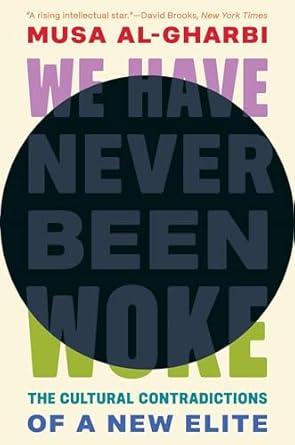
Evaluating We Have Never Been Woke, Part 3: Economics

In his book We Have Never Been Woke, Musa al-Gharbi examines the worldview of symbolic capitalists in great detail. Much of what he describes looks very familiar to me (although the fact that I see the behavior al-Gharbi describes so regularly is itself something I consider as having very little weight as evidence — I’ll describe why in a different post). But there are some points in his analysis that didn’t quite fit, as far as I can tell. For example, consider how al-Gharbi described the rise of the symbolic capitalists, and the worldview they embraced as they took the reins of social power: Secularizing the social gospel movement, they promised to help America transcend its divides, redeem its soul, and experience unprecedented peace and prosperity by leveraging science and reason to maximize human flourishing in a way that laissez-faire capitalism never could. They promised a world where robber barons would be restrained by technocrats, where corruption, nepotism, exploitation, and unjust discrimination would be replaced by meritocracy and professionalization. The poor and the unfit would be cared for and gradually eliminated through a combination of aid, education programs, expanded rules and regulations (and intensified enforcement), and eugenics programs. Political partisanship, ethnic and religious conflict, and other forms of tribalistic struggles would be settled by objective and disinterested experts committed to the greater good. Class struggle would be eliminated, not because inequality was vanquished, but because people across the social strata would be made to see that the prosperity and economic dynamism unleashed by free markets could benefit everyone—so long as the wealthy and powerful could be persuaded to entrust a share of their wealth and authority to symbolic capitalists to manage the economy and society writ large. This, al-Gharbi tells us, has continued to be basically the framework and ideology supported by symbolic capitalists (minus the support for eugenics, which was thankfully repudiated). Overall, al-Gharbi tells us, symbolic capitalists want social welfare programs, redistribution, increased and more strongly enforced economic regulation in order to “maximize human flourishing in a way that laissez-faire capitalism never could,” technocratic control of economic outcomes, legally enforced restrictions and barriers to entry for a wide range of careers, and to “manage the economy and society writ large.” Yet later in his work, al-Gharbi also tells us that symbolic capitalists “skew culturally and symbolically to the left but favor free markets.” Not wanting to go too deeply down the rabbit hole of arguing by definition, but there seems to be a strong disconnect here — how can someone favor top-down technocratic control of the economy, but also favor free markets? Granted, in his last line of the description, al-Gharbi says symbolic capitalists argue the “prosperity and economic dynamism unleashed by free markets could benefit everyone—so long as the wealthy and powerful could be persuaded to entrust a share of their wealth and authority to symbolic capitalists to manage the economy and society writ large.” But to my eye, saying free markets will benefit everyone as long as technocrats control the economy writ large is tantamount to saying free markets will benefit everyone as long as we abandon free markets. I confess to being unable to provide a flawless, exclusively correct analytic definition of what “free market” means (see Matt Zwolinski on this point here), but I have a hard time squaring the circle of “favoring free markets” with favoring all the various forms of top-down, technocratic control of market activity symbolic capitalists advocate. I mentioned in my last post that I at least got an impression that al-Gharbi favors increasing the minimum wage, even though he surely doesn’t advocate this policy for the reasons initially intended by progressives. Part of that impression came from passages like this: [Symbolic capitalists] prescriptions for addressing unfortunate market externalities vary systemically from everyone else’s too. Highly educated Americans, for example, tend to prioritize redistributive policies to address inequalities (taxes and transfers) over predistributive approaches (e.g., high wages, robust benefits, and job protections that render reallocation less necessary.) To be clear, al-Gharbi isn’t explicitly saying he favors the “predistributive” approach, so I can only report my impression — I may very well be wrong. Still, I think this difference is somewhat overstated. In support of this claim, al-Gharbi cites the paper Compensate the Losers: Economic Policy and Partisan Realignment in the US. While there is a negative association between education and support for predistributive economic policies (defined as increased minimum wages, stronger unions, job programs, and economic protectionism), that trend has been weakening over time with regard to minimum wages and labor unions from the second “Awokening” forward.  By contrast, the negative association between education and support for protectionism has only gotten stronger over time, while the association between education and support for redistribution is very weak and not always positive. Figure A.1 (on page 58 of Compensate the Losers) shows the association for various redistributive measures, and the coefficients are all very close to zero — and in some cases, slightly negative. Even more noteworthy is what we see on Figure A.13 (page 70). In his book, al-Gharbi criticizes the symbolic capitalists support for policies like affirmative action, suggesting that this policy has been a tool of elites to secure their own advantage, while failing to benefit the genuinely disadvantaged: These beneficiaries also tend to be already affluent compared with most other Black Americans. These patterns are especially pronounced at elite schools (and by proxy, elite symbolic professional institutions). Critically, this “elite capture” is hardly unique to Black people. Across ethnicities, comparative studies in the United States and abroad have found that affirmative action programs tend to primarily benefit already financially well-off members of the target groups. But in Figure A.13, we see there is a strong negative association between support for affirmative action and years of education. The more highly educated someone is, the less likely they are to support affirmative action policies. This runs contrary to the usual association al-Gharbi makes of woke policies being disproportionately held by highly educated elites. It’s also not clear to me that highly educated Americans being more likely to oppose the minimum wage and more supportive of redistribution fits well with al-Gharbi’s general thesis. One of the causes of “Awokenings,” al-Gharbi says, is the desire of elites or elite-aspirants to secure their situation by embracing policies that shut out potential rivals. But an increase in minimum wages doesn’t seem like a good way for elites to shield themselves from competition the same way that, say, licensing, educational, and certification requirements would. As al-Gharbi says elsewhere, “The amount of money symbolic capitalists take home every year is higher than for virtually anyone else in society,” and even “symbolic capitalists on the low end of the spectrum still tend to earn about as much or more than they would if they pursued work outside the symbolic professions.” Minimum wages would be non-binding for symbolic capitalists — they would neither gain additional income nor risk being priced out of their jobs by the higher wages. Higher taxes and redistributive transfers, however, would seem to be against the self-interest of symbolic capitalists. Given that these are disproportionately high-income people, they would also be the ones who would have to foot the bill for redistribution, rather than benefitting from it. So the idea that symbolic capitalists support redistribution over predistribution as a means to protect their own status doesn’t strike me as compelling. There is one possible exception. There are situations where al-Gharbi describes some symbolic capitalists who work for very low or no wages, particularly when attempting to break into journalism, and that this arrangement can actually be beneficial for them in the long run: The people who occupy the really low-paid positions within the symbolic professions (working for free or nearly so) are often able to persist in these roles while living in expensive cities (rather than relocating to somewhere more affordable but less glamorous and doing something else with their lives) because they are supported in part or in full by families or partners who tend to be relatively affluent, or because they have a nest egg of their own. Symbolic capitalists generally try to “stick it out” in these positions not because they lack other options but rather because they view even the unglamorous and poorly compensated work they’re doing as more valuable or meaningful than pursuing other forms of employment that might pay more in the short to medium term—and because they view these contingent jobs as stepping stones to positions with especially high pay, benefits, and social prestige. In the meantime, the lack of compensation helps reduce the number of competitors for higher-pay, higher-status positions by weeding out most of those who are not from elite backgrounds early in the process (because most nonelites are unable to sustain themselves for long on little to no pay). Working in these relatively lowly positions also helps elite aspirants feel as though they have “earned” any eventual high-paying posts they might secure. As a consequence, if they are able to outlast the other competitors and successfully make the leap to the higher echelons, they demonstrate little sympathy or solidarity with those occupying the positions they used to hold. For symbolic capitalists in this specific situation, it would be in their interests to oppose minimum wages for freelance journalists, because this would remove a barrier that makes journalism inaccessible as a career to people who aren’t of similarly elite backgrounds. But this seems very much like an edge case, and not something that would motivate symbolic capitalists in general to be skeptical of wage mandates. An alternative explanation for why more highly educated people are skeptical of predistributive policies is that there are good reasons to believe such policies will backfire. Throughout his book, al-Gharbi frequently cites workers in the gig economy — Uber drivers, DoorDash delivery workers, etc. — as being emblematic of people who are exploited by symbolic capitalists. Do symbolic capitalists, for their own benefit, oppose predistributive policies mandating stronger wages for DoorDash drivers? It’s possible. Lacking mind-reading abilities, I can’t truly know someone else’s motives. But it’s also possible that skepticism of such policies is rooted in basic economics. For example, I once wrote about how Seattle (a place frequently referenced by al-Gharbi as a symbolic capitalist hub) did, in fact, push through a mandate requiring DoorDash drivers to be paid more. The result, I said, could have been easily predicted by anyone who absorbed the lessons of Econ 101: Food delivery became more expensive, leading to fewer people placing food orders, while the prospect of increased pay led more people to become DoorDash drivers, resulting in more drivers attempting to catch fewer orders. The end result was that effective wages for DoorDash drivers significantly declined. As the drivers themselves described it, “They’re not telling the whole story,” Shagen said. “Assuming that you are working constantly, then yes, you’re going to be making that much money. But that’s not what’s happening right now. Because people are not ordering as much anymore. The tips are going down because they think we’re making all this money.” One driver shared how much he made on this week last year: $931. But this week, he only made $464.81. Lardizabal said their “bread and butter” is often South Lake Union, near Amazon. But KING 5’s visit to the area Sunday resulted in several conversations with bored delivery workers who reiterated their wages have been slashed. This brings me to another point of contention I have with al-Gharbi’s ventures into economic issues. As mentioned, he’s highly critical of the situation faced by gig workers and frequently describes them as exploited by symbolic capitalists. The way he describes things can often seem bit over the top to me. For example, he says, What are Uber and Lyft drivers, for instance? They are chauffeurs for people who cannot deign to drive themselves around, take public transportation, or even exert the minimal effort of hailing a cab. And of food delivery services, he writes, However, for large and growing numbers of symbolic capitalists, it is not enough to simply have others prepare food for us—we often insist that meals are rapidly delivered to our homes as well (as it is apparently too much for us to pick up the food ourselves, let alone actually dining at the restaurants we order from). This seems like a bit much to me. Indeed, when al-Gharbi worries about symbolic capitalists (including himself) that “we’ve likewise grown increasingly out of touch with the values and perspectives of ordinary Americans”, these statements of his could easily serve as an example of that. As al-Gharbi says elsewhere, people “who are genuinely vulnerable, marginalized, disadvantaged, or impoverished don’t think or talk in these ways.” I mentioned in one of my initial posts that al-Gharbi analyzes social phenomenon using a lens he calls analytic egalitarianism – by which he means the “behaviors of white and racial and ethnicity minorities, men and women, and LGBTQ and ‘cishet’ (cisgender, heterosexual) Americans will be discussed in equivalent terms.” As an example, he goes on to say “For instance, when racial and ethnic minorities demonstrate a preference to hire, promote, mentor, and otherwise do business with coethnics, this is frequently analyzed in terms of in-group solidarity or building and leveraging social capital, and these behaviors are lauded. When whites engage in the exact same behaviors, they tend to be analyzed in a completely different way—almost exclusively through the lenses of racism and discrimination—and those who engage in such behaviors are pathologized and denounced.” Those who employ analytic egalitarianism would reject these double standards in evaluation. I would suggest that when it comes to matter of economic class, al-Gharbi’s analysis could also benefit from analytic egalitarianism. Imagine speaking this way about an ordinary working-class person who decided to order some delivery from the local Domino’s while preparing to watch a weekend football game. Would we say to such a person, “I guess it’s just not enough for you to have someone else cook your meals for you — you can’t even deign to eat the food where it was made or even pick it up yourself, that’s just too much for you!” I can’t sign on to that – here, I am an analytic egalitarian. I don’t see any difference between Joe Sixpack ordering a pizza delivery on game day and Joseph Champagne ordering dinner from a Thai restaurant via UberEats. I would never speak so scornfully of the former — and for the same reasons, I see no reason to do so for the latter. Many of al-Gharbi’s criticisms of Uber (and similar app-based services) strike me as off the mark as well. (A good counterweight to the concerns he raises can be found in the work of Liya Palagashvili, a brilliant economist specializing in studying exactly these issues — see here for a general introduction to her work.) As part of his discussion of Uber, al-Gharbi makes what I think is another fundamental mistake when he says it is “the drivers from whom this wealth is derived.” It’s often easy for people to fall into thinking that the line-level workers are entirely or at least primarily responsible for creating the wealth of an industry. I’ve criticized this perspective here, but as it relates to Uber specifically, the flaw in this thinking was explained by this Uber driver far better than I could do myself. In my next post, I’ll offer my thoughts on al-Gharbi’s views of wokeness, both how it is defined and on his argument about whether we should be woke.   As an Amazon Associate, Econlib earns from qualifying purchases. (0 COMMENTS)

/ Learn More

Preferences Informed by Information

During the late 1990s a scientific paper investigating the link between the MMR vaccine and Autism was published in the prestigious medical journal The Lancet. Mayhem followed. Anti-vaccine attitudes increased, along with the presence of Measles. However, the paper’s finding were fabricated. Although the paper was later retracted by The Lancet, Pandora’s Box had been opened. America was infected with yet another wave of the anti-vaccine movement during the COVID-19 pandemic. In 2021, 1 in 12 Americans identified as an anti-vaxxer, and death from COVID-19 was 170 percent higher where vaccine hesitancy was more common. It has been over five years since the COVID-19 pandemic ravaged the United States, killing over 1.2 million people, and costing the American economy over $16 trillion. The pandemic revealed the weaknesses of public health institutions in communicating complex medical information while respecting individual freedom. Emily Oster, professor of Economics at Brown University, and New York Times bestselling author, argues during her sixth appearance on EconTalk that public health depends on delivering Americans the relevant information to make their own informed choices, not telling people what to do. Misinformation seems to have taken over the health world, while public health officials try to correct the record. Oster asserts that establishing the facts means that no information can be left out, including the potential side effects of treatments and limits to current scientific knowledge. Oster and Roberts acknowledge that there is a risk to telling the full story; some individuals may still avoid a potentially life-saving vaccine or perfectly safe medical treatment. But to Oster, nuanced information must be provided, because people have different preferences. Complete information combined with preferences creates room for individuals to make the right choices for them.  Oster also acknowledges that many people simply do not listen to public health officials, while citing the example of raw milk drinkers. Oster explains that the technological feat of pasteurization has saved millions of lives, as raw milk has regularly caused outbreaks of tuberculosis and food-borne diseases. Oster acknowledges that even though drinking raw milk is unsafe, some people will choose to do it regardless of what public health officials say. Failing to communicate with nuance removes the potential to reduce harm. Oster draws a comparison to her area of expertise, parenting- specifically, parents who co-sleep with their babies. Oster states that co-sleeping is incredibly dangerous, but even when people are presented with this information, many continue to do so. To Oster, navigating this issue requires acknowledging that people are not perfectly rational robots, and hence the pursuit of the next best outcome must be resorted to. Oster believes that communicating with parents how to more safely co-sleep with their babies, while  simultaneously acknowledging the risks, will lead to far safer outcomes as opposed to simply hoping parents will change their behavior. Roberts points out that these exact arguments show that public health officials should not be telling people what choices to make. Roberts and Oster agree that the decline in the trust of public health officials is due to a lack of transparency in acknowledging uncertainty alongside a failure to explain tradeoffs. For example, Oster finds that during the COVID pandemic, public health officials frequently changed their advice without explaining why, or were simply too cautious, such as within the rush to close schools. Oster herself came out against closing schools, believing in-person education to not pose a significant threat of spreading COVID. In retrospect, Oster finds that closing schools was an even bigger mistake than she thought at the time because of the profound negative effects on children’s educational and social development. Part of the reason I pushed this so hard in October of 2020 was it already seemed to me like this was really going to be very bad for kids and their learning. I think that’s proved to be right. I’ve continued a project in the wake of the pandemic about what’s happened to test scores, which especially in places that had closed schools–took an enormous hit during the pandemic. They’re crawling back, but we have not seen a recovery. And it’s now many school years from then. I think that there are cohorts of kids who are going to be affected forever. Roberts believes this issue to be a good example of how economists uniquely analyze issues through thinking about the opportunity costs of the various alternatives. Oster and Roberts do not refute the reality that fully opening schools during a pandemic would have had some inevitable cost of life to it but agree that the opportunity cost of a much higher level of social dysfunction was not the preferable alternative. Oster adds that activists who thought they were protecting the disadvantaged did not consider the fact that impoverished children are the most adversely affected by school closures, showing how digging deeper than the immediate costs and benefits can shift analysis towards developing comprehensive policy decisions. There is no consensus on the public health lessons from the pandemic. COVID remains a contentious issue with deep partisan divisions. Mistakes from public health officials and politicians, combined with failures from the American public in receiving medical information produced an institutional response where neither the best, nor the next best alternative was the outcome. Emily Oster makes the case that nuance is the lesson from the pandemic, it is the key to ensuring history does not repeat itself during future public health crises. Nuance allows public health officials to effectively combat misinformation while acknowledging the gaps in scientific knowledge. Neither was done during the pandemic, and it resulted in a loss of trust in public health institutions, and a consequent anti-vaccine wave that killed thousands of people. The path forward is to enable both those who are receptive and skeptical of information from public health authorities to make the decisions that are best for them.   Related EconTalk Episodes: Brian Deer on Autism, Vaccination, and Scientific Fraud Emily Oster on the Pandemic Ed Yong on Science, Replication, and Journalism Emily Oster on Cribsheet Vinny Prasad on the Pandemic   Related Liberty Fund Network Content: Economic Lessons from COVID-19, by David Henderson, at EconLog The Public Health Leviathan, by G. Patrick Lynch, at Law and Liberty The Bias in Health Science, by Richard Gunderman, at Law and Liberty The Economic Approach to Public Health, by Pierre Lemieux, at EconLog Lauren Hall on the Medicalization of Birth and Death, The Great Antidote Podcast, at Adam Smith Works   Kevin Lavery is a graduate student in the M.S. in Economics program at Georgetown University. He holds dual Bachelor of Science degrees in Economic Analysis and Political Science from Western Carolina University, where he graduated in Spring 2025. (0 COMMENTS)

/ Learn More

Ideas Have Consequences: Law & Economics Edition

A new paper by Elliot Ash (ETH Zurich), Daniel L Chen (Toulouse School of Economics), and Suresh Naidu (Columbia University) in the Quarterly Journal of Economics discusses the impact of the Manne Economics Institute for Federal Judges on judicial rulings (“Ideas Have Consequences: The Impact of Law and Economics on American Justice“).  From their abstract: We find that after attending economics training, participating judges use more economics language in their opinions, rule against regulatory agencies more often, and impose more severe criminal sentences.  We argue that economics, as a rigorous social science, was especially effective in persuading judges. The Manne Economics Institute for Federal Judges is a long-running program started by Henry Manne in 1976 to introduce judges to economic reasoning.  It continues to this day, the modern incarnation run by the Law & Economics Center at the Antonin Scalia Law School.[1]  An important thing to note is that the lectures given and the participants selection were non-partisan.  Both Republican- and Democratic-nominated judges participated, being chosen on a first-come, first-served basis.  Further, lectures were given by prominent economists like Milton Freidman, Paul Samuelson, Armen Alchian, Harold Demsetz, Orley Ashenfelter, and Martin Feldstein.  Imagine learning economics from that line-up!  Two Nobel Prize winners (Samuelson, Freidman), two who should have won Nobel Prizes (Alchian, Demsetz), and two who could still win Nobel Prizes (Ashenfelter, Feldstein). Manne’s efforts to break down the silos between disciplines stands as a testament to the importance of disciplinary engagement.  The judges used their new insights in their rulings, which in turn have continued to influence modern opinions.  Further, the classes helped make economic arguments more intelligible to the judges. As the late, great Ruth Bader Ginsburg said, the classes “lift[ed] the veil on such mysteries as regression analyses” (see page 7 of the linked paper).  When expert testimony is obscure and technical, it has little influence on judges.  Rather, the de-siloing turned such wizardly experts into teachers for the judges[2], allowing them to improve the quality of their rulings and make them less reliant on non-judicial factors. The specialization of knowledge (a natural consequence of the division of labor) is a great thing.  Just like the division of labor, the specialization of knowledge deepens our knowledge base, leading to more and more gains.  But one must be aware of the interconnectedness of knowledge.  Insights can be gained from all sorts of disciplines, even those seemingly unrelated.  This empirical test of the Manne program supports the need for breaking down silos and rejecting the “just stay in your lane!” mindset.   —— [1] Full disclosure: the LEC also runs a parallel program called The Law Institute for Economics Professors.  I was a participant in that program this past June. [2] This metaphor comes from Roger Koppl and E. James Cowan’s 2010 paper “A Battle of Forensic Experts is not a Race to the Bottom.” (Review of Political Economy 22(2): 235-262 (0 COMMENTS)

/ Learn More

EconLog Price Theory: Let Them Eat Steak

We’re bringing back price theory with our series on Price Theory problems with Professor Bryan Cutsinger. You can see all of Cutsinger’s problems and solutions by subscribing to his EconLog RSS feed. Share your proposed solutions in the Comments. Professor Cutsinger will be present in the comments for the next couple of weeks, and we’ll post his proposed solution shortly thereafter. May the graphs be ever in your favor, and long live price theory!   Question: Russ buys 5 sirloins per week. True or false: If the price of sirloin rises by $5 dollars apiece, and if Russ’ preferences and income remain constant, he will have $25 a year less to spend on other things. (0 COMMENTS)

/ Learn More

In (Sort of) Defense of (Something Like) Property Taxes

A revolt is building across the United States against property taxes. From Florida to North Dakota, states have attempted or are attempting to abolish them. The anger driving this movement comes from two sources. One is the belief that you are being taxed for living in your house. “Is the property yours or are you just renting from the government?” Florida governor Ron DeSantis asked. “Boiled down to its very essence, fulfilling the promise of personal liberty is impossible if you can’t actually own a piece of real property,” Pennsylvania state Rep. Russ Diamond argues. The second driving force is that property tax burdens are often tied to the notional market value of an asset—your house—rather than to the owner’s ability to pay or the cost of providing the services the tax finances. They function like a wealth tax, which isn’t good. “Seniors on Social Security in 2025 received a 2.5% cost of living adjustment,” a Minnesota resident notes, “yet my city property tax increased by 10% and 48% over the past five years.” The first of these points is based on a misapprehension (albeit an understandable one, given the second point). Property taxes are payments for locally provided and consumed goods and services. Property taxes are not a fee for living in your house, but a payment for locally provided and consumed goods and services, like schools, police, parks, the fire department, etc. If advocates of property tax abolition are willing to forego these goods and services, then there is no problem. But few of them are. The question then becomes: how will these goods and services be paid for? The ideal is to charge for a local park the same way we would a water park, or the fire department, the same way we would pest control. But “public goods” – though less ubiquitous than often claimed – do exist, so simply paying for services isn’t always possible. A squad car cruising the street deters criminals from burgling number 48 and number 50 (it is “nonrivalrous,” in the jargon), whether number 48 pays for it or not (it is “nonexcludable”)—and whether they are still paying their mortgage or not. In these cases, if you want the locally provided and consumed service, you must pay for it somehow. Local service fee burdens should be based on the cost of their provision The payment method commonly used for locally provided and consumed goods and services is commonly called “property taxes,”  and they are frequently driven by the value of your house. So the above misconceptions about property taxes are understandable.  If we deal with these misconceptions and genuine problems with property taxes, we can construct something fairer that might garner more support, or at least tolerance. As a first step towards reforming the system of paying for locally provided and consumed goods and services, they ought to be renamed. When Margaret Thatcher abolished the “rates” system – which was essentially a property tax – she called its replacement the Community Charge. While this was hugely controversial in its application, it was an accurate reflection of what the payment actually was. A second step would be to break the link between changes in the burden of these payments and changes in the notional value of the payer’s property. The burden should change as the cost of providing the goods and services changes. A local Taxpayer’s Bill of Rights (TABOR), which limits the growth of government spending to something like the growth rate of inflation plus population, for example, would help contain Community Charge burdens by containing local government spending. Finally, once the cost of these locally provided and consumed goods and services has been determined, there are a number of ways to apportion it between taxable units. One, closest to the current system, would be to allocate it according to each unit’s share of the total property value in the locality. Another, Thatcher’s idea, sought to approximate a private sector fee as closely as possible by apportioning the cost by the number of people in each unit. Some taxes are better than others Most people who want to abolish the property tax want to keep the locally provided and consumed goods and services that these taxes finance. There are several proposals for how to finance them, ranging from handouts from state governments to levies on migrants’ wires to foreign countries. While those pushing these schemes often present as “conservative” because they are pushing to abolish a tax, unless they are also pushing to abolish the spending, they are, in reality, merely seeking that free lunch which a wise man told us does not exist. There are notably few takers among the abolitionist ranks for the hefty sales tax hikes that could fill the gap. Those who consume goods and services, as far as possible, ought to be those who pay for them. (0 COMMENTS)

/ Learn More

The Liberal 19th Century

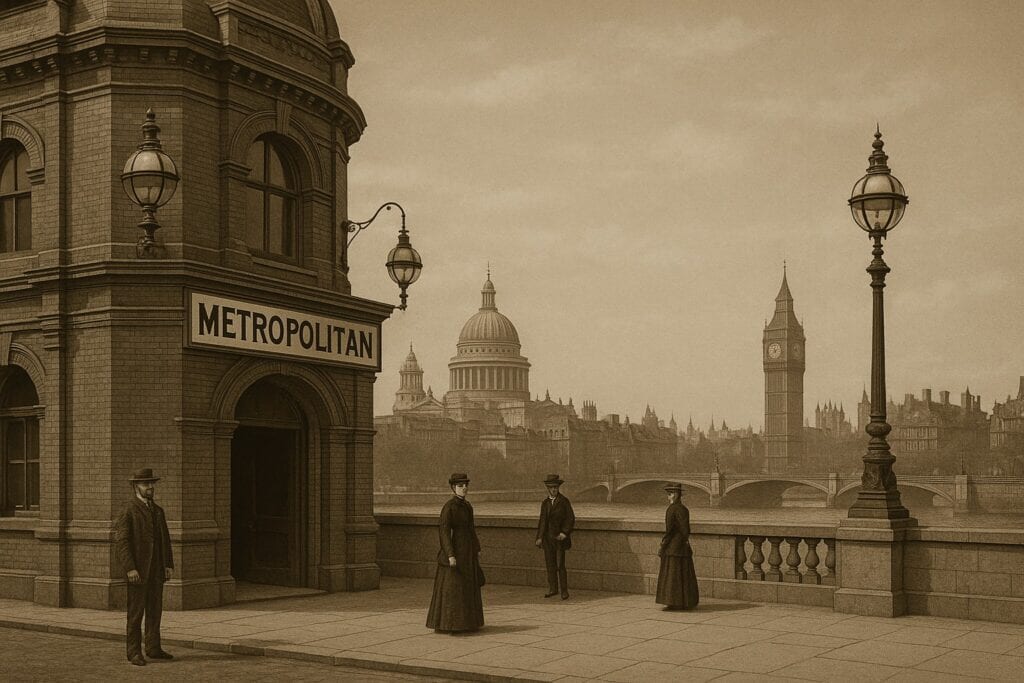
Many libertarians and classical liberals consider the 19th century in the West as the most liberal epoch in history. We can certainly see stains, notably slavery and later Jim Crow, as well as colonialism (think about the control of trade from the colonies, which Adam Smith criticized in his 1776 Wealth of Nations). In many countries, moreover, the liberal century started late (in France, for example) or ended early (in Germany). Even in the UK, the Corn Laws were only abolished in the middle of the century, and British libertarians were pessimistic as the end of the century approached (see Matt Zwolinski and John Tomasi’s The Individualists, which I reviewed in Regulation). Yet, for Anthony de Jasay, whose thought is strongly anchored in the “private forteresses” of private property, the 19th century was clearly the era of liberalism, even if fleeting. In his book Against Politics (see my Econlib review), he wrote: It is to history taking its time that we owe thanks for the brilliant but passing nineteenth-century interlude in Western Civilization, with limited government and assured-looking private sovereignty of everybody’s own decisions over crucial domains of economic and social life. The UK was among the countries where the advance of liberalism was most promising. In his English History 1914–1945 (Oxford University Press, 1965), historian, journalist and broadcaster A.J.P. Taylor described his country on the onset of World War I. Was he influenced by similar observations in John Maynard Keynes’s 1919 book The Economic Consequences of the Peace? In any event, the opening paragraph of Taylor’s book is memorable and worth quoting nearly in extenso; it suggests that the promises of liberalism have been seriously betrayed: Until August 1914, a sensible, law-abiding Englishman could pass through life and hardly notice the existence of the state beyond the post office and the policeman. He could live where he liked and as he liked. He had no official number or identity card. He could travel abroad or leave his country for ever without a passport or any sort of official permission. He could exchange his money for any other currency without restriction or limit. He could buy goods from any country in the world on the same terms as he bought goods at home. For that matter, a foreigner could spend his life in this country without permit and without informing the police. Unlike the countries of the European continent, the state did not require its citizens to perform military service. … Only those helped the state who wished to do so. The Englishman paid taxes on a modest scale … rather less than 8 per cent. of national income. The rest of the paragraph shows both the emergence of an interventionist trend and that the British were still generally freer than nearly everybody in the West—and even than everybody now. The interventionist trend was not so much apparent in elementary public education and in last-resort social assistance as in the fact that some adults (mainly women) were deemed incapable of liberty in certain areas of life: The state intervened to prevent the citizen from eating adulterated food or contracting certain infectious diseases. It imposed safety rules in factories, and prevented women, and adult males in some industries, from working excessive hours. The state saw to it that children received education up to the age of 13. Since 1 January 1909, it provided a meagre pension for the needy over the age of 70. Since 1911, it helped to ensure certain classes of workers against sickness and unemployment. This tendency towards more state action was increasing. Expenditure on social services had roughly doubled since the Liberals took office in 1905. Still, broadly speaking, the state acted only to help those who could not help themselves. It left the adult citizen alone. Taylor is a controversial figure. He had shortly been a member of the British Communist Party in his youth and remained a lifelong socialist. But is it possible that the quote above mainly reflects something that we still observe? I mean that socialists don’t understand that individual liberty is impossible without economic freedom, just as conservatives have problems understanding that economic freedom is inseparable from individual liberty. According to David Pryce-Jones writing in The New Criterion, though, it’s worse than that: Taylor was also a fellow-traveler of the Soviet regime and a Nazi sympathizer—anything but the opposite of individual sovereignty! He seems to have gone through a whole palette of collectivist ideologies. So, his description of English liberty before WWI was probably an incrimination. At any rate, we can read his description as close to what individual liberty should be against all forms of authoritarianism on the right or on the left. ****************************** A London Underground station in the late 19th century, as viewed by ChatGPT (0 COMMENTS)

/ Learn More