
Political Thought
-
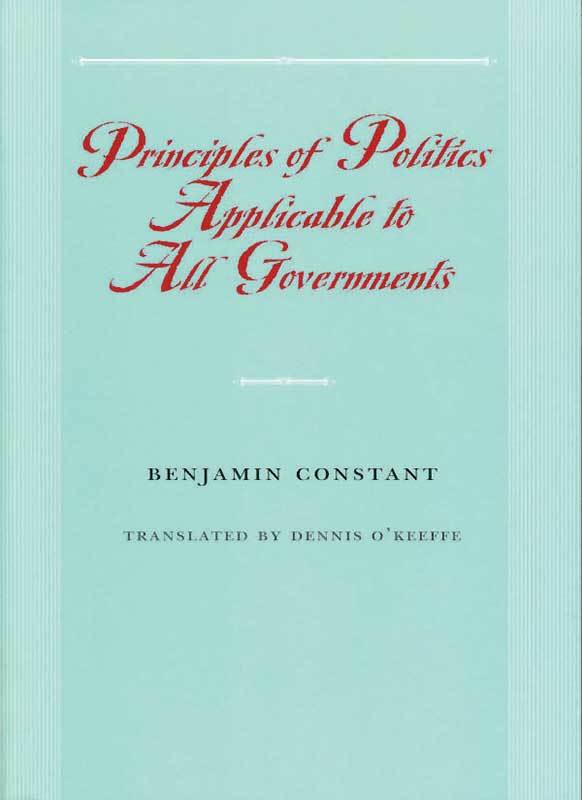
![ConstantPrinciples 9780865973954 800h 72]()
Principles of Politics Applicable to All Governments
by Benjamin Constant
/ Learn MoreIn Principles of Politics, first published in 1815, Constant explores the subjects of law, sovereignty, and representation; power and accountability; government, property, and taxation; wealth and poverty; war, peace, and the maintenance of public order; and freedom, of the individual, of the press, and of religion. Benjamin Constant (1767–1830), born in Switzerland, became one of France’s leading writers, as well…
-
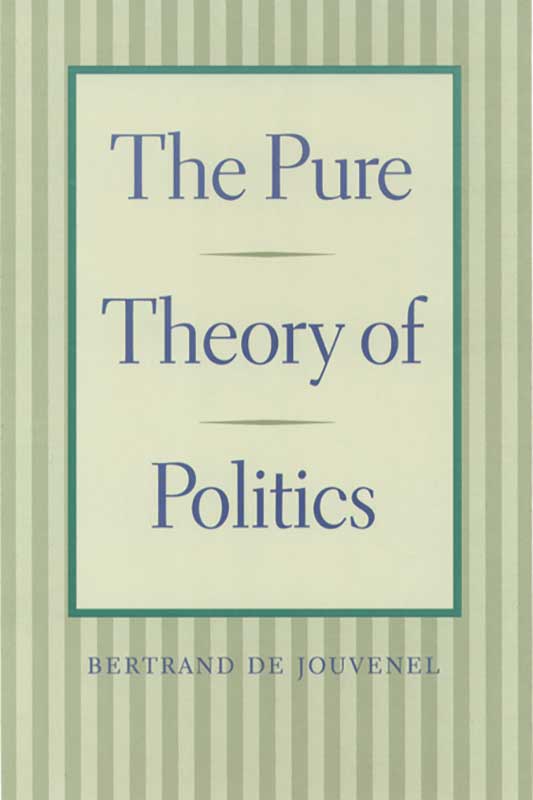
![JouvenelPureTheory 9780865972650 800h 72]()
The Pure Theory of Politics
by Bertrand de Jouvenel
/ Learn MoreThis is the final volume in Jouvenel’s magnum opus, the trilogy that begins with On Power, moves to Sovereignty, and concludes with The Pure Theory of Politics. In this volume, Bertrand de Jouvenel proposes to remedy a serious deficiency in political science: “the lack of agreement on first principles, or ‘elements.’” The author’s concern is with political processes as they…
-
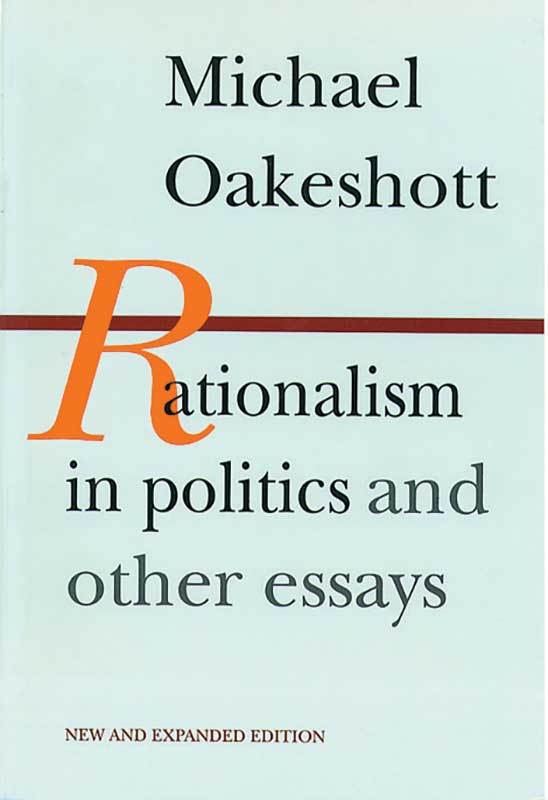
![OakeshottRationalism 9780865970953 800h 72]()
Rationalism in Politics and Other Essays
by Michael Oakeshott
/ Learn MoreRationalism in Politics established the late Michael Oakeshott as the leading conservative political theorist in modern Britain. This expanded collection of essays astutely points out the limits of “reason” in rationalist politics and criticizes ideological schemes to reform society according to supposedly “scientific” or rationalistic principles that ignore the wealth and variety of human experience. Timothy Fuller is Professor of…
-
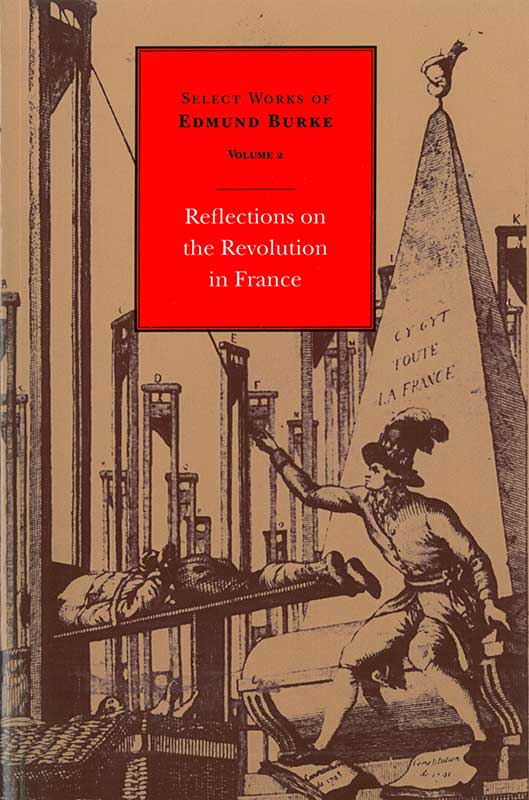
![BurkeV2Reflections 9780865971653 800h 72]()
Select Works of Edmund Burke: Reflections on the Revolution in France
by Edmund Burke
/ Learn MoreOriginally published by Oxford University Press in the 1890s, the famed three-volume Payne edition of Select Works is universally revered by students of English history and political thought. Faithfully reproduced in each volume are E. J. Payne’s notes and introductory essays. Francis Canavan, one of the great Burke scholars of the twentieth century, has added forewords. Volume 2 consists of…
-
![HamiltonRevWritings 9780865977068 800h 72]()
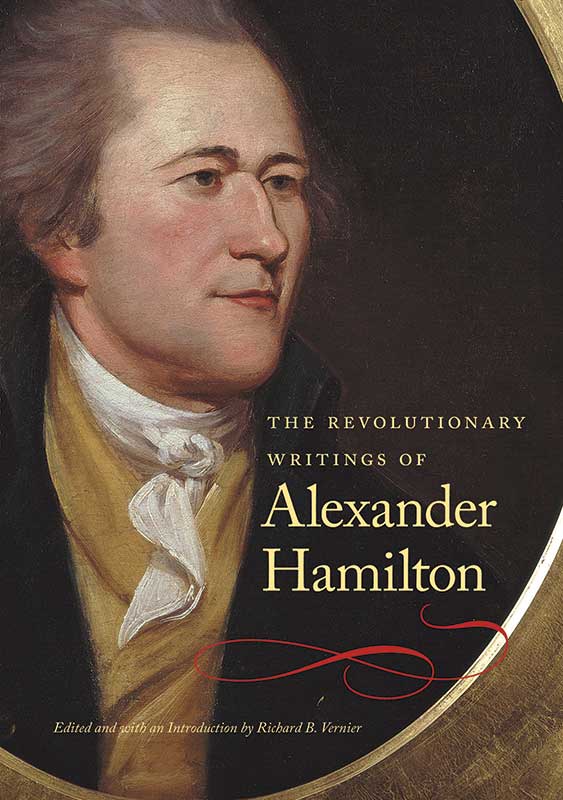
The Revolutionary Writings of Alexander Hamilton
by Alexander Hamilton
/ Learn MoreAlexander Hamilton, trusted military aide and secretary to General George Washington, wrote to persuade. He had the ability to clarify the complex issues of his time without oversimplifying them. From the basic core values established in his earlier writings to the more assertive vision of government in his mature work, we see how Hamilton’s thought responded to the emerging nation…
-
![AdamsRev 9780865972858 800h 72]()
The Revolutionary Writings of John Adams
by John Adams
/ Learn MoreThe Revolutionary Writings of John Adams presents the principal shorter writings in which Adams addresses the prospect of revolution and the form of government proper to the new United States. This collection illustrates that it was Adams who, before the Revolution, wrote some of the most important documents on the nature of the British Constitution and the meaning of rights,…
-
![SandozRoots 9780865977099 800h 72 2]()
The Roots of Liberty
by Ellis Sandoz
/ Learn MoreThe Roots of Liberty is a critical collection of essays on the origin and nature of the often elusive idea of liberty. The essays address early medieval developments, encompassing such seminal issues as the common-law mind of the sixteenth century under the Tudor monarchs, the struggle for power and authority between the Stuart kings and Parliament in the seventeenth century,…
-
![Dreisbach 9780865977150 800h 72]()
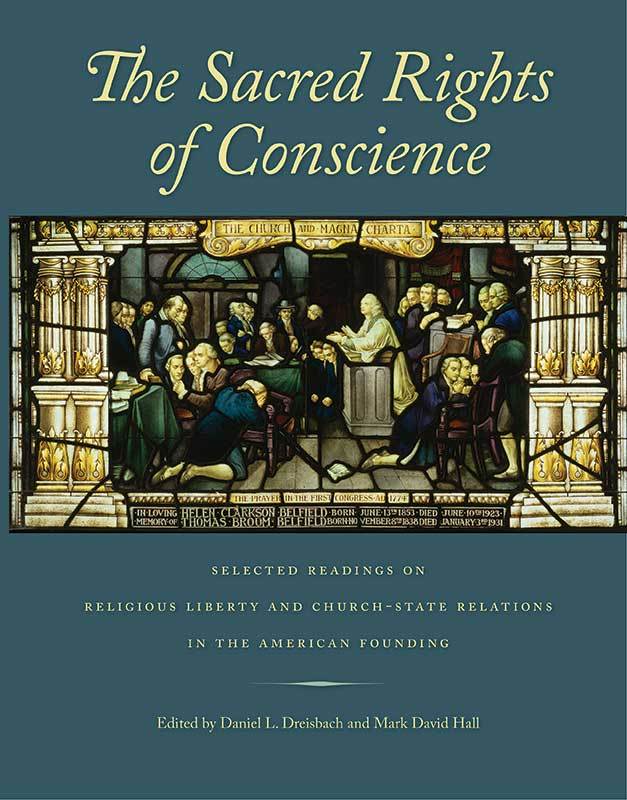
The Sacred Rights of Conscience
by Daniel L. Dreisbach and Mark David Hall
/ Learn MoreThe Sacred Rights of Conscience contains original documents from both public and private papers, such as constitutions, statutes, legislative resolutions, speeches, sermons, newspapers, letters, and diaries. These documents provide a vivid reminder that religion was a dynamic factor in shaping American social, legal, and political culture and that there has been a struggle since the inception of the Republic to…
-
![MaritainScholasticism 9780865978287 800h 72]()
Scholasticism and Politics
by Jacques Maritain
/ Learn MoreScholasticism and Politics, first published in 1940, is a collection of nine lectures Maritain delivered at the University of Chicago in 1938. Maritain championed the cause of what he called personalist democracy—a regime committed to popular sovereignty, constitutionalism, limited government, and individual freedom. He believed a personalist democracy offered the modern world the possibility of a political order most in…
-
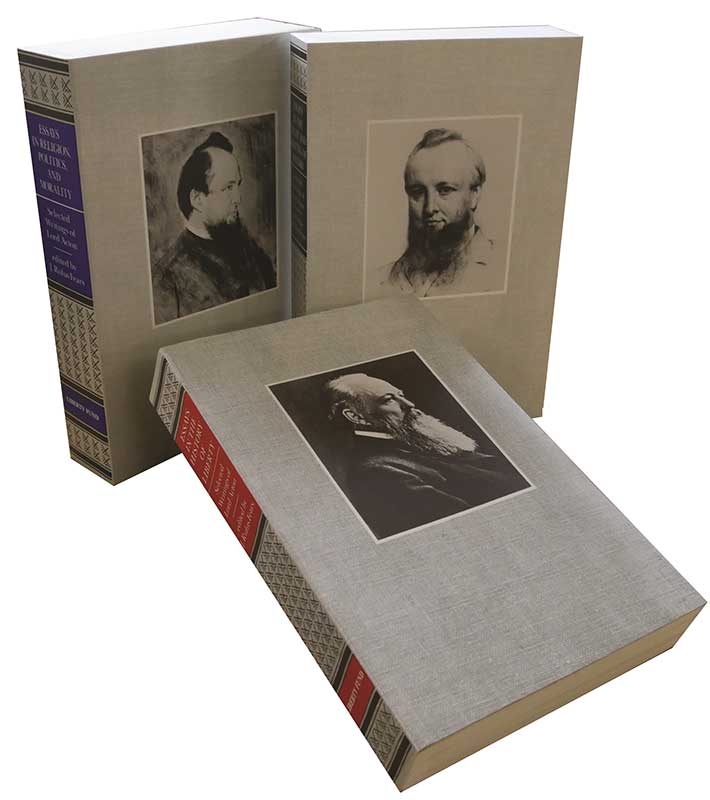
![ActonSet 9780865973305 800h 72 2]()
Selected Writings of Lord Acton
by John Emerich Edward Dalberg-Acton
/ Learn MoreLord Acton was among the most illustrious historians of nineteenth-century England, a man of great learning with a deep devotion to individual liberty and a profound understanding of history. Liberty Fund is proud to offer the most complete collection of Acton essays ever published. Volume I: Essays in the History of Liberty Included are his two famous essays on the…
-
![Belloc 9780913966327 800h 72]()
The Servile State
by Hilaire Belloc
/ Learn MoreHilaire Belloc (1870–1953) was one of the most respected men of his day for his learning, insight, wit, and brilliant literary style. Author of over a hundred books and articles, Belloc was a journalist, polemicist, social and political analyst, literary critic, poet, and novelist. The Servile State has endured as his most important political work. The effect of socialist doctrine…
-
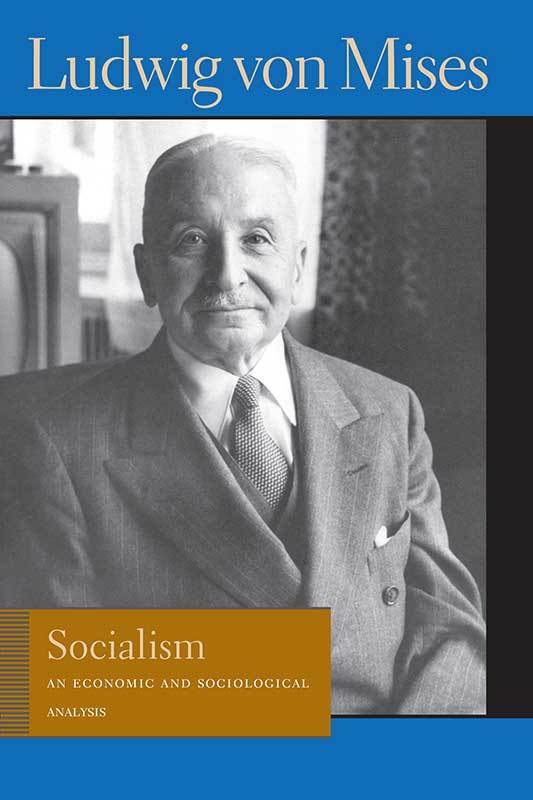
![MisesSocialism 9780913966631 800h 72 2]()
Socialism
by Ludwig von Mises
/ Learn MoreMore than thirty years ago F. A. Hayek said of Socialism: “It was a work on political economy in the tradition of the great moral philosophers, a Montesquieu or Adam Smith, containing both acute knowledge and profound wisdom. . . . To none of us young men who read the book when it appeared was the world ever the same…


Promotions
Stayed tuned for future promotions!